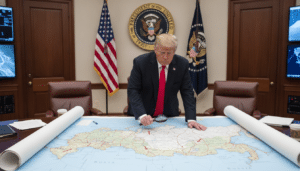
Trump’s Influence on American Life: Insights from the People.
Explore the profound impact of Trump’s Influence on America’s politics, society, and global standing, as recounted by everyday citizens.

Trump's Influence on America
Trump’s Influence on America: Donald Trump’s return to the White House has changed many things. From grocery shopping to big decisions, his impact is seen everywhere. People talk about a growing social divide and less trust in government, thanks to constant media coverage.
A new Yahoo/YouGov survey shows a clear trend. More Americans than ever think Trump has been a bad president. They believe he’s making America worse.
The survey was done right after Trump made big moves. He ousted the Venezuelan leader, threatened to take Greenland, and suggested using force against protesters in Minneapolis.
It also came before Trump’s team celebrated “One Year of MAGA.” The White House framed this as a time of strength and winning. This message can widen the social divide, making people more loyal to their views.
The survey’s findings are based on 1,709 U.S. adults. They were chosen to represent the country well. The results were weighted to match the 2019 American Community Survey.
Party ID was adjusted to reflect the country’s balance. The margin of error was about 3.1%. The poll gives a clear view of how Trump’s actions affect daily life.
Trump’s actions and public opinion have always been a challenge. But the current situation is different. Researchers are studying how Trump’s rule and media coverage affect people’s views.
People often focus on practical issues, such as budgets. In places like Pennsylvania’s Poconos, affordability is a big concern. This adds to the social divide that campaigns try to address.
Looking at the long-term effects of Trump’s rule helps understand why opinions stick. Even when the news changes, these views can last.
Costs are a big part of everyday conversations. This reality affects opinions more than speeches. Reporting on affordability in battleground counties shows how national promises are put to the test in real life.
Trump’s influence is seen in both big actions and small choices. Campaign stops focused on prices and trust show how media coverage meets real-world stress.
Trump’s Influence on America Key Takeaways
- Trump’s Influence is being judged through everyday costs, civic trust, and national mood.
- Public opinion in the Yahoo/YouGov poll tilts more negatively than earlier expectations about his presidency.
- The Jan. 8–12, 2026, field dates coincided with major headline events, shaping media coverage of the survey.
- The White House messaging amplified the anniversary narrative and fueled debate across the social divide.
- The poll surveyed 1,709 U.S. adults via YouGov and used detailed weighting tied to the 2019 American Community Survey.
- Affordability and institutional confidence are emerging as linked concerns in how Americans assess the past year.
Trump’s Influence on American Life After One Year Back in Office
Donald Trump’s return to office has changed how we talk at work, at home, and online. The pace of change is fast, and his impact is clear. Many Americans wonder about the future of services, rights, and trust in government.
Why this first year is historically unusual: a president returns after losing reelection
This year is special because Trump is only the second president to return after losing. His choices, from staff to messages, are under intense scrutiny. His legacy is also getting more attention than usual.
Debates over power and tariffs are heating up. Legal battles, like the fight over tariffs, are part of the story. This affects budgets, prices, and how people see his competence.
Poll snapshot: more Americans say he’s changing the country “for the worse.”
New polls show a growing divide on whether the country is getting better or worse. Now, 49% say Trump is making things worse, while 34% say he’s making them better. 7% think he’s not changing anything.
There’s been a big change. In March, 43% said worse, and now it’s 49%. Better has dropped from 40% to 34%, widening the gap to 15 points.
Voters are also reacting to how Trump’s actions affect global and domestic issues. Events like Nicolás Maduro’s ouster and comments on Greenland are making headlines. These stories shape opinions on Trump’s influence in real time. A detailed look at the year’s big moments is in these themes from the first year back in.
“Better than expected” vs. “worse than expected” assessments
28% think Trump has been better than expected, while 49% say worse. 20% think he’s been about the same. This shows a big gap in expectations, affecting households and markets.
The gap has grown. In March, 41% said worse, and 30% better. Now, the spread is 21 points, double what it was. Even basic government operations are influencing views of his legacy, including the disruption described as the shutdown nears record length.
Public opinion, political impact, and the presidential legacy are shaped by policy decisions and media coverage
Public attitudes are becoming more fixed as Trump’s Influence meets everyday stress and big policy decisions. Many people focus more on results than style. Media coverage highlights conflict, but voters judge by what affects their daily lives.
The mood of the country shows a growing distrust and split information streams. Research from how America changed during Donald Trump’s presidency shows how polarized we have become. This makes today’s debates seem like two separate conversations.
Independents shift away: the clearest driver of the widening gap
Independents have seen a big drop in hope to frustration. Before Trump took office, more independents expected change for the better than worse (41% vs. 34%). But two months later, that flipped (46% worse vs. 36% better).
Now, independents are much more negative: 57% say “worse,” and 22% say “better.” They also think he has been worse than expected (57%) instead of better (16%), showing a big shift from March’s closer split (44% vs. 26%). This suggests media coverage and economic consequences are hitting voters who don’t lean to either party hard.
Party breakdown: Republicans steady, Democrats souring further
The party gap is clear: Republicans are staying the same, while Democrats are becoming more negative. Republicans expect Trump to do better than expected (63%), just like in March.
Democrats, on the other hand, have moved further away. “Worse than expected” rose to 86%, while “about the same” dropped to 10%. This split affects how we judge policy decisions, with the same action seen as progress by one side and disruption by the other.
Issue priorities: “wrong priorities” perceptions intensify
Approval of Trump is seen as stable, with 40% approving and 56% disapproving. But the argument over priorities is getting louder. In March, 43% said he focused on America’s most important issues, while 45% said he focused on less important ones.
Now, 51% say he is focused on less important issues, and 38% say he is focused on the most important things. In this climate, media coverage does more than report disputes; it can make it seem like governing is stuck in the wrong lane, even when policy decisions are moving fast.
Economic consequences and daily life: cost of living as the biggest drag
Cost of living is the biggest pressure point. About 70% say he has not focused enough on it, compared to 21% who say the right amount and 2% who say too much. At the same time, 52% say he has focused too much on arresting and deporting immigrants, adding to the “wrong priorities” feeling for many voters.
The strain is clear when federal action affects paychecks and basic services. Past funding fights, like the 43-day shutdown, had big effects on contracts, hiring, and travel delays, as explained in this breakdown of the 43-day government. These memories prompt people to talk more about the economic consequences, as prices rise faster than wages.
Most people blame Trump for the country’s condition: 53% say he is most responsible, compared to 22% who name former President Joe Biden and 25% who say both are equally responsible. This judgment fuels a debate over Trump’s Influence and how policy decisions and media coverage shape the presidential legacy in real time.
Trump’s Influence on America Conclusion
One year after his return, Trump’s impact is seen more in public opinion than in headlines. A Yahoo/YouGov poll shows 49% think he’s making the country worse, while 34% believe he’s making it better. Almost half (49%) say he’s been worse than expected, while 28% say he’s been better.
Supporters point to successes like border and economic gains, as reported in the White House’s “365 wins” report. Yet, the national mood remains skeptical.
Independents are key, and their views are widening the social divide. They now believe 57% that Trump is making America worse, and 57% that he’s been worse than expected. Republicans are steady, while Democrats are more critical, leading to fewer shared views.
This divide is critical for Trump’s legacy. It influences what voters reward, punish, and accept as normal. This is a theme in many assessments, like the Miller Center’s look at Trump’s impact and legacy.
Approval of Trump is steady, with 40% approving and 56% disapproving. Yet, the real story is about priorities and daily life. A majority, 51%, believe he focuses on less important issues, and 70% say he doesn’t address the cost of living enough.
There’s also a split on arrests and deportations: 52% say he focuses too much. Supporters argue these actions bring order. Recent debates over Washington’s choices have highlighted the need for stability, as seen in coverage of the 43-day shutdown.
Accountability is shaping Trump’s legacy, with most Americans blaming him for the state of the country. The optimism gap has also grown, with Democrats and independents more pessimistic. This divide is unlikely to fade, given ongoing debates over power, trade, and emergency authority, including legal questions about tariffs, as covered in the Supreme Court’s role.
For now, Trump’s influence is marked by polarized opinions and a deepening social divide. These factors will shape every major decision, leaving a lasting impact in history.