U.S Attacks ISIS in Retaliation Against Terrorist Attack Against U.S Troops
Stay updated on the latest strategic responses to ISIS activities & counterterrorism efforts in the Middle East. Get insightful news on combating ISIS.
ISIS Attack
The United States launched a coordinated response against ISIS, the Islamic State, after a deadly ambush near Palmyra. This action targets the extremist group across central Syria. It shows a renewed push against terrorism in the Middle East—and other war news about Ukraine.
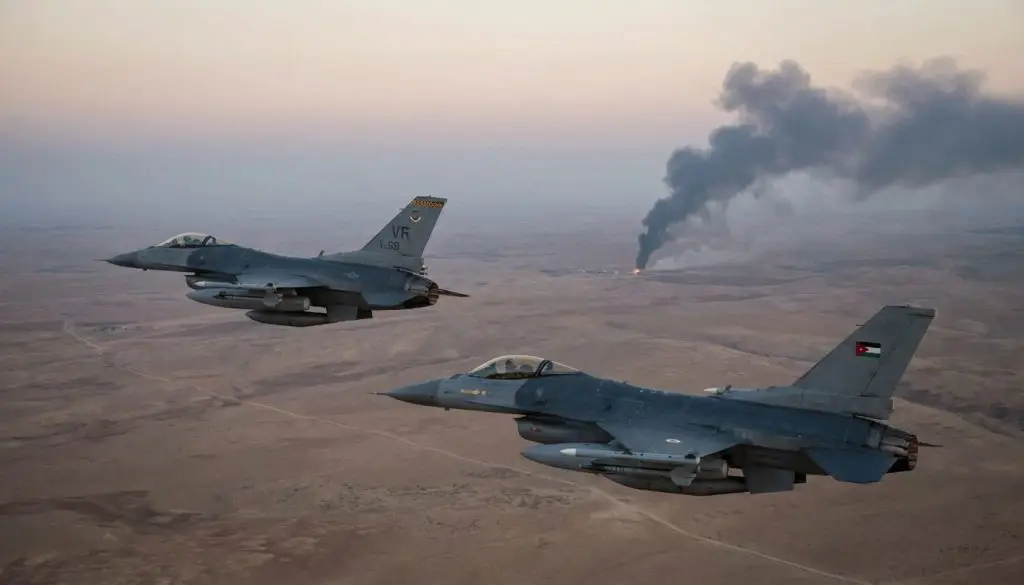
U.S. Central Command called it a “massive strike,” hitting known ISIS infrastructure and weapons sites with more than 100 precision munitions. The wave of attacks involved F-15 fighter jets, A-10 “Warthogs,” Apache helicopters, and Jordanian F-16s. CBS News reported that more than 70 targets were struck as part of a broader campaign to degrade the group’s reach.
Many think war with the Islamic State is the least of our concerns, as in October, Russia was testing long-range rockets that can be fitted with nuclear warheads.
The operation follows the killing of Sgt. William Howard, Sgt. Edgar Torres Tovar and interpreter Ayad Mansoor Sakat. Three other Guard members were wounded. President Donald Trump vowed very serious retaliation, while Defense Secretary Pete Hegseth pledged overwhelming force under Operation Hawkeye Strike, as detailed by ISIS news coverage. The goal is clear: deny ISIS sanctuary and signal sustained counterterrorism pressure.
ISIS Attack: Key Takeaways
- U.S. forces launched a large, coordinated strike on Islamic State sites in central Syria.
- More than 70 targets were hit with over 100 precision munitions.
- Assets included F-15s, A-10 “Warthogs,” Apaches, and Jordanian F-16s.
- The action followed a Palmyra attack that killed two soldiers and a U.S. interpreter.
- Leaders vowed decisive retaliation under Operation Hawkeye Strike.
- CENTCOM emphasized a focused, retaliatory operation against the extremist group.
Breaking developments: U.S. airstrikes target ISIS in Syria as counterterrorism escalates
The United States launched swift strikes in central Syria. This move shows a stronger stance against ISIS after recent attacks. The action was tracked across the Middle East, showing a quick response to threats.
Officials said the mission focused on known infrastructure and weapons hubs tied to ISIS networks. Early reports from defense sources mentioned air and artillery fires. These were aimed at stopping ISIS threats.
Overview of the retaliatory operation in central Syria
Multiple locations in central Syria were hit in a synchronized window. The goal was to target ISIS staging, logistics, and command functions. This move aimed to limit ISIS’s ability to move and operate across borders.
Scale and precision: more than 70 targets and over 100 precision munitions
More than 70 targets were struck with over 100 precision munitions. The strikes were designed to have a substantial impact while minimizing harm to civilians. This approach is similar to previous counterterrorism efforts.
- Hardened storage and weapons depots linked to ISIS
- Vehicle staging areas tied to recent ISIS attacks
- Command and facilitation hubs feeding regional cells
Aircraft and assets involved: F-15s, A-10 “Warthogs,” Apaches, and Jordanian F-16s
F-15s led high-speed strike runs. A-10 “Warthogs” provided close air support and armed overwatch. Apache helicopters executed precision engagements, while Jordanian F-16s underscored coalition reach in the Middle East. Artillery complemented sorties to suppress the remaining ISIS firing points.
U.S. Central Command’s characterization of a “massive strike.”
U.S. Central Command described the action as a “massive strike.” This aligns with a surge model used when disrupting ISIS revenue and leadership nodes. This approach helps contain reconstitution risks, as noted in this counter-ISIS analysis.
“The operation delivered concentrated effects against validated targets integral to ISIS operations.”
Timeline: Friday operations following last weekend’s attack
The strikes unfolded on Friday, days after the weekend ambush in Syria. Multiple outlets reported activity underway early that day, with CENTCOM posts on X reinforcing the mission’s retaliatory purpose. The timing matched leadership pledges to act fast against ISIS and deter fresh ISIS attacks across the region.
As details continue to develop, officials stress vigilance while monitoring ISIS news for indicators of further plots.
ISIS attack context and U.S. leadership response
The attack in central Syria changed how the U.S. fights terrorism in the Middle East. Officials say it’s part of the fight against the Islamic State. This group uses propaganda and recruitment to keep violence going. The attack happened during patrols near Palmyra.
The Palmyra ambush: Two American soldiers and a U.S. interpreter were killed
A lone gunman attacked a joint patrol near Palmyra. Two American soldiers and a U.S. interpreter were killed. Several others were hurt before a helicopter took them to safety.
Investigators looked into reports of the Islamic State’s involvement. They also checked if someone inside the security forces was involved.
Victims identified: Sgt. William Howard, Sgt. Edgar Torres Tovar and Ayad Mansoor Sakat
The Pentagon named the fallen as Sgt. William Howard, Sgt. Edgar Torres Tovar and interpreter Ayad Mansoor Sakat. Both soldiers were from the Iowa National Guard. A report from the scene details the attack and the quick medical help.
Presidential and Pentagon responses: vows of “very serious retaliation” and “overwhelming force”.
President Donald Trump promised very serious retaliation. Later, he said he ordered a big strike. Defense Secretary Pete Hegseth said they would use overwhelming force against the group.
This shows they plan to target the group’s propaganda and recruitment efforts.
“If you target Americans — anywhere in the world — you will spend the rest of your brief, anxious life knowing the United States will hunt you, find you, and ruthlessly kill you.”
Operation Hawkeye Strike: objectives to eliminate ISIS fighters, infrastructure, and weapons sites
Hegseth announced Operation Hawkeye Strike to weaken the Islamic State in Syria. The goal is to hit fighters, logistics, and weapons. The aim is to disrupt the group’s propaganda and recruitment.
- Target cells are tied to recent ambush activity.
- Neutralize weapons depots and transit routes.
- Disrupt media pipelines that spread propaganda.
Follow-on actions: 10 operations in Syria and Iraq, detaining or killing 23 terrorist operatives
U.S. Central Command carried out 10 missions after the attack. These actions in Syria and Iraq killed or detained 23 operatives. They aim to weaken the group’s ability to organize.
Regional and counterterrorism implications across the Middle East
The U.S. and its partners responded with air and ground forces. Their goal is to stop threats and reduce the Islamic State’s power. By limiting the group’s movement and money, they aim to weaken its propaganda and stop attacks.
ISIS Attack Conclusion
The U.S. strike in central Syria was a big win in the fight against terrorism. F-15s, A-10 “Warthogs,” Apaches, and Jordanian F-16s hit over 70 ISIS targets. They used more than 100 precision munitions, assisted by artillery.
U.S. Central Command said it was a massive strike. They released pictures from December 19, 2025. This showed a strong response to ISIS attacks.
The operation came after an ambush in Palmyra. It killed Sgt. William Howard, Sgt. Edgar Torres Tovar and interpreter Ayad Mansoor Sakat. Some Iowa National Guard members were also hurt.
President Donald Trump and Defense Secretary Pete Hegseth promised to take decisive action. Operation Hawkeye Strike aimed to weaken ISIS’s cells, depots, and weapon sites. CENTCOM says 10 more raids in Syria and Iraq have caught or killed 23 ISIS operatives.
These efforts aim to stop ISIS’s operations and reduce its propaganda and recruitment. They rely on steady partners and lessons from past battles. Experts say success comes from using military force, financial pressure, and information campaigns.
This approach is detailed in a study on international responses.
The fight against ISIS is ongoing. It needs constant attention and teamwork. The Islamic State can change its plans, and Syria’s instability lets it regroup. The U.S. must keep working with allies to keep ISIS in check and protect people in the Middle East.
ISIS Attack FAQ
What prompted the U.S. retaliation against ISIS in Syria?
A lone ISIS gunman attacked U.S. personnel in Palmyra, Syria. He killed Sgt. William Howard, Sgt. Edgar Torres Tovar and interpreter Ayad Mansoor Sakat. Three others were wounded. This attack led to a quick response against ISIS.
How did U.S. Central Command describe the operation?
U.S. Central Command called it a “massive strike.” They said it was a quick response to the attack. They shared a photo from Dec. 19, 2025, showing a U.S. fighter jet ready for action.
What was the scale of the U.S. strikes?
U.S. forces hit over 70 Islamic State targets with more than 100 precision munitions. They targeted facilities, weapons caches, and infrastructure. This was to weaken their ability to fight and stop future attacks.
Which aircraft and assets were involved?
The strike included U.S. F-15s, A-10s, Apaches, and Jordanian F-16s. U.S. artillery also supported the mission. This mix allowed for close air support and regional cooperation.
When did the strikes occur?
The strikes happened on Friday, right after the Palmyra ambush. Officials confirmed to CBS News that the strikes were underway that day. This matched public promises of swift action against ISIS.
Who were the victims of the Palmyra attack?
The Pentagon named Sgt. William Howard, Sgt. Edgar Torres Tovar and interpreter Ayad Mansoor Sakat as the fallen. Their deaths led to more actions against them.
How did U.S. leadership respond publicly?
President Donald Trump promised “very serious retaliation.” Defense Secretary Pete Hegseth vowed to “avenge these fallen Americans with overwhelming force.” Both attended the dignified transfer at Dover Air Force Base.
What is Operation Hawkeye Strike?
Defense Secretary Pete Hegseth announced Operation Hawkeye Strike. It aims to eliminate ISIS fighters, infrastructure, and weapons sites. The goal is to weaken ISIS, disrupt recruitment, and blunt propaganda.
Were there follow-on counterterrorism actions?
Yes. U.S. Central Command reported 10 more operations in Syria and Iraq. These actions killed or detained 23 terrorist operatives. They keep pressure on ISIS and support counterterrorism goals.
What role did regional partners play?
Jordanian F-16s joined the mission, showing cooperation with U.S. forces. This partnership strengthens Middle East security against ISIS and supports counterterrorism efforts.
How does this affect the broader fight against the Islamic State?
The strikes show ongoing counterterrorism efforts to weaken the Islamic State. They aim to limit ISIS attacks and control their news and messaging. The goal is to reduce their ability to operate and recruit.
What was shared about the operation’s timing and imagery?
CENTCOM posted that the mission happened on Friday. They shared a photo of a U.S. fighter jet preparing for action, dated Dec. 19, 2025. The post highlighted the operation’s quick response and precise targeting of ISIS sites.