What Happened to Generation X
Discover the journey of Generation X, exploring their unique traits, values, and the challenges they face in today’s evolving landscape.

What Happened to Generation X
Generation X is getting attention again, but it’s not just nostalgia. They’re facing midlife challenges as workplaces and families deal with stress. Their calm approach is now seen as leadership.
The “forgotten generation” label stuck because of the focus on Boomers and Millennials. Generation X worked hard in the background. They feel overlooked, overworked, and overwhelmed, yet they stay calm and practical.
Big changes affected their path. The promise of secure jobs and pensions disappeared, replaced by 401(k)s and job changes. They went from a pre-Internet childhood to a social-media adulthood, adapting to each new system.
In 2026, younger people are seeking better work-life balance and fewer distractions. The trend of digital minimalism shows a desire to disconnect from burnout and app overload. For Generation X, the question is finding time to unplug.
Key Takeaways
- Generation X is being re-examined as Gen X enters midlife and more leadership roles.
- The “forgotten generation” narrative stems from being sandwiched between Baby Boomers and Millennials.
- The Generation X mindset is often pragmatic, calm, and built for problem-solving under pressure.
- Economic shifts from pensions to 401(k)s added long-term insecurity for Generation X.
- Tech acceleration forced Gen X to adapt from an analog childhood to an always-on modern society.
- Today’s unplugging trend highlights how hard disconnection can be for Generation X.
Why People Keep Asking “What Happened to Gen X” in Modern Society
Gen X is often overlooked in today’s conversations. They are the ones running homes, teams, and budgets, yet they stay in the background. This neglect makes them feel forgotten, keeping the question of their fate alive.
Gen X faces familiar challenges: steady responsibility and less attention. They are seen as the forgotten middle children, not the loud winners or critics. This makes them a quiet, overlooked generation, rarely setting the tone of the national debate.
The “forgotten generation” problem: sandwiched between Boomers vs Millennials
Gen X is often caught in the middle of the Boomers vs Millennials debates. This framing decides who gets blamed, praised, and heard. It’s a pattern of media neglect, not because Gen X did nothing, but because it’s easier to sell without them.
In politics, Gen X feels skipped over. Barack Obama, born in 1961, is sometimes seen as a late Boomer. This makes the lack of a Gen X president a noticeable trend.
Smaller cohort visibility: roughly 66 million Gen Xers compared with about 75 million Boomers and 75 million Millennials
Gen X’s visibility is tied to their numbers. With about 66 million Gen Xers, they are outnumbered by Boomers and Millennials. This smaller size means fewer votes, products, and narratives.
This smaller size is often overlooked in headlines and marketing. When attention is divided, Gen X can easily get missed. This reinforces the idea of an overlooked generation, making the question of their fate resurface.
Middle child generation dynamics: overlooked in media, politics, and cultural narratives
The middle-child dynamic affects power dynamics and storylines. Leadership tends to be older, while culture and retail focus on younger adults. Midlife concerns, like schools and caregiving, often get overlooked, seen as media neglect.
Money and control also play a role. Boomers are often seen as dominant in institutions and wealth. This makes Gen X’s challenges seem less like personal failure and more like structural timing within the Boomers vs Millennials narrative.
Who Is Generation X and What Defines the Generation X Mindset
Generation X is caught in the middle of big changes in society and technology. This spot shapes their approach to work and family. They are known for being steady and adaptable, always ready to adjust to new situations.
As teens, they were seen as cool and ironic. Later, they became known as capable adults who keep things running smoothly. This evolution explains why their traits are relevant today in the U.S.
Birth years and identity: born 1965–1980, and the “X” as an unknown variable
Gen X was born between 1965 and 1980. The term “X” became popular thanks to Douglas Coupland’s 1991 novel Generation X. It symbolizes an unknown variable, fitting Gen X’s identity.
This label captures a group caught between old and new rules. It helps us understand Gen X traits without forcing a single story.
Generation X characteristics: independence, pragmatism, skepticism, humor, resilience
Gen X is known for independence and pragmatism. They question hype and look for solid evidence. They prefer to see proof before making promises.
They also value dry humor and resilience. This comfort with ambiguity is key to the Gen X mindset, where living in the gray is normal.
Generation X values: self-reliance, practicality, informality, flexibility, work/life balance, diversity
In work settings, Gen X values trust, honesty, and autonomy. They do best when goals are clear, and they have freedom to work. Results matter more than noise.
Gen X values self-reliance, practicality, and informality. They also value flexibility, work/life balance, and diversity. Ignoring these values can lead to low motivation and high turnover.
Generation X priorities: providing for family while keeping life from becoming “all work, all the time”
For many, Gen X priorities are simple: provide for family, stay employable, and keep life balanced. Work is important, but it shouldn’t take over everything.
Gen X values setting boundaries. Work is a means to stability, but family, health, and sanity are non-negotiables.
Latchkey Kids, Divorce Rates, and the Roots of Generation X Work Ethic
For many Americans born between the late 1960s and 1980, growing up was a real-life lesson. They learned to handle life’s challenges early on. This upbringing, with its mix of independence and skepticism, shaped their work ethic.
They carried this early independence into adulthood. They also kept a healthy dose of skepticism about promises that seemed too good to be true.
Latchkey childhoods and learning independence early
In many towns and suburbs, latchkey kids walked home alone. They let themselves in and managed their time and homework. This was common when a parent worked late or had weekend shifts.
This routine taught them to solve problems in small ways. It also made them more self-reliant, as they learned to handle their own time and emotions.
Family shifts in the 1980s: rising divorce rates, shaping skepticism and self-reliance
As divorce rates soared in the 1980s, many families split and moved. This change brought new schedules, schools, and budgets. It was a lot to handle all at once.
This era made kids skeptical in a quiet way. When adults’ plans failed, kids learned to rely on themselves. They became cautious of big promises, a trait that helped them in the workplace.
Reporting and support systems were different back then, as explained in this account of Gen X childhood.
Parenting norms then vs now: less supervision, fewer guardrails, “be home before dark” freedom
Back then, families followed simple rules like be home before dark. Supervision was lighter, and safety habits were seen as optional. This was the norm in everyday life.
The media also changed later. Etan Patz’s face didn’t appear on milk cartons until 1984. This shows how the “stranger danger” mindset grew after many childhood routines were already set.
How that childhood shaped Gen X work ethic: competence, boundaries, and a “get it done” approach
Those early responsibilities helped them become competent at work. They show up, solve problems, and finish tasks. The Gen X work ethic values clear priorities, fair boundaries, and results over words.
- They prefer direct feedback and practical tools over hype.
- They can adapt plans quickly because change was normal early on.
- They value family time because they remember thin guardrails in childhood.
Mike Males argued in 2001 that Gen X teens assumed adult responsibilities early. They handled freedoms in an “admirably competent” way. This view fits what many managers see today: a steady, self-directed style with a strong sense of independence.
Even today, relationship stress and split households can change daily routines. This theme is seen in discussions like signs of strain in long-term partnerships. Practical pressures often hide under the surface.
From MTV Generation to Grunge Music: Gen X Pop Culture Influence
Generation X grew up in loud, shared moments. Their pop culture influence spread through TV, radio, and weekend hangouts. Before social media, everyone knew the same songs, shows, and brands.
1980s culture markers: mall culture, VHS era, early gaming, and mass-media sameness
In the 1980s, malls were like town squares. Teens would hang out in record stores and food courts. Then, they’d meet up at arcades or movie theaters.
At home, VHS tapes were like a family calendar. Early gaming brought them into shared worlds on Nintendo and Atari. They wore Sony Sport Discmen and Motorola MicroTACs, and collected Cabbage Patch Kids and Air Jordan 1s.
1990s culture and irony: “whatever” attitudes, slacker stereotypes, and satirical humor
In the 1990s, irony and “whatever” became big. The slacker stereotype was everywhere, thanks to songs like “Loser” and films like Slacker. Yet, humor stayed sharp, even in tough times.
Satire hit screens in Beavis and Butt-Head and Wayne’s World. Style relaxed, and scents like CK One sold a laid-back vibe. This all contributed to a casual yet alert Gen X lifestyle.
Grunge music as a generational mood: loss, disillusionment, and authenticity
Grunge music sought authenticity, even in pain. Kurt Cobain became a symbol of this authenticity and its costs. Lines like Billy Corgan’s “Despite all my rage, I am just a rat in a cage” expressed frustration.
Loss was a big part of the era, with cultural shocks from deaths like Kurt Cobain and Tupac Shakur. Later, losses like Philip Seymour Hoffman and David Foster Wallace left similar marks. These names highlight the emotional depth of their pop culture influence.
Gen X nostalgia today: revived brands, retro fashion, and rewatch culture
Gen X nostalgia is back, in stores and living rooms. Brands like Cabbage Patch Kids and Ninja Turtles are back as collectibles. Footwear like Doc Martens and Vans tells a story in closets.
Rewatch culture keeps 1990s culture alive, with reruns like Melrose Place. References like Dave Chappelle’s Care Bears jokes bring the past into the present. For the MTV generation, the past keeps coming back, one familiar detail at a time.
The Analog to Digital Transition and the Early Internet Era
For Gen X, the shift to digital didn’t begin with smartphones. It started with a childhood filled with radio, TV, and long days outside. Parents often didn’t know where their kids were.
In the early days of the internet, they learned by doing. They used noisy modems, traded tips in computer labs, and fixed problems without tutorials. This hands-on approach shaped their traits, such as patience, problem-solving, and skepticism.
This transition made them fluent in two worlds. They were more tech-savvy than many parents, but didn’t see social media as their identity. Online life was just one part of their day, not everything.
- Offline first habits: meet-ups, phone calls, and shared TV moments
- Early web instincts: forums, email, and simple personal pages
- Privacy reflex: a need for space away from constant posting
They helped build the modern web, but the market moved fast. Brands like Amazon, PayPal, Google, and YouTube became daily essentials. Yet, skills like basic HTML lost their value.
At work, they operate differently. Managers get better results by giving autonomy, clear goals, and tools that match real values. Even soft skills, like workplace communication, are important.
Douglas Coupland (2021) suggests that early tech exposure shapes a generation. Gen X is in a unique position. They remember life before the web and adapted quickly to the early internet era.
Economic Pressures and Generation X Challenges in Midlife
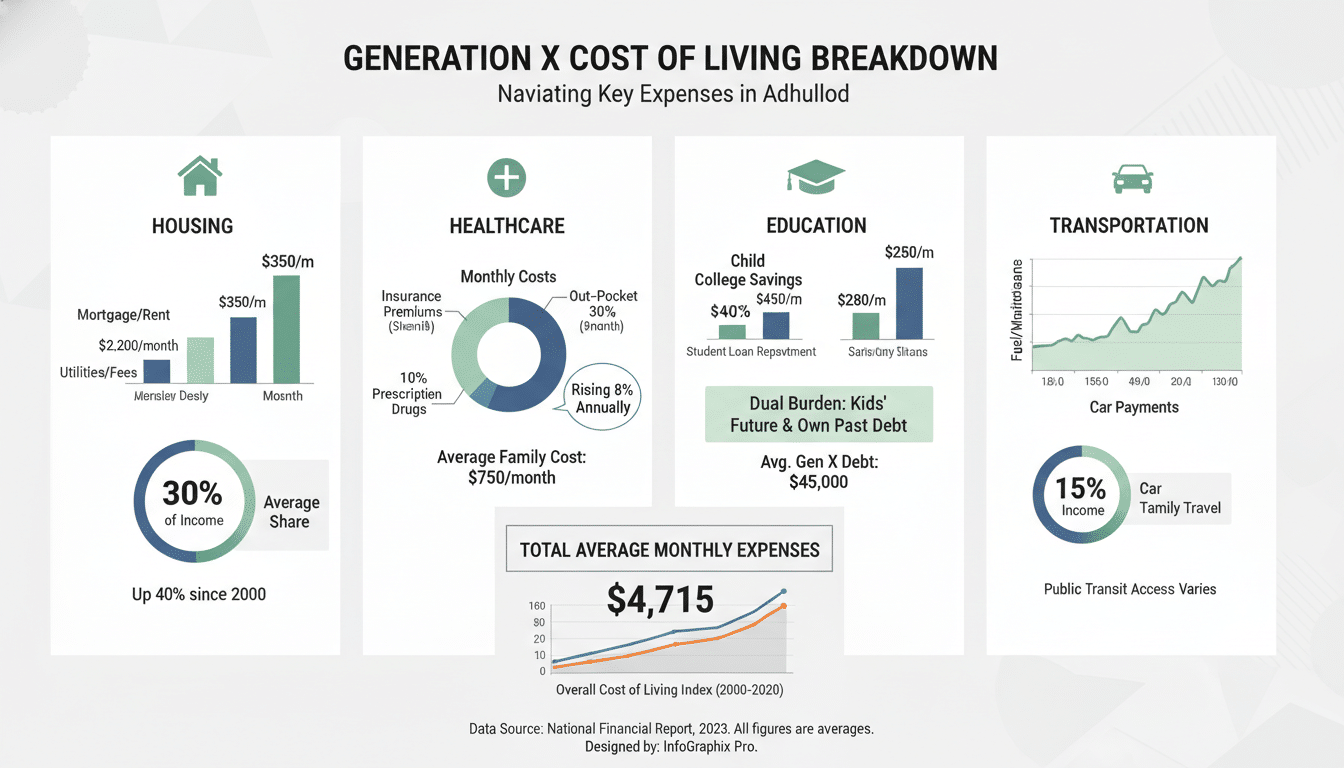
For many in midlife, it’s a constant struggle. They must choose between saving for the future or covering today’s expenses. These challenges often hide behind the surface, even when jobs seem secure.
Guaranteed pensions and long benefit periods used to guide family planning. But Gen X faces changing rules, higher costs, and less certainty. This can change their priorities quickly.
Vanishing ladder
The old “secure company” ladder is thinning. Promotions are less automatic, and long-term guarantees are weaker than before. This is different from what many Boomers experienced.
Now, 401(k)s and personal risk are more common. Globalization and automation bring change, making loyalty seem like a risk. This adds to the economic challenges Gen X faces.
Earnings and timing
Peak earning years don’t always come as expected. The Bureau of Labor Statistics says men ages 35–54 now earn less than their counterparts did decades ago. Women also face gaps, though the patterns differ.
The New York Times reports that more older Americans are working full-time. About one in seven over 65 works full-time, up from one in 12 in 2000. This can slow career advancement for 45–54-year-olds, when bills are high, and choices are tight.
Recession damage
The last major downturn left deep scars. Pew Research says Americans ages 35–54 lost 40–55% of their net worth during the recession. It takes years to rebuild this loss.
Retirement strain adds to the economic pressure. About 30% of Gen Xers have used retirement savings, and many plan to work past traditional retirement age. Nearly 40% don’t feel financially secure and have more debt than savings, leading to a focus on short-term stability.
Cost-of-living squeeze
Housing and childcare costs are rising. Public four-year college tuition has tripled, forcing parents to take out loans, take on side jobs, or juggle finances.
Some families spend over $20,000 a year on kids’ tuition and another $10,000+ on parents’ medications. Caregiving takes an average of 21 hours a week, and one in five delay medical care due to cost. This cost-of-living squeeze defines daily challenges in midlife, even before retirement planning.
- Less predictable career ladders and weaker long-term guarantees.
- Slower wage growth during years when expenses often peak.
- Competing demands from kids, parents, and personal health.
Careers, Leadership, and the Gen X Lifestyle Today
In many workplaces, a quiet shift is underway. More teams are finding that their next manager is likely to be Gen X. This shift is shaping careers in subtle ways, from meeting norms to how work gets measured.
The quiet power shift at work
Gen X leaders often move without fanfare, but they hold key seats. Their approach tends to favor clear goals, tight follow-through, and fewer speeches. These habits fit a set of Generation X traits built on independence and a bias for action.
That same style shows up in public service, too. Rebecca Rhynhart won election as Philadelphia’s city controller at age 43. She argued for making the government run more efficiently. She has also pointed to peers like Donna Bullock and Joanna McClinton as part of a rising cohort with an independent voice.
A practical style that works in the gray
When Gen X is in charge, leadership often sounds like: let’s get it done. They may accept tradeoffs instead of chasing perfect answers. In messy moments, they are comfortable living in the gray when the real problem is time, budget, or risk.
In fields tied to global policy, that mindset can help when rules collide with reality. It connects with the kind of work described in global issues and policy leadership, where negotiation and governance frameworks push decision-makers to balance values and results.
Managing different generations on one team
Managing across generations has become a daily skill, not a buzzword. Gen X managers often try to harness younger employees’ energy while keeping boundaries. They will adapt, but only up to a point, and they may skip flashy perks that feel performative.
- They translate the Boomer hierarchy into plain rules and priorities.
- They explain Millennial and Gen Z expectations around flexibility and feedback.
- They push for accountability without turning every issue into a culture war.
The balancing act outside the office
The Generation X lifestyle can feel like a pressure cooker. Many are raising kids, helping aging parents, and managing high-deductible health plans at the same time. Add a 24-hour news cycle, social media conflict, and climate anxiety, and stress becomes background noise.
Even so, their careers often keep moving, powered by reliability and problem-solving. In this phase of life, leadership shows up at work and at home, in schedules, budgets, and calm decisions made on crowded days.
Generation X Conclusion
Generation X didn’t just disappear; they faced a lot of pressure. As a smaller group, they often got overlooked by systems led by the Boomers and media focused on the young. But they kept showing up, carrying heavy loads at work and at home, even when the spotlight moved on.
Their mindset was shaped by a world that changed fast. They went from having freedom as kids to the early days of the web and then to always having a phone with them. This made them good at both old ways and new technology. They also developed a strong work ethic: they focused on getting things done without making a fuss.
As they got older, things got tougher. Their pay didn’t grow as much, and the cost of living, college, and healthcare went up. But they adapted, using their values of self-reliance, flexibility, and humor. They tend to find middle ground, which helps teams stay calm during tough times.
Now, as more of them take on leadership roles, their impact will be harder to ignore. Many newsrooms are watching how they lead in times of change. In today’s volatile and expensive world, Generation X might become a key stabilizing force.
For more on how Generation X is shaping today’s world, check out this article on editors and journalists who cover these changes.