
National Guard Deployed in Minnesota Due to State Protests
Unrest escalates as the National Guard steps in amidst the Minnesota State Protests, highlighting tensions and calls for change.

Minnesota State Protests
Minnesota State Protests: Minnesota Gov. Tim Walz has called up the Minnesota National Guard to help the State Patrol. This move is in response to the ongoing protests in the state. The Guard is ready to assist if needed.
But it’s important to note what this action does not mean. The Guardsmen are not yet patrolling the streets. This move is despite the ongoing protests and concerns about public safety.
In downtown Minneapolis and near the Bishop Henry Whipple Federal Building, protests have been intense. Demonstrators have been chanting and holding signs in the cold. Law enforcement is closely monitoring the situation, vigilant for any indications of potential trouble.
The situation is also tense in St. Paul and Minneapolis. Officials are preparing for more protests. This episode comes after a fatal shooting by an ICE officer and another incident involving an ICE agent and a Venezuelan man.
Minnesota State Protests are ongoing, with agencies reviewing their response plans. The Guard’s role is to protect life and property and to ensure the right to protest. This is in line with the First Amendment, as reported in this article on the role of the Minnesota National Guard.
Plans are underway at the federal level to swiftly respond to civil disturbances. This includes rapid mobilization and crowd-control training. These efforts are part of a broader plan, detailed in a Pentagon plan for a quick response to civil unrest
Minnesota State Protests Key Takeaways
- Minnesota State protests have prompted Gov. Tim Walz to mobilize the Minnesota National Guard to back the Minnesota State Patrol.
- “Mobilized” currently means staged and ready, not deployed to city streets.
- Recent protests in Minnesota gathered near downtown Minneapolis and the Bishop Henry Whipple Federal Building in freezing weather.
- Officials in Minneapolis and St. Paul are preparing for more demonstrations and shifting crowd sizes.
- Social unrest in Minnesota is intensifying scrutiny of federal immigration operations and local crowd-control tactics.
- Public safety planning now balances traffic control, property protection, and the right to protest.
Minnesota State Protests: Why the National Guard Was Mobilized and What Officials Say
State leaders in Minnesota are working hard to keep everyone safe. They want to make sure people can speak their minds without fear. They believe it’s possible to plan for big gatherings while also protecting protesters’ rights.
Gov. Tim Walz mobilizes the Minnesota National Guard to support the Minnesota State Patrol
Gov. Tim Walz called on the Minnesota National Guard to help the State Patrol. He said this move is meant to ensure public safety plans work during protests.
Photos from the Minnesota Department of Public Safety showed troops getting ready. They were loading equipment and preparing vehicles. For more on this, check out the Guard mobilization update. It explains how officials see this as a precaution, not an escalation.
National Guard spokesperson Maj. Andrea Tsuchiya: “Staged and ready to respond,” not deployed to city streets
Army Maj. Andrea Tsuchiya said the Guard is ready but not yet on the streets. This news is important for those watching the protests. It helps ease concerns about the impact of uniformed presence.
State officials are working with local partners and law enforcement. They’re planning for big crowds. The Guard is seen as a backup, not the main force, in case things get tough.
Mission focus: traffic support, protecting life and property, and supporting the right to assemble peacefully
Tsuchiya said the Guard’s mission is to help with traffic and protect people and property. They also want to make sure Minnesotans can gather peacefully. This shows that safety and protester rights are important together.
- Traffic control near high-volume gathering areas
- Support roles aimed at protecting life and property
- Coordination that officials say is designed to keep space for peaceful assembly
There’s also a growing focus on crowd tactics. A federal court in Minnesota has limited some actions by federal agents. This adds to the discussion on protesters’ rights during protests.
Public messaging from Walz urging residents to “stay safe and stay peaceful” amid political protests in Minnesota
Walz is asking people to stay safe and peaceful. He’s also thanking law enforcement for keeping things calm. The state’s message is to reduce tension during protests.
Federal officials, including the Department of Homeland Security, are using careful measures. They’re using the minimum force needed. Updates on the situation, including the Guard’s status and clashes, can be found in coverage of the Minnesota protests. The debate on enforcement, safety, and protester rights continues.
Protests in Minnesota: What Happened in Downtown Minneapolis and the Federal Building Area
Downtown Minneapolis was tense but calm as people gathered near the Bishop Henry Whipple Federal Building. The weekend showed a wave of activism in Minnesota. People expressed their anger and fear, demanding a voice.
Public safety planning was always in sight. The Minnesota National Guard was ready to help if needed, according to live updates on the mobilization.
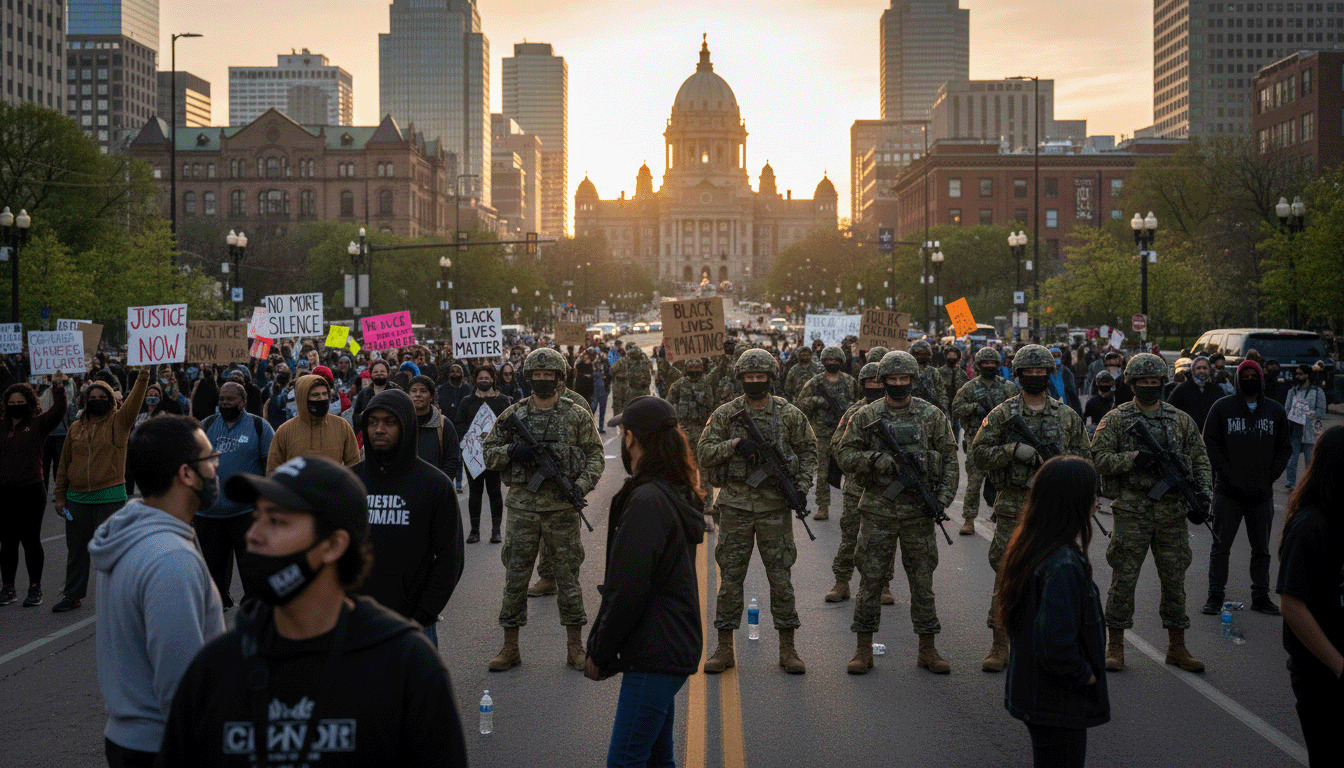
Subfreezing demonstrations near the federal building
On Saturday, people showed up in the cold, chanting and holding signs. They focused on the federal building, linked to immigration issues.
The cold didn’t scare them off. They kept coming, sharing warmth and news from around the area.
Detentions observed during a protest were described as peaceful
CNN reported that several protesters were detained near the federal building, even though the protest was peaceful. Officials didn’t explain why they were arrested.
This raised questions, similar to past police brutality protests. Fast actions can leave many questions unanswered.
Extra downtown security measures
Downtown security was more visible than usual. Roads were blocked, and hotels increased security in the area around the protest.
- Drivers were rerouted away from the busiest corners near the federal building.
- Onlookers watched from a distance as officers formed lines and repositioned.
- Businesses adjusted entrances and staffing based on the crowd flow.
Backdrop of concerns after the fatal shooting of Renee Good
The fatal shooting of Renee Good by an ICE officer on Jan. 7 was a big concern. It made people worried about public gatherings and crowd control.
Activism in Minnesota focused on accountability and fairness. Police brutality concerns also influenced how people viewed each new event.
Minnesota State Protests Conclusion
The Minnesota State Protests have highlighted the importance of public safety and free speech. Gov. Tim Walz has called in the Minnesota National Guard to help the State Patrol. Guard leaders say they are ready but not yet on city streets.
They aim to keep order without stopping lawful protests. Their mission is to support traffic, protect life and property, and ensure peaceful assembly. Walz also asks everyone to stay safe and peaceful.
There are questions after detentions near the Bishop Henry Whipple Federal Building during a calm protest. The reasons are unclear, sparking debate on how rules are enforced. Downtown security is tight, and there’s concern about social unrest.
The situation is complicated by recent events, like the fatal shooting of Renee Good by an ICE officer. As protests continue, officials must balance safety with civil rights. The coming days will show if tensions ease or worsen.


A baby was tear gassed! That’s crazy. What the hell were the parents thinking? Why were they in that situation?