U.S. Dollar Hits 4-Year Low, Precious Metals Soar
Discover how the U.S Dollar at 4 year low influences the market and boosts precious metals. Explore the latest trends and economic impacts.

The U.S Dollar has hit a 4-year low, causing big changes in the foreign exchange market. This has made everyday investors talk more about currency. The U.S. dollar index has fallen to levels not seen in early 2022. As the US dollar hit 4-year lows, find ways to help your money stretch further.
This has raised questions about the dollar’s value. It affects U.S. households and companies that import goods.
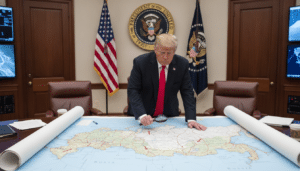
President Donald Trump recently spoke about the dollar’s value. He said, “No, I think it’s great,” when asked about the drop. He also mentioned the dollar’s value is good for business. The Job market outlook for 2026.
As the dollar fell, gold and silver prices soared. Investors turned to these precious metals as a safe haven. For a quick look at the dollar’s slide, the foreign exchange market move shows how fast things can change.
The economic impact of a weaker dollar is significant. It can increase the cost of imported goods. It also affects how people save, travel, and protect their money from inflation.
In a related market update, gold’s record surge shows the link between the foreign exchange market and real-world investments.
U.S Dollar Key Takeaways
- The U.S. dollar at a 4-year low signals broad weakness in the foreign exchange market, not just a one-day swing.
- President Donald Trump said he is comfortable with the decline, calling it “great” as markets reacted.
- Shifts in currency exchange rates can change import costs and shape the economic impact on U.S. consumers.
- Gold and silver rallied as investors looked for stores of value during the dollar’s pullback.
- The move is being read as policy-linked, with traders watching positioning and global reallocations.
- Volatility is rising ahead of key central bank signals, keeping the foreign exchange market on edge.
What’s Driving the USD Exchange Rate Lower in the Foreign Exchange Market
Traders are seeing the USD exchange rate decline, driven by political and data factors. Recent comments have changed how people think about the dollar’s value. This change affects everything from import prices to company profits.
Trump signals comfort with the decline as the currency hits its lowest level in early 2022
Donald Trump’s comments have been seen as a green light for sellers. His relaxed view of a weaker dollar has led many to believe it is acceptable. This shift can happen quickly in the foreign exchange market.
Trump has long believed that weak currencies help other countries. His public statements on this could further weaken the dollar’s value. This affects the economy beyond just one trading day.
Bloomberg Dollar Spot Index extends losses after comments, weakening versus major counterparts
After Trump’s comments, the Bloomberg Dollar Spot Index fell by up to 1.2%. It weakened against major currencies before London trade steadied things. This move made the usd exchange rate a big concern, not just a rate story.
The dollar’s decline also showed up in other currency pairs. For more on how the weaker greenback has supported the Canadian dollar, see this report on the greenback’s decline.
Policy uncertainty and investor confidence: tariffs, pressure on the Fed, deficit concerns, and geopolitical friction
Investors are worried about the impact of unpredictable policies on capital flows. Tariffs, pressure on the Federal Reserve, deficit worries, and geopolitical tensions have all added stress. These factors make planning harder for businesses and households.
- Tariffs can lift costs and disturb supply chains, which markets often price in quickly.
- Federal Reserve pressure raises doubts about independence, which can weigh on confidence.
- Concerns about the deficit can affect how global investors assess U.S. risk and value.
- Geopolitical friction can push investors to seek safety outside the dollar.
Win Thin of Bank of Nassau has warned that a weaker currency can “be nice until things get disorderly.” This risk is significant in the foreign exchange market, where swings can feed back on themselves during a decline in the U.S. dollar.
Why the move stands out despite higher Treasury yields and expectations that the Fed may pause rate cuts
The dollar weakened even with rising Treasury yields and the expected Fed pause. This shows politics and risk appetite are driving the market more than usual.
Bloomberg Markets Live macro strategist Tatiana Darie has argued the day’s drop may look overdone given rate differentials. Treasury Secretary Scott Bessent has also highlighted the difference between the dollar’s trading price and its reserve-currency value. This nuance shapes how traders see the next economic impact in the foreign exchange market.
U.S Dollar at 4-Year Low: Market Reaction, Currency Trend Analysis, and Positioning
Markets are quickly reacting to the U.S. dollar hitting a 4-year low. The shift is from seeing it as “noise” to recognizing it as a real “trend.” Now, many are focusing on analyzing currency trends across different markets, not just spot FX.

Deepest drop in years, with the gauge tracking its worst month in April
Following President Donald Trump’s comments, the dollar’s slide was its deepest in years. The Bloomberg Dollar Spot Index was set for its worst month in April. This shows the dollar’s move is not just a one-time event.
Under Trump, the U.S. dollar has fallen nearly 10%. This affects everyday things like import costs and how much money people earn overseas.
The drop has also led to bigger swings in other markets. For example, this market wrap noted the Dollar Index (DXY) below 96.00. Other major currencies are also showing strength, and gold and oil prices have seen big moves.
Derivatives and sentiment: short-dated options pricing shows the strongest bearish USD tilt in 15 years
Derivatives are showing a clear sign. The cost of short-dated options betting on a weaker U.S. dollar has hit a record high. This is the highest level seen in 15 years, according to Bloomberg’s data.
At the same time, investors are becoming more optimistic about other currencies. This is the highest level of bullishness seen in months, similar to after the April tariff rollout. Investors are not just selling dollars; they are also buying into other currencies as part of their analysis.
There’s also a valuation angle to consider. OECD data suggest the U.S. dollar is overvalued against most G-10 currencies except the Swiss franc. The yen and euro are considered undervalued, which can influence how traders view their exchange rates.
Heavy trading activity: record DTCC turnover and what it signals about conviction
Trading volumes are showing strong conviction, not just thin liquidity. The Depository Trust & Clearing Corp. (DTCC) saw its highest turnover on record on Tuesday. This shows the move is being expressed broadly and aggressively.
Trump’s stance adds to the narrative tension. He has praised dollar strength for leverage, but also said weakness can help manufacturing. He has said,
“I’m the person that likes a strong dollar, but a weak dollar makes you a hell of a lot more money.”
On Tuesday, he also said,
“I could have it go up or go down like a yo yo,”
He criticized Asian efforts to devalue their currencies, citing China and Japan. This keeps markets focused on policy risk, options pricing, and how currency value might change next.
Gold and Silver Rally as the United States Dollar Decrease Boosts Demand for Stores of Value
When the U.S Dollar hit a 4-year low, traders quickly turned to hard assets. The drop in the dollar made metals cheaper for global buyers.
In the foreign exchange market, a weaker dollar and a stronger rival can happen on the same day. This mix affects commodities, funds, and rates.
Cross-currency dynamics: yen rebound and intervention risk add pressure to the dollar
The Japanese yen suddenly rebounded, forcing traders to adjust quickly. They also worried about potential actions by Japanese officials, which could exacerbate currency volatility.
This tension is closely linked to the foreign exchange market. A big move in one pair can affect prices and economic impact worldwide.
“Debasement trade” narrative: investors rotate into gold as bullion hits record highs
With the dollar down, more investors saw gold as a safe bet against policy risks and long-term fiscal worries. Gold reached new highs as the “debasement trade” gained traction.
Market commentary indicated demand for gold wasn’t limited to central banks. Private and institutional buyers were also in the game. This was highlighted in a Saxo analysis, which linked dollar pressure to a stronger appetite for stores of value.
Silver strength alongside gold: precious metals soar amid shifting risk preferences
Silver rose alongside gold, driven by momentum and risk-taking. But silver’s price can jump quickly because of industrial demand.
- Gold acts more like a monetary hedge when the foreign exchange market turns choppy.
- Silver can surge on speculative flow, then cool if high prices start to strain real-world demand.
Flows beyond metals: rotation into emerging-market funds at record pace and “quiet-quitting” of U.S. holdings
Investors didn’t just buy metals. They also invested in emerging-market funds at a record pace. This was a sign of a move away from U.S. assets as the dollar declined.
A weaker dollar can help exporters, but it also raises concerns. Overseas buyers might pull back from U.S. assets. This could lead to tighter funding conditions and greater currency volatility.
U.S Dollar Conclusion
The U.S Dollar hitting a 4-year low wasn’t a surprise. It happened after President Donald Trump said he was okay with a weaker dollar. This policy change quickly affected the foreign exchange market.
As the dollar’s value changed, traders saw it as a sign of things to come. They believed easier policies were on the way. This shift was big news in the market.
Market indicators showed the dollar’s decline was significant. The Bloomberg Dollar Spot Index dropped by 1.2% in one day. Options showed traders were very bearish, and record DTCC turnover showed they were serious.
The dollar’s fall also affected other assets. Gold and silver prices went up, and the euro and pound reached their highest levels in 2021. The yen also got stronger, near ¥152.3 per dollar.
This change in the dollar’s value had a wide impact. Investors began favoring emerging-market funds and reducing their exposure to U.S. assets. This shift is detailed in the explanation of why the greenback is falling.
What happens next depends on several factors. These include uncertainty about tariffs, pressure on the Federal Reserve, and the U.S. deficit. The U.S. debt is near $38.49 trillion.
Traders will also look at the February jobs report and CPI. These will give clues about rate cuts. Policy rates are around 3.50%–3.75%, and inflation is near 2.7% CPI and 2.8% PCE.
The economic impact of politics is also important. A government shutdown nears record length. This keeps the demand for hard assets in the spotlight.