Tariff Refunds: Are You Eligible? When to Receive Them.
Explore your eligibility for tariff refunds and learn when you can expect to receive reimbursement for tariffs paid on imports.

Tariff refunds are becoming a reality in the United States. Importers are keeping a close eye on this development. A new plan has been outlined to handle claims efficiently, with thousands of companies ready to claim back duties found to be unlawful.
Brandon Lord, the Executive Director of U.S. Customs and Border Protection (CBP) Trade Policy, has shared the plan. It aims to process claims on a large scale. This comes after a court order to address illegally collected tariffs, moving the refund process forward.
The Trump administration has outlined a four-step process for tariff refunds. This process is expected to be ready for companies by spring. It’s designed to handle a large number of claims efficiently. Yet many importers are seeking more clarity on timing, documentation, and handling disputed entries.
More details are coming through court updates and trade-law coverage. This includes IEEPA tariff refunds guidance that explains the legal framework and next steps. For businesses, waiting for refunds can be like waiting for a large tax refund. Speed depends on accurate records, correct account details, and a system that can process payments quickly, as noted in refund timing and direct deposit tips.
Tariff refunds Key Takeaways
- Tariff refunds are now tied to a court-driven timeline rather than agency discretion.
- CBP has outlined a four-step tariff refund process intended to be web-based and scalable.
- Senior Judge Richard Eaton’s orders are accelerating the push to issue refunds for unlawful duties.
- Eligibility and timing will hinge on entry data, payment records, and the implementation of the tariff refund policy.
- Many importers are preparing for tariff reimbursement but expect some challenges as systems and guidance evolve.
- Faster payouts may depend on accurate banking details and clean filings, similar to modern IRS refund processing.
What’s Driving the New Tariff Refund Push in the United States
In the United States, a new push for tariff refunds is underway. This is due to court orders, agency build-outs, and growing public expectations. Importers are closely watching deadlines and cash flow.
Why refunds are being ordered now: trade court action after the Supreme Court ruling
The Supreme Court ruled in February that tariffs under the International Emergency Economic Powers Act (IEEPA) were illegal. This decision led to more lawsuits and closer court oversight.
Senior Judge Richard Eaton of the U.S. Court of International Trade ordered the government to refund all illegally collected tariffs. The government is updating on progress while setting up systems for claims.
What’s at stake for importers: an estimated $166 billion in IEEPA tariffs collected over the last year
Companies are seeking clarity due to the large amount involved. It’s estimated that about $166 billion in IEEPA tariffs were collected over the last year. This makes refunds more than just an accounting issue for many.
The tariff refund policy is also tied to legal debates on emergency powers. A deeper look at this fight is found in coverage of the IEEPA tariff debate. This explains why the refund timeline is so important.
Interest may be included: the court’s position on refunds plus interest
Eaton has stated that companies are also entitled to interest on tariff payments. This matters because interest can affect the size and timing of payments when entries are corrected.
This week, Eaton expressed satisfaction with the government’s progress and asked for another update next week. Earlier, the Trump administration tried to delay refunds for three months. But now, the process is moving forward under court direction.
Rising public and political pressure: polling shows broad support for issuing refunds
Public opinion is adding to the pressure. A survey by Groundwork Collaborative and Data for Progress found about 80% of likely U.S. voters support tariff refunds. Most also want direct relief for American consumers.
This pressure comes as the government prepares for new tariffs this summer. Section 301 investigations are underway against the European Union, Canada, China, and others. Agencies are balancing new enforcement with refunding tariffs, as described in CBP’s CAPE refund process update.
- Legal trigger: courts are directing the unwind of IEEPA duties and supervising timing.
- Financial stakes: a large estimated collection total has companies tracking every step.
- Operational reality: systems work, and validation checks will shape how the tariff refund policy is carried out.
- Public demand: polling shows support for leaders to keep tariff refunds on the front burner.
Tariff refunds eligibility: who may be able to claim a tariff refund
Tariff refund eligibility is becoming clearer for importers who faced IEEPA duties later challenged in court. The focus is on refunds for tariffs ruled illegal by the Court of International Trade. But the government warns that not every entry or importer will qualify automatically.
Which companies are in line: businesses seeking refunds for tariffs ruled illegally collected
Importers of record with entries hit by IEEPA duties might get refunds. They need to be part of the court cases known as the New IEEPA Tariff Cases. They could claim refunds on covered entries and sometimes even interest.
Non-parties might also get a chance with a Universal Refund Order. But, it’s uncertain and could take months to years due to system load and court stays.
What “eligibility” can depend on: entry records, payment history, and how duties were assessed
Getting a tariff refund often depends on documents, not just news headlines. Importers need to match each request to entry numbers and confirm duty payments. If records are missing, refunds may be delayed or require additional review.
- Entry packets that tie items to specific filings
- Payment history showing when duties were paid and by whom
- Assessment details that identify the tariff basis used at import
How court oversight shapes the tariff refund policy and timelines for refunding tariffs
The refund schedule is moving under court oversight, which limits delays. Judges require updates and frequent reports, speeding up refunds once a path is set. Importers tracking refunds often review updates like those in the next steps for importers to understand timing impacts.
Even with court involvement, the government says not every entry will get a refund. Outcomes can vary by importer and filing posture.
Scale also plays a role. Past refund programs handled fewer claims. IEEPA duties were paid by many importers, slowing verification and payment even after legal issues are resolved.
What to watch if customers seek repayment: consumer claims tied to corporate tariff reimbursement
After a company gets a tariff refund, it may face questions about who should get the money. This is already happening: a Costco (COST) customer is suing for a nationwide class-action lawsuit. They want Costco to pass any tariff refunds to customers.
Costco is notable because it sued for its own refund before the Supreme Court ruling. Other retailers and brands should have a plan for handling refunds. This includes pricing records, customer communications, and contract terms.
How to get a tariff refund through the CAPE portal and the tariff refund process
Many importers are eager to find a simple way to get tariff refunds. U.S. Customs and Border Protection has created a single online system. It handles large volumes, checks, and fast payments.
This system is important because it can speed up refunds. But it can slow down if entry details are missing or refund routes are unclear. Companies often prepare entry numbers, HTS data, and importer details before filing.
Where the government says claims will run: Consolidated Administration and Processing of Entries (CAPE) portal
CBP says the CAPE portal is where claims will be submitted and tracked. In a six-page filing, Brandon Lord explained how the portal works. It moves claims from start to payment.
Portal access and banking setup are key to a smooth process. A detailed overview of the system is available in this CAPE refund system update.
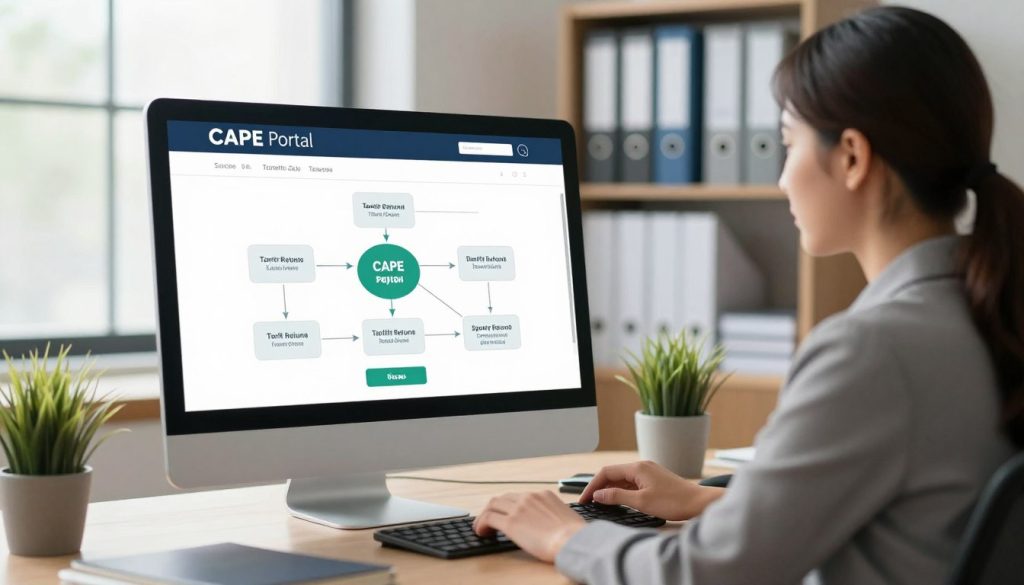
The four-step process outlined by CBP: claim portal, mass processing, review of refund findings, and electronic payment
CBP’s process is designed to be efficient. Each step is connected, reducing rework and allowing checks before payment.
- Claim portal submission, where companies enter data and correct errors early.
- Mass processing is built to handle large batches and re-run duty calculations.
- Review of refund findings, where results may be validated before payment is approved.
- Electronic payment, where refunds are sent to the designated bank account on file.
The tariff refund form is more than a document. It triggers automated validation and calculations. Companies with data fields matching ACE records may face fewer issues.
Build status and readiness: components reported 40% to 80% complete, performance testing planned in the coming weeks
Lord said CAPE components are 40% to 80% complete. Performance testing is planned for the coming weeks. This will reveal issues under load.
This progress range means a phased rollout. The system will first handle most refund requests. Then, it will add functions for more complex scenarios.
Timing signals: filings suggest the system aims to be ready in about 45 days, with companies potentially using it later
A government filing suggests the system will be ready in about 45 days. This means companies could start using it later this spring. The actual pace will depend on testing results and the quality of entry data.
For firms planning to get tariff refunds quickly, focus on basic readiness. Confirm portal access, verify ACH refund settings, and decide who should receive payment. These steps can reduce delays once a tariff refund form is submitted.
Tariff Refunds Conclusion
Tariff refunds are becoming a reality after the U.S. Court of International Trade ordered repayment. This comes after the Supreme Court’s February ruling. Importers now have a clearer path, but they must have clean entry records and proper duty charges.
About $166 billion in tariffs was collected last year. The court has said interest should be part of the repayment. This is a significant amount, and it shows the court’s interest in fairness.
The process of getting tariff refunds might seem slow. CBP has warned that each refund will be reviewed. They check for any other Customs issues and unpaid duties, taxes, or fees.
This extra scrutiny can slow down refunds. For more details, see this update on court-ordered refunds.
The Trump administration wants CBP to create an electronic refund system. The system is 40% to 80% complete. It’s expected to be ready in about 45 days.
This means refunds might arrive in the spring. This is if everything goes as planned. It’s important for businesses to be ready for this.
The impact of tariff refunds could be felt by more than just importers. Around 80% of people support issuing refunds. This could lead to changes in how companies talk to their customers.
If businesses get refunds, it could lead to more lawsuits. This includes a proposed class action against Costco. The way companies handle refunds could become a public issue.
Timing and documentation are key in any refund dispute. This refund-dispute guidance reminds us to keep records and act quickly when time is short.