2500 US Marines Heading to the Middle East After U.S Casualties
Discover the latest deployment as 2500 US Marines mobilize for the Middle East in response to recent American casualties.

The United States is sending 2,500 Marines to the Middle East. This move comes as U.S. casualties in operations against Iran rise. The U.S. military is stepping up its response as the war’s pace quickens.
U.S. Central Command reported six American airmen died in a crash in western Iraq on Friday. This brings the U.S. death toll to 13. The loss has made the deployment of Marines more urgent. It aims to protect people and keep options open for Marines in combat.
Defense Secretary Pete Hegseth ordered the deployment. He called the fallen service members “American heroes, all of them.” Hegseth said the country will honor them at Dover. He believes their sacrifice will reaffirm the mission’s core aims.
The report will explain the crash and its impact on Marines. It will also discuss how the USS Tripoli fits into Marine Corps deployments from the Pacific. The pressure points, like the Strait of Hormuz, will be highlighted. This is based on AP reporting on the Middle East.
Marines Heading to the Middle East: Key Takeaways
- The Pentagon is sending 2,500 Marines as part of a broader United States military response.
- U.S. casualties rose after six airmen died in a refueling aircraft crash in western Iraq.
- U.S. Central Command confirmed the deaths as operations against Iran continue.
- Defense Secretary Pete Hegseth tied the move to security needs and mission resolve.
- The Middle East deployment will connect to wider Marine Corps deployments, including movement tied to the USS Tripoli.
- Marines and marines in combat may be tasked with embassy security, evacuations, and rapid crisis support.
U.S. casualty update after KC-135 crash in western Iraq
The KC-135 crash in western Iraq marks a significant event in the air campaign. The Marine Corps is gearing up for more tasks in the area. This crash highlights the dangers of flying in wartime and the fast pace of operations.
Six American airmen were killed during operations against Iran, raising the U.S. death toll to 13
U.S. Central Command reported that six American airmen died in a crash. This incident has raised the U.S. death toll in Operation Epic Fury to at least 13. Seven of these deaths were due to combat.
About 140 U.S. troops have been injured, with eight severely hurt. For more details, see the KC-135 crash report.
Pentagon: crash involved two aircraft in “friendly airspace,” with the second aircraft landing safely
The Pentagon said the crash happened in friendly airspace. Another KC-135 landed safely in Israel, according to officials.
Three crew members from Ohio were among the six who died. They were part of the Ohio Air National Guard’s 121st Air Refueling Wing. The fallen will be honored at Dover Air Force Base.
Central Command: investigation underway; incident “not due to hostile or friendly fire.”
U.S. Central Command is investigating the crash. They say it was not caused by hostile or friendly fire. The aircraft crashed in friendly territory in western Iraq while on a mission.
- Location: western Iraq, over friendly territory
- Status: investigation ongoing under U.S. Central Command
- Initial assessment: not linked to hostile or friendly fire
The KC-135 refueling tanker is the fourth U.S. aircraft to crash during the war against Iran
The crashed aircraft was a KC-135 refueling tanker. It’s the fourth U.S. aircraft lost in the war against Iran. Each loss adds to the challenges faced by commanders in the fast-paced war.
Marine deployment: 2,500 troops ordered toward the Middle East
U.S. officials are sending more Marines to the Middle East. This move is to keep up with changing risks in the area. The plan is to stay flexible and support troops already there.
For readers tracking the latest order, the USS Tripoli is set to move. This could happen by the end of the month, according to reports.
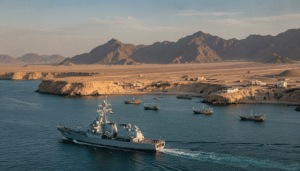
USS Tripoli amphibious assault ship preparing to carry Marines on a two-week journey from Japan
Defense Secretary Pete Hegseth ordered the USS Tripoli to head to the Middle East. About 2,500 Marines will be on board.
The trip is expected to take two weeks. The USS Tripoli can get close to shore. It supports aircraft and landing forces.
How the deployment bolsters existing Marine Corps deployments with added warships, troops, and fighter jets
This move is to strengthen, not replace, existing forces. It brings more ships, troops, and jets to the area.
This approach allows for quick changes without needing a single airfield. It helps cover more ground while keeping logistics flexible.
What the United States Marine Corps may be tasked with amid escalating regional operations
The Marine Corps often employs quick, adaptable forces. A sea-based rapid response can handle various missions without a fixed plan.
- Crisis response and limited security operations around U.S. sites and partners
- Support to air and naval campaigns, including command-and-control and recovery support
- Evacuation contingencies for civilians and embassy support if conditions deteriorate
- Deterrence posture, signaling readiness while leaving room for de-escalation
It’s not clear if more ships will join the USS Tripoli. The full plan is not yet confirmed.
Context for readers: Marine Corps training, Marine Corps ranks, and Marine Corps values that shape readiness for rapid
Marine Corps training focuses on being ready to move and operate quickly. This helps units stay effective even when plans change fast.
Marine Corps ranks help make decisions quickly. This ensures fast action and accountability in high-pressure situations.
Marine Corps values like discipline and teamwork are key. These values help during long missions and uncertain times.
Escalation in the war against Iran and wider regional fallout
The U.S. has increased its firepower, but the message is unclear. Officials have shown the scale of the buildup but left many questions unanswered. This situation reminds many of the Marine Corps’ history, where missions often change.
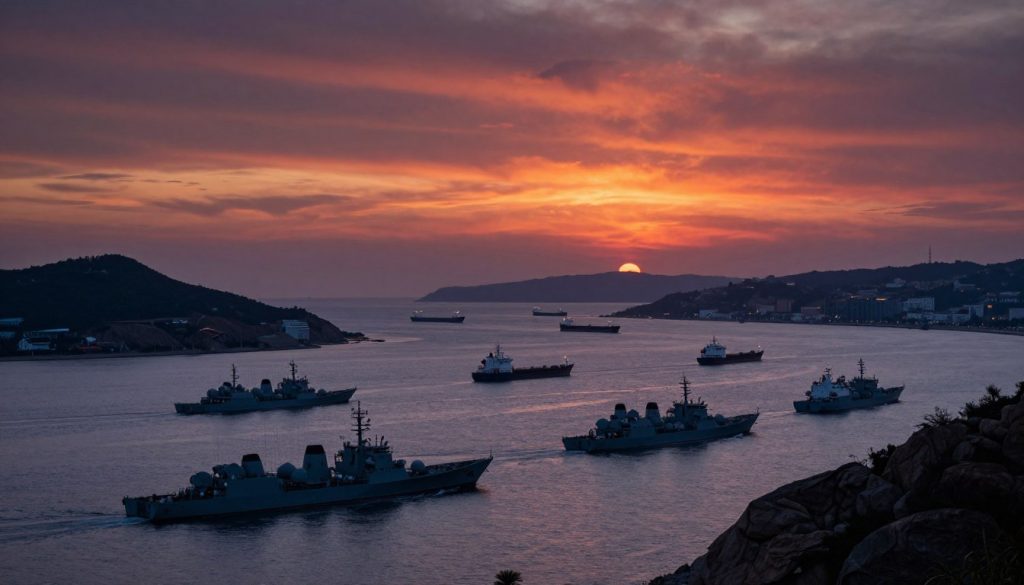
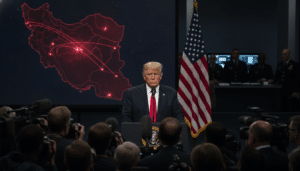
Hegseth: “heaviest round of airstrikes yet” expected as the two-week U.S.-Israeli operation intensifies
Pete Hegseth said Iran would face the “heaviest round of airstrikes yet” on Friday. He mentioned strikes had damaged buildings and factories across Iran. Iranian officials reported at least 1,348 civilians killed.
Hegseth vowed, “No quarter, no mercy for our enemies.” He said the fighting would stop when the U.S. destroys Iran’s naval, missile, and nuclear weapons. Yet, President Donald Trump added uncertainty, saying the war might end when he feels it in his bones.
Reporting on the wider deployment and regional posture shows the tension between force and flexibility. This is seen in coverage of the USS Tripoli’s mission.
Speculation and signaling around Kharg Island and the Strait of Hormuz security, including Trump’s shifting public messages
Kharg Island is a key focus, seen as Iran’s main oil export outlet. Trump said it was “not high on my list,” but he could change his mind quickly. Later, he said U.S. forces had bombed Kharg Island, but spared the oil infrastructure.
In the same message, Trump warned of reconsidering if Iran or others block the Strait of Hormuz. This public debate has made markets and shipping firms cautious of sudden changes.
Iran’s threats to choke the Strait of Hormuz and its impact on shipping, with reports of vessels stranded in the Persian Gulf
Iran might use the Strait of Hormuz as leverage. Ayatollah Mojtaba Khamenei vowed retaliation, calling it “never-ending.” Hegseth claimed Khamenei was “wounded and likely disfigured,” but offered no proof.
Shipping risks are clear. The International Energy Agency warned of the largest oil supply disruption ever. About 1,000 ships are stranded in the Persian Gulf, including energy tankers. The United Kingdom Maritime Trade Operations reported 20 incidents in March, affecting vessels in and around the Persian Gulf, Strait of Hormuz, and Gulf of Oman.
Energy and economic effects: oil prices surging and global fertilizer supply disruptions affecting U.S. farmers
Energy traders have seen a big jump in oil prices, up 40% to about $95 a barrel. Higher fuel costs affect trucking, food processing, and household budgets. Insurers, ports, and carriers have increased prices due to the Strait of Hormuz risk.
Farm country is also concerned about fertilizer supply. Zippy Duvall, president of the American Farm Bureau Federation, said over a third of the global fertilizer trade moves through Hormuz. Agriculture Secretary Brooke Rollins said the crunch would resolve “pretty quickly,” but noted 25% of farmers have not bought what they need.
Marines Heading to the Middle East: Conclusion
The United States is sending more troops to the Middle East. About 2,500 Marines are on their way. This is in response to growing security concerns.
Recently, six American airmen died in a KC-135 tanker crash in Iraq. This brings the U.S. death toll to 13. The Pentagon and U.S. Central Command are keeping the public informed.
The Pentagon said two planes were in friendly airspace. The second plane landed safely. U.S. Central Command said the crash was not due to hostile or friendly fire. They are investigating the cause.
The situation is escalating quickly. Officials warn of possible heavier strikes. The USS Tripoli is carrying Marines to the Middle East.
Shipping delays and energy price hikes are concerns. These can affect U.S. households. The conflict’s direction is influenced by other global issues.
Reports of Russia’s actions in Ukraine are adding to the tension. There’s talk of a broader mobilization. This could lead to a wider war. For those at home, the impact is real. Marine deployments and economic strain are now part of the picture.
For more on this, see full-scale war push.