What Would Happen if Trump Destroyed Iran’s Power Grid?
Explore the potential repercussions if Iran’s power grid was targeted, affecting its national energy infrastructure and global stability.

The idea of turning off Iran’s power grid seems like a simple military move. It’s like saying, “Hey, Tehran, stop what you’re doing.” But, hitting the power grid is a big deal. It affects everyone, not just the government. Iran strikes the world’s largest oil refinery in retaliation for U.S. military strikes.
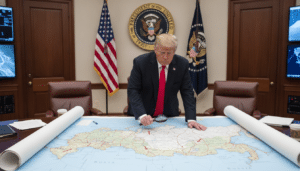
Recently, President Donald Trump talked about hitting Iran’s power grid. But then he backed off after hearing from U.S. allies and Gulf partners. They told him, “Think twice, because this could cause a lot of trouble.”
Iran has 85 million people, with over 25 million in cities that rely on power. If the power goes out, water stops, hospitals struggle, phones don’t work, and traffic gets worse. This puts pressure on the government and families alike. Travel alerts due to Iran war threats.
There’s also a financial side to this. Any sign of trouble near the Strait of Hormuz can shake markets. This is because much of the world’s oil passes through there. Disruptions can spread fast.
This situation is serious beyond just the headlines. We’ll explore what made Trump pause, why others didn’t want a power grid attack, and what damage it could mean for Iran and the region. We’ll also look at the risks outlined in this war scenario report.
Iran’s Power Grid? Key Takeaways
- Striking Iran’s power grid would be seen as a major escalation because civilians rely on it for basic survival.
- U.S. allies and Gulf partners warned that damage to the electrical grid in Iran could trigger humanitarian and political instability.
- Urban areas could be hit hardest, with millions facing outages that disrupt water, health care, and communications.
- Markets react quickly to any threat near the Strait of Hormuz, raising the risk of oil price spikes and wider inflation.
- Iran’s cyber capabilities add another pathway for disruption, increasing the chance of cascading infrastructure failures.
- Iran’s national power system is not just an energy network; it is a pressure point that can spill over borders.
Trump Backs Off Iran Power Strike After Allies Warn of Fallout
President Donald Trump has decided to pause a possible strike on Iran’s power system. This move came after allies expressed concerns. They said hitting Iran’s electricity could draw more countries into the conflict. Troops to deploy– Boots on the Ground in Iran War.
This pause is also important for energy and financial markets. Iran’s perceptions of oil risk are closely tied to its energy network. Even a short pause can affect how traders price the week ahead.
What Trump said: a five-day delay tied to renewed diplomacy with Tehran
On Monday, Trump announced a five-day delay as diplomacy with Tehran resumed. He made this announcement while traveling to Tennessee. He hopes talks can lead to a deal.
Experts say the timing was to calm markets. After the announcement, Brent crude fell, but the S&P 500 and U.S. Treasuries rebounded. This shows traders’ relief at the reduced risk to Iran’s energy network.
Trump also mentioned fuel costs. He believes lower tension will lower prices. This message aligns with his economic goals, illustrating how domestic economic pressures influence his decisions.
Why U.S. allies and Gulf partners pushed back on striking civilian energy infrastructure
U.S. allies and Gulf partners were worried about hitting civilian energy targets. Dana Stroul, a former deputy assistant secretary of defense, said it could be seen as a war crime. This could lead to more escalation.
They were also concerned about practical effects. Hitting Iran’s energy network could disrupt other grids, plants, and ports. This would affect daily life in the region.
Failed-state warnings: how permanent damage to Iran’s electricity infrastructure could destabilize the country
Regional partners fear permanent damage could leave Iran unable to recover. They worry it could weaken governance and make post-conflict recovery difficult.
They’re not just worried about power lines. Wrecking Iran’s energy network could lead to shortages in public services and industry. This instability could spread beyond Iran’s borders.
Backchannel messaging and intermediaries: Turkey, Oman, Egypt, Pakistan, and others
Diplomacy is happening through various channels. A senior diplomat mentioned Egypt, Turkey, and Pakistan as key players. Other sources talk about Turkey, Oman, Riyadh, New Delhi, and Cairo as intermediaries.
Trump believes Saudi Arabia, the UAE, Qatar, Kuwait, and Bahrain will benefit from his efforts. Iran’s foreign ministry denies any talks with the U.S. The situation remains tense, with both sides focused on Iran’s electricity and energy network.
Iran’s power grid: What a U.S. strike could mean for Iran and the region
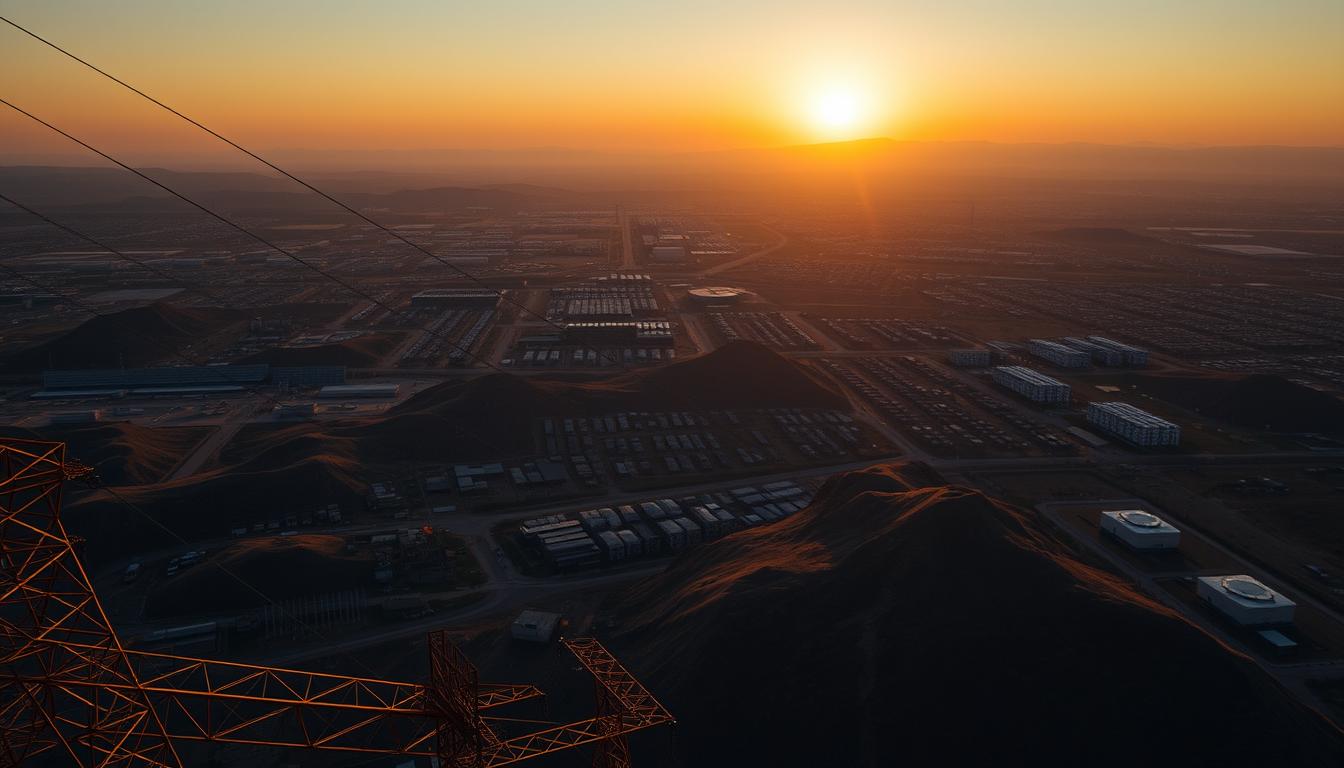
When allies warned about hitting civilian energy sites, they were pointing to a simple fact: the grid is not just wires and towers. It is the backbone of daily life, public order, and the economy. A strike that disrupts Iran’s energy distribution network would not stay limited to military targets for long.
Energy planners also watch for spillover. If the energy network in Iran is thrown off balance, the shock can move across borders through markets, shipping risk, and security choices made in a hurry. Even during pauses and diplomatic windows, the same vulnerabilities remain.
How Iran’s energy distribution network functions as a national lifeline
Iran’s energy distribution network links power plants, high-voltage transmission lines, and local substations that step down power for cities and towns. That flow supports homes, small businesses, and large industries simultaneously. Because the system is interconnected, a hit in one corridor can force operators to shed load elsewhere to prevent wider damage.
The energy network in Iran also supports state capacity in quiet ways. Government offices, fuel distribution, and basic municipal services run on dependable electricity. When that rhythm breaks, it can become harder to manage crowds, keep supplies moving, and maintain routine governance.
Immediate domestic impacts of disabling the electrical grid in Iran
If major nodes go dark, the first effect is simple: outages that spread fast and last longer than people expect. Traffic signals fail, elevators stop, and refrigeration becomes a race against time. Families and hospitals turn to generators, but fuel logistics can tighten quickly.
Factories may halt within hours, while banks and payment networks struggle to stay online. With Iran’s energy network under stress, repairs compete with basic demand for crews, spare parts, and safe access. That kind of scramble can raise public anxiety and pressure on local officials.
Cascading failures: water systems, hospitals, communications, and transport linked to the energy network in Iran
Electricity is the quiet enabler of safe water. Pumping stations, treatment plants, and wastewater systems depend on steady power and automated controls. If Iran’s energy distribution network is disabled, water pressure can drop, boil-water advisories can spread, and sanitation problems can stack up.
Hospitals can keep critical wards running, but only if backup systems hold. Mobile networks and internet services also rely on powered towers, data centers, and cooling systems. When the energy network in Iran falters, communications can become patchy, slowing emergency response and complicating travel plans.
Longer-term damage to the Iranian electricity infrastructure and recovery timelines if equipment is destroyed
The hardest part to replace is often the least visible: large transformers, switchgear, and specialized control hardware. These components are heavy, custom-built, and slow to ship, even in stable conditions. If they are destroyed, Iran’s energy distribution network can face months of rolling instability.
Crews would also have to rebuild confidence in system protection, from relays to grid software. That work requires testing, training, and a steady supply of parts. With Iran’s energy network repeatedly stressed, each restart carries the risk of new faults, prolonging recovery, and keeping daily life uncertain.
Iran’s Power Grid? Conclusion
The episode ends with a pause, not a resolution. Trump’s plan to strike Iran’s power grid faced opposition from U.S. allies. They feared it could start a bigger war.
They also worried that hitting civilian energy sites could destabilize Iran. This could have effects far beyond its borders.
Trump said the delay was for renewed diplomacy with Tehran. But many questions remain about what will happen next.
The news cycle showed a credibility gap. Trump mentioned Jared Kushner and Steve Witkoff’s involvement. Iran countered through the Mizan News Agency and through criticism by Mohammad Bagher Ghalibaf.
Analysts were skeptical. Clearview Energy Partners LLC showed a market that quickly prices risk when energy security is at risk. Even a hinted strike on Iran’s power grid is more than just a military plan.
For U.S. readers, the message is clear: pressure on Iran’s power grid can affect oil prices and U.S. markets. It also tests allied unity. Turkey, Oman, Egypt, and Pakistan are trying to prevent escalation. The electrical grid in Iran is a high-stakes lever with global costs. More details on the information battle are in this report.