ICE Agents Deployed to U.S. Airports Amid TSA Backlash
Explore why ICE Agents are being stationed at U.S. airports amid rising concerns over TSA procedures and their impact on travel security.

ICE Agents Deployed to U.S. Airports: Immigration and Customs Enforcement agents were sent to some U.S. airports. This was due to long security lines and growing frustration among travelers. TSA union leaders, though, criticized President Trump’s move, saying it’s not a good solution to the staffing problem. 300 TSA Agents quit due to Government shutdown non-payment issues.
They pointed out that a partial government shutdown hurt DHS operations. TSA officers kept showing up, even without paychecks. They said bringing in ICE Agents won’t speed up screening or fix the problem.
The dispute comes as ICE law enforcement grows its national reach. This includes greater efforts that involve multiple federal partners. Reports on Operation At Large show how quickly resources can be moved. Unions argue that airports are not the right place to address TSA staffing issues.
Union officials called the deployment an “insult” and a “waste of money.” They said it’s not the right use of law enforcement officers for tasks TSA is designed for. They also warned that confusion at busy terminals can spread quickly, making things worse for travelers.
This article explores why ICE Agents were sent, what passengers experienced at hubs like JFK and Atlanta, and the union’s critique. It also examines how immigration and customs enforcement agents operate in public spaces. This is important in crowded airport settings, including concerns about ICE law enforcement encounters that have affected U.S. citizens.
ICE Agents Deployed to U.S. Airports: Key Takeaways
- ICE Agents were deployed to certain airports as TSA lines grew and staffing stayed tight.
- TSA union leaders said the real problem was DHS staffing strain tied to the partial government shutdown.
- AFGE leaders called the move an “insult” and a “waste of money” while TSA officers worked without pay.
- Immigration and customs enforcement agents have a different mission than checkpoint screening and passenger flow.
- The article will cover what travelers saw at JFK and Atlanta and why the union says the plan won’t cut wait times.
- ICE law enforcement authority and public-facing encounters are part of the debate over airport roles and oversight.
Why ICE Agents Were Sent to Select U.S. Airports During the TSA Staffing Crunch
A partial government shutdown made airport security harder when TSA staff numbers dropped. Many TSA officers were working without pay, making it tough to keep security lines moving. This led to ICE Agents being sent to busy airports, raising questions about their role.
There has been a lot of public pushback from ICE agents detaining too many U.S citizens during their ongoing raids across the U.S., and a few fatalities.
Partial government shutdown and Department of Homeland Security staffing impacts
The shutdown hit the Department of Homeland Security hard, making staffing even more challenging. TSA call-outs increased, and some employees quit, causing longer wait times. Officials said ICE Agents at airports would follow the rules, not doing TSA jobs like screening or pat-downs.
More on the shutdown’s effects on airports was shared in coverage of the TSA staffing crunch. The debate over funding and staffing priorities continued.
Trump administration goal: easing long security lines at 14 airports
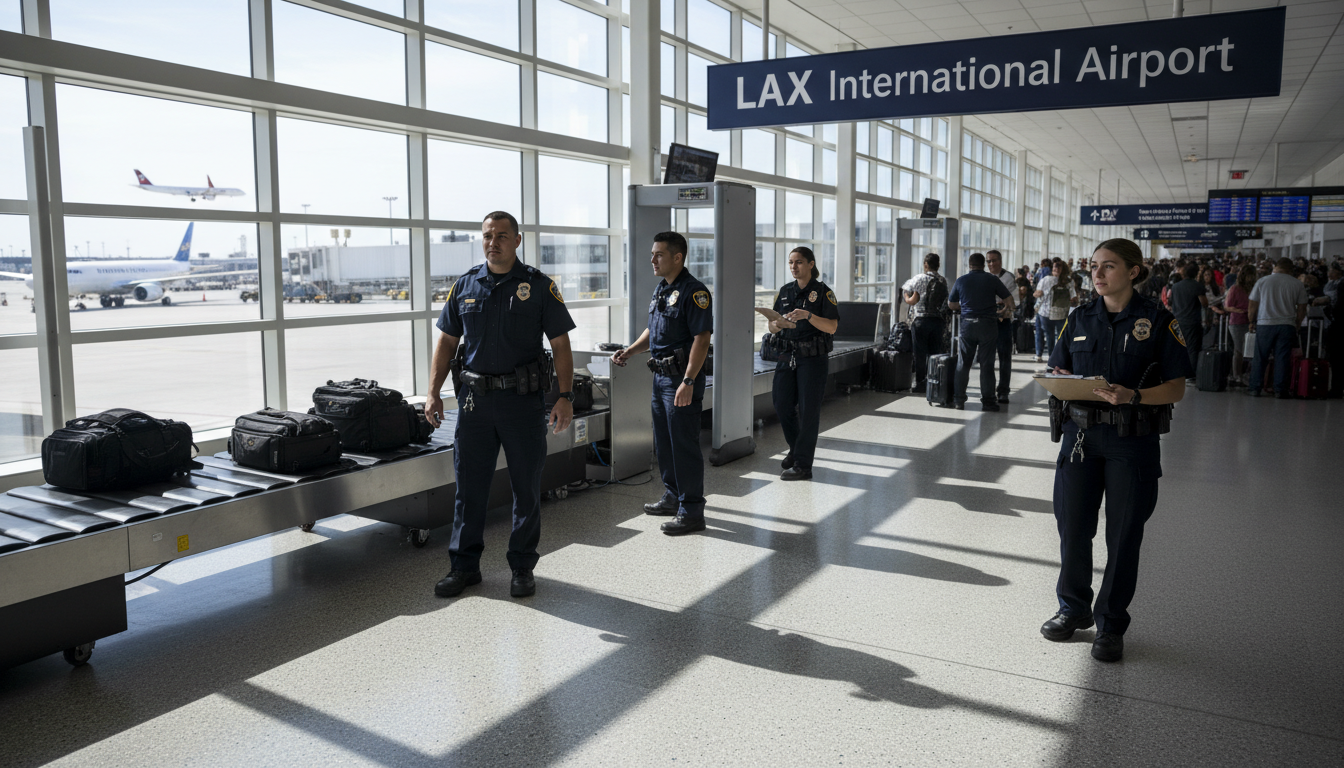
The Trump administration sent immigration and customs enforcement agents to 14 U.S. airports to help with long security lines. They aimed to tackle the biggest hubs where lines were longest. ICE Agents were to monitor passenger flow and help control crowds.
- What they were expected to do: support line management, watch entry points, and help reduce bottlenecks.
- What they were not allowed to do: X-ray screening, bag checks, or hands-on screening tasks reserved for TSA.
What travelers saw on the ground at major hubs like JFK and Atlanta
At John F. Kennedy International Airport, Hydrick Thomas of AFGE TSA Council 100 and AFGE Local 2222 said ICE Agents appeared near terminals and checkpoints. They lacked the day-to-day familiarity needed to guide travelers. Some passengers were given incorrect directions to reach Terminal 4, adding stress for people rushing to make flights.
At Hartsfield-Jackson Atlanta International Airport, AFGE Local 554 President Aaron Barker said immigration and customs enforcement agents were “monitoring lines” but not closing staffing gaps. They stood behind document-check officers or walked the queue, while airport teams handled most of the direction work.
Barker also disputed claims that the extra presence shortened Atlanta’s lines. He noted that Tuesday and Wednesday are typically nonpeak days. He said Atlanta, often described as an “entertainment hub,” tends to see heavier weekend surges, so shorter weekday waits were expected regardless of ICE agents’ duties in the terminal.
TSA Union Criticism: “Insult” and “Waste of Money,” AFGE Leaders Say
TSA union leaders say the real issue is unpaid workers and thin staffing at checkpoints. They argue that moving people around doesn’t solve the problem. It doesn’t replace the daily screening work travelers need.
AFGE virtual press conference: core arguments from TSA union leaders
In a virtual press conference, the American Federation of Government Employees’ leaders called it an insult and a waste of money. Johnny Jones, an AFGE TSA Council 100 leader, said it’s a distraction from paying TSA employees.
They also talked about the cost. They mentioned spending on travel while TSA officers missed paychecks. This fueled anger among workers.
Training and role mismatch: TSA screening and customer-service skill set vs. ICE law enforcement
Hydrick Thomas said the officers are a tactical group, not for checkpoints. He noted that TSA work needs calm customer service and quick judgment. He believes ICE agents are trained for tasks different from airport screening.
Leaders also mentioned unclear roles for ICE law enforcement at terminals. Without clear roles, it’s hard to measure oversight and results.
Certification requirements: why TSA leaders say ICE officers can’t fill screening positions
Janis Casey explained that TSA screening jobs need formal certification and yearly recertification. They have strict performance standards. She believes this stops ICE deportation officers from just stepping into screening lanes, even in a crunch.
So, union leaders say the deployment can’t fully cover vacant posts or speed up the core checkpoint process.
Operational confusion at airports: claims of limited familiarity with terminals and passenger guidance
Thomas mentioned concerns about basic airport flow and wayfinding. He said at JFK, deployed staff were not familiar with terminal layouts. This could slow lines when passengers ask for directions.
In Atlanta, Barker argued the same theme showed up in practice. ICE law enforcement staff were present but not screening. They were not easing the workload as travelers might expect. Union leaders said TSA officers were left carrying the same pressure while ICE deportation officers stayed outside the certified screening role.
ICE Agents Deployed to U.S. Airports Conclusion
The Trump administration thought adding ICE Agents at 14 airports would fix long security lines during the shutdown. They wanted to keep passengers moving as TSA staff numbers dropped. But this move highlighted a big problem: TSA workers were unpaid.
The TSA’s union, the American Federation of Government Employees, saw this as an “insult” and a “waste of money.” They said ICE Agents are trained for law enforcement, not for screening passengers. They also mentioned TSA rules, saying ICE Agents can’t do much at security lanes.
Reports from big airports like JFK and Hartsfield-Jackson Atlanta showed a limited impact. ICE Agents were mostly watching lines and entry points, not screening passengers. This raised a question: Can their presence really reduce wait times when there’s a lot of pressure on staff?
For travelers, the main point is clear. More uniforms don’t always mean more help. Until ICE Agents can do what TSA needs, or TSA staff levels improve, airports will keep using temporary fixes. These fixes might look busy, but they won’t make lines shorter.