Severe Oil Shock Shakes Up the Global Economy
A severe oil shock disrupts markets worldwide, driving up fuel costs and triggering economic concerns across industries and households in America

The world economy is facing a big challenge due to the conflict with Iran. This has caused oil prices to skyrocket. Brent crude, a key indicator for U.S. gasoline prices, recently hit $119 per barrel before settling at $113. This is the highest level seen in over a year, when inflation was high. Stocks plummet as oil reaches an all-time high since 2008, an all-time record 148.2 dollars per barrel on July 11th.
Energy experts say markets might be too hopeful about this situation. Samantha Gross from the Brookings Institution notes that traders might not fully grasp the length of this disruption. The real concern is that these impacts won’t all happen at once. Instead, they will affect different sectors over time. Soaring oil prices cause gas and diesel fuels to skyrocket.
For Americans, this oil market instability is more than just numbers. It means higher gas prices for drivers, more expensive shipping for businesses, and higher production costs for manufacturers. The economic effects are far-reaching, potentially affecting everything from food prices to broader economic stability across industries.
Key Takeaways
- Brent crude prices hit $119 per barrel last week, the highest in over a year, before settling at $113
- The Iran conflict is driving what experts call the most significant energy crisis in decades
- Energy markets may be underestimating how long the disruption will continue
- Economic impacts will unfold in waves, affecting multiple sectors over weeks and months
- American consumers face higher costs for gasoline, shipping, and manufactured goods
- Experts warn that the worst economic effects could be yet to come as the conflict continues
War With Iran Sparks an Energy Market Disruption and a Crude Oil Supply Crisis
A perfect storm of blocked shipping routes and damaged infrastructure is creating an energy market disruption unlike anything seen in recent history. The conflict has turned the Middle East’s critical energy corridors into danger zones. This has triggered supply constraints that are sending shockwaves through global markets.
What started as a regional military confrontation has rapidly evolved into a full-blown crude oil supply crisis. This crisis has far-reaching implications for consumers and economies worldwide.
The economic impacts of the Iran war extend well beyond the battlefield. Energy analysts are watching nervously as the situation unfolds. They know that every day of disruption adds pressure to an already strained global energy system.
Brent Crude Prices Surge to Multi-Year Highs
The global oil price benchmark, Brent crude, briefly topped $119 a barrel last week. This marked the highest level seen in the conflict. The surge reflects the market’s immediate reaction to supply uncertainties and geopolitical risks.
As of Monday, Brent prices had settled at approximately $113 a barrel. This represents a significant increase from pre-conflict levels. It heavily influences U.S. gasoline prices at the pump.
Energy traders describe the market conditions as extremely volatile. Price swings of several dollars per barrel within a single trading session have become common. This reflects the uncertainty surrounding how long the conflict will last and how severely it will impact global supply.
The Strait of Hormuz Becomes a Critical Chokepoint
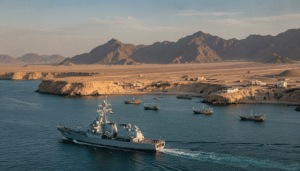
The Strait of Hormuz is at the heart of this crisis. It’s a narrow waterway that plays an outsized role in global energy security. Before February 28, approximately 20% of the world’s oil and liquefied natural gas transited through this strategic passage.
Think of the Strait of Hormuz as a vital artery in the global energy system. When that artery gets blocked, the entire system feels the strain. The waterway is only 21 miles wide at its narrowest point, making it vulnerable to disruption and easy for Iran to control.
“The Strait of Hormuz is the world’s most important oil transit chokepoint, and any prolonged closure would have catastrophic effects on global energy markets.”
Iran has effectively leveraged its geographic position to control access to this critical passage. The country’s military capabilities in the region allow it to monitor and restrict vessel movements. This turns the strait into a bargaining chip in its confrontation with the United States and its allies.
Shipping Traffic Collapses by More Than 95 Percent
The numbers tell a stunning story of disruption. Before the conflict erupted, over 100 vessels per day sailed through the Strait of Hormuz. This carried crude oil, refined petroleum products, liquefied natural gas, and other essential commodities.
Today, according to data from the International Monetary Fund, daily traffic through the strait has plummeted to fewer than five ships. That’s a staggering 95% collapse in shipping activity. The implications are profound and immediate.
This dramatic reduction means that millions of barrels of oil are effectively landlocked. They are unable to reach the refineries and markets that desperately need them. Tankers are avoiding the route entirely, either waiting at safe distances or taking much longer alternative (and much longer) shipping routes around Africa.
The economic consequences ripple outward in waves. Oil producers in Saudi Arabia, the United Arab Emirates, Kuwait, Iraq, and other Gulf states find their product stranded. Countries that depend on these imports face shortages. The entire global supply-demand balance shifts, pushing prices higher and creating uncertainty in energy markets.
Infrastructure Damage Extends Beyond Shipping Lanes
The problems don’t stop at blocked waterways. Military exchanges between various parties in the region have inflicted damage on critical energy infrastructure throughout the Middle East. Key oil production facilities and liquefied natural gas plants have been caught in the crossfire of tit-for-tat strikes between opposing forces.
These aren’t minor disruptions that can be quickly repaired. Modern energy facilities are sophisticated operations with complex equipment, safety systems, and specialized components. When missiles or drones strike these installations, the damage can take months to assess and repair, even in an active conflict zone where work crews face ongoing security risks.
Liquefied natural gas facilities have been affected. These plants super-cool natural gas into liquid form for transport by specialized tankers. They represent billions of dollars in investment and provide essential energy for heating homes and powering industrial processes in importing countries.
Understanding how a war with Iran would help explain why energy infrastructure has become a primary target. Both sides recognize that controlling or disrupting energy flows provides strategic leverage in the conflict.
The combination of these factors creates a compound crisis. Blocked shipping routes prevent existing supplies from reaching markets. Damaged production facilities reduce the total amount of oil and gas available. Together, they form the perfect conditions for a sustained crude oil supply crisis that shows no signs of quick resolution.
Why this severe oil shock Is Fueling Oil Price Volatility and Oil Market Instability
This energy crisis is not just about the initial shock. It’s about the waves of oil price volatility and oil market instability that will follow. Experts warn of months of trouble, not just higher gas prices.
The crisis is like a series of aftershocks. It will continue to shake financial markets and supply chains. The slow impact might make things even worse.
Shortages Build Over Time
The disruption is building up slowly. As the world uses up its oil and gas, shortages and price hikes will spread. They will hit different sectors at different times.
This slow build-up creates big challenges. Companies can’t adjust to a new normal because things keep changing. Fuel shortages might hit in one month, while another month might see transportation supply problems.
The timeline is key. Even if the conflict ends soon, repairing damaged energy infrastructure will take months. Analysts say it will take a lot of time to get things back to normal.
Markets Might Be Too Optimistic
Analysts like Samantha Gross from the Brookings Institution are worried. They think markets are underestimating the war’s impact. Everyone expects a quick end and a return to normal.
Gross doesn’t agree. Current prices don’t show the full extent of shortages a long conflict will cause. Markets are betting on a quick fix, but that’s unlikely.
This underpricing adds risk. When markets correct their views, the change could be sharp and painful. This will add further instability to the oil market on top of supply problems.
The Three-to-Four-Month Danger Zone
Patrick Pouyanné, CEO of Total, warned at a global energy conference in Houston:
“It’s clear to me that if this crisis lasts more than three or four months, it becomes a systemic problem for the world.”
This warning should grab everyone’s attention. The longer the Strait of Hormuz is closed, the bigger the energy shortages. These shortages threaten the world’s economic stability.
We’re not just talking about higher prices. A systemic problem means the whole global economy’s stability is at risk. Supply chains break down, inflation goes up, and recession risks grow.
Worst-Case Scenarios Point to $200 Oil
Analysts think oil could hit $200 a barrel if the U.S. escalates and damages Iranian export facilities. That’s almost double today’s prices.
This price spike would hit every part of the economy hard. Airlines, agriculture, manufacturing, and retail would face huge cost increases. This is serious planning based on past oil shocks.
Andy Lipow, president of Lipow Oil Associates consultancy, says even if the conflict ends tomorrow, the supply disruption will last a while. The damage to energy infrastructure needs time to fix.
Lipow points out a key fact: even after repairs, the psychological and financial damage will last. Companies will think twice about doing business in such a risky area. They’ll demand higher returns, leading to higher energy prices.
This means we might see a permanently higher price floor for oil. The oil price volatility we’re seeing now could become the new normal.
Economic Impact of Oil Shock on the U.S. and the Global Economy
The energy crisis has hit American families hard. It’s affecting everything from gas prices to grocery bills. This is causing financial stress for millions.
Gas prices have hit over $5.99 per gallon, on average, the highest in over a year. This means a lot of money is being spent on fuel every day.
Patrick De Haan, a gas expert, says drivers have spent an additional $10 billion on gas. This number keeps going up.
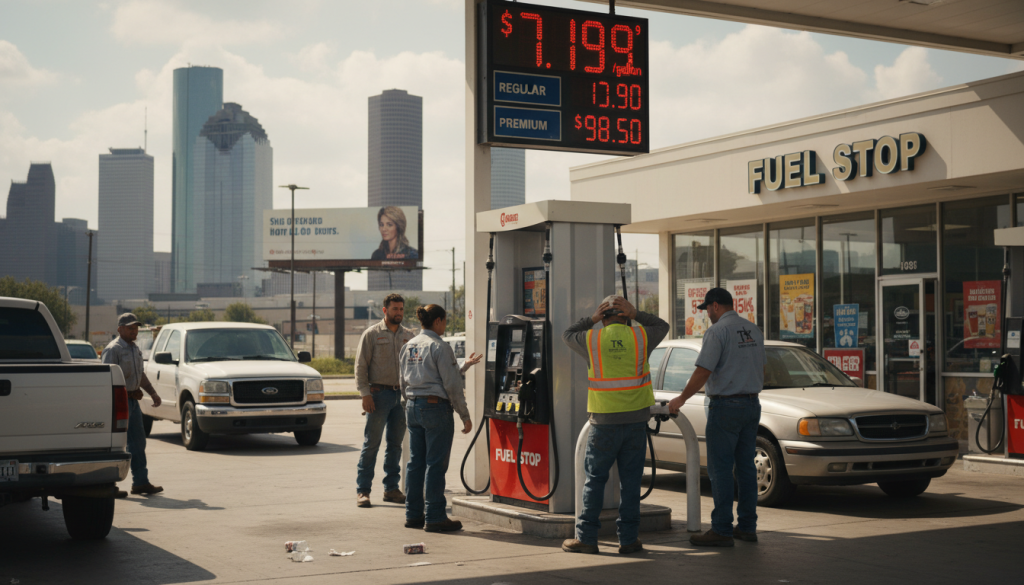
This means families have about $35 less to spend each month. That’s money for meals, savings, or paying off debt. Now, it’s just for gas.
But the problem goes beyond gas stations. Higher oil prices affect the whole economy. They raise prices on everything we buy.
When gas costs more, so do transportation costs. This adds up in the supply chain. Trucking, shipping, and stocking shelves all cost more. And we end up paying more for things we need.
Diesel prices are near a record high set in June 2022. Diesel powers trucks that deliver everything. So, these high costs affect delivery networks.
Manufacturing and packaging costs are also rising. Oil-based materials like plastics cost more. Energy-intensive processes cost more to run. This squeezes businesses already facing tough times.
Rising oil prices are making things worse, says Moody’s. Consumer demand is weak, and businesses are struggling. They must decide whether to absorb costs or raise prices.
The U.S. has some benefits that help. Domestic energy production, such as shale production, provides a cushion. America produces a lot of its own oil and gas. This helps protect it from global supply shocks.
This domestic production means the U.S. is less affected than other countries. The American economy is less energy-dependent. Services account for a larger share of GDP than heavy manufacturing.
S&P Global says it’s a “growth scare, not a recession.” This is some good news. But it means slower hiring and cautious spending. The economy is worried.
No country is completely safe from global economic problems. When energy prices rise in Europe or Asia, it affects American exports. Global trade is too connected for isolation.
“The current macro environment is a toxic brew of many of the same vulnerabilities that haunted the global economy in the lead-up to past recessions.”
Inflation is getting worse as energy costs rise. Analysts think U.S. inflation will be around 3% annually. This is higher than the Federal Reserve’s goal.
This extra percentage point is a big deal for families. For a family with $5,000 in monthly expenses, it’s an extra $150 per month or $1,800 per year. That’s a lot of money.
Think about what $1,800 means for families:
- A family vacation or holiday spending budget
- Several months of car payments or insurance premiums
- Emergency savings or retirement contributions
- Back-to-school expenses for multiple children
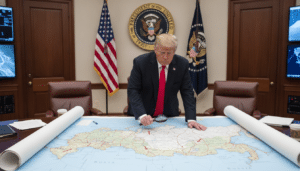
President Trump has tried to reassure markets. But investors are skeptical. They wonder whether presidential words can affect prices when supply and demand are tight.
The administration sends mixed signals. Sometimes they talk about diplomatic deals. Other times, they threaten Iran. Markets hate uncertainty, and these messages provide plenty of it.
The economic impact of the oil shock is clear. While America has some advantages, no one is completely safe. The longer this crisis lasts, the more it hurts American families trying to keep up with their budgets.
Conclusion
The severe oil shock of 2025 marks a major shift in energy markets. Without a sudden change, energy prices will likely stay high. The damage to oil facilities and shipping will take months to fix, even if the conflict ends.
American families will face tough budget choices. The extra $1,800 a year will force hard decisions on daily spending. Businesses will also struggle to decide whether to raise prices or absorb costs.
This oil shock is hard because disruptions keep getting worse. Shortages will grow over the weeks as supplies run low. Analysts say the crisis could last a long time, leading to more price swings.
The risk of Middle Eastern energy will stay high even after repairs. There’s no promise this won’t happen again. This means energy security will continue to affect prices and policies for a long time. Americans hope for diplomatic solutions to avoid the worst.