U.S. Service Members Starve Due to Federal Package Delays
U.S. Service Members Starve as federal package delays impact access to essential food supplies, highlighting the ongoing military hunger crisis.

U.S. Service Members Starve Due to Federal Package Delays
U.S. Service Members Starve Due to Federal Package Delays: Families with loved ones in the Middle East say U.S. service members often go hungry. They face thin meals and long waits for fresh food. A federal mail halt has also left care packages stranded. U.S Congress Reinstates Military Draft Program, The Selective Service.
This hunger crisis is clear from photos showing small portions and empty trays. Families confirm these images match their loved ones’ stories of rationing and low morale. Is Global War Looming? Exploring the Nuclear Threat.
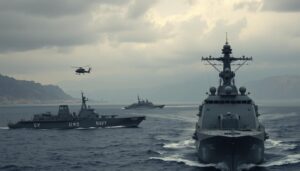
The USS Tripoli has been at sea for over a month. It carries 3,500 sailors and Marines enforcing a U.S. blockade of Iranian ports. This intense operation is part of a larger surge in the region.
Other ships, like the USS Abraham Lincoln and USS Gerald Ford, are also involved. The USS George H.W. Bush is on its way. Families see food shortages as more than just a minor issue.
Navy leaders and Pentagon chief Pete Hegseth deny food shortages. Yet, families argue that feeding our military is more than just paperwork. Mail delays have cut off essential items, adding to the stress. The funding fight also worries families, as seen in the military pay debates during the shutdown.
U.S. Service Members Starve Due to Federal Package Delays
Key Takeaways
- Families say U.S. service members starve due to small portions and limited fresh food during deployment.
- Photos from inside ships are fueling concern and sharpening the military hunger crisis.
- The USS Tripoli has been at sea for over a month, operating under U.S. Central Command’s mission in the region.
- Carrier deployments include the USS Abraham Lincoln and USS Gerald Ford, with the USS George H.W. Bush headed toward the area.
- Mail suspensions have stranded care packages that families say help prevent food insecurity among troops.
- Navy leadership and Pete Hegseth dispute shortage claims, while families keep pressing for feeding our military to match conditions at sea.
Families Raise Alarm Over Sparse Meals Aboard Deployed U.S. Naval Vessels
Viral meal photos have sparked fear in some families. They worry that U.S. service members might starve while deployed, even on ships meant to stay supplied for long missions. The issue goes beyond just calories, touching on trust, morale, and basic care at sea.
Food insecurity among troops is hard to track from home, as messages are brief when ships have internet access. Yet families say the pattern in these updates is consistent enough to warrant concern about a broader military hunger crisis.
Photos from the USS Tripoli show a mostly empty lunch tray
Dan F., a parent of a Marine on the USS Tripoli, was shaken by a photo his daughter sent. The tray was mostly empty, with a small scoop of shredded meat and a single folded tortilla.
He asked that only his first name be used, fearing retaliation against his daughter. He sees the photo as more than a bad day in the galley. It shows how personal support for hungry soldiers becomes for families watching from afar.
Another image from the USS Abraham Lincoln depicts a modest dinner
A family shared a photo from the USS Abraham Lincoln showing a modest dinner. The meal included boiled carrots, a dry meat patty, and processed meat.
The Navy responded to claims of shortages, saying menu variation and planning are routine. Yet, families who saw the pictures up close question if these snapshots reflect daily life for crews.
Service members report rationing and limited fresh food during deployment
Dan F. said his daughter mentioned rationing and the lack of fresh produce. She also talked about a broken coffee machine and low hygiene items, small issues that feel huge at sea.
Other relatives share similar worries. A Texas mother, who wishes to remain anonymous, said her Navy sailor son on the Tripoli is hungry. The family spent over $2,000 on care packages that haven’t arrived yet.
- In messages shared with USA TODAY, the sailor described eating when they can and dividing food evenly if someone gets more than others.
- He warned that supplies were expected to run “really low,” with no port visits until the mission ended.
- He wrote that morale was headed to “an all-time low.”
In Shepherdstown, West Virginia, pastor Karen Erskine-Valentine heard from a community member whose son was on the USS Abraham Lincoln. The food was “tasteless,” “not nearly enough,” and sailors were “hungry all the time.” For families, each update, each meal photo, and each push for support for hungry soldiers adds to the crisis.
Federal Mail Suspensions Leave Care Packages Stranded Across the Middle East
Care packages, once a comfort, now face a roadblock in the Middle East. For many, these boxes are more than treats. They are a vital form of military food assistance, filling gaps when regular food is scarce. When delivery stops, worry grows quickly.
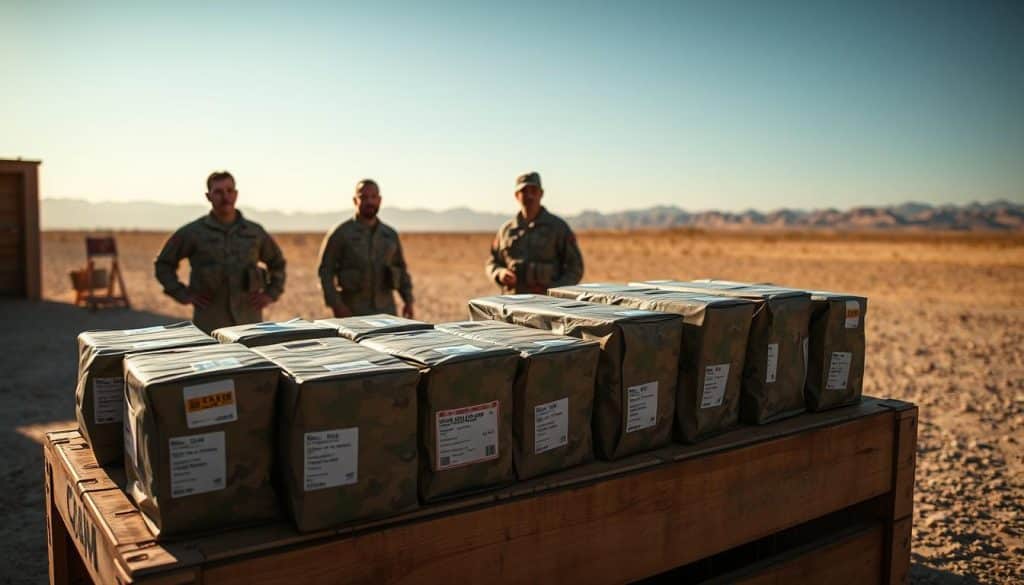
USPS and the Military Postal Service Agency suspended delivery to 27 military ZIP codes
The U.S. Postal Service and the Military Postal Service Agency stopped delivery to 27 military ZIP codes. This happened at the start of April, due to airspace closures and logistics issues. Maj. Travis Shaw, an Army spokesperson, said the pause will last until conditions improve.
USPS spokesperson David Coleman advises families to check USPS updates for the latest. This uncertainty makes planning what to send and when even harder.
Packages already in transit are being held, not returned
Mail already on its way when the pause started is being kept safe. Shaw said it’s held in secure facilities for later delivery. Coleman confirmed that no mail is sent back during a suspension.
Tracking updates can add to the stress. Dan’s two boxes, sent nearly a month ago, have yet to arrive. Karen Erskine-Valentine’s six packages reached Tokyo on April 14 but haven’t arrived yet.
Why these delays matter for support for hungry soldiers
Care packages are a practical support for hungry soldiers during long deployments. They include shelf-stable snacks, toiletries, and small items to boost morale. When these packages are delayed, families feel a loss of support.
Mail delays are common in wartime, but the scale can surprise families. Smithsonian National Postal Museum curator Lynn Heidelbaugh notes that military mail is complex, with disruptions common. USPS historian Steve Kochersperger says interruptions have occurred in every American conflict, including major backlogs after D-Day.
Even in calm times, shipping to the Middle East takes up to 24 days. The Postal Service moves huge volumes each year. In a surge, getting small items on time is critical, as families worry about stretched meals.
U.S. Service Members Starve as Communities Rush Aid for Starving Soldiers
As deployment tempo rises and supply chains tighten, many families say the fastest help comes from home. They trade tips in group chats, watch tracking updates, and build boxes meant to fill gaps between ship galleys, base stores, and delayed deliveries. For some, feeding our military has become a weekly routine rather than a holiday gesture.
What families are packing to tackle soldier hunger and boost morale
Relatives describe a mix of comfort food, practical hygiene items, and small distractions that break up long watches. Dan said his family packed homemade fudge, Jolly Ranchers, crossword puzzle books, playing cards, toothpaste, Girl Scout cookies, and fresh socks.
After his daughter reported hygiene shortages, he added shampoo and conditioner, deodorant, toothpaste, and tampons. He said they filled the remaining space with candy and snacks, then sent a second box with Emergen-C vitamin C packets and clean socks when she felt a sore throat coming on. The goal, families say, is to tackle soldier hunger while keeping morale steady.
Dawn Penrod, treasurer of an American Legion Auxiliary chapter in Edgewater, Maryland, assembled a “grab bag” for her nephew in Bahrain. She included Kind bars, candy, homemade fudge, Girl Scout cookies, puzzle books, pencils, pens, decks of cards, and other games as hunger relief for service members, which also feels personal.
- Snacks that hold up in heat, like Kind bars and hard candy
- Homemade treats, including fudge and Girl Scout cookies
- Small-time fillers, such as puzzle books, cards, and pens
- Basics like socks, toothpaste, deodorant, and shampoo
Costs and logistics: sending support during a deployment surge
Families also describe the cost as a second burden. A Texas mother said her family has spent at least $2,000 on care packages for her sailor son aboard the USS Tripoli, but none have been delivered. Others say postage and the pace of shipping quickly add up, even before buying food and toiletries.
Karen Erskine-Valentine said shipping alone costs at least $540 for the boxes she sent. After she announced a need for “love and nourishment,” she said donations poured in, and within two days she had 18 boxes ready; she later sent four more on April 15, bringing the total to 22. For many donors, this kind of aid for starving soldiers feels urgent, but it depends on routes staying open.
In Monson, Massachusetts, Karen Turgeon organized an extra Monson Military Care Package Drive for four service members deployed after the war broke out. None of the packages has arrived, so the effort shifted to encouraging families at home and to envelopes of items to mail later, when service resumes. Penrod said a postal worker told her she could not send the package to the listed military address, and she wasn’t able to complete the customs form, leaving it at home, “waiting.”
American Legion Auxiliary Post 226 bought snacks for care packages as part of feeding our military, but one intended for a service member in Bahrain couldn’t be sent. Organizers say each snag changes what they pack next time, from shelf-stable calories to items that can be stored and mailed later.
Military and Pentagon responses to hunger claims
Some relatives argue that mail delays and thin meals don’t match the image of a well-supported force. Dan said, “We have the strongest military in the world. You shouldn’t be running out of food, and you shouldn’t be able to get mail on the ship,” adding that feeding troops has historically been a U.S. advantage. Families pushing for tackling soldier hunger say they want clarity, not blame.
Pentagon chief Pete Hegseth disputed food-shortage claims, posting on X that his team confirmed logistics statistics for the USS Abraham Lincoln and USS Tripoli and that “Both have 30+ days of Class I supplies (food) on board.” He said U.S. Central Command (NavCent) monitors this daily for every ship and that sailors “deserve — and receive — the best.” The Navy also denied reports of food problems, even as supporters continue hunger relief for service members through whatever channels are open.
Operational strain remains part of the backdrop. The USS Gerald Ford set a post–Cold War record for the longest aircraft carrier deployment at 295 days as of April 15, and it pulled back to Naval Support Activity Souda Bay in Crete for maintenance March 23 after a laundry fire and amid plumbing problems, according to military statements. Families watching these updates say the details shape what they send and how they plan the next round of aid for starving soldiers.
U.S. Service Members Starve Due to Federal Package Delays
Conclusion
The debate is fierce. Families share photos and messages that show U.S. service members sometimes go hungry. They point to rationing and low morale during long deployments. On the other side, the Pentagon and Navy say ships have enough food for 30 days or more.
This disagreement is at the core of the military hunger crisis. It leaves families searching for truth and answers.
The situation has worsened because mail to 27 military ZIP codes in the Middle East has stopped. There’s no clear date for when it will start again. Care packages are stuck, not returned, and their fate depends on several factors.
For families, this means they can’t send direct support to hungry soldiers when it’s most needed.
Despite this, families have been sending care packages with snacks, hygiene items, and morale boosters. These packages are meant to help stretch meals and improve spirits. They’ve spent money and time on these efforts.
Updates show packages reaching places like Tokyo, but then waiting for days or weeks. This leaves service members and families feeling stuck and worried.
Wider federal issues add to the worry. Delays in benefits, furloughs, and stalled projects are affecting local spending. This is detailed in coverage of shutdown fallout.
When everyday services falter, trust drops quickly. This is true for families already concerned about food and mail issues. Until mail resumes and food conditions are confirmed, the crisis will continue. Families and communities will keep trying to support hungry soldiers, even as they worry about the unseen hunger of U.S. service members.