Jobs Being Replaced By AI: Careers at Risk from Automation (2026 Guide)
Explore careers at risk from automation as AI continues to evolve. Discover which jobs might be replaced and how to adapt for the future workforce.

Jobs Being Replaced by AI: In 2026, AI will become a big part of the U.S. workforce. It changes how we hire, assign work, and decide what tasks need a person. Many workers wonder when AI will show up on the job. Trump Wants Big Tech to Pay More For AI.
A report from NewsNation, shared by The Hill, by Damita Menezes caught attention. Mark Cuban warned that five job types are at risk due to AI. He says these are routine, entry-level jobs that follow set steps. Cuban believes this change is already happening, driven by simple math.
Employers are now comparing AI’s costs and outputs to those of human labor. AI can draft emails, sort tickets, and summarize documents quickly. When AI is good enough, companies might hire less, slow down hiring, or focus on more important tasks. Why ChatGPT Stands Out in the Rise of AI Tools.
Cuban doesn’t predict a sudden job-market collapse. He says disruption starts quietly. Fewer entry-level jobs mean fewer chances for new graduates and career changers, even if a company seems fully staffed—the Economic and Environmental Toll of AI.
Workers need to understand how AI impacts their jobs. They should learn to use AI to enhance their work, not avoid it. Those who stay curious about AI tend to have more career options as the workplace evolves.
Jobs Being Replaced By AI: Key Takeaways
- AI adoption is accelerating in U.S. workplaces in 2026, mainly for routine tasks.
- A NewsNation report published via The Hill quoted Mark Cuban warning that five job categories face rising automation risk.
- Entry-level roles are often exposed because their tasks are structured and repeatable.
- Employers are weighing the cost and productivity gains from AI applications against the value of human labor.
- The near-term risk is disruption, fewer openings, and slower hiring, not instant mass unemployment.
- Workers can protect their careers by learning how to use AI responsibly and improving results with it.
Why AI Automation Is Accelerating in the U.S. Workforce in 2026
In the U.S., AI tools are becoming a regular part of work. Machine learning is now in everyday software, making automation faster. Deep learning boosts accuracy on tasks such as speech and image recognition, making automation seem ready to many managers.
Big platforms like TikTok are also showing AI’s impact. With 170 million U.S. users, TikTok uses AI to suggest content. For more on the policy and business side, check this market update.
Mark Cuban’s warning: routine, entry-level roles are increasingly exposed as adoption speeds up
Mark Cuban has warned about the impact on routine and entry-level jobs. Repetitive tasks are easier for AI to handle. As AI tools become easier to use, more companies are adopting them.
What’s driving the shift: companies comparing the cost and productivity of AI systems vs. human labor
Cuban points out the economic benefits of AI. Companies see how AI can handle tasks all day, scale quickly, and improve with feedback. This changes how they think about staffing for repetitive work.
- Productivity: faster handling of high-volume tasks with consistent rules
- Cost: fewer marginal costs as usage expands across departments
- Speed: quicker rollouts through off-the-shelf tools built on neural networks
“Those who are great at AI and everybody else”: why Cuban says the transition period is where risk spikes
There’s only two types of companies in this world. Those who are great at AI and everybody else.
The competitive nature of AI adoption explains why it can happen in waves. When one company shows success, others follow to stay competitive. Cuban says the riskiest time is during the transition, when workflows are changed, and results are measured.
What Cuban is (and isn’t) predicting: disruption and slower hiring, not an immediate total employment collapse
Cuban doesn’t predict a sudden job loss across the economy. He compares this to the rise of personal computers, where some jobs shrink, and new ones emerge. In the short term, we might see fewer entry-level jobs, internal changes, and longer hiring times as managers test AI systems.
Whether you are an employee, you’re gonna have to understand how it impacts your job, or how you can use it to be better at your job.
AI Jobs Lost
Mark Cuban says automation is taking over work that is structured, repetitive, and rules-based. Tools that use natural language processing and computer vision can work quickly. They sort, label, and verify information at scale. This often means fewer job openings and slower hiring, not an immediate wave of layoffs.
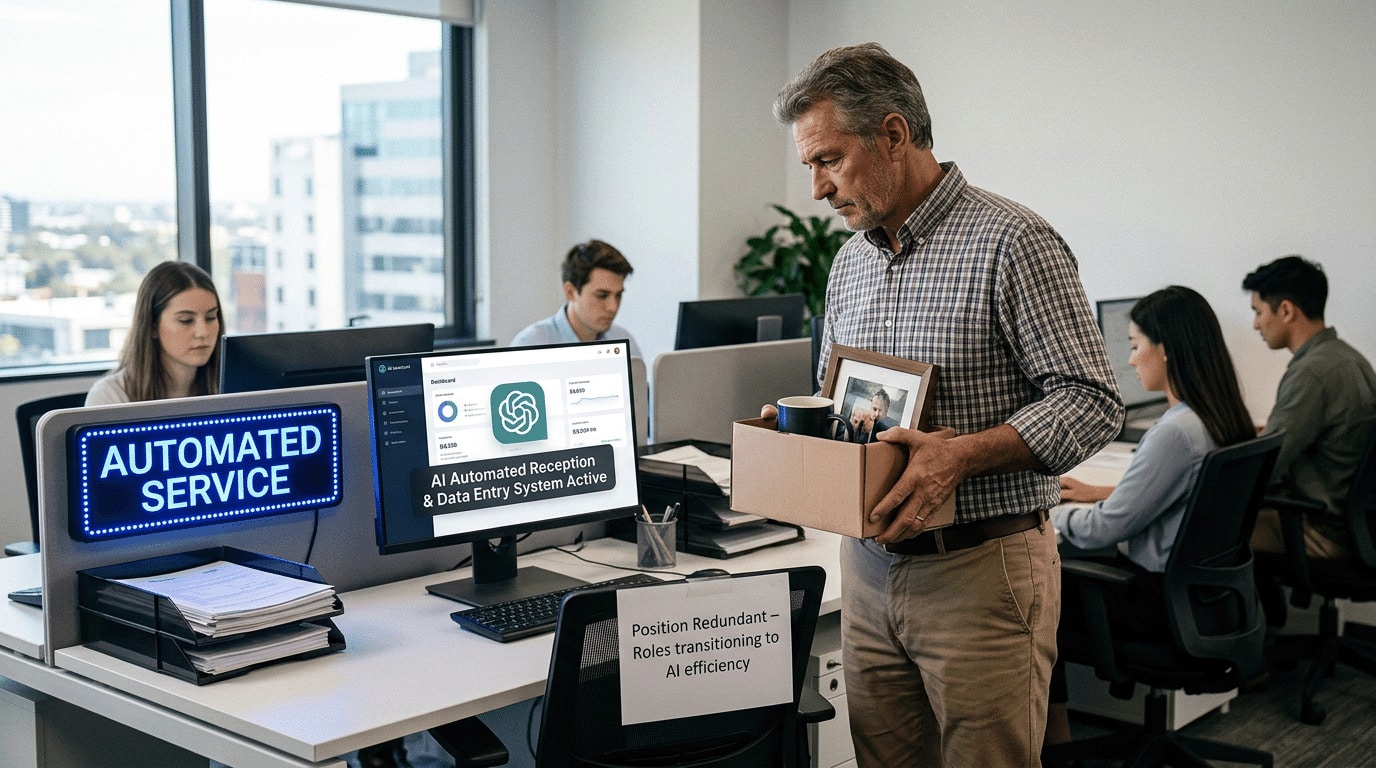
Entry-level white-collar roles: data entry, bookkeeping, and other structured “binary” tasks moving to automation
Cuban points out that entry-level office jobs are at risk. These jobs include data entry and basic bookkeeping. Automation can complete these tasks faster because it follows set rules.
Tools like natural language processing and computer vision help with these tasks. They can read forms and emails, and capture details from scans and IDs.
This shift means teams might have fewer junior hires. Employers may need people for exceptions, audits, and customer follow-ups. But the amount of routine work decreases.
Software development: AI-assisted coding is reshaping routine programming and raising the bar for entry-level access
Cuban also talks about software work, focusing on the repetitive parts of coding. AI tools can generate code, suggest fixes, and speed up testing. This makes simple tasks less valuable.
For new graduates, the bar for entry-level jobs is higher. They need to review output, spot edge cases, and explain tradeoffs. This requires skills that go beyond basic coding.
Customer service: chatbots and voice systems are taking basic inquiries, leaving more complex and sensitive cases for people
In customer support, chatbots and voice systems handle more questions. These systems get better at understanding intent with natural language processing. Computer vision helps with tasks like checking damaged packages.
But human agents are needed for sensitive issues. They handle billing problems, medical concerns, and angry customers. These situations require empathy and judgment.
Research and data analysis: machine learning tools summarizing datasets, generating reports, and surfacing trends faster
Cuban warns analysts about machine learning tools. These tools can summarize datasets, draft reports, and quickly identify trends. They work best with standardized data.
Teams rely on these tools for routine tasks. People focus on guiding the tools and checking the outputs. They interpret results, question assumptions, and connect findings to the business context.
Beyond these areas, Cuban also mentions routine finance and legal tasks. As artificial intelligence becomes more common, experienced professionals are in demand. Entry-level jobs may be fewer where the work is most repeatable.
What Skills and Roles Stay Valuable as Artificial Intelligence Evolves
As AI spreads across U.S. workplaces, the safest work often looks less like pushing buttons and more like making calls. Mark Cuban has framed it as a people-first edge: humans grasp context, weigh tradeoffs, and spot second-order effects that tools can miss.
Artificial intelligence can process mountains of text and numbers fast. Yet it can lack real-world awareness, drift in consistency, and output results that sound right but fail basic checks.
Human advantage, Cuban emphasizes: context, judgment, and the ability to anticipate real-world consequences.
Cuban’s counterweight to the risk story is simple: good judgment stays hard to automate. They can ask, “What happens next?” and “Who gets hurt if this is wrong?”
“The biggest mistake is thinking the computer is doing the thinking for you.”
In practice, that means AI applications work best when a person sets the goal, frames the constraints, and checks whether an answer fits the situation.
How work changes instead of disappearing: interpreting results, guiding tools, and validating outputs when AI is
Even when a job title stays the same, the day-to-day work shifts. Teams spend more time interpreting AI outputs, guiding prompts and workflows, and validating results before they reach customers or leaders.
- Verification: cross-checking sources, numbers, and edge cases
- Calibration: tuning inputs so AI applications match policy, brand, or risk limits
- Escalation: knowing when a human must step in for nuance or accountability
That same logic shows up in public service modernization, where agencies use automation to speed intake and triage while keeping people in the loop for judgment-heavy calls, as described in federal efficiency efforts.
New expectations inside roles: system design, problem-solving, and oversight as routine tasks get automated
As routine tasks get absorbed by artificial intelligence, the bar rises in technical and professional roles. Routine coding, templated reports, and basic ticket handling matter less than system design, problem-solving, and oversight.
- Define requirements in plain language and testable terms
- Map data flows and failure points, then add safeguards
- Monitor outputs for drift, bias, and security risks
Ethics and data safety become day-one skills, not side projects, because AI systems are only as trustworthy as the rules and data around them.
Where opportunity may grow: smaller companies where AI skills can have a more visible impact than in large enterprises
Cuban has also pushed job seekers to look at smaller companies. In many cases, a person who can deploy AI applications, document the process, and train coworkers can show impact faster than in large organizations with slower change cycles.
Workers who use AI to deepen understanding—rather than outsourcing thinking—tend to stay competitive as artificial intelligence continues to evolve across the labor market.
Jobs Being Replaced by AI: Conclusion
Mark Cuban warns that AI is changing how we hire in the U.S. It’s starting with simple, repetitive jobs. AI tools are now doing tasks that used to be done by new workers.
He doesn’t say every job will vanish right away. But, companies are weighing AI’s benefits against the cost of hiring. This can lead to slower hiring and fewer jobs. The 2025 economy will see job losses, affecting new graduates and managers, according to a job market analysis.
For job seekers, Cuban offers advice: learn about AI in your role and use it wisely. But don’t rely solely on AI. It can make mistakes and miss important details. Human insight and careful checks are key when results count.
He compares this change to the rise of personal computers. It’s disruptive at first, but it opens up new opportunities. Those who master AI can excel in their careers. The gap between AI experts and those who avoid it is growing.