Trump Imposes 10% Global Tariff Despite the Supreme Court
Discover how the imposition of a 10% global tariff by the administration is shaking up international trade and economic policies.
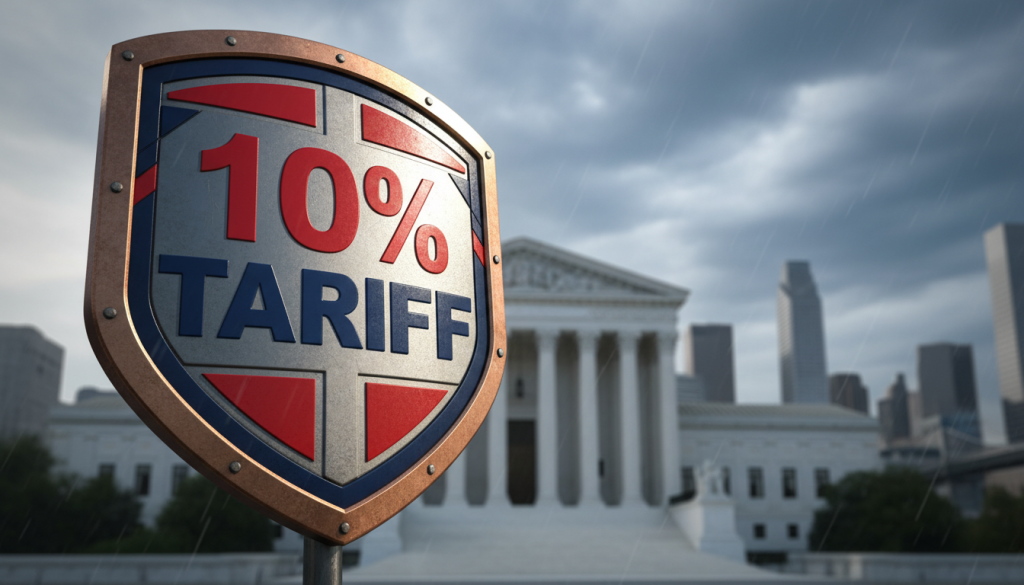
President Donald Trump is moving forward with a 10% global tariff, even after the Supreme Court blocked his plan. This move keeps tariffs at the heart of U.S. economic policy. Businesses are now watching how quickly the White House can adjust tariff rates.
The Court’s ruling forced a quick change in Trump’s strategy. This change is already affecting import costs, supply chains, and trade talks, as reported by the Supreme Court’s tariff ruling.
In his first public response, Trump called the justices a “disgrace to our nation.” Yet, he vowed to keep pushing for tariffs through other means. He aims to keep pressure on trade partners and maintain current tariff rates.
The tariff landscape is complex. Some tech goods now face a 0% tariff, easing concerns for major tech companies. This is detailed in coverage of the tech tariff.
How prices and availability will change is the near-term question. Warnings of August supply disruptions accompany the 10% global tariff plan. The August 1 tariff deadline is now a key date for retailers, importers, and consumers.
10% Global Tariff Key Takeaways
- Trump is pursuing a 10% global tariff despite the Supreme Court’s rejection of IEEPA-based tariffs.
- The ruling forced the White House to pivot quickly to other legal tools to keep global trade tariffs moving.
- Trump publicly criticized the Court’s majority and vowed to use alternative methods to reach trade goals.
- Some tech goods are exempt from tax at 0%, which may help stabilize prices for key devices and components.
- Businesses are reassessing international tariff rates, import costs, and supply-chain plans in real time.
- Upcoming deadlines, including August 1, are raising concerns about price jumps and possible stockouts.
Supreme Court ruling upends Trump’s second-term tariff agenda
The Supreme Court made a big change in Washington’s trade debate last night. For many, it also changed how they think about prices. Now, any talk about trade tariffs must remember: emergency powers have limits.
This decision came at a tense time for global economic policies. Trading partners were looking for stability, not just words. The ruling added more uncertainty to already tense talks.
Decision details: 6-3 ruling that IEEPA does not authorize the President to impose tariffs
The Court ruled 6-3 that the International Emergency Economic Powers Act doesn’t let the president impose tariffs. Chief Justice John Roberts wrote that the Constitution gives Congress control over taxes, including tariffs.
The opinion said IEEPA never mentions tariffs. It also noted that no president had used it for tariffs before. Reporting on global economic policies highlighted Congress’s role in revenue measures.
- Majority: IEEPA cannot be used to create broad import taxes.
- Dissenters included Justices Samuel Alito, Clarence Thomas, and Brett Kavanaugh.
- The Court did not settle whether tariff payments must be refunded.
What was struck down: “Liberation Day” blanket tariffs announced last year under the 1977 International Emergency
The ruling struck down the wide “Liberation Day” tariffs from last year. These levies hit many partners at once, with rates from 10% to 50% in some cases.
Blanket tariffs change supply chains quickly. For companies, tariff impacts on the economy show up in many ways. For households, it means higher bills for items that come from far away.
More detail on which actions were tied to IEEPA was summarized in the trade tariff analysis coverage.
Timing and signals: ruling comes just over one year into the second term, after skeptical questioning during November
The decision came just over a year into Trump’s second term. It followed skeptical questioning during oral arguments in November. It also backed up earlier rulings from the U.S. Court of International Trade.
Legal analysts said the core question was simple: Can “emergency” regulation turn into revenue-raising tariffs without Congress? This debate has been closely followed in discussions of global economic policies. It shows the high stakes for future presidents and the limits of delegated power, as noted in the impact of tariffs on the economy.
Immediate impact: a large section of tariffs appears set to halt, reshaping the U.S. trade landscape and global trade
With IEEPA-based measures blocked, a big part of the tariff program is set to stop quickly. This change can affect orders already on the water, customs paperwork, and supplier terms. In trade tariffs analysis, the next question is how fast companies can adjust to tariff changes.
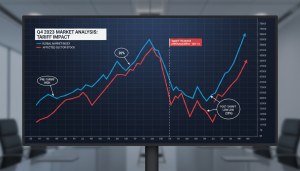
Markets reacted fast. U.S. stocks rose after the ruling, with the Nasdaq Composite leading gains, and tariff-exposed names bouncing. Past episodes show how quickly tariff headlines can cause market volatility, including in global economic policies coverage of tariff-driven market stress.
The refund issue also surfaced right away. The Court did not order repayments, but importers and trade groups are already considering what could happen to the duties collected so far. Justice Brett Kavanaugh warned in dissent that refunds could become a “mess” if costs were passed along to consumers.
Trump’s 10% global tariff plan and the legal path forward
After the Supreme Court narrowed one route to new duties, the White House shifted fast. The move reframed trade negotiations and put fresh focus on how global trade tariffs can be set, paused, or replaced.
For businesses, the timing matters. Even a short-term change can alter pricing, sourcing, and contract terms tied to import-export tariffs.

New authority cited: Section 122 of the Trade Act of 1974 allows up to 15% tariffs for up to 150 days to address trade
Trump pointed to Section 122 of the Trade Act of 1974, a tool designed to address trade deficits. It allows tariffs of up to 15% and limits them to 150 days, which sets a clear clock on any broad action.
Reporting on the plan, it was framed as a stopgap while broader trade negotiations continue and longer-lasting options are weighed. Details circulated quickly in coverage of the 10% move, as importers tried to map how global trade tariffs would hit landed costs.
What Trump announced: a “10% global tariff … over and above the normal tariffs already being charged.”
In remarks to reporters, Trump described a 10% global tariff layered on top of existing rates. That language suggested the baseline could stack with current import-export tariffs rather than replace them.
Companies that rely on parts and finished goods from multiple regions often feel these shifts first. They may adjust orders, expedite shipments, or renegotiate terms to reduce exposure as trade negotiations proceed in parallel.
Next steps: administration plans trade investigations under Section 301 and other “methods, statutes, practices, and
The administration also signaled that it would pursue more formal trade investigations under Section 301, alongside other legal approaches. Those probes can take months, but they can also lead to targeted measures that outlast a temporary baseline.
- More country- or product-specific actions could replace a broad duty later.
- Firms may face added documentation demands as enforcement tightens.
- Ongoing trade negotiations may keep shifting assumptions around global trade tariffs.
What remains in place: national security-related Section 232 and Section 301 tariffs stay “fully in place,” affecting
Separate tariffs tied to national security under Section 232 and other active Section 301 duties were described as remaining in force. That means key categories can remain under pressure even if a short-term 10% layer expires.
For consumers, the debate often centers on whether prices fall when duties are eased, even if retailers have already reset prices. A closer look at that dynamic appeared in reporting on whether tariffs lower prices, while U.S. suppliers and buyers continued planning around import-export tariffs.
10% Global Tariff Conclusion
The Supreme Court made a big decision: IEEPA can’t be used for tariffs. This ruling stops a key part of Trump’s plan for his second term. It also makes it harder to change global economic policies.
Trump is now using a 10% global tariff under Section 122 of the 1974 Trade Act. This allows up to 15% for 150 days, unless Congress extends it. The administration is also planning more Section 301 investigations. This is to make sure their plans can pass court review.
Lawmakers are now debating who should have more power: Congress or the president. This is being closely watched in the Supreme Court tariff updates.
For importers, things are a bit mixed. Section 232 national security tariffs and Section 301 tariffs are staying in place. This keeps pressure on supply chains for copper, semiconductors, autos, and wood products.
This continuity is important for international tariff rates. It also affects global economic policies and companies’ sourcing decisions.
The biggest question now is what to do with the money already collected. It’s estimated that over $100 billion in tariffs might need to be refunded. This could cause uncertainty for budgets and contracts.
Debates over refunds are ongoing. There are also new disputes, like the added duties on India. This is covered in the U.S.-India tariff coverage. India’s wider trade strategy is also being reported on in reporting on India’s trade pacts.
These issues keep the focus on the tariffs’ impact on the economy. This includes consumer prices, business costs, and market swings.