Trevor Noah Epstein Files Remark Draws Trump’s Attention
Trevor Noah sparks buzz with his Epstein files joke, catching former President Trump’s eye. Read about the comedic controversy.
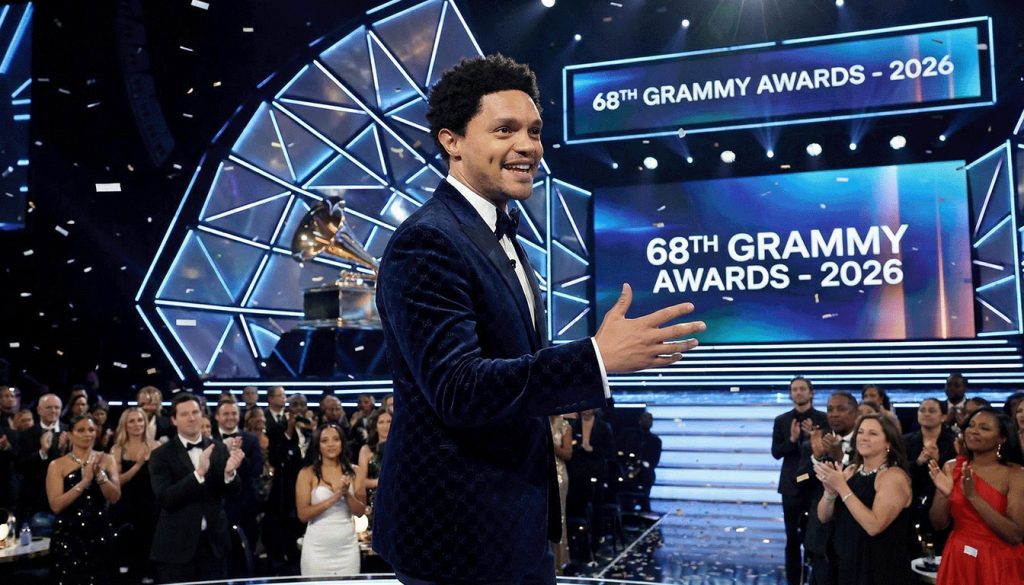
Trevor Noah 2026 Grammy's
At the Grammys, Trevor Noah made everyone laugh with a quick joke about the Epstein Files. He ended it with a challenge: “What are you going to do about it?” The joke was fast but had a lasting impact.
Donald Trump quickly noticed the comedian’s joke. This turned the event from entertainment to politics. For a host like Trevor, this shift can happen quickly. A simple joke can become a big headline, and the spotlight gets even brighter.
The Epstein Files are back in the news after the Justice Department released more documents. These documents have many redactions to protect privacy. This update has sparked debates about what the documents reveal and hide. You can find more about the DOJ Epstein files update.
This story is about a comedian making a joke, a former president reacting like it’s a legal battle, and a culture war unfolding live. It’s a mix of celebrity, television, and legal threats all happening at once.
Trevor Noah Key Takeaways
- Trevor Noah’s Grammys quip about the Epstein Files drew attention well beyond the room.
- Donald Trump’s response sets up a public clash with a comedian known for sharp timing.
- The host-to-headline jump shows how fast live television can change the stakes.
- Newly released DOJ material adds context, but many pages are heavily redacted.
- The larger story blends entertainment coverage with politics and legal pressure.
- The controversy signals how the Epstein Files keep reshaping public debate.
Grammys moment sparks backlash after Epstein Files joke
The 68th annual Grammy Awards in Los Angeles had its usual mix of big performances and quick banter. Trevor Noah, the host, kept the pace moving smoothly. He let the crowd settle before delivering a sharp punch.
Trevor Noah’s on-air quip and the “What are you going to do about it?” punchline
On CBS, Trevor Noah made a joke about Donald Trump and Bill Clinton. It was about “Epstein Island.” The joke had the feel of his stand-up routines, blending casualness with sharpness.
Then, he dared the room with, “What are you going to do about it?” The line was like a challenge. It showed his confidence in the crowd, a risk only a seasoned host would take.
Why the joke landed: recent attention on the newly released, heavily redacted Epstein Files
The joke’s timing was key. Just days before, the Epstein Files were released, sparking debate. The redacted pages mentioned many public figures, but didn’t make every mention a claim.
This context gave the joke an extra spark. It connected to a story already in the news. It also reminded viewers of The Daily Show’s sharp political edge, where Trevor Noah often mixed news with humor.
Details on the controversy and the backlash spread quickly. A report on the dispute is available here.
Context from the broadcast: the 68th annual Grammys aired on CBS as Kendrick Lamar and Bad Bunny dominated marquee wins
Even with Kendrick Lamar and Bad Bunny winning big, the joke stole the show. It changed the conversation from awards to timing, taste, and the power of live comedy.
As the show ended, the buzz was fast and loud. The joke’s impact was discussed in this article.
- Live-TV pressure made the joke feel riskier than a scripted bit.
- Political heat around the Epstein Files raised the stakes for any reference to it.
- Showmanship turned it into a talking point beyond the music.
Trump threatens lawsuit, targets the comedian and Grammy host
The morning after the Grammys, a political fight took center stage. A comedian’s joke sparked the controversy, putting Trevor Noah in the spotlight as a host.
The situation quickly turned from comedy to a battle of power and publicity. The debate moved fast online, with quick clips and opinions spreading.
Truth Social post: Trump says he’ll send lawyers to sue Noah “for plenty.”
Donald Trump took to Truth Social with a post full of insults and legal jargon. He vowed to send lawyers after Trevor Noah, saying he would sue “for plenty$.”
He also mocked Noah’s hosting job and criticized the Grammys’ tone. The argument quickly grew, with people sharing screenshots and discussing the seriousness of Trump’s threat.
Trump’s denial: he insists he never went to “Epstein Island” and calls the remark “false and defamatory.”
Trump’s main issue was the claim about “Epstein Island.” He denied ever being there, calling the statement false and defamatory.
The post and the Grammys exchange, including details from the Grammys exchange, kept the controversy alive. It kept the comedy moment in the news long after the awards.
Pattern of response: Trump’s history of attacking critics, comedy, and Epstein-related coverage
This clash fits a common pattern in political-media battles. Trump often responds to criticism with personal attacks and legal threats, even for comedy.
- Rapid escalation on social media after a headline moment
- Public demands for “facts” while blasting the speaker’s credibility
- Hard-line responses when the topic touches on Jeffrey Epstein coverage
Trevor Noah and the wider Epstein Files fallout in U.S. media
In U.S. media, the Epstein Files story has moved fast. It has pulled in politics, celebrity, and law enforcement at the same time. For a South African comic working in American television, that kind of news cycle can turn one punchline into a national argument.
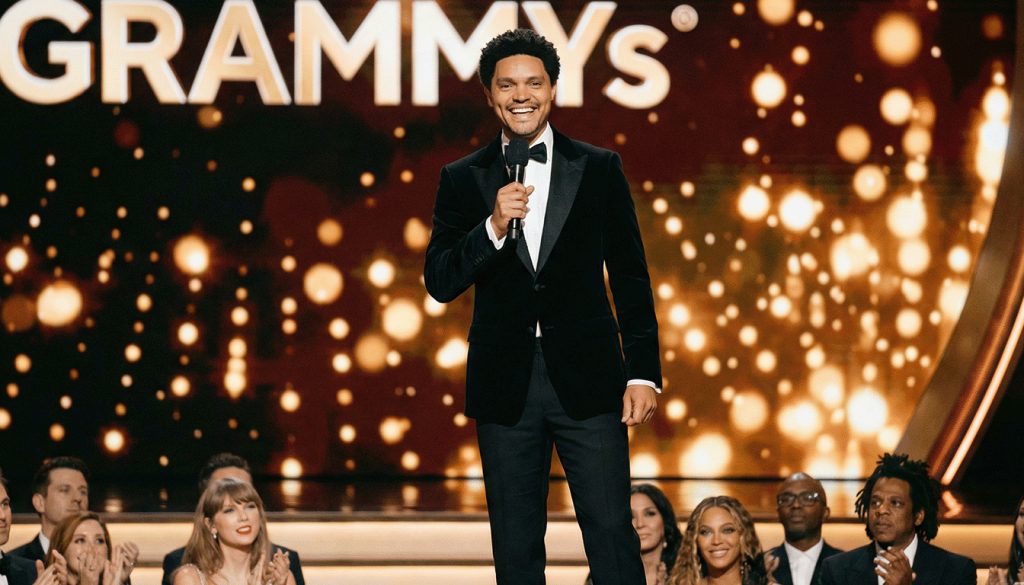
What the DOJ released: millions of pages and hundreds of thousands of images with heavy redactions
The Department of Justice release was described as massive. It included millions of pages and huge batches of images. Many pages arrived with thick black bars and missing details, making even simple claims hard to verify.
That timing mattered. The Grammys joke and Trump’s public reaction landed right as outlets were trying to read what the documents did, and did not, show. Reporting around the dispute spread quickly, including coverage of the threat aimed at the comedian in the Grammys backlash.
Names mentioned in the documents: Trump appears multiple times; others include Bill Clinton, Elon Musk, Casey Wasserman,
In the material that drew attention, Trump’s name appears multiple times. Other well-known names mentioned include Bill Clinton, Elon Musk, Casey Wasserman, Bill Gates, Jay-Z, Andrew Windsor, Harvey Weinstein, and Ghislaine Maxwell.
Because the documents span years and threads, mentions can mean many things. They can range from contact details to third-party notes. The public often treats a name as proof, while lawyers and investigators treat it as a lead that needs context.
Ongoing controversy: speculation about what remains unreleased despite Congressional pressure and public interest
Even after large releases, the loud question remains what else exists and when it might be shared. Some of that tension has shown up in political messaging, including Trump’s calls to shift focus while also urging more disclosure, as described in his push for additional Epstein records.
The slow pace also reflects screening and redaction, which is important for protecting victims and witnesses. That gap between demand and process keeps speculation alive on cable panels and social feeds.
Public persona lens: how a comedian, writer, and television host (linked to The Daily Show and stand-up comedy) becomes
Trevor Noah’s profile adds fuel because he is a writer and television host whose brand is built on political humor and stand-up. His link to The Daily Show gives his jokes a civic edge, even when they land in an entertainment setting.
- Platform matters: the Grammys reach viewers who may not follow court filings.
- Comedy travels: a line meant for laughs can be replayed as a claim.
- Public trust shifts: audiences weigh a comedian’s intent against a politician’s denial.
That mix helps explain why a single awards-show moment can become a flashpoint. It’s because major broadcasters compete for live events and their outsized attention.
Trevor Noah Conclusion
Trevor Noah’s quick line at the Grammys turned into a big political fight. His joke about the Epstein Files sparked a reaction from Donald Trump. Trump denied the claim and threatened to sue, saying it was false and defamatory.
This situation highlights the challenges comedians face today. They must navigate a world where every word can have serious consequences. The debate over the Epstein Files continues, with many details remaining unknown.
There is growing pressure to release more information from the Epstein Files. This includes logs, testimony, and evidence, as reported in coverage of the Epstein Files debate. The legal and reputational fallout from the Grammys moment is very real.
The episode shows how entertainment and politics are now closely linked. Trevor Noah’s joke became a major news story. It involved courts, credibility, and control of the narrative, as detailed in reporting on Trump’s lawsuit threat. For comedians today, this constant feedback loop is the new reality.