Alarming New Covid-19 Strain Spreads Across 25 U.S. States
Uncover the latest on the new Covid-19 strain as it swiftly moves through 25 states, heightening concerns for US public health safety.
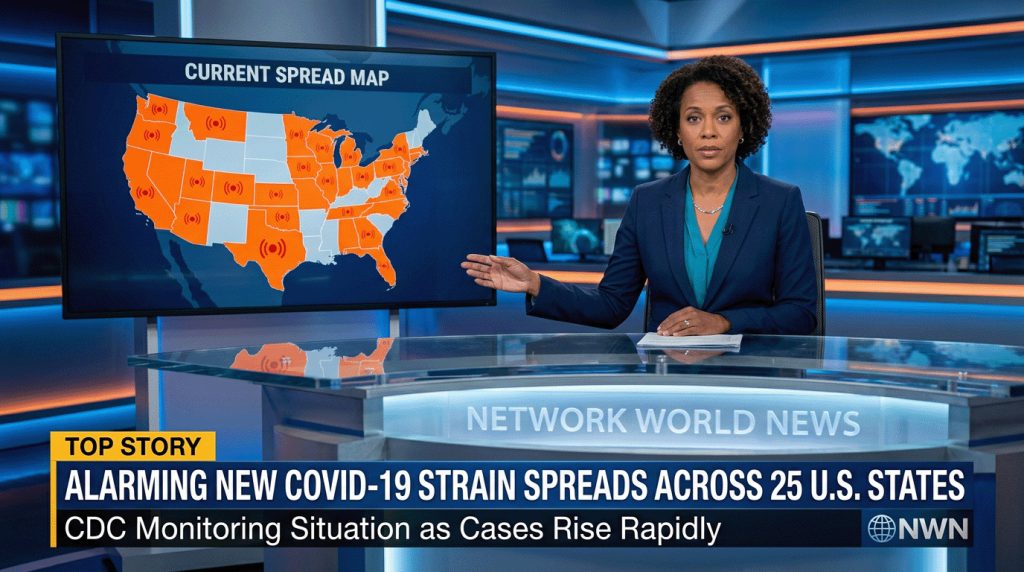
New Covid-19 Strain
A new Covid-19 Strain called BA.3.2 is getting a lot of attention in the U.S. It’s being closely watched because it might not be stopped by current vaccines. Many people now see COVID as a common illness. Also see groeing concerns of Covid vaccine safety.
As this new strain of the coronavirus spreads, health experts are using more than just case numbers to track it. They’re looking for early signs of the latest covid strain.
So far, the strongest clues are coming from places that routine reporting might miss. BA.3.2 has been detected in nasal swabs from four American travelers and in samples from five patients in four states of unknown origin. Environmental tracking also shows signs: three airplane wastewater samples and 132 wastewater samples from over 20 states have detected this variant.
With new COVID outbreaks, there is always the concern of isolation with families and loved ones, for those with compromised immune systems and the elderly. This covid isolation has led to an increase in domestic violence, as it did in 2020.
This news comes at a complex time. COVID is seen as endemic, but the virus keeps changing. That’s why tracking wastewater and travel is important.
Recent wastewater trends, such as a surge in California, show how quickly a wave can grow before many people are tested.
The CDC reports some good news: COVID deaths, positive tests, and ER visits are down from last year. But over 3,600 COVID deaths have been reported this year. Flu and RSV were more common in the winter, but COVID can also spike in the summer. This is why experts are keeping a close eye on the latest strain.
New Covid-19 Strain Key Takeaways
- BA.3.2 is a new COVID-19 strain being monitored as a possible immune-evading coronavirus variant.
- Signals include four traveler nasal swabs and five patient samples tied to four unidentified states.
- Surveillance has flagged three airplane wastewater samples and 132 wastewater samples across more than 20 states.
- CDC trends show COVID impacts are down versus last year, but deaths continue nationwide.
- Flu and RSV led much of the winter surge, yet summer increases in COVID remain possible.
- Wastewater and travel data can reveal the latest covid strain before routine case reporting does.
What’s happening with the BA.3.2 coronavirus variant in the U.S?
BA.3.2 has started showing up in the U.S. in different ways. This adds a new twist to the current COVID-19 situation. It’s a small sign now, but it’s being watched closely because the virus keeps changing.
BA.3.2 detections in travelers, patients, and wastewater
Researchers have found BA.3.2 in nasal swabs from four American travelers. It has also been found in five patients in four unidentified states.
Environmental surveillance has given us more insight. BA.3.2 was found in three airplane wastewater samples and in 132 wastewater samples across more than 20 states. This shows how this COVID-19 strain might be spreading.
Why wastewater and airplane sampling suggest wider spread
Wastewater and airplane sampling often find infection traces before lab tests do. This can happen when people test at home, skip testing altogether, or have only mild symptoms.
Airplane wastewater hints at how the virus spreads through travel. When wastewater signals appear in many states, it suggests the virus is present in more places, even if case counts seem low.
How this COVID-19 variant update fits into today’s U.S. reporting
Recently, U.S. COVID metrics have gone down. This includes deaths, positive tests, and emergency room visits. But the CDC keeps an eye on changes because each strain can vary with immunity, behavior, and season.
Scientists believe the virus will continue to mutate as it replicates. Virologist Angela Rasmussen of the University of Saskatchewan says viral replication is like “buying a couple of evolutionary lottery tickets.” This means fewer infections could lead to fewer changes in the next COVID-19 variant update.
Where the latest covid strain has been detected across 25 states
Tracking a new covid strain is not just about one big story. It’s about many small clues. Health teams look at lab results, travel data, and wastewater. These clues help find where a strain might be spreading, even before it’s widely known.
Because of reporting lags, maps can change quickly. What seems limited today might grow as more tests are done and results are shared.
States reporting BA.3.2 signals or cases
So far, BA.3.2 has been spotted in 25 states. Reports mix clinical findings with surveillance signals linked to the omicron family.
- California
- Connecticut
- Florida
- Hawaii
- Idaho
- Illinois
- Maine
- Maryland
- Massachusetts
- Missouri
- New Hampshire
- New Jersey
- Nevada
- New York
- Pennsylvania
- Rhode Island
- South Carolina
- Texas
- Utah
- Vermont
- Virginia
- Wyoming
- Louisiana
- Michigan
- Ohio
Why the number of states may grow as surveillance expands
The count might increase as testing becomes more widespread. More wastewater sites and sequenced patient samples can reveal more locations. This is important because wastewater signals already cover over 20 states, suggesting the strain might be under-reported.
Wastewater from airplanes and traveler samples also offer early signs. They don’t replace clinical data, but can show spread patterns that need more attention.
What “not dominant yet” means compared with other omicron offshoots
BA.3.2 is not the top U.S. variant right now, even though it’s part of the omicron family. In simple terms, “not dominant yet” means it’s present but not the most common among omicron variants tracked by the CDC.
This phrase helps people understand the situation without making it the only story. It also leaves room for change as more data comes in.
COVID-19 Strain details: what scientists know about BA.3.2 so far
Researchers are closely watching BA.3.2, a coronavirus variant. They want to know how it interacts with existing immunity. They also want to see how fast it spreads in communities.
Omicron lineage and when BA.3.2 was first identified
BA.3.2 is a variant of omicron. It was first found in South Africa in 2024. Scientists have been studying its genetic markers to understand its place in the family tree.
This tracking helps health teams spot important changes early. It also helps determine which tests and sequencing to prioritize.
Timeline of spread from 2024 to the 2025 surge
BA.3.2 was found in the U.S. in June 2025, in someone who traveled from the Netherlands. By September 2025, it started to spread quickly. It has now been found in 23 countries.
This timeline is important. Changes in travel, local spread, and testing can affect what we see. The goal is to keep up with the latest information without getting caught up in short-term trends.
How is it genetically distinct from JN.1 lineages circulating in the U.S. for over a year?
The CDC’s Morbidity and Mortality Weekly Report (MMWR) calls BA.3.2 “genetically distinct from the JN.1 lineages that have circulated in the United States for over a year.” This genetic difference affects how well antibodies from vaccines or past infections work against it.
Scientists also compare BA.3.2 to BA.2.86, which emerged in 2024 and later became JN.1. While BA.3.2 is similar, it’s not just another JN.1 variant. Each mutation changes how we assess and plan for risks.
Covid mutation and spike protein changes tied to immune evasion
Scientists track a coronavirus variant like BA.3.2 by examining the spike protein. This part of the virus helps it attach to cells. Small changes can affect how a strain spreads in a community.
About the 70–75 spike protein changes and why they matter
BA.3.2 has about 70-75 genetic changes in its spike protein. This is significant because the spike is key for cell entry. It’s also where scientists look for clues about how the virus spreads.
With a mutant coronavirus strain, the mix of changes is more important than the number. Researchers see these spike shifts as signs that the virus might evade the immune system more easily. But the real-world impact depends on many factors, like timing, exposure, and prior immunity.
How spike mutations can affect transmission and antibody neutralization
Many defenses, like antibodies, target the spike. If the spike changes shape, antibodies might bind less tightly. This can make it harder to stop the virus from spreading.
That’s why labs study spike sites and compare them across strains. Even small changes in binding can have a big impact when many people are exposed indoors or during travel.
What lab findings suggest about evading vaccine-activated antibodies
In lab tests, BA.3.2 seems to evade antibodies from Covid vaccines, likely due to spike mutations. Scientists say more data is needed to see how this affects real-life protection.
One study found a vaccine from 2025–2026 worked against JN.1 strains but not as well against BA.3.2. This gap is why scientists keep a close eye on spike mutations, even when a mutant strain appears in many places.
Vaccines, protection, and whether an update may be needed
As BA.3.2 gets more attention, vaccine plans are looking at its genetic makeup. Experts say the differences from JN.1 lineages might be important. This is because many vaccines are made for JN.1, which is common in the U.S. now.
Lab tests are showing urgency, but they’re not the same as real-world results. A test with seven variants showed that the mRNA vaccine didn’t work as well against BA.3.2, raising concerns that the virus could evade the immune system.
It’s not clear how these lab results will affect real-world protection. Scientists need more data before they can give new advice. The FDA is reviewing vaccine safety and has a plan for updates, as seen in this FDA vaccine safety update.
- Lab tests can hint at immune evasion, but they don’t show all outcomes.
- Vaccine strategies might need to change if BA.3.2 continues to diverge from JN.1.
- Monitoring is key because many lineages can spread at once in the U.S.
With COVID now here to stay, experts expect ongoing changes. The goal is to stay prepared and update tools as needed. Every update helps us prepare for the next COVID-19 strain or mutation.
How severe is BA.3.2 compared with other variants like the delta variant and the omicron variant?
It’s easy to jump to conclusions about how severe a new strain is. BA.3.2 is a new COVID-19 strain. But the best clues come from looking closely at each case and considering the bigger picture.
Hospital detections and patient outcomes reported in December and January
In the United States, the first BA.3.2 cases were found in December and January. These cases involved two older adults hospitalized. One was admitted for heart issues before catching the virus.
The third case was a young child who got care outside the hospital. Thankfully, all three patients made it through, giving us a glimpse of the risk without jumping to conclusions.
What researchers say about severity signals and limits of early data
Finding BA.3.2 in the hospital doesn’t always mean it’s more severe. It also doesn’t show who’s at risk. Other health issues might explain why someone needed hospital care.
This is a lesson we’ve learned before, like with the omicron variant. Early reports might not show the whole picture. The CDC report highlights the need for more data, even as wastewater signals of the spread are widespread.
How this mutant coronavirus strain compares to past concerns like the delta covid variant
The delta variant caused a lot of worry about serious illness and hospital overload. BA.3.2, with its many changes and possible immune tricks, is viewed differently. It hasn’t shown clear signs of being more severe in the data we have.
This difference with delta is significant, but not the whole story. Health experts are keeping a close eye on hospital rates, reinfections, and how BA.3.2 behaves as more samples are analyzed.
- Clinical case details are limited, so patterns can change with more data.
- Wastewater detection hints at spread, but doesn’t show disease severity.
- Comparing variants depends on consistent reporting and larger datasets.
New Covid-19 Strain Conclusion
BA.3.2 is a new COVID-19 strain found in traveler screening, patient samples, and wastewater. It suggests the virus is spreading more than reported. So far, it has been found in 25 states, even in states with limited testing.
This strain is important because it belongs to the omicron family, with about 70–75 changes in the spike protein. Early studies suggest it may be more difficult to stop with antibodies. The CDC also notes it’s different from the JN.1 lineages seen in 2024. This makes experts think vaccines might need an update.
BA.3.2 is not yet the main strain, and it doesn’t seem to cause more severe illness. But, health officials are watching closely. They want to see how it changes as more data comes in.
Even though things are getting better in the U.S., COVID is causing over 3,600 deaths this year. Keeping up with the latest strain and staying vaccinated is key. The story of COVID-19 is ongoing, and we’ll follow the facts, not rumors.