U.S VISA Application: Will Now Include Social Media Examination
Learn about the latest update to the U.S VISA Application process, which now requires scrutiny of applicants’ social media activity.
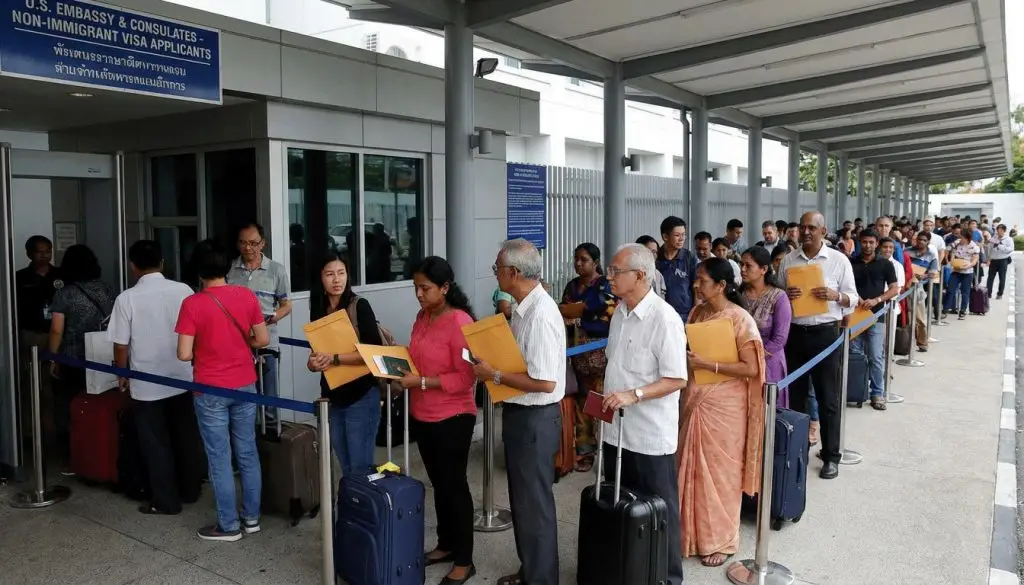
U.S VISA Application
U.S VISA Application:The U.S. government is making a significant change to the immigration process. They will now check social media for visa applicants. This is a big step in the process of applying for a U.S. visa.
Travelers from about 40 countries will be affected. This includes countries such as Australia, Germany, Japan, and the United Kingdom. They use ESTA for trips up to 90 days. The new rule is in the Federal Register for 60 days of public comment, as reported in this CBP filing.
This change comes as tourism is slowing down and rules are getting stricter. Experts predict fewer international visits and less spending in 2025. This will put pressure on airports, airlines, and hotels. At the same time, questions about privacy and provenance on platforms like Facebook are growing. This may affect how we view online signals, as explored in this analysis of the relevance of social data.
Applicants now need to include their social media history in the visa application. This is in addition to travel history, contact details, and other visa requirements. The goal is to improve security while maintaining fairness. How this works out will be important for millions of people planning trips and checking their visa status before booking.
U.S VISA Application Key Takeaways
- Social media history from the past five years will be part of the U.S. Visa Application for Visa Waiver travelers.
- CBP and DHS posted a 60-day notice inviting public comments on the proposed screening change.
- About 40 ESTA-eligible countries are affected, with trips capped at 90 days under current visa requirements.
- Pre-travel screening will integrate online activity with contact details and prior travel records.
- Tourism forecasts point to lower international visits and spending, underscoring the urgency of clear rules in the immigration process.
- Applicants should monitor their visa status checks and prepare accurate disclosures to avoid delays.
What the New Social Media Examination Means for Travelers
Travelers now face a deeper look at their online footprint as part of the u.s visa application process. This change links social media checks to the application form for both standard visas and the ESTA pre-screen. It may affect timing, eligibility, and ultimately visa approval for short and long stays.
Mandatory social media disclosure for ESTA expands data collection to help officials assess risk before issuing travel authorization. Applicants should expect more straightforward prompts and more detailed fields tied to their profiles.
Who Is Affected: Visa Applicants and Visa Waiver Program Visitors
The policy applies to two groups. First, people completing a standard u.s visa application through the State Department. Second, travelers from Visa Waiver Program countries who seek travel authorization via ESTA for trips of 90 days or less.
Citizens of Australia, Germany, Japan, and the United Kingdom can skip a traditional visa for short visits. But their ESTA application form now includes social media details that could affect visa approval.
Five-Year Social Media History as a Mandatory Data Element
Applicants must provide a five-year record of social media identifiers. This history is being added as a required field on the application form, alongside past phone numbers and email addresses.
Customs and Border Protection integrates these entries into screening. This supports decisions that affect travel authorization and visa approval. Accuracy and completeness help prevent delays.
Impact on ESTA and Travel Authorization for 40 Visa Waiver Countries
For ESTA, the five-year social media section becomes part of pre-travel vetting. This means the u.s visa application path for VWP travelers remains streamlined. But the data checks are deeper before travel authorization is granted.
- Short stays up to 90 days remain eligible through ESTA.
- Incomplete social media fields on the application form may stall processing.
- Consistent identifiers can support faster visa approval decisions.
Policy Context: Expanded Reviews for H-1B and Student Visas
The State Department has widened social media reviews for H-1B workers and dependents. The guidance urges applicants to keep their profiles public. This can shape outcomes tied to visa approval.
Student visa screening now weighs online presence as well. These moves align with broader DHS efforts. They link social media checks to both the u.s visa application and ESTA travel authorization. This creates a uniform review framework across categories.
U.S VISA Application: Key Changes to the Immigration Process and Visa Requirements
Travelers now face new rules in the immigration process. They must share their social media details. This helps verify who they are and check for any risks.
Applicants who start early avoid mistakes. They also keep their timeline clear.
Transparency matters. It’s essential to use the same usernames and facts as on your visible profiles. This makes the review process smoother and might prevent extra questions.
Application Form Updates: Social Media Fields and Disclosure Expectations
The new application form asks for your social media history for the last five years. You need to list all platforms and identifiers used during that time. Even if you’re not active, include them.
Being open about your online presence helps the process. If your username changed, mention the old one. This keeps your records consistent and avoids confusion.
Visa Interview Preparation: Handling Questions About Online Presence
At the visa interview, you might be asked about your online activities. Keep your answers simple and accurate. Be prepared to explain the context and purpose of your accounts.
Bring notes that match your application form. This includes any past usernames. Being consistent helps avoid misunderstandings.
Privacy Settings and Public Profiles: State Department Guidance
The State Department prefers visible profiles for review. You can make your profiles public for verification. Just remember to follow the rules and keep your posts accurate.
Don’t change facts to fit your application. Instead, update your bio for clarity and remove old links. This shows your current activity.
Visa Application Fee, Processing, and Possible Effects on Visa Approval
The visa application fee hasn’t changed, but the process might take longer. Reviews can be slower if there are questions about your content. Keeping your records organized helps you move through the process faster.
Being consistent in your application, profiles, and statements helps with a fair review. It may also increase your chances of getting a visa under the current rules.
Broader Implications for Tourism, Security, and Policy
Travel authorization is now stricter, affecting demand and prices in the tourism sector. Airlines, hotels, and small businesses near airports are preparing for fewer visitors. This is because travelers are dealing with more paperwork and a changing immigration process.
Projected Decline in Foreign Visitors and Travel Revenue
Experts predict fewer international trips and tighter travel budgets. Visitors are now preparing detailed social media histories for ESTA. They also check their visa status before booking, adding to the planning time.
Travelers might choose to visit later in the year due to these changes. Delays in airports and agencies can cause missed flights and canceled plans. Even simple visa renewals can become complicated.
Security Rationale and Administration Policy Direction
Officials say the new rules are to improve safety before travel. They use social media to assess risks and align with a more thorough immigration process.
New proposals include stricter data standards and possible biometric checks. These changes are open for comments for 60 days, as reported in policy updates on ESTA. Debates on federal operations and staffing add to the uncertainty in processing times.
Countries Most Affected and Length of Stay Implications
Citizens from countries such as Australia, Germany, Japan, and the UK must disclose more during the authorization process. They can stay for up to 90 days but face more checks, including a visa status check, before boarding.
Travelers near the 90-day limit should plan extra time to avoid overstays. Those attending events or sports should check the screening periods.
Best Practices for Compliance Without Compromising Safety
Plan early, document clearly, and keep records consistent. Make sure your online profiles match your application. Remove unclear handles to avoid delays. Keep your privacy settings in line with the rules while protecting your personal info.
- Allow extra lead time for travel authorization and monitor progress with regular visa status checks.
- Organize posts, emails, and phone numbers used in the past five years to speed responses.
- Carry proof of lodging, return flights, and funds to support the immigration process at inspection.
- Answer follow‑up questions briefly and accurately; avoid changing profile data mid‑review.
“Consistency across applications, bookings, and online identifiers reduces delays and helps travelers move through screening with fewer surprises.”
With clear records and realistic buffers, visitors can navigate new rules while maintaining safety, privacy, and trip flexibility.
U.S VISA Application Conclusion
The U.S VISA Application is changing, with social media now part of the screening process. For travelers from Australia, Germany, Japan, and the United Kingdom, a five-year history check is standard. This change affects both traditional visas and the Visa Waiver Program.
This shift comes after the expansion of reviews of H-1B and student visa applications. It follows a public rulemaking process with a 60-day comment window. Now, social media plays a significant role in visa checks, affecting how quickly you might get approved.
Policy and economics meet in this new era. With fewer international visitors expected, travel revenue is under pressure. Agencies are using new tools to analyze online data.
Applicants need to keep their social media profiles consistent with their public image. They should answer interview questions truthfully and plan for longer processing times. For more information, check the State Department’s visa application FAQs.
It’s not just about what you post. The quality of your social media signals matters too. Younger users tend to post less, while AI crawlers can reach further. Platforms are also changing how content is ranked and viewed.
Being aware of these changes can help you prepare your social media accounts. A review of how social signals are evolving, as discussed in this industry analysis, can give you insight into what officers might see.
To make a strong U.S. visa Application, include accurate social media handles and consistent posting. Make sure your privacy settings match what you disclose. Keep records of your posts and be prepared to explain any gaps in your online history.
With careful preparation and attention to visa requirements, you can make your application smoother. This can help improve your chances of getting your visa approved or travel authorization promptly.
U.S VISA Application FAQ
What does the new social media examination mean for the U.S visa application process?
The U.S. government now asks for five years of social media history before travel. This applies to Visa Waiver Program travelers using ESTA. For standard visa applicants, this scrutiny may affect their eligibility and the approval of their visa.
Who is affected: visa applicants and Visa Waiver Program visitors?
Two groups are impacted. First, Visa Waiver Program travelers from about 40 countries must share their social media history in the ESTA system. Second, standard visa applicants, including H-1B workers and students, face broader reviews.
What counts as a five-year social media history as a mandatory data element?
DHS wants applicants to list all platforms used in the last five years. This includes handles and profiles used for identity and risk assessment. Omissions or inconsistencies can lead to delays or denials.
How will this change impact ESTA and travel authorization for Visa Waiver countries?
The ESTA application will now include fields for social media. CBP will use this data for pre-travel vetting. Incomplete or conflicting information can delay or deny authorization, so travelers should plan ahead.
What is the policy context for expanded reviews for H-1B and student visas?
The State Department now checks social media for H-1B workers, dependents, and students. Applicants should make their profiles public for review. This change reflects a broader role for social media in visa requirements.
What updates are coming to the application form and disclosure expectations?
Application forms will include fields for five years of social media identifiers. Applicants should enter accurate platform names and handles. Consistency across the application and online presence can help with visa approval.
How should applicants prepare for visa interview questions about online presence?
Consular officers may ask about affiliations and activities on social media. Applicants should be concise and prepared to clarify context. Honesty and coherence can help avoid delays.
What should applicants know about privacy settings and public profiles?
Recent guidance suggests setting profiles to public for transparency. Applicants should review content for accuracy and ensure compliance with platform policies. Transparency can support efficient screening without compromising safety.
Will the new scrutiny affect the visa application fee, processing, or final visa approval?
The notice does not change the visa application fee. But additional review steps can lengthen processing times. Social media content that raises security flags may affect visa approval.
How will this shift influence tourism and the broader travel ecosystem?
Added screening may create friction for prospective visitors. The U.S. Travel Association projects a drop in foreign visits and a loss of revenue. Stricter vetting could slow the recovery in inbound travel.
What is the security rationale and administration policy direction?
DHS and CBP view social media collection as an enhanced risk assessment tool. This shift aligns with tighter entry measures and plans to re-review approvals. It complements expanded reviews for specific visa categories.
Which countries are most affected, and what are the length-of-stay implications?
About 40 Visa Waiver Program countries, including Australia and Germany, are affected. Their nationals can visit for up to 90 days without a traditional visa, but must secure ESTA authorization with the new social media data requirement.
What are the best practices for compliance without compromising safety?
Ensure application details match public profiles and use accurate platform identifiers. Provide clear explanations of the context and keep copies of submitted information. Plan for possible follow-up and monitor ESTA or consular portals for updates.
When does the change take effect, and will there be a comment period?
DHS posted the proposal with a 60-day public comment window. After review and finalization, the five-year social media element becomes mandatory in ESTA. Applicants should watch DHS and CBP notices and adjust their u.s visa application timelines.
Does this apply to visa renewal cases as well?
For visa renewal and repeat ESTA applications, applicants should expect similar disclosure requirements if the category is subject to social media review. Prior approvals do not exempt travelers from updated screening. Keep records up to date to avoid delays in travel authorization and visa renewal.