Trump Warns: Greenland Vulnerable to China, Russia Annexation
Amid geopolitical tension, Trump emphasizes Greenland’s risk of falling prey to China or Russia’s expansive ambitions.
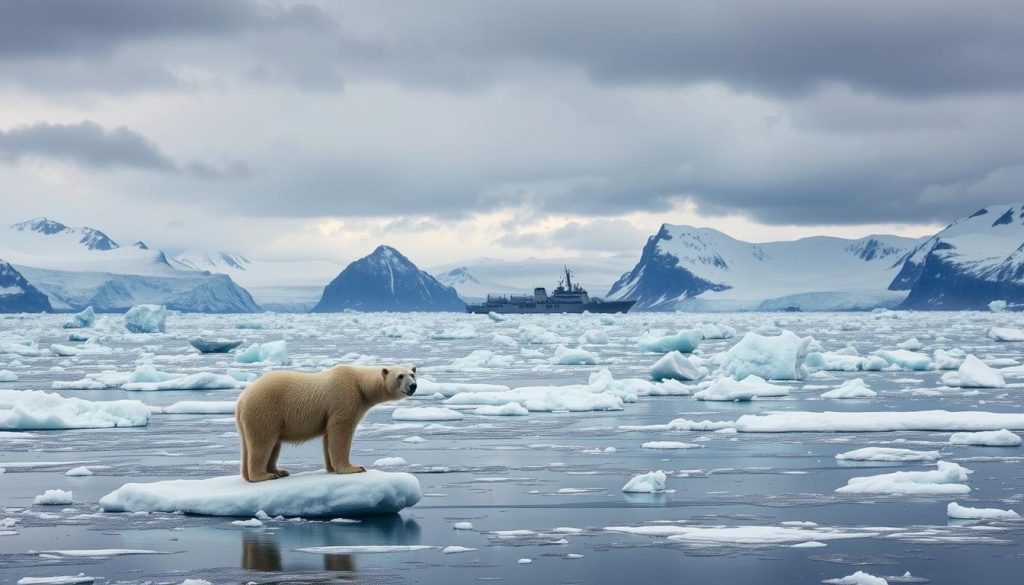
President Donald Trump says the Arctic is getting hotter in more ways than one. He spoke to reporters aboard Air Force One on Sunday. He argued that Greenland could become a target if the United States does not move first.
Trump framed the issue as a test of Washington and its allies’ security. He asserted that the United States would seize Greenland regardless of the outcome. He called control of the island “crucial for US national security” as Russia and China expand their reach in the High North.
His sharpest line was aimed at the fear of being boxed out. “If we don’t take Greenland, Russia or China will, and I’m not letting that happen,” he said. Even though neither Russia nor China has laid claim to Greenland.
For Americans, the stakes are easy to picture on a map. Greenland sits between North America and the Arctic routes that matter for defense, shipping, and surveillance. The U.S. has kept a military footprint there for defense purposes. A deeper look at the legal and alliance questions is already fueling debate, including in this Greenland analysis.
Beyond the politics, Greenland facts often get lost in the noise. It is vast, sparsely populated, and tied to Denmark while running many of its own domestic affairs. This mix of geography, governance, and great-power pressure is what makes Greenland such a flashpoint right now.
As the story spreads across U.S. political media, it is also being folded into wider campaign and party coverage. Including a separate report on Trump’s outreach to Marjorie Taylor Greene in this politics update.
Key Takeaways
- Trump says Greenland is vulnerable to pressure from Russia and China.
- He told reporters aboard Air Force One the U.S. would take Greenland “one way or the other.”
- Trump called Greenland “crucial for US national security,” citing rising Arctic tension.
- Greenland’s location links North America to key Arctic routes and warning systems.
- The U.S. has maintained a military presence connected to Greenland for defense purposes.
- Basic Greenland facts—its size, sparse population, and political ties to Denmark—shape the debate.
Trump’s warning on Greenland and US national security
Donald Trump linked Greenland’s future to U.S. safety and control of the Arctic. This debate touches on Greenland’s history, in which outside powers have viewed the far north as strategic.
What Trump said aboard Air Force One: “one way or the other.”
Trump spoke bluntly on Air Force One, saying the U.S. would take Greenland “one way or the other.” Yet, he hinted at a possible deal with the Danish territory.
This mix of pressure and negotiation highlights Greenland’s history. It shows how sovereignty and outside interests often clash.
Why Trump argues the mineral-rich territory matters in the Arctic
Trump sees Greenland as rich in minerals and key to U.S. security. He believes control of the Arctic gives the U.S. an edge in surveillance and access.
Supporters see the Arctic’s changing map as a reason for U.S. interest. Critics warn of the dangers of decisions made far from Greenland’s residents.
Claims of rising Russian and Chinese military activity near Greenland
Trump accused Russia and China of increasing military presence near Greenland. He mocked Greenland’s defenses, saying rivals have more advanced military assets.
These claims come as reporting and diplomatic talks on Greenland increase. The island’s strategic location is at the heart of the issue.
“If we don’t take Greenland, Russia or China will”: framing and implications
Trump’s statement—”If we don’t take Greenland, Russia or China will”—frames the issue as a race. This implies a sense of urgency and a willingness to intensify pressure, all the while maintaining the possibility of a deal.
This framing also raises questions about sovereignty and alliances. It comes as global disputes influence U.S. risk assessments, including the Ukraine peace deal.
Denmark, NATO, and the diplomatic fallout over the Danish territory
In Greenland, security is more than just words. It affects shipping, air defense, and daily life. It also touches the hearts of those who value local control and self-rule.
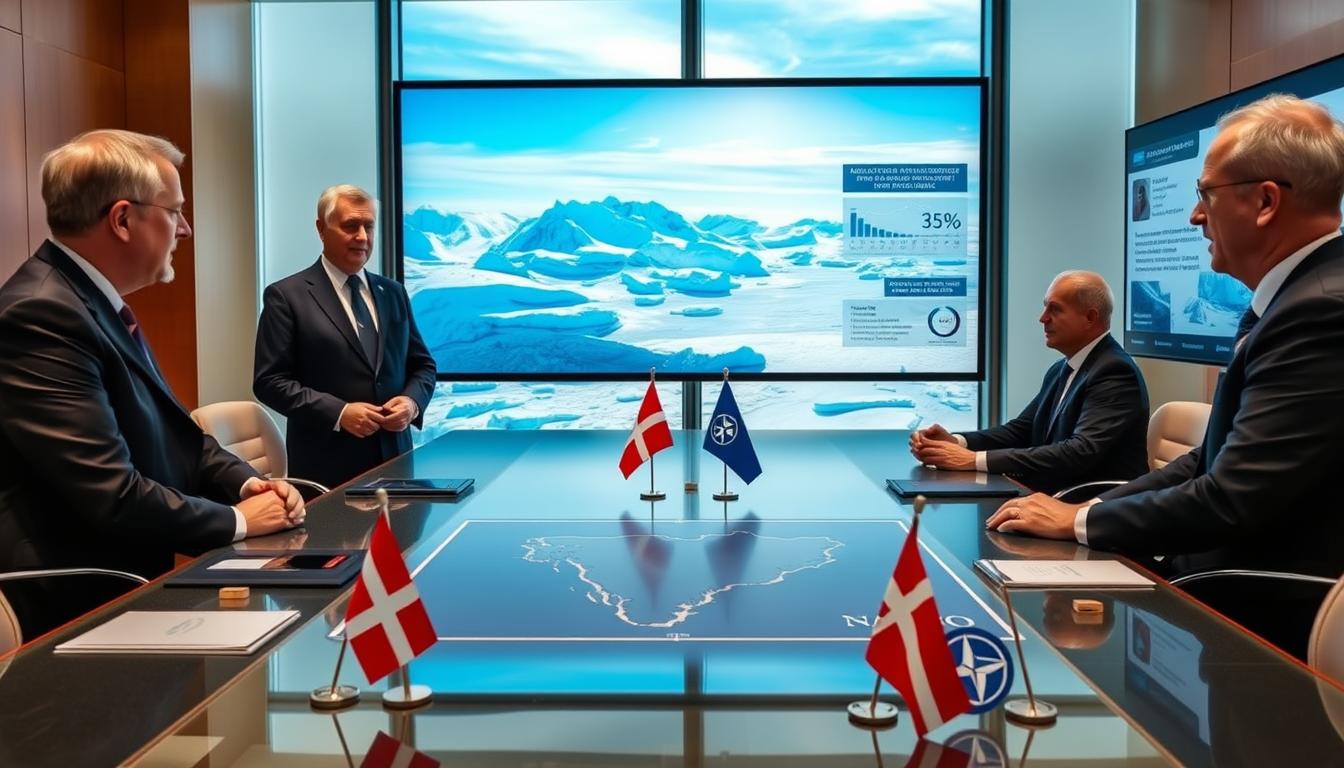
Greenland’s status as a Danish self-governing territory and why it matters
Greenland is part of Denmark but has its own government. It was a Danish colony until 1953. It gained home rule in 1979 and more self-government in 2009.
Many in Greenland believe decisions should be made by Greenlanders. Leaders from different parties agree. They say the future should be decided at home, not by others.
European allies’ reaction and Denmark’s warning on transatlantic security ties
Denmark and its European allies are worried about Greenland’s status. Danish Prime Minister Mette Frederiksen warned that changing it could break trust. This could harm the security ties that have shaped the Atlantic partnership.
Diplomacy has sped up as tensions rise. There are plans for talks in Washington with Danish and Greenlandic officials. The news was reported by international media outlets covering Denmark’s response. For many, the stakes are high because Greenland culture and institutions are at risk.
How a forced move could affect NATO and Arctic stability
A conflict over Greenland could strain NATO unity. Denmark is a member, and Greenland is part of NATO’s strategic map. Trump said if it affects NATO, it will affect NATO, while arguing Greenland needs the U.S. more.
The debate can chill cooperation and complicate planning. It invites louder pushback from other powers watching the Arctic. In Greenland, the argument risks disrespecting Greenlandic culture.
The US presence in Greenland and its strategic location
Greenland’s location is key for early warning and surveillance. The U.S. has a military presence here, including Pituffik Space Base, which supports missile warning and space surveillance.
This presence makes the issue more than a real estate dispute. It involves deterrence, basing rights, and alliance coordination. This is reflected in coverage, noting the White House view that military action is “always an option” in Greenland: U.S. option language and NATO.
In U.S. politics, the Greenland fight mirrors a wider pattern of alliance pressure and intra-party friction. Other headlines also grab attention, including recent coverage of Trump-era political crosscurrents. For Greenland, the point remains steady: its security role is real, but so is its claim to self-rule and culture.
Separate political turmoil in Washington shows how quickly priorities can shift. This is seen in reporting on congressional and internal change. For Denmark and its NATO partners, the issue adds uncertainty to discussions of Greenland and Arctic stability.
Greenland facts: history, culture, climate, and what it means for tourism
Greenland’s story is key to understanding today’s sovereignty debates. It was a Danish colony until 1953. Then, it gained home rule in 1979 and more self-government in 2009. This history shows why many Greenlanders value their right to make decisions.
For a quick overview, many start with Greenland facts. It has a small population spread across long coastlines. Most people live in the southwest, making travel between towns challenging.
Culture is at the heart of Greenland’s story. The Greenlandic Inuit identity, language, and community ties are vital. They show why Greenlanders should decide their own path.
Geography also plays a big role. Greenland is between North America and the Arctic. Its vast terrain and sea lanes make it unique for travelers seeking solitude.
Weather is part of the bargain, and Greenland’s climate is extreme. Temperatures, wind, and daylight can change plans. For U.S. readers, climate variability, like La Niña updates, affects winter travel plans.
Greenland tourism is all about nature. Visitors see iceberg-filled fjords and dog sled routes. Yet, geopolitical tensions can impact perceptions of safety, even for cultural and scenic trips.
- History: a steady shift toward more local control, shaping today’s sensitivities.
- Identity: culture and language that make politics feel community-driven.
- Logistics: long distances that influence Greenland travel plans and pacing.
- Perception: Greenland tourism can be affected by the international spotlight, even far from any base or border.
Conclusion
Trump’s warning made Greenland a big topic in U.S. politics again. He said the U.S. would take Greenland, calling it a national security issue. He also warned that if the U.S. doesn’t act, Russia or China might take it instead.
This message was clear: the Arctic is now a key area of focus. For many Americans, Greenland is no longer just a distant place on a map.
But there are limits to this clash. Greenland is self-governing under Denmark, and Denmark handles its defense and foreign policy. Local leaders have rejected any idea of U.S. control. European allies see it as a threat to trust within NATO.
Reporting on Greenland in this update shows how quickly this issue becomes a test of alliances.
The security debate is real, but the risks are high. Denmark’s prime minister said using force would break decades of trust with the U.S. Trump, on the other hand, seems to ignore these risks, even if they harm NATO.
Greenland is already important for the U.S. because of its location. It hosts a U.S. base and is near key Arctic routes. This makes it important for missile defense and undersea surveillance.
These facts explain why pressure tactics alarm partners who rely on shared rules. In the end, Greenland’s importance doesn’t change, even as the ice does. Warming seas may open shipping lanes and raise the value of minerals, but sovereignty and self-determination are key for Greenlanders.
The U.S. can argue strategy all it wants, but it must deal with Denmark, NATO, and Greenland’s people. Coverage of the political ripple effects has also spread beyond Arctic policy circles. Posts like Trump’s political news show how quickly the issue becomes part of the broader campaign conversation.