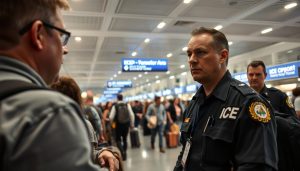
Ongoing Immigration Enforcement Across the US Continues Despite Lawsuits
Explore the latest on how immigration enforcement continues nationwide amidst challenges and legal battles over policies and rights.
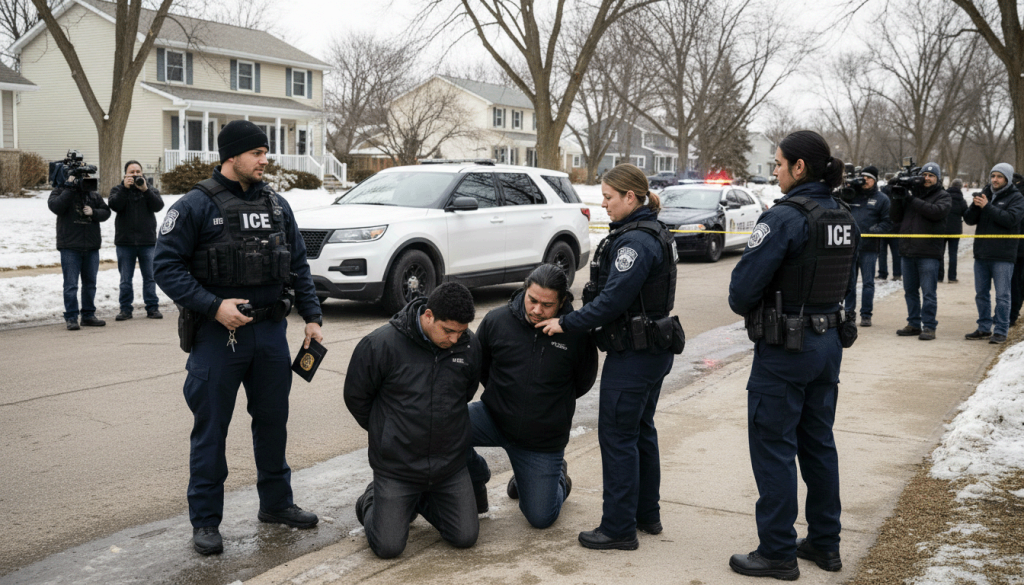
Ongoing Immigration Enforcement Across the US Continues Despite Lawsuits
A federal judge in Minnesota has refused to stop the immigration enforcement surge in the Twin Cities. This decision comes as a lawsuit against the enforcement is ongoing. The situation is tense, with immigration policy being debated in courts, city halls, and on the streets.
The Minnesota case illustrates why immigration enforcement persists nationwide despite legal hurdles. In Los Angeles, large crowds have gathered outside detention centers. Police actions have also been a key factor, as seen in protests outside the Metropolitan Detention Center.
In Minnesota, local leaders say the enforcement is causing daily disruptions and straining immigrant rights. This is true for families with mixed status and undocumented immigrants. On the other hand, federal officials believe the effort is about public safety and focused enforcement priorities. This view is shared in the broader planning described in Operation At Large.
In other places, the situation is different. Maine officials have ended their “enhanced operation,” while Minnesota remains a key focus, according to separate reporting on the Maine drawdown and Minnesota.
Immigration Enforcement Key Takeaways
- A Minnesota judge declined to halt an active enforcement surge while a lawsuit proceeds.
- The case highlights how immigration enforcement continues nationwide amid legal pushback.
- Local officials warn that immigration policy tactics can disrupt schools, work, and public life.
- Federal authorities frame the operations as a public-safety effort tied to immigration enforcement priorities.
- Recent protests in Los Angeles show how enforcement debates can spill into the streets.
- Conditions vary by state, with Maine scaling back while Minnesota remains under heavy focus.
What the Minnesota Ruling Signals as immigration enforcement continues Nationwide
A federal court case in Minnesota is getting significant attention. It’s about how far federal agencies can go and how fast courts will act. This affects immigrant rights in cities that don’t cooperate with federal requests.
Judge Katherine M. Menendez declines to halt the surge while the case moves forward
U.S. District Judge Katherine M. Menendez made a decision on Saturday. She refused to halt the enforcement surge immediately. This means the operation can continue while the lawsuit goes on.
The ruling has sparked significant discussion. People are worried about what they might see in their neighborhoods. Spectrum Local News has been covering the fallout closely.
Who filed the lawsuit: Attorney General Keith Ellison and the mayors of Minneapolis and St. Paul
Minnesota Attorney General Keith Ellison and the mayors of Minneapolis and St. Paul filed the lawsuit. They requested a quick decision, which indicates how urgent they consider the situation. This is important for areas where asylum seekers and long-time immigrant communities live.
The case is happening at a time when immigration laws are being tested. Policy changes, local resistance, and fast federal actions are all playing a role. Minnesota is now a key place to monitor advocates and officials from other states.
What the plaintiffs alleged: DHS’s actions violated constitutional protections
The plaintiffs say the Department of Homeland Security is breaking constitutional rules. They asked for limits through a preliminary injunction. Their claims also raise concerns about how enforcement can affect daily life and reduce people’s willingness to report crimes or use city services.
- Core claim: the federal approach crosses legal boundaries while the court review is pending.
- Immediate aim: rapid court intervention before the operation becomes the new normal.
DOJ response and framing: calling the lawsuit “legally frivolous.”
U.S. Department of Justice lawyers say the lawsuit is “legally frivolous.” They stand firm against court-ordered restrictions. Federal officials believe they have the right to make enforcement choices, even as immigration enforcement continues Nationwide and public debate grows.
The debate is growing as more people question arrest and detention practices. Reporting on enforcement tactics and mistaken detentions is on the rise. For communities watching the Minnesota case, the outcome is important. It shapes expectations about how immigration laws will be applied and what protections will matter most for asylum seekers.
Operation Metro Surge, ICE operations, and the federal public-safety argument
The Minnesota push is called “Operation Metro Surge” by federal officials. They say it’s a focused effort to improve public safety in Minneapolis and St. Paul. Yet, local leaders are worried about the impact and confusion it might cause.
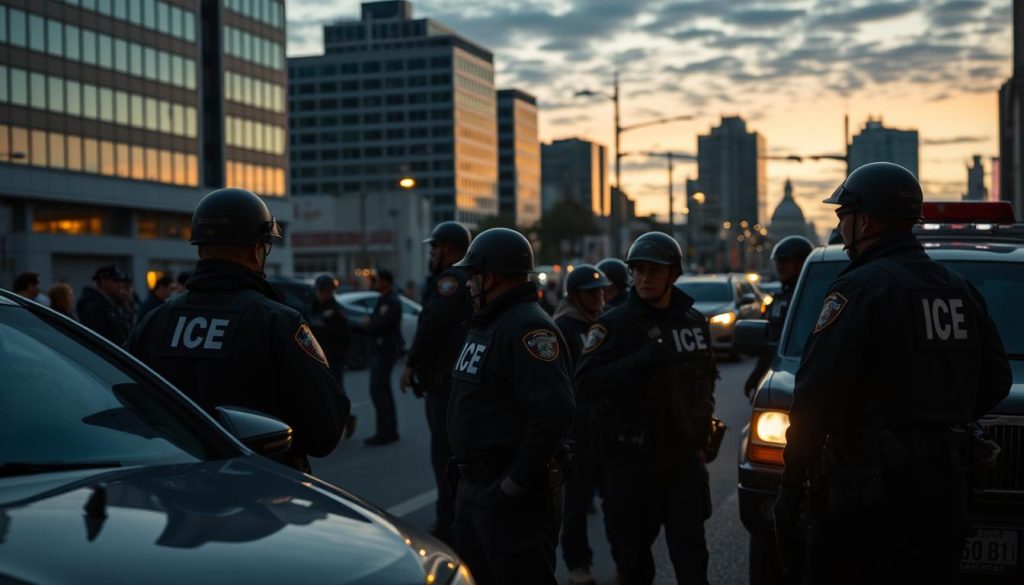
How the federal government describes the surge: targeting “criminal immigrants.”
The federal government claims the surge targets “criminal immigrants,” not the whole community. They say this makes the enforcement more precise and easier to defend. This is because arrests are linked to specific allegations or past convictions.
The legal fight over the surge has brought attention to how these claims are tested. This includes the evidence each side can present. For example, live updates on the judge’s ruling show the public-safety argument alongside concerns from state and city officials.
Border security vs. interior enforcement: how immigration policy priorities show up on the ground
Border security debates are common in national politics. But the surge in Minnesota focuses on interior enforcement. This means it affects workplaces, traffic stops, and neighborhoods.
Pressure to move cases faster can blur policy goals and daily practice. This occurs when arrests outpace available capacity. Reports indicate that deportations may slow due to transportation, paperwork, and bed-space constraints.
Sanctuary laws and policies: the federal claim that cooperation limits enforcement
Federal officials say state and local “sanctuary laws and policies” hinder enforcement. They claim lack of cooperation forces more field activity and increases reliance on ICE operations.
This argument has sparked tension in other states. Enforcement actions have led to large protests and police responses. Reports on protests tied to ICE show how local policies and federal tactics can clash in public spaces.
How does this connect to immigration laws and the broader deportation process?
An arrest is just the beginning of a long process shaped by immigration laws and agency rules. After an arrest, the deportation process includes custody decisions, interviews, filings, and hearings. This can take weeks or months, depending on the case.
This process often goes through detention centers. Access to counsel, language services, and medical care can affect outcomes and public confidence. Reporting on federal pressure to increase removals has raised questions about expediting cases when detention space is tight, and records are incomplete, as detailed in coverage of efforts to speed up.
- Arrests trigger custody reviews and initial paperwork that sets the case in motion.
- Detention decisions affect whether people wait in the community or in detention centers.
- Court timelines and legal standards shape how fast the deportation process can move.
- Policy priorities link internal actions to national debates on border security.
Constitutional and community impacts: 10th Amendment claims, immigrant rights, and local disruption
The fight in Minnesota is not just about immigration laws. It’s about the federal government’s reach in a state. It affects daily life in schools, clinics, and city halls.
Why the 10th Amendment matters in the case and how the judge weighed “likelihood of success.”
Minnesota officials used the 10th Amendment to argue for local protection. They say federal immigration actions create fear and burden local governments.
Judge Katherine M. Menendez looked at the “likelihood of success” in deciding. She found both sides had strong points, making a quick decision hard. The state’s full argument is in the Minnesota DHS complaint.
State and city arguments: retaliation claims and alleged strain on local resources
State and city leaders say the surge is a form of retaliation. They claim it’s a way to force compliance with immigration laws.
They also talk about the strain on local resources. This includes staff time and safety planning. It affects how cities help undocumented immigrants without fear.
Reported effects on daily life: closures, fear, and concerns about armed or poorly trained officers
Officials say closures and disruptions affect daily life. People avoid shopping and school due to enforcement sites.
They worry about armed federal officers. They say this creates fear and makes immigrants less likely to report crimes. This weakens safety for everyone.
Protests and force limits: the 8th Circuit decision influencing the injunction analysis
Menendez mentioned a recent 8th U.S. Circuit Court of Appeals decision. It affected her caution in limiting the force by immigration officers.
She said if her earlier limits were too strict, then stopping the whole operation would be even more so.
Reactions were quick. U.S. Attorney General Pam Bondi praised the ruling on X. Minneapolis Mayor Jacob Frey was disappointed, citing fear and harm.
After federal officers killed two in Minneapolis, protests grew. Thousands marched in Minnesota and nationwide.
Other federal steps add to immigration policy uncertainty. A pause in citizenship steps for some applicants is detailed in this report. Critics say it adds to family instability.
Messages to the Minnesota Attorney General’s office and St. Paul attorneys have not answered yet.
Immigration Enforcement Conclusion
Judge Katherine M. Menendez has decided not to stop Operation Metro Surge. This means a big federal presence in Minnesota and the Twin Cities will stay. The lawsuit will continue, but immigration enforcement is already underway everywhere.
This situation affects more than just Minneapolis. It shows how border security can lead to actions inside the country. Even when states and cities say it’s too much, the deportation process keeps moving fast. This is happening while more people are watching, as seen in Operation Metro Surge reporting.
The case will focus on a few key points. These include the strength of the 10th Amendment claim and the court’s view of DHS’s actions. Policy debates in Washington, like the Dignity Act, will also play a role. These debates affect what ICE does and whom it deports.
Immigration enforcement is also getting more support, including from the military. This support aims to help without requiring troops to make arrests, as covered in Marine assistance to ICE. With more resources, immigration enforcement is getting stronger. The next court decisions will show how far this logic can go in U.S. cities, despite growing protests and legal battles.