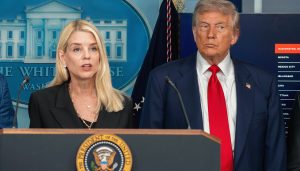
Trump Tests a New 2026 Agenda in a High-Stakes National Address
Unveiling his roadmap for America, Trump reveals his bold 2026 agenda during a national address amid slipping popular support.
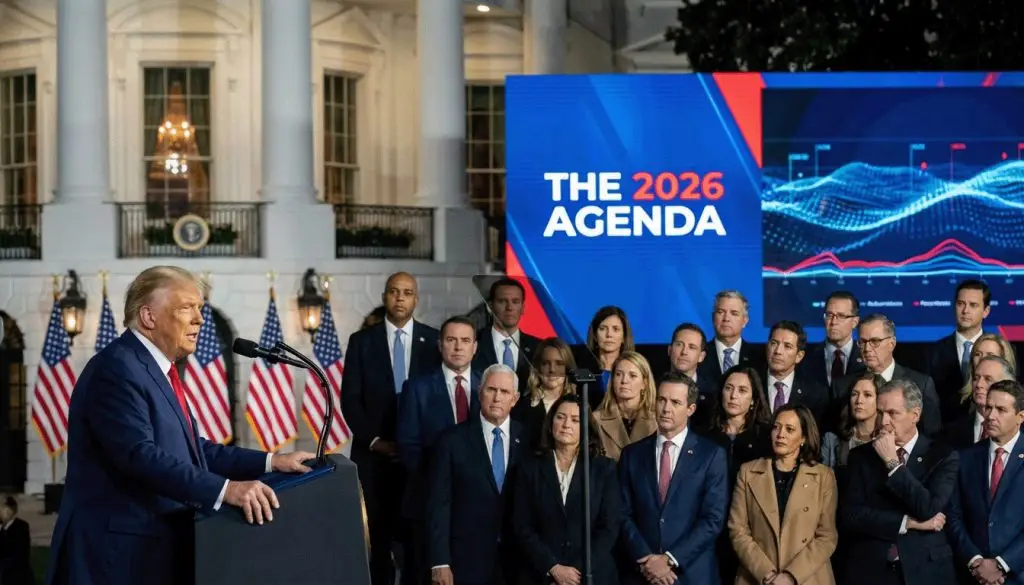
Trump's 2026 agenda
Trump’s 2026 Agenda: President Donald Trump will give a live White House address at 9 p.m. EST on Wednesday. He aims to outline his 2026 Agenda and change how people see his campaign. With polls showing people are unhappy about prices and jobs, he plans to share a clear plan for the rest of his second term.
The White House hasn’t shared much, but Press Secretary Karoline Leavitt says he will talk about his achievements and what’s next. He recently said, “It has been a great year for our Country, and THE BEST IS YET TO COME!” He’s hoping to show his optimism as the election gets closer and voters decide on his platform.
There are significant doubts about the economy after tariffs raised prices and slowed job growth. This has hurt his approval ratings. His team believes a direct message can help him discuss affordability, U.S. manufacturing, and border policy. This is what he will focus on in his national address preview.
He plans to mix formal speeches with visits to key areas, like Pennsylvania. There, he will talk about how his policies can help people save money. This shows how he wants to make his 2026 Agenda seem like a practical plan that helps families.
Trump’s 2026 Agenda Key Takeaways
- Trump will use a 9 p.m. EST White House address to preview Trump’s 2026 Agenda.
- The message centers on a tighter presidential campaign platform and clear goals.
- Economic unease and slower hiring shape the stakes of the upcoming election.
- Aides say the speech will highlight achievements and next steps for the term.
- Tariffs, prices, and jobs will be core themes as he seeks to regain momentum.
- The 2026 midterms will test control of Congress and its leadership.
- Outreach in swing areas supports the broader platform he plans to promote.
National Address Preview: Policies, Platform, and Election Stakes
The White House is planning a big speech for tonight. They want to discuss new policies to address money and jobs. This is all part of their plan to win over voters in the next election.
Timing and Context of the 9 p.m. EST White House Speech
The speech will start at 9 p.m. EST tonight in the East Room. It’s a chance for the President to show a steadier approach. He will focus on specific actions, not significant changes.
Health care will be a big topic. There’s a debate over whether to keep the Affordable Care Act’s tax credits. The President might discuss ways to address health care costs and deadlines.
Rebuilding Popularity Amid Economic Frustrations and Slowing Hiring
Approval ratings have dropped because of rising prices and slower job growth. The team is working on plans to boost jobs and help with costs. They believe these steps will show progress to the people.
Expect concise claims, not grand promises. The President will try to balance talking about jobs and tariffs. He wants to show he’s working on the economy without causing worry.
Balancing Immigration Enforcement with Public Backlash to Mass Deportations
Border control is a key part of their plan, but deporting many people is unpopular. The team is looking to target specific groups and speed up asylum decisions. This way, they can show they’re serious about the order without being too harsh.
They aim to be careful with their words. Past mistakes have shown the importance of being precise. They want to keep the border secure without upsetting people in key areas.
Positioning Ahead of 2026 Midterms: Control of the House and Senate
The election next year is critical. It will decide who controls Congress. Both parties are working hard to win, but it won’t be easy. See the 2026 House elections overview for more on the challenges.
They plan to connect their big ideas to local races. This will help them win votes by showing they care about everyday issues. They want to focus on clear, practical solutions, not just big promises.
One big issue will be making health care more affordable. Families are worried about costs and how long subsidies will last. This is why extending subsidies is so essential: it can help people now while larger changes are put in place.
Trump’s 2026 Agenda: Goals, Strategies, and Initiatives
The White House has a clear plan for 2026. It focuses on economic strength, security, and good governance. The goal is to see quick results and set a path for the future.
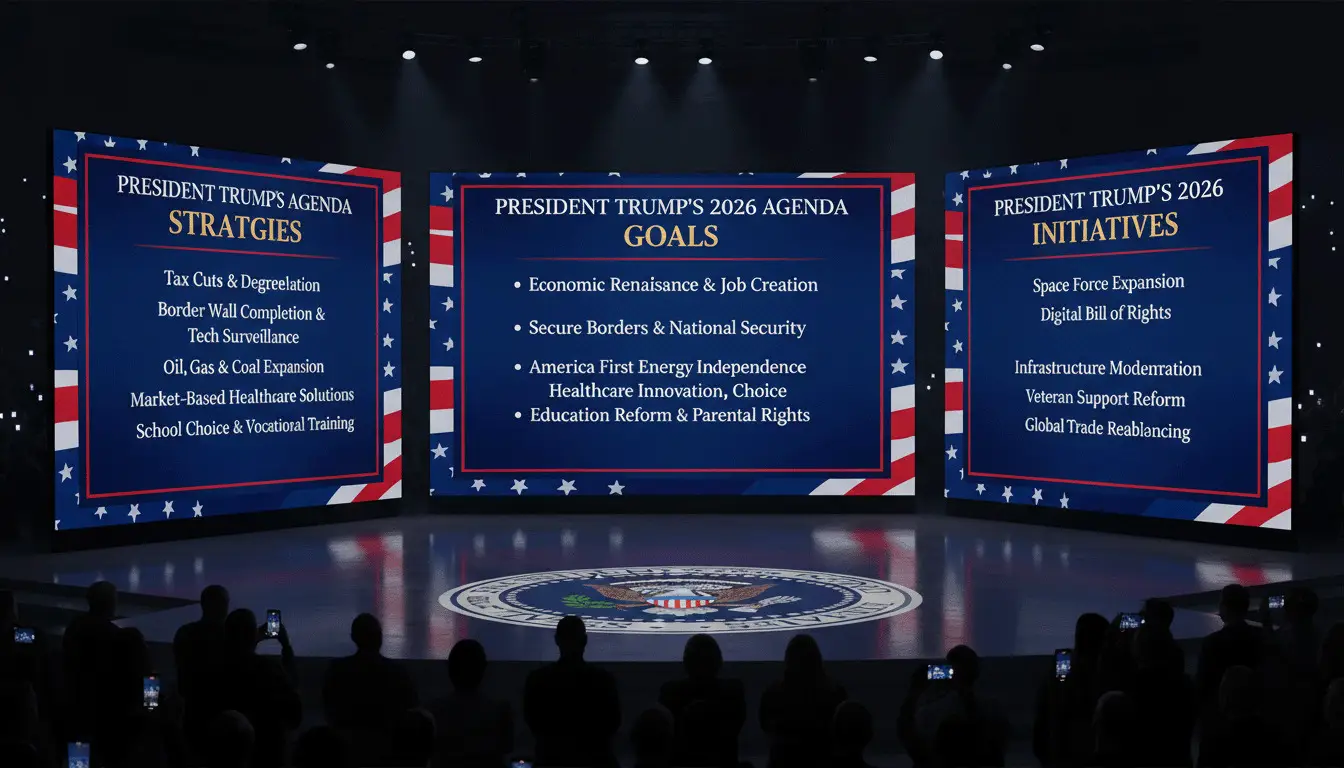
Economic Vision: Tariffs, Inflation Pressures, and Promises of Manufacturing Jobs
The plan uses tariffs to help American factories. This might make imports more expensive. But it aims to create more jobs and better pay.
He believes this short-term challenge will lead to long-term benefits. In speeches, he says families might spend less now. But a stronger economy will bring higher wages and more pride later.
Tax Policy and Consumer Relief: Increased Refunds and Growth Claims
He promises faster refunds to help people spend. He links tax changes to economic growth. He wants to support small businesses and freelancers.
He knows people had mixed feelings about tax cuts before. So, he wants to make sure the benefits are clear. The plan uses taxes to meet real needs and support families.
Border and Immigration Policy: Halting Crossings vs. Unpopular Deportations
He highlights border enforcement as a success. He points to fewer crossings as proof. But mass deportations have been unpopular.
So, he wants to focus on serious crimes and improve fairness. He aims to balance order with respect for people’s rights.
Foreign Policy Posture: Iran Strikes, Anti-Drug Operations, and Global Engagement
Abroad, he talks about strikes on Iran and fighting drug trafficking. He also wants to attract more investment to the U.S.
To make sure things work, he plans to reform the government. This includes cutting waste and improving how the government buys things. This is part of a detailed reform plan. He also knows about the impact of past shutdowns, as seen in a shutdown recap and a record-length fight. These efforts show his 2026 agenda is a complete plan for the U.S. and the world.
Trump’s 2026 Agenda Conclusion
The White House is starting a new chapter with a 2026 plan. It includes tariffs, factories, and bigger tax refunds. They also want stricter border controls and a more assertive stance abroad.
Voters have mixed feelings. They support stopping illegal crossings but worry about mass deportations. They’re also unsure about tax cuts when inflation is high.
With jobs growing slowly and unemployment at 4.6%, the campaign is all about economic fears. Can these policies calm people’s worries about money?
The administration believes new plants and refunds will boost demand and jobs. Trump’s team highlights tough actions against Iran and near Venezuela. They see this as a security-focused platform.
But the public is cautious amid higher prices and slow job growth following tariffs. In this election, actions speak louder than words.
The stakes are high. The 2026 midterms will decide who runs Congress and judge the leadership and policies. By using a careful, prime-time address, Trump hopes to win support.
If the economy improves and security claims are valid, the campaign might gain momentum. But if not, doubts about his platform could shift the election.
Check out this nationwide preview for more on Trump’s 2026 agenda.
Trump’s 2026 Agenda FAQ
When is President Donald Trump’s national address, and what will it cover?
President Trump will speak live from the White House at 9 p.m. EST on Wednesday. He plans to talk about his 2026 plans, his achievements so far, and his future policies. He will also share his vision for the 2026 midterm elections.
Why is the speech happening now as his popularity declines?
Trump’s popularity has dropped due to economic concerns. Inflation rose after he introduced broad tariffs, and hiring slowed. He hopes to change public opinion by sharing his complete record and vision directly with voters.
How do tariffs fit into his economic vision for 2026?
Tariffs are key to his economic plan. Trump believes they will change trade and boost domestic manufacturing, despite short-term inflation. He points to new factory investments as a way to create jobs and increase consumer confidence.
What recent jobs data frames the political stakes?
After introducing tariffs in April, job growth slowed to about 17,000 a month. Unemployment also rose from 4.0% to 4.6%. These numbers highlight the challenges he faces in his policy and 2026 midterm election pitches.
What will he say about tax policy and consumer relief?
Trump will argue that larger tax refunds next year will boost spending and ease concerns about the job market. Despite mixed public views on income tax cuts, he sees refunds as a short-term boost to his growth strategy.
How will immigration enforcement be addressed?
Trump will focus on stopping border crossings, a move many polls support. He must also address public concerns about mass deportations, aiming to strike a balance between strict enforcement and humanitarian concerns.
What foreign policy themes are likely?
Expect Trump to highlight bold actions, like strikes on Iranian nuclear sites and anti-drug efforts near Venezuela. He will link these actions to domestic benefits, aiming to strengthen his campaign message.
How does the White House characterize achievements so far?
Press secretary Karoline Leavitt says Trump will review this year’s successes and outline plans. Trump has used social media and impromptu remarks to stay visible, while national addresses are more formal.
What are the stakes for the 2026 midterm elections?
The elections will decide control of Congress, serving as a judgment on Trump’s leadership. His address aims to rally voters behind his agenda, including tariffs, tax refunds, border control, and a firm foreign policy.
How is he positioning his agenda amid criticism of inflation?
Trump acknowledges higher import costs but believes long-term gains in production and jobs outweigh short-term inflation. He cites planned factories and supply-chain reshoring as key to his 2026 agenda.
What role does messaging play in his strategy?
Trump believes speaking directly to voters can change opinions. He has used frequent posts and appearances to defend his record. This national address aims to showcase his goals, initiatives, and election platform in a disciplined way.
How is he framing the nation’s outlook?
Trump is optimistic, saying, “It has been a great year for our Country, and THE BEST IS YET TO COME!” The address aims to turn this optimism into a clear vision and actionable policies for 2026.
Will he address criticisms over rhetoric and past comments?
Aides focus on policy, but Trump’s off-the-cuff style has sparked both support and backlash. The national address format suggests a more measured approach as he seeks to win over skeptical voters.
How does he tie domestic and global strategies together?
Trump links trade policy and border security to national strength. He connects overseas operations to economic stability at home. This cohesive pitch aims to sway voters in the 2026 elections.
What is the core message of Trump’s 2026 vision?
Trump’s vision includes tariffs to boost manufacturing, targeted tax relief, stricter border enforcement, and a firm foreign policy. He believes these steps will restore growth, ease inflation, and strengthen America.