The Lost Colony of Roanoke The disappearance of an entire English colony in 1590
Discover the haunting mystery of The Lost Colony of Roanoke The disappearance of an entire English colony in 1590 through historical evidence and expert theories

The Lost Colony of Roanoke is a big mystery in American history. In August 1587, about 115 English settlers arrived on Roanoke Island, off North Carolina’s coast. They wanted to make the first permanent English base in the New World. John White led the group, which included his pregnant daughter, Elinor, and her husband, Ananias Dare.
Virginia Dare, born shortly after their arrival, was the first English child in the Americas. When White went back to England for supplies, he got caught up in the Anglo-Spanish War. He returned in August 1590 to find the colony gone, with only “CROATOAN” carved into a post as a clue.
For centuries, people have sought to determine what happened to the “Lost Colony “1. In 2007, they started collecting DNA from families related to the settlers or Native American tribes. They hoped to learn more about the colony’s disappearance. The Roanoke colony’s story might have helped the Jamestown colony succeed 17 years later.
- Roanoke was an attempt by the English to establish the first permanent settlement in North America in 1587.
- The colony, led by Governor John White, appeared, leaving the word “Croatoan “as a clue.
- The Fate of the 115 settlers, including the first English child born in the Americas, remains one of history’s greatest mysteries.
- Efforts to uncover the colony’s Fate through DNA analysis and archaeological research continue to this day.
- Lessons from the Roanoke colony may have contributed to the success of the later Jamestown colony.
The Lost Colony of Roanoke: The disappearance of an entire English colony in 1590
The Roanoke colonists vanished in 1590, leaving historians baffled for centuries. John White returned after three years to find no trace of the 115 settlers, including his family. The homes were gone, leaving only a haunting mystery that has intrigued many.
20 years later, Jamestown settlers tried to find them but failed. The case of the missing colonists is a major mystery in American history. It has led to many theories about what happened to them.
Despite the mystery, clues and historical records offer hints about the Fate of the Roanoke colony. Some think the colonists might have joined Native American tribes. Others believe a Spanish attack or a natural disaster could have killed them.
| Key Dates and Facts | Details |
|---|---|
| 1584 | Explorers Philip Amadas and Arthur Barlowe were the first known Europeans to set eyes on Roanoke Island. |
| 1585 | 100 soldiers, miners, and scientists sent by Raleigh to Roanoke Island. |
| 1587 | 117 men, women, and children recruited by Raleigh for a more permanent settlement on Roanoke Island3. |
| August 18, 1587 | Eleanor Dare gave birth to a daughter named Virginia, the first English child born on American soil |
| 1590 | John White found the City of Raleigh deserted on Roanoke Island. The mystery of the Roanoke colonists’ disappearance continues to fascinate historians and the public. Ongoing research and exploration aim to solve this enduring mystery. |
The search for the Fate of the Roanoke colonists remains ongoing. New clues and insights are being found, which may one day reveal the truth behind their disappearance.
Sir Walter Raleigh’s Vision for English Colonization
Sir Walter Raleigh was a key figure in the Elizabethan era. He received a charter from Queen Elizabeth I in 1584 to establish a colony in North America. Raleigh had to establish a colony by 1591 or lose his rights. He couldn’t go himself, so he sent others to do the work from London.
Raleigh wanted more than just a colony. He wanted a place for privateers to attack Spanish ships, showing the complex politics of his time. The Outer Banks of North Carolina were first explored in the early 1500s. People like Giovanni da Verrazzano and Pedro de Quejo sailed by in 1524 and 1525.
Raleigh’s charter was a significant step in English exploration and colonization. It was the first attempt to establish a lasting English settlement in the New World. In 1584, Raleigh sent two ships to explore. In 1585, he sent a larger fleet of five ships and two pinnaces, comprising about 600 people.
| Event Years | Event |
|---|---|
| 1584 | Raleigh received a charter from Queen Elizabeth I to establish a colony in North America. |
| 1585 | The first attempt at colonization set sail for Roanoke Island with 600 people and 7 ships. |
| 1586 | The colonists abandoned the military colony on Roanoke Island due to starvation. |
| 1587 |
Raleigh funded another colonization attempt to Virginia, later known as the “Lost Colony. Raleigh’s division of English colonies in North America helped spur subsequent exploration and settlement. This led to the establishment of the Jamestown colony and to a greater presence in the area. The mystery of the Roanoke colony remains a major question in American history. |
The First Roanoke Expedition: Laying the Groundwork
In 1584, Philip Amadas and Arthur Barlowe led the first Roanoke expedition. They sailed to explore the coastal areas of what is now North Carolina. This mission was key to Sir Walter Raleigh’s dream of English colonies in the New World.
On July 13, they reached land and made friends with the Secotan Native Americans. Two locals, Wanchese and Manteo, even went to England with them. This strengthened ties between the English and the Native Americans.
Their good reports about the area impressed Queen Elizabeth I. This helped set the stage for more colonization attempts. In 1587, a large fleet brought hundreds of people to North Carolina. They aimed to create the “City of Raleigh”.”
This effort, known as the third Roanoke expedition, ended in mystery. The whole colony vanished, leaving a lasting American mystery.
The first Roanoke expedition was a key step for Raleigh’s colonial dreams. It built good relations with Native Americans and brought back positive news. This set the stage for the bigger colonization efforts that followed.
This initial journey was a vital part of the Roanoke mystery. It has fascinated historians and the public for centuries98.
The Mystery Unfolds: Discovery of Abandonment
In August 1590, John White, the colony’s leader, returned to Roanoke. He was shocked to find the colony empty, with no signs of trouble10. This event sparked widespread concern and confusion.
A strong hurricane complicated White’s search. His ship had to return to England, leaving the mystery unsolved 10. This event initiated a long-standing puzzle that has puzzled historians for centuries 10.
| Key Statistics | Value |
|---|---|
| Initial English Expedition Size | 115 men, women, and children10 |
| First English Child Born in the New World | Virginia Dare |
| Discovery Upon White’s Return | Deserted settlement,” C-R-” and” Croatoan” carved on trees10 |
| Time Elapsed Before White’s Return | 3 years |
The Roanoke colonists vanished without a trace, leading to numerous theories and debates. The mystery of the lost colony is one of America’s oldest unsolved puzzles.
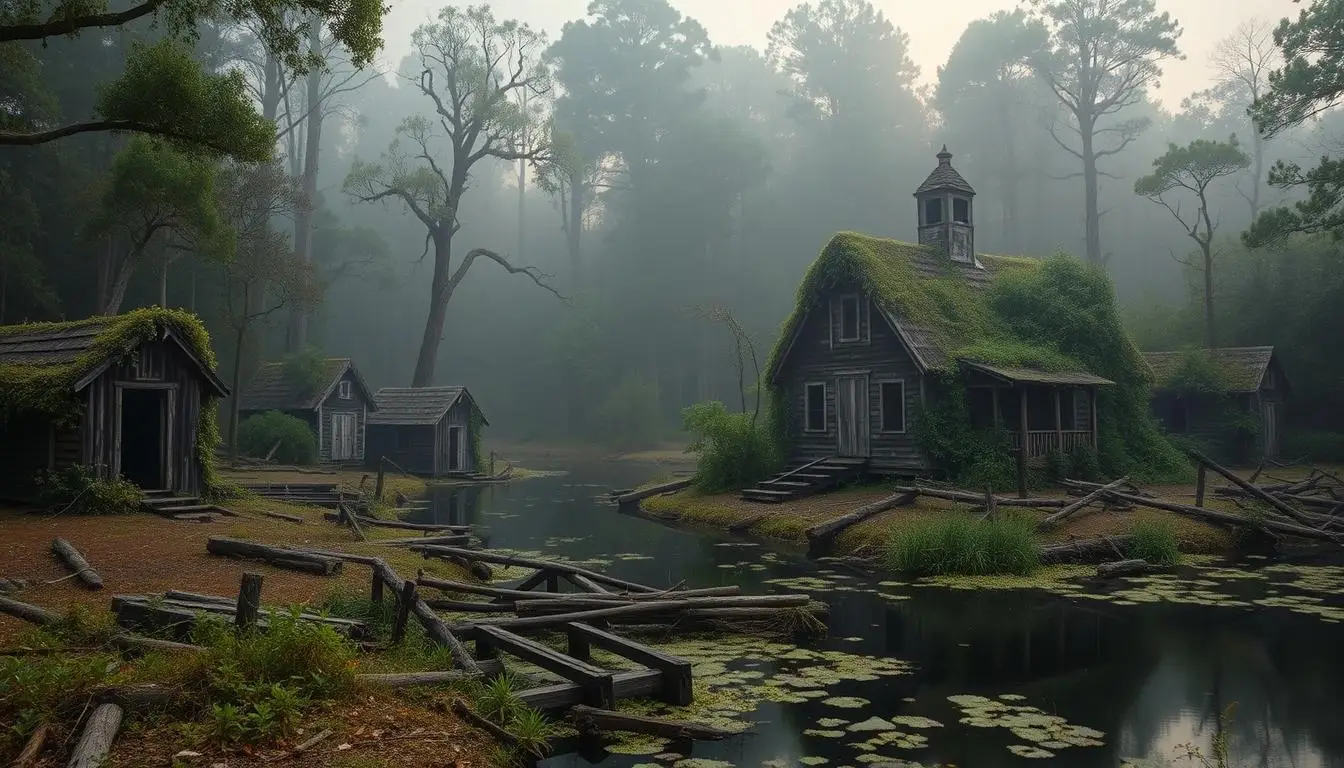
“The narrative of the Lost Colony remains unresolved with various historical theories.”
The Croatoan Clue and Its Significance
The mystery of the Roanoke Colony’s disappearance has fascinated historians for centuries. The only clues left were” CROATOAN” carved into a wooden post and”CR” on a tree near the settlement. These messages have sparked many theories about the 115 English people who vanished14.
Analysis of Historical Evidence
Croatoan Island, south of Roanoke, was home to a Native American tribe. Historians have debated the meaning of these messages. Some think the colonists moved to Croatoan Island, while others believe it was a distress signal13. Archaeological excavations have sought additional clues, hoping to reveal what happened to the lost colony.
Theories About the Carved Messages
European artifacts found on Croatoan Island suggest that the colonists might have joined the local tribe 14. Excavations at the Cape Creek site yielded a gold ring, a writing slate, and other colonial-era items. Pottery at Site X, near Edenton, North Carolina, is believed to have been used by Roanoke settlers15.
But the mix of Elizabethan and Native American artifacts on Croatoan Island raises questions. Some think these items might have been taken by force rather than through peaceful exchange4.
“The passage of time has not diminished the mystery surrounding the lost colony of Roanoke. The carved messages and the scattered artifacts continue to captivate historians, archaeologists, and the public alike, showing the complex relationship between the English colonists and the native inhabitants.”
Archaeological Discoveries and Modern Research
The mystery of the Roanoke Colony’s disappearance in 1590 has long fascinated scholars. Archaeological research at Fort Raleigh National Historic Site has been ongoing for over a century. It has uncovered many European and Native American artifacts that help us understand what happened to the colony16.
Among the finds are signs of a metallurgy workshop from the early days of the colony. This shows that the colonists were engaged in various industrial tasks.
Today, DNA studies of local families have also given us clues about the Roanoke settlers’ connections to Native American tribes. While no clear evidence of the colonists’ joining the Croatoan people has been found, research continues to bring us closer to the truth.
The digs have uncovered items from the 16th and 17th centuries. This suggests a complex history of the English settlers and the local Native American population. Scott Dawson and his team from the University of Bristol in the UK have led these efforts. Yet, their findings have sparked debate, with some, such as Dr. Charles Ewan of East Carolina University, questioning the accuracy and interpretation of the evidence.
Despite the debates, research continues to reveal more about the Roanoke Colony’s disappearance. It offers a fascinating look into early English colonization and the interactions between settlers and Native Americans.
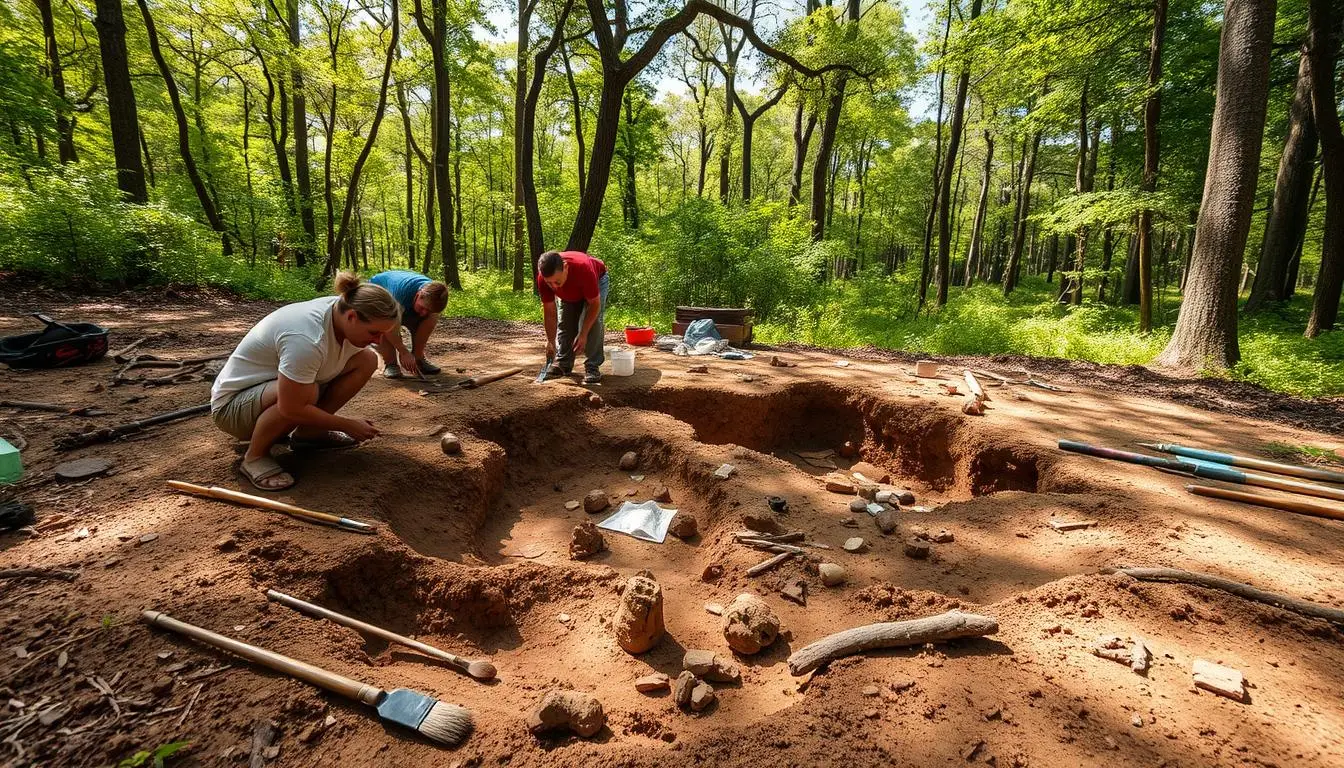
“The Roanoke Colony remains one of the most intriguing and elusive mysteries in American history. The archaeological and scientific research being conducted today is critical in finding out what happened to these early English settlers.”
The search for answers at Fort Raleigh and nearby areas gives us hope. It might help solve the mystery of the lost Roanoke Colony.
Theories About the Colony’s Fates Fate
The Roanoke Colony’s disappearance in 1590 has fascinated historians for centuries. Many theories try to explain what happened to the lost colonists. Each theory has its own evidence and challenges.
Integration with Native Tribes Theory
One idea is that the colonists might have joined friendly Native American tribes. This could refer to the Croatoan or Lumbee peoples. Later accounts describe people with European features living in native villages.
Some think the colonists might have split up. Some could have gone inland or to Croatoan Island. They might have joined different tribes21.
Natural Disaster Hypothesis
Another theory is that a natural disaster, such as a hurricane or disease, might have struck the colony. The Outer Banks’ harsh weather and lack of supplies made the colony vulnerable to environmental dangers20.
Spanish Attack Possibility
The ongoing conflict between England and Spain may have prompted a Spanish attack on the colony. The colony’s proximity to Spanish territories in Florida and the Caribbean supports this idea.
Each theory has its supporters and critics, making the mystery of the Roanoke Colony’s fate a topic of debate. As research and discoveries continue, we might learn more about this mystery.
| Theory | Supporting Evidence | Challenges |
|---|---|---|
| Integration with Native Tribes |
|
|
| Natural Disaster |
|
|
| Spanish Attack |
|
|
The mystery of the Roanoke Colony’s fate continues to intrigue scholars and the public. It shows the complexities and challenges of early colonial adventures. As we continue to search for answers, discoveries may resolve this long-standing mystery.
The Lost Colony of Roanoke Conclusion
The Lost Colony of Roanoke is a mystery that grabs our attention. It shapes American culture and keeps researchers busy. It shows the tough times early settlers faced and the tricky relationships with Native Americans.
Though we may never know what happened to the Roanoke colonists, their story is a big part of American history. It has sparked considerable interest l, leading to numerous theories and searches.
The story of the Roanoke colony is a key part of the founding of the United States. It depicts the challenges of starting a new life in a new land. As we continue to learn, the Lost Colony of Roanoke will continue to excite and inspire us all.
The Lost Colony of Roanoke FAQ
What was the Lost Colony of Roanoke?
The Lost Colony of Roanoke was an English settlement on Roanoke Island, off North Carolina’s coast. It was established in 1587. The colony comprised 117 people, including John White’s daughter, Elinor, and her husband, Ananias Dare. When White returned in 1590, the colony was gone, leaving only the word “CROATOAN” as a clue.
What happened to the Roanoke colonists?
The fate of the Roanoke colonists remains a mystery. John White found the colony empty in 1590. There were no signs of struggle or disaster. Theories suggest that they may have joined Native American tribes or faced a natural disaster or a Spanish attack.
What was Sir Walter Raleigh’s role in the Roanoke colony?
Sir Walter Raleigh was given a charter by Queen Elizabeth I in 1584. He wanted to create a base for privateers and a successful colony. He sent others to do the work while he stayed in London. But the colony vanished before the 1591 deadline.
What was the first Roanoke expedition like?
The first expedition, led by Philip Amadas and Arthur Barlowe in 1584, was a success. They made friends with the Secotan tribe. Two natives, Wanchese and Manteo, went to England, impressing Queen Elizabeth I with their reports.
How did the mystery of the Lost Colony unfold?
The mystery deepened in August 1590 when John White returned. He found the colony gone, with no signs of trouble. The only clues were “CROATOAN” and “CRO” on trees, sparking confusion.
What was the significance of the “CROATOAN” clue?
The “CROATOAN” clue was found on a post, and “CRO” was found on a tree. Croatoan was an island south of Roanoke, home to a tribe. Historians have debated its meaning for centuries, with theories ranging from relocation to a coded message.
What archaeological evidence has been found at the Roanoke site?
Archaeological work at Fort Raleigh National Historic Site started in 1895. It has uncovered European and Native American artifacts and evidence of early metallurgy. DNA analysis of local families is also being done to find links to the settlers.
What are some of the theories about the Lost Colony’s disappearance?
Theories include the colonists joining Native American tribes, a natural disaster, or a Spanish attack. Each theory has its supporters and critics, leaving the mystery of the Lost Colony unresolved.
Source Links
- What Happened to the ‘Lost Colony’ of Roanoke? | HISTORY – https://www.history.com/news/what-happened-to-the-lost-colony-of-roanoke
- The Lost Colony — An Outer Banks Mystery – https://www.npca.org/articles/3604-the-lost-colony-an-outer-banks-mystery
- Roanoke Voyages – The Lost Colony – https://www.thelostcolony.org/the-lost-colony/bring-history-to-life/roanoke-voyages/
- What Happened to the Lost Colony at Roanoke? – https://history.howstuffworks.com/history-vs-myth/roanoke-colony.htm
- The Roanoke Colonies | First Colony Foundation – https://www.firstcolonyfoundation.org/history/the-roanoke-colonies/
- What Happened to the Roanoke Colony – https://www.pbsnc.org/blogs/science/lost-colony/
- The Search for the Lost Colony of Roanoke – https://www.nationalgeographic.com/magazine/article/lost-colony-roanoke-history-theories-croatoan
- The Lost Colony of Roanoke: Did They Survive? – National Geographic, Archaeology, Historical Records, and DNA – https://dna-explained.com/2018/06/28/the-lost-colony-of-roanoke-did-they-survive-national-geographic-archaeology-historical-records-and-dna/
- PDF – https://www.mrtripodi.org/students/wp-content/uploads/2010/10/coldacse.pdf
- Roanoke–The Lost Colony – https://www.southbuffalocs.org/cms/lib/NY01001376/Centricity/Domain/17/740_colonization_roanoke_the_lost_colony_0.pdf
- What We Now Know About the Lost Colony of Roanoke – https://historyguild.org/what-we-now-know-about-the-lost-colony-of-roanoke/?srsltid=AfmBOoocngNVfzFZgoYfqjmDbU-LYHW_3i-4_jPRj6c3e3hCeWKM49YZ
- Archaeologists Find New Clues to “Lost Colony” Mystery | HISTORY – https://www.history.com/news/archaeologists-find-new-clues-to-lost-colony-mystery
- We Finally Have Clues to How the Lost Roanoke Colony Vanished – https://www.nationalgeographic.com/culture/article/150807-lost-colony-roanoke-hatteras-outer-banks-archaeology
- The lost colony of Roanoke – https://digital.lib.ecu.edu/13444
- The Mystery of the Lost Roanoke Colony – https://www.historyhit.com/the-mystery-of-the-lost-roanoke-colony/
- What We Now Know About the Lost Colony of Roanoke – https://historyguild.org/what-we-now-know-about-the-lost-colony-of-roanoke/?srsltid=AfmBOoqyfasrkzPsgvdkjvu7rjNCxvkjbUjA60B-LRk7a7uP1pg1FM_S
- Exploration Mysteries: The Lost Colony of Roanoke » – https://explorersweb.com/exploration-mysteries-the-lost-colony-of-roanoke/