Iran Threatens U.S. Post Trump’s Stern Warning.
Discover the latest on how Iran threatens U.S. relations amid escalating tensions and the challenges facing the nuclear deal’s future.

Iran Threatens U.S.
Iran Threatens U.S.: Fresh news from Tehran has raised alarms. U.S. President Donald Trump issued a stern warning on Truth Social. This occurred during a wave of unrest, as Iran threatened U.S. intervention. There has been a warning from Russia as well for the U.S. to stay out of the Ukraine War
Iran’s leaders spoke bluntly about the consequences. They warned that these actions could spread beyond their borders.
Dozens of protesters marched in several provinces this week. Some demonstrations turned deadly after clashes with police. This has made U.S.-Iran relations even more tense.
Washington is facing public pressure to act carefully. Tehran, on the other hand, says it won’t accept outside interference.
The situation is escalating quickly. Trump’s warning, the protests, deaths, arrests, and U.S. calls for restraint are all colliding. Iran’s top security voices are now issuing threats. For more on the initial warning and the protests, see this report on Trump’s warning.
Iran Threatens U.S. Key Takeaways
- Iran threatens U.S. involvement after Trump warned Iran over how it handles protesters.
- Iranian officials said any U.S. interference could put American forces in the region at risk.
- Protests spread across multiple provinces, with clashes that turned deadly in some areas.
- U.S.-Iran relations face a new strain as both sides trade public warnings.
- Iran’s political news this week centers on unrest, arrests, and the government’s security response.
- The following developments hinge on protest momentum, U.S. messaging, and Tehran’s threats of retaliation.
Trump’s warning amid deadly protests raises stakes for U.S.-Iran relations
Demonstrations are spreading, and deaths are mounting. This is putting a lot of pressure on leaders in Washington and Tehran. The situation is testing the U.S.-Iran relationship in real time.
Public messages, street unrest, and market panic are all contributing to the tension. This comes at a time when there are ongoing debates about the Iran nuclear deal. It also raises questions about what leverage the U.S. has in its foreign policy.
What Trump said on Truth Social and why it matters for U.S. foreign policy
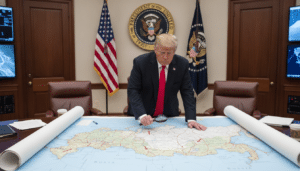
Donald Trump warned Tehran on Truth Social against killing protesters. He suggested the U.S. might step in. His message was clear and focused on stopping violence, not changing the regime.
This stance complicates U.S. foreign policy. It raises expectations quickly and forces officials to decide what “rescue” means in practice. Other political news
Ali Vaez of the International Crisis Group sees a tough choice. Inaction might embolden the government and chill dissent. But action could lead to a broader conflict. The situation also affects the debate over the Iran nuclear deal, as any crisis response could shape future talks.
Where protests spread, and what Iranian state media reported about deaths and clashes
Protests have spread beyond Tehran to several provinces, with clashes turning deadly. State media described scenes of stone-throwing, fires, and confrontations near official buildings. They also claimed armed “rioters” were involved.
Accounts like Trump’s “locked and loaded” warning drew wider attention as the unrest intensified.
- Azna, Lorestan: Fars News Agency reported at least three killed and 17 injured after protesters stormed a police station, with cars set on fire.
- Lordegan county, Chaharmahal and Bakhtiari: Fars reported at least two killed after dozens clashed with police; it was not clear who the casualties were.
- Kuhdasht, Lorestan: State-affiliated media reported one Basij member killed and 13 injured, and aired footage of an injured security officer.
Arrest tallies are also rising, with 20 detained in Kuhdasht and 30 detained in Malard County in Tehran province. The growing crackdown is now part of how U.S.-Iran relations are being read. It also raises questions about whether economic pressure is driving the unrest.
Why is the unrest being compared to the 2022 Mahsa Amini uprising
The mix of students, bazaar merchants, and shopkeepers echoes the nationwide uprising in 2022 following the death of Mahsa Amini. Anger is tied to economic stress, including record lows in the currency and sharp price increases. This makes it hard for officials to categorize the protests.
For U.S. audiences, the comparisons revive debate about the Iran nuclear deal. They question whether sanctions, diplomacy, or a mix of both can change Iran’s behavior. Each option has tradeoffs, and none offers a quick solution once violence spreads.
U.S. State Department reaction to reports of intimidation, arrests, and violence
The U.S. State Department expressed concern about reports of “intimidation, violence, and arrests.” It urged Iranian authorities to stop the crackdown. Its Persian-language messaging emphasized the protests’ broad nature, framing them as a national demand for rights.
This public posture adds another layer to U.S. foreign policy. It shows how values-based statements can clash with security concerns. Even if the unrest remains uneven, the daily images and detentions are shaping U.S.-Iran relations alongside nuclear diplomacy.
Coverage of the administration’s supportive tone toward demonstrators is likely to keep the Iran nuclear deal conversation tied to what happens on the streets.
Iran Threatens U.S. as leaders warn American forces in the Middle East could be targeted.
Iran’s leaders turned their attention to U.S. troops and bases in the area. They used strong words to warn the U.S., underscoring Iran’s view of external pressure as a threat. This is a common theme in Iran’s foreign policy.
The Guardian reported on these warnings, adding to the already high tensions in the Middle East. Washington and Tehran are exchanging sharp messages.

Ali Larijani’s warning about regional “disruption” and American interests
Ali Larijani, Iran’s security chief, said U.S. interference would spread trouble. He warned it could harm American interests across the region. He linked any action in Iran to risks for U.S. assets worldwide.
His words were meant to be broad and scary. They hinted at wider consequences, making everyone uncertain.
Ali Shamkhani calls Iran’s national security a “red line” and threatens a “regrettable response.”
Ali Shamkhani, close to Iran’s leader, made a clear statement. He said Iran’s security is a “red line” and warned of a strong response to any interference. He linked domestic unrest to external threats.
This approach shows Iran sees public threats and actions as part of the same issue. It’s part of their foreign policy.
Parliament speaker Mohammad Bagher Ghalibaf says U.S. centers and forces would be “legitimate targets.”
Mohammad Bagher Ghalibaf, Iran’s parliament speaker, gave a direct warning. He said U.S. bases and forces in the region would be targets if there were any actions. This was after Trump’s statement.
His words were clear and aimed directly at U.S. personnel and facilities. This is a common tactic in the Middle East.
How Iran’s foreign policy messaging connects to Iran’s military capabilities, Iran’s sanctions, and Middle East tensions
Senior officials in Iran used X to spread their message. It seemed like a coordinated effort. They hinted at Iran’s military strength, making any intervention seem costly.
- Deterrence through warnings about “the entire region,” not a single battlefield.
- Leverage by linking U.S. choices to threats against personnel, bases, and interests.
- Resilience claims under pressure from Iran sanctions, presented as a reason Iran will not bend.
In this way, Iran’s foreign policy uses words and actions together. It focuses on Iran’s military and sanctions amid growing tensions in the Middle East. This makes it hard for both sides to predict what the other will do next.
Iran Threatens U.S. Conclusion
Trump warned the U.S. would act if Iran harmed protesters. Iran said it would fight back if the U.S. got involved. This could lead to more trouble in the Middle East, even without direct action.
Iran’s protests have spread, with reports of deaths and arrests. The situation is getting worse, with the sixth day of unrest. This has made Trump’s promise to help protesters a big deal.
Many see this moment as similar to the 2022 uprising. The U.S. is worried about violence and arrests. This heightens tensions between the U.S. and Iran.
The U.S. faces a tough choice: staying quiet or getting involved. Either way, it could lead to more conflict. The CFR timeline shows how quickly things can escalate.
Ali Vaez calls it a tough decision. It will significantly affect U.S.-Iran relations. The situation is very delicate, with both sides ready to react.
Iran Threatens U.S. FAQ
Why did Iran threaten the U.S. after President Donald Trump’s post?
Iran’s leaders reacted after Trump threatened to intervene in their protests. They warned that if Washington interferes, U.S. troops and interests in the Middle East could be targeted. This has made U.S.-Iran relations even more strained.
What did Trump say on Truth Social, and what were the implications?
Trump wrote on Friday: “If Iran shoots (sic) and violently kills peaceful protesters, which is their custom, the United States of America will come to their rescue. We are locked and loaded and ready to go. Thank you for your attention to this matter! President Donald Trump. His post signaled a threat of intervention tied to Tehran’s handling of protests. It raised questions about the U.S. government’s follow-through on foreign policy.
What “stark strategic dilemma” did analyst Ali Vaez describe for Washington?
Ali Vaez, director of the Iran Project at the International Crisis Group, said Washington faces a stark strategic dilemma. If it threatens action but fails to follow through, it could embolden the regime and discourage future dissent. If it intervenes, it could widen into a broader conflict with unpredictable consequences for Americans and Iranians.
Where did protests spread in Iran, and what happened this week?
Dozens of protesters took to the streets across several provinces this week. Some demonstrations turned deadly on Wednesday after clashes with police, as unrest spread and security forces moved to contain crowds.
What did Iran’s state-affiliated Fars News Agency report in Azna, Lorestan?
Fars reported that in Azna, Lorestan, on Thursday evening, at least three people were killed and 17 were injured after protesters stormed a police station. Fars said protesters clashed with police, threw stones, and set cars on fire. It claimed some armed “rioters” took advantage of a protest and that police later confiscated firearms, without providing evidence.
What did state-affiliated media report from Lordegan county in Chaharmahal and Bakhtiari?
Fars reported that in Lordegan county on Thursday morning, at least two people were killed after dozens clashed with police. It was unclear whether the casualties were protesters or law enforcement. Unverified social media videos showed protesters throwing stones, and Fars said stones were thrown at the governor’s office, banks, and other government buildings.
What was reported in Kuhdasht, Lorestan, and why was it significant?
Fars reported that in Kuhdasht on Wednesday night, one Basij paramilitary member was killed and 13 people were injured, described as the first known protest-linked death reported by state-affiliated media in this wave. Fars also aired video of a police member receiving treatment after allegedly being set on fire by protesters.
How many arrests were reported by state-linked outlets, and where?
Tasnim reported 20 arrests in Kuhdasht on Thursday, citing the prosecutor. Fars reported 30 arrests in Malard county, Tehran province, citing county official Mansour Saleki, who said those detained were “abusing the legal right of citizens to protest” while “disrupting public disorder.”
Why are comparisons to the 2022 Mahsa Amini protests resurfacing?
Shopkeepers, bazaar merchants, and students protested in several cities, chanting anti-regime slogans over economic conditions after the currency hit record lows. The unrest has been described as the most significant protest wave in Iran, similar to the 2022 nationwide uprising sparked by Mahsa Amini’s death in police custody.
What did the U.S. State Department say about the protests and crackdown?
The U.S. State Department said Wednesday on X that it was concerned about reports of “intimidation, violence, and arrests” and urged authorities to end the crackdown. Its Farsi-account message added: “First the bazaars. Then the students. Now the whole country. Iranians are united. Different lives, one demand: respect our voices and our rights,” framing the U.S. response as public, values-driven messaging.
How did Iranian leaders frame their warning against U.S. interference?
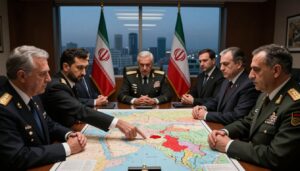
Senior Iranian political and security figures issued stern warnings after Trump’s comments. They tied possible retaliation to American troops, bases, and broader U.S. interests in the region, using deterrent language meant to raise the costs of any U.S. intervention and to influence regional perceptions amid Middle East tensions.
What did Ali Larijani warn about “disruption” and American interests?
Ali Larijani, identified as Iran’s national security chief, said American interference would trigger “disruption across the entire region and the destruction of American interests.” His message framed retaliation in broad regional terms, signaling the possible escalation beyond Iran’s borders.
What did Ali Shamkhani mean by calling Iran’s national security a “red line”?
Ali Shamkhani, a close adviser to Supreme Leader Ali Khamenei, declared Iran’s national security a “red line.” He warned: “Every hand of intervention that approaches Iranian security…will be cut off with a regrettable response,” indicating punitive action if U.S. moves go beyond rhetoric.
What was Mohammad Bagher Ghalibaf’s most direct threat about U.S. forces?
Mohammad Bagher Ghalibaf, speaker of Iran’s parliament, issued the most explicit targeting threat. He said that after Trump’s “official statement,” “all American centers and forces across the entire region will be legitimate targets for us in response to any possible actions,” directly linking possible U.S. intervention to attacks on U.S. assets in the Middle East.
How do Iran sanctions and Iran’s military capabilities factor into this escalation?
The warnings come as Iran sanctions continue to shape pressure points in U.S.-Iran relations and as Iran’s leaders emphasize deterrence. Their public messaging highlights Iran’s military capabilities and Iran’s foreign policy posturing as leverage, suggesting that any U.S. intervention could trigger regional blowback affecting American personnel and facilities.
Does this escalation affect talks on the Iran nuclear deal?
Heightened unrest, sharper rhetoric, and threats against U.S. forces can complicate diplomacy around the Iran nuclear deal by increasing mistrust and raising the political cost of compromise, even without direct negotiations in the foreground, worsening U.S.-Iran relations often narrow diplomatic space.
Why are officials using public posts on X to deliver warnings to Washington?
By posting on widely visible platforms, Iranian officials can quickly and publicly signal a unified stance. The approach aims to deter U.S. action, shape regional narratives, and show domestic audiences that Iran’s leadership is responding forcefully to what it frames as U.S. interference.
What is known so far about fatalities and injuries from the unrest?
State-affiliated reporting described at least three killed and 17 injured in Azna, at least two deaths in Lordegan county, and one Basij paramilitary member killed with 13 wounded in Kuhdasht. The reports also described clashes, property damage claims, and arrests as protests spread across provinces.
Why is this moment especially volatile for U.S. foreign policy and U.S.-Iran relations?
Trump’s post publicly threatened intervention tied to Iran’s treatment of protesters, and Iran responded by warning that American forces and interests could become targets across the region. With protests drawing comparisons to the Mahsa Amini uprising and the U.S. State Department criticizing intimidation and arrests, the situation raises the risk of miscalculation amid broader Middle East tensions.