Missing NASA Scientists Has FBI Concerned
Concerns grow as Missing NASA Scientists spark investigations by the FBI, highlighting unexplained disappearances within the space agency’s personnel.
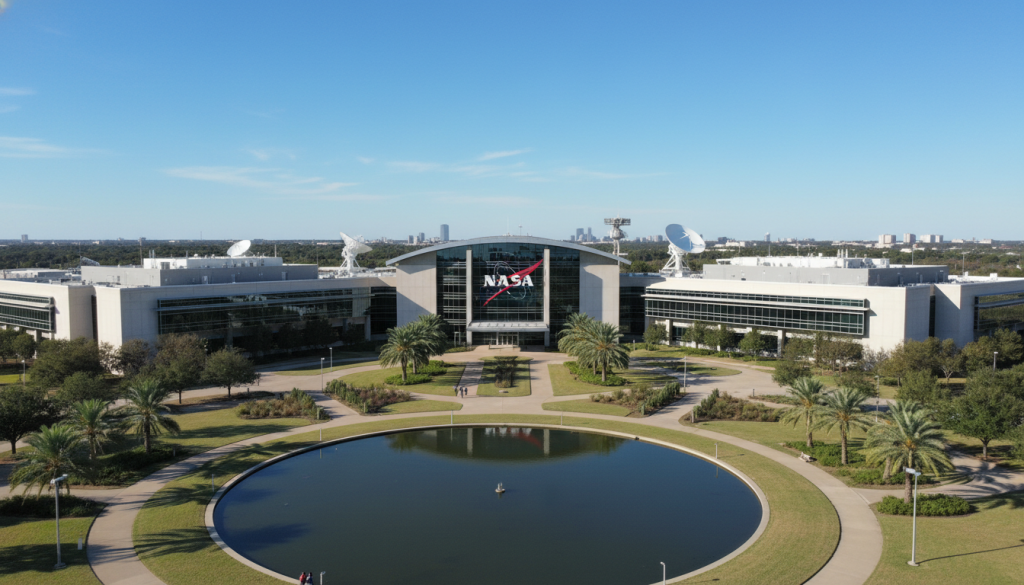
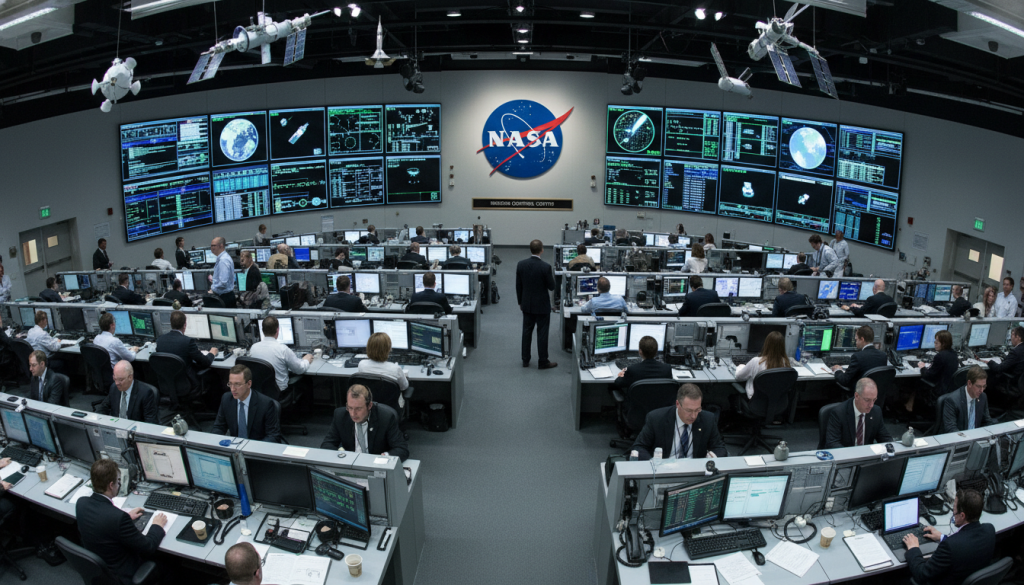
Missing NASA Scientists: At least 11 U.S. scientists in nuclear and space research have died or gone missing. This has raised questions about their safety and the projects they worked on. It’s a mystery that’s caught the public’s attention.
President Donald Trump called it “pretty serious stuff.” This phrase captures the public’s concern. The issue is not just about the scientists’ lives but also about the knowledge and research they took with them.
NASA has tried to reassure the public. On X, the agency said it’s working with other agencies to find the missing scientists. It also stated there’s no national security threat. Yet the term “Missing NASA Scientists” is spreading online quickly, with many seeking updates.
This article will explore what we know and what remains unconfirmed. It will follow the federal probe and look at the most discussed cases. It will also examine how national security claims and speculation are adding to the mystery.
Missing NASA Scientists: Key Takeaways
- At least 11 scientists connected to U.S. nuclear and space work have died or gone missing in recent years.
- The FBI has drawn increased attention as the NASA scientist investigation expands.
- President Donald Trump described the situation as “pretty serious stuff.”
- NASA says it is cooperating with relevant agencies and sees no current national security threat.
- Public debate has surged, making “Missing NASA Scientists” a widely searched topic.
- The article will separate verified facts from rumors tied to the space agency scientist mystery.
As more information comes out, some are comparing this to other unexplained reports online. But the main question remains: who is missing, what they worked on, and why the FBI is involved.
Federal investigation intensifies as scientists linked to nuclear and space programs die or vanish.
Federal officials are facing fresh questions after a cluster of cases involving scientists tied to U.S. nuclear and space work. The growing public focus has turned the unexplained disappearance of scientists into a national conversation. It has also pushed agencies to compare notes across states and jurisdictions.
While many details remain unclear, the headlines have been fueled by the same basic fear: that vanished NASA researchers and other experts may not be isolated incidents. The reporting has also highlighted how quickly rumors can outrun verified facts. That tension has kept the NASA personnel disappearance issue in the spotlight without settling on a single explanation.
Why the cases drew national attention: at least 11 scientists have died or gone missing in recent years
The key threshold driving attention is blunt: at least 11 scientists connected to U.S. nuclear and space research have reportedly died or gone missing in recent years. That count, repeated across broadcasts and social media, has pushed federal authorities to treat the trend as more than background noise. Even so, the cases span different locations, timelines, and personal histories.
- Some reports focus on missing-person timelines and last-known movements.
- Others stress employment ties to sensitive labs, contracts, or space research networks.
- Several accounts note the difficulty of comparing cases without shared case files.
House Oversight Committee announcement onApril 200 and James Comer’s warning of “something sinister.”
OnApril 200, the House Oversight Committee said it would review the deaths and disappearances after Chairman James Comer (R-Ky.) raised alarms on Fox & Friends. Comer warned that “something sinister could be happening,” adding that he first thought it was “some kind of crazy conspiracy theory.” He later framed it as a possible national security concern, as the unexplained disappearance of scientists continued to draw new tips and public claims.
The committee’s move also widened the political lens, placing vanished NASA researchers alongside other federal safety debates. That broader climate has shaped how Americans read hard stories about government power and accountability, including coverage of law-enforcement scrutiny that keeps civil-liberties questions in the news cycle. In that context, each new NASA personnel disappearance report tends to land with extra force.
President Donald Trump calls it “pretty serious stuff” as a broader federal review is ordered.
The White House timeline added to the intensity. On April 155, Fox News reporter Peter Doocy questioned press secretary Karoline Leavitt about the cases; two days later, Leavitt said the administration would launch an investigation. President Donald Trump later described the situation as “pretty serious stuff,” while saying the probe had not yet found evidence of a connection.
Trump also stressed that the circumstances vary, noting that some people were sick, some cases were “self-inflicted,” and others differed. He said the administration would produce a “full report,” and repeated that “it’s very serious.” The remarks kept the unexplained disappearance of scientists in the public ear, while leaving room for competing interpretations.
Agencies involved: FBI coordination with the Department of Energy, the Department of Defense, and local law enforcement
CNN reported that the FBI is leading efforts to identify links and coordinating with the Department of Energy, the Department of Defense, and state and local law enforcement. That structure matters because cases tied to vanished NASA researchers can cross city, county, and state lines fast. It also reflects how national security concerns and standard missing-person work can collide in real time.
The political backdrop has added another layer. Trump has slashed funding for science research in his second term, prompting debate about whether rival nations could try to poach U.S. talent, though that remains unproven. At the same time, Oversight Committee member Rep. James Walkinshaw (D-Va.) told CNN that the U.S. has thousands of nuclear scientists and experts, and it is not clear that targeting about 10 individuals would significantly affect the nuclear program, even as stories of NASA personnel disappearances continue to circulate.
Missing NASA Scientists and the key cases fueling the space agency scientist mystery
The phrase “missing NASA scientists” keeps popping up in talks about safety, secrecy, and risk. These cases involve deaths, disappearances, and unanswered questions. Families and agencies are left to deal with these mysteries.
Small details often spark big interest in these cases. What was left behind, where someone was last seen, and how fast rumors spread. The disappearance of NASA employees is seen as one big story, not separate incidents.
William Neil McCasland was reported missing from Albuquerque onFebruary 277, 2026, after leaving key items behind.
William Neil McCasland, 68, a former U.S. Air Force major general, went missing from his Albuquerque home onFebruary 277, 2026. His wife reported him missing. He left behind glasses, his phone, and other electronics, and was believed to have taken a .38 caliber revolver.
Two months later, officials were unsure where he went. The case gained more attention because McCasland once commanded Wright-Patterson Air Force Base. This base is linked to the Roswell incident, fueling speculation about classified work.
Nuno Gomes Loureiro was shot and killed in Massachusetts in December 2025 after being named director of MIT’s Plasma Science.
Nuno Gomes Loureiro, a renowned nuclear science professor, was shot and killed at his Massachusetts home in December 2025. He was named director of MIT’s Plasma Science and Fusion Center. This detail keeps the case in the spotlight.
YouTuber Daniel Liszt, known as Dark Journalist, suggested that advanced fusion research was so critical that a researcher could be erased. He linked the homicide to other deaths related to the U.S. Strategic Defense Initiative. This added to the mystery of NASA employees disappearing.
Some coverage linked Loureiro’s death to space-weather concerns. It tied public anxiety to big unknowns in science and security, including talk about large solar storm risk.
Michael David Hicks’ July 2023 death and the start of intensified attention to vanished NASA researchers.
Michael David Hicks, 59, a scientist at NASA’s Jet Propulsion Laboratory in California, died in July 2023. Lawmakers, including James Comer, pointed to this period as when the incidents began to receive more attention.
Hicks’ daughter, Julia, told CNN that the speculation has been unsettling. She doesn’t understand the alleged connection between her father’s death and other cases. This shows how a NASA staff disappearance case can collide with grief in real time.
Additional names and timelines tied to the NASA personnel disappearance and nuclear-lab cases
Other cases often mentioned in public reporting and online debate involve NASA-linked roles and work at nuclear labs. The list changes as new posts and articles appear. It is frequently recirculated in discussions of missing NASA scientists, but not with the same level of detail across entries.
- Amy Eskridge, described in coverage as an anti-gravity scientist, died by suicide in 2022; the Daily Mail linked her death to a broader narrative. Her father, Richard Eskridge, a former NASA scientist, rejected claims that it was suspicious, saying, “Scientists die also, just like other people.”
- Frank Maiwald, a JPL space researcher, died in July 2024; the cause of death was not publicly disclosed.
- Anthony Chavez, a retired engineer who worked at Los Alamos National Laboratory in nuclear weapons research, disappeared from his New Mexico home in May 2025.
- Melissa Casillas, an administrative assistant from Los Alamos, went missing in June 2025; she was last seen walking along a highway a few miles from her home.
- Monica Jacinto Reza, employed as director of materials processing at JPL, vanished while hiking with a friend in the Angeles National Forest last June; relatives told LA Mag she was “just a regular person who had a family,” and the family said tthe White House or FBI had not contacted them
- Steven Garcia, a property custodian with high-level clearance at a National Nuclear Security Administration facility in Albuquerque, disappeared last August.
- Jason Thomas, a pharmaceutical scientist, went missing last December and was later found dead onMarch 177, 2026.
Rep. Eric Burlison (R-Mo.) later added more names to the public tally, as reported by the Mercury News and on X, including Matthew James Sullivan, Ning Li, and Joshua LeBlanc. OnApril 300, Burlison posted that the count was up to 13, calling the losses a national weakness and saying he is working to get answers—language that continues to shape how the mysterious vanishing of NASA employees is discussed.
In the same online spaces where these timelines circulate, pop-culture hooks are sometimes used to keep attention on the topic, including references to Aliens, even when the real-world details remain far more grounded and unresolved.
National security questions, conspiracy claims, and the search for missing space experts
The case list is growing, and people are divided. Some talk about policy and security. Others focus on the mystery of missing scientists, where rumors spread fast.
Families and investigators face a big challenge. The disappearance of scientists leaves many questions. Rumors quickly fill these gaps.
The government is working on a full report. But, they say there’s no single link yet.
What lawmakers are alleging: sensitive access as a possible link in the unexplained disappearance of scientists
Lawmakers see a connection to sensitive research. They believe access to this research is a big deal. It makes these cases more serious than usual.
The House Oversight Committee thinks these deaths could threaten national security. They point to the FBI’s review as evidence. The search for missing experts continues, with new tips and doubts.
Foreign adversary concerns were raised publicly, including competition with China, Russia, and Iran.
Some officials think foreign powers might be involved. They mention China, Russia, and Iran as rivals. Rep. Eric Burlison said the U.S. is competing in areas such as nuclear technology and space.
In a Fox News interview, Burlison said it looks like a foreign operation. These claims have made people more cautious about new reports of missing scientists.
How online speculation accelerated: influencers, YouTube theories, and tabloid coverage shaping the mysterious vanishing
Online, the story quickly became a single narrative. YouTuber Daniel Liszt shared theories linking Nuno Gomes Loureiro’s death to other cases. Influencer Jessica Reed Kraus compared Loureiro’s death to Carl Grillmair’s, calling William Neil McCasland’s disappearance suspicious.
Tabloids like the Daily Mail highlighted the mystery of the five missing scientists. This coverage helped search for missing experts a bigger topic.
Discussions about tech policies also affect how we view online claims. This is seen in debates about banning apps like TikTok. Readers try to separate fact from fiction in the mystery of missing scientists.
What critics and analysts say: skepticism from former FBI voices and commentators about whether a single pattern exists
Critics warn that grouping tragedies might create a false pattern. Retired FBI agent Jennifer Coffindaffer said the claims don’t hold up under scrutiny.
Erin Ryan of the podcast Hysteria believes the panic shows how dangerous it is for scientists. Daniel Engber of The Atlantic says calling it a conspiracy theory is too kind. He believes there’s no clear explanation for the pattern.
Now, we’re in a tense middle ground. The mystery of missing scientists keeps us guessing. But we don’t have enough evidence to solve the case yet.
Missing NASA Scientists: Conclusion
At least 11 scientists from U.S. nuclear and space research have died or gone missing. This fact became clear after the April 200 announcement by the House Oversight Committee. It brought the issue of missing NASA scientists into the national spotlight.
The investigation into missing NASA scientists is a joint effort. The FBI is leading it, with help from the Department of Energy, the Department of Defense, and local police. NASA is cooperating and believes there’s no national security threat. Agents are checking if any cases are connected beyond coincidence.
Politics and grief are mixing in the news. James Comer and Eric Burlison are questioning national security. Critics and some analysts think the pattern might not be real. Families, like those of Michael David Hicks and Monica Jacinto Reza, are fighting back against rumors. They want people to remember the human cost of each NASA staff member’s disappearance.
The number of missing scientists keeps changing in public debate. Burlison says it might be 13. The federal review is ongoing. President Donald Trump has called it serious. The next step will be a report that separates facts from speculation. Until then, the story will compete with other space-related news, such as asteroid-tracking updates, as the investigation continues.