The U.S Democratic Process: Has It Failed the American People?
Exploring whether the U.S. Democratic process has truly served the American people, reflecting on democratic ideals and principles for a better future.

The U.S Democratic Process: Has It Failed the American People?
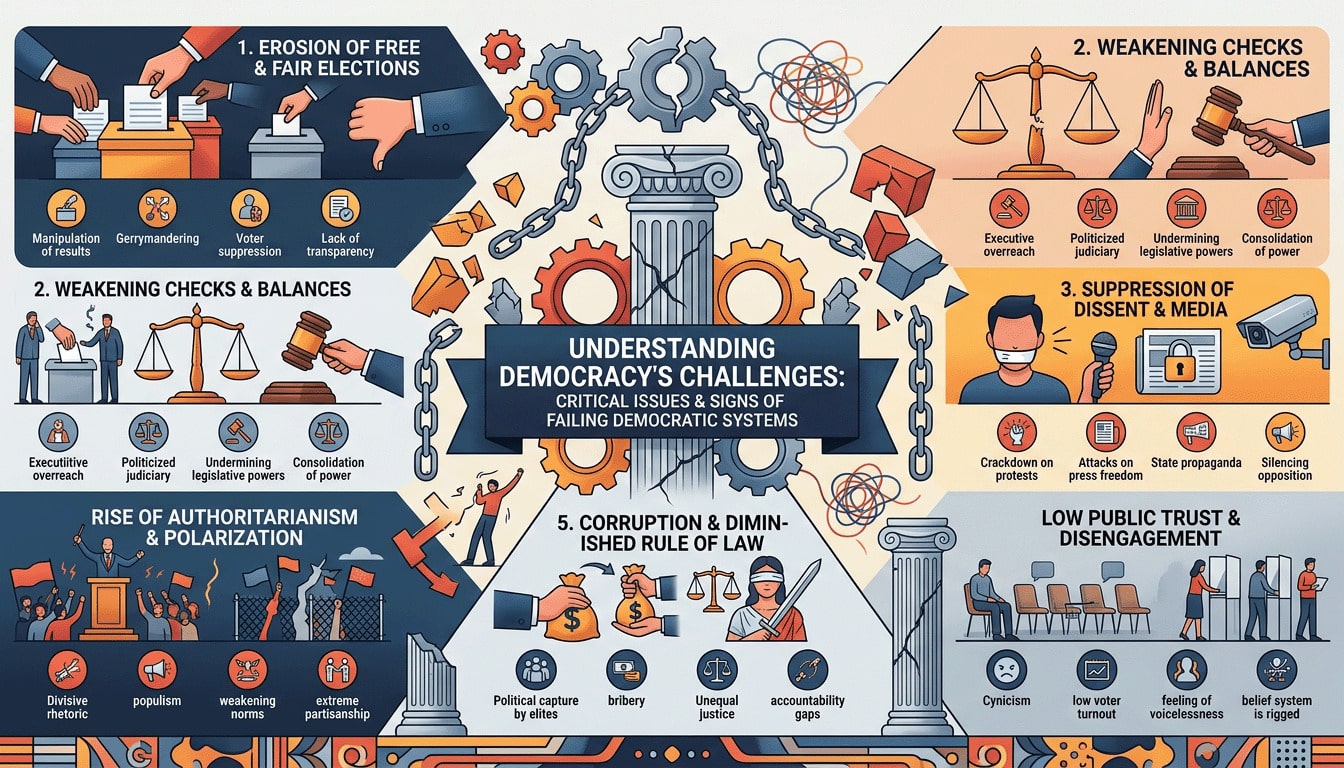
In the United States, a question is growing louder: Is the Democratic process working well? Or is it becoming shaky and unpredictable?
The primary season is a big test. Redistricting fights in several states are happening right when voting starts. This clash is making people question the fairness of democracy.
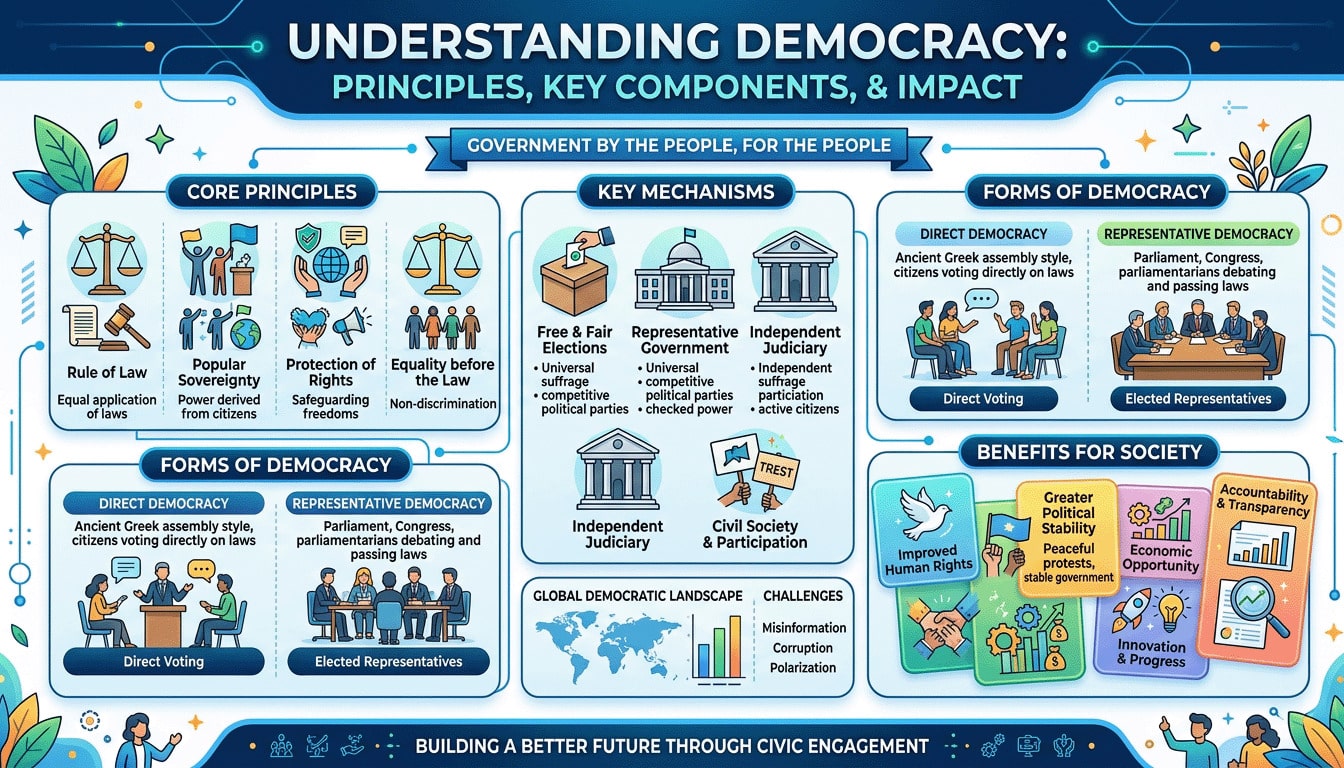
At its core, democracy is not just about voting. It’s about trusting that the votes are counted fairly and consistently. This trust is shaken when voting rules and district lines change suddenly.
Trust is as important as the voting process itself. Claims of voter fraud and confusing rules can make democracy seem like a moving target. Even if elections are technically legal, these issues can erode trust.
Recent surveys show concerns about democracy. A 2019 Public Agenda survey found 39% of Americans think democracy is in crisis. Only 15% believe it’s doing well.
Compared to other countries, the U.S. has a lower rating. Freedom House ranks the U.S. below Chile and the Czech Republic. This ranking has dropped over the years, making the U.S. seem less democratic than newer countries like Croatia and Greece.
The Supreme Court has been quiet on assembly rights for decades. Despite the First Amendment, protests during the 2020 Black Lives Matter movement faced police violence.
High voter turnout doesn’t solve the problem. In the 2016 presidential election, 55.7% of eligible voters cast ballots. Yet, many people choose not to vote in midterms, showing a lack of confidence in the system.
In a world where major powers compete, the U.S. democratic credibility is at stake. The health of democracy at home affects trust abroad. This article will explore how the U.S. fits into this global contest.
For more on democracy and self-governance, see democracy and self-governance.
U.S Democratic Process: Key Notes
- Primary disruptions and redistricting fights are creating a visible stress test for the Democratic system.
- Democracy relies on trust in lawful, transparent outcomes—not just the act of voting.
- Fraud claims, paired with real administrative confusion, can weaken democratic ideals and principles.
- Public polling shows many Americans think U.S. democracy is in crisis or facing serious challenges.
- Global democracy rankings suggest the U.S. has lost ground compared with peer nations.
- High participation moments, including the 2020 protests, highlight rights that need clearer legal guidance.
Why Redistricting Chaos Is Testing Trust in the Democratic System
In the South, redistricting is causing trouble. After a U.S. Supreme Court ruling weakened the Voting Rights Act, lawmakers quickly changed maps.
This timing is key because a few seats can decide control of the U.S. House. When lines change late, voters wonder if the democratic system is fair.
How the Democratic system is failing the United States
Voting Rights Act rollback fallout and a scramble to redraw Southern congressional maps
Republican-led legislatures had to rethink district lines. In Louisiana, where 30% of residents are Black, there’s a big fight. It’s about whether maps should create two districts for Black representatives.
The issue spread quickly. Republicans in Alabama, Mississippi, South Carolina, and Tennessee considered changes that could erase Democratic seats. Florida also changed its map to shift seats away from Democrats, sparking debates on fair representation.
Real-time voter confusion in Louisiana as early ballots include races that won’t be counted
In Louisiana, early voting started May 2. Just two days later, Gov. Jeff Landry called an emergency to suspend primaries for new maps. This meant voters saw U.S. House contests on ballots that wouldn’t count.
Secretary of State Nancy Landry said nearly 179,000 primary ballots had been cast. About 53,000 were absentee ballots. For some, it felt as if the rules were being changed in their hands, weakening trust in democracy.
Sallie Davis from New Orleans voted for Democratic U.S. Rep. Troy Carter. But a sign at her booth had that race crossed out. A poll worker told her to follow the sign, making Davis worry her vote wouldn’t count.
When election rules change without warning, doubt fills the gaps, even if other parts of the ballot are valid.
Logistical strain on election officials: reprogramming systems, retraining poll workers, and shifting precincts
For local election offices, redistricting is more than politics. In Tennessee, the state’s elections coordinator warned of big changes. This includes reprogramming systems, retraining poll workers, and adjusting precincts, which might change polling places.
This isn’t just theory. A Tennessee review found over 3,000 voters were assigned to the wrong districts. More than 430 cast ballots in the wrong races. Each error spreads fast, affecting perceptions of democracy.
Readers have followed early voting and election-day reporting alongside map fights.
- Ballots and voter guides must match the correct district lines.
- Poll books and check-in systems need updated voter assignments.
- Staff must explain changes clearly, often under time pressure.
Do-overs and moving targets: Alabama’s primary redo and shifting primary calendars
Alabama’s primary was set for May 19, but under the old districts. Courts were deciding if lines should change. Lawmakers passed a bill to do over congressional primaries, which unsettles voters.
South Carolina leaders discussed moving the primaries, even after thousands of mail ballots had been sent out. Running separate congressional primaries could cost about $3 million and strain preparation.
Mississippi faced upheaval after a federal court ordered new state Supreme Court districts. President Donald Trump also pushed Republicans to revisit the state’s congressional map, adding uncertainty.
- Courts demand new maps.
- States try to keep calendars intact.
- Voters and workers adjust in real time.
Democratic Values Under Pressure: Disenfranchisement Claims, Gerrymandering, and Voter Apathy
In the South, map fights are now loud and clear. They decide who gets heard and who gets left out. It’s about keeping democracy fair and trustworthy.
How gerrymandering battles can reshape representation, including majority-minority districts
In Louisiana, the 2024 map fight is about two key districts. These districts helped elect Black representatives in a state with a large Black population. Changing these lines could quickly alter who represents the state, even if voters don’t want it.
In Alabama, Mississippi, South Carolina, and Tennessee, changes could erase Democratic districts. This includes seats held by Black lawmakers. Florida’s recent changes show how lines can change outcomes without changing minds. This can strain democratic values in everyday life.
“My vote isn’t going to count”: what disenfranchisement fears look like on the ground
In New Orleans, Sallie Davis felt left out after voting early. She was confused and worried her vote wouldn’t count.
Michael McClanahan of the NAACP Louisiana State Conference said voters were confused. They even asked if there was an election. In Alabama, Senate Democratic leader Bobby Singleton said local officials were unsure too, showing democracy’s machinery can wobble.
When rules change mid-cycle: why activists warn instability can fuel disengagement in a democratic society
Voting rights lawyer Amir Badat says modern suppression can look like errors and chaos. When districts change, election offices must update everything. Small mistakes can affect voters.
In Tennessee, people worry about losing their voices. Officials are debating map changes that could dilute local voices. This is detailed in a Tennessee redistricting report. The main concern is whether democracy can stay clear and stable.
Trust as infrastructure: why confidence in democratic government matters as much as the mechanics of voting
Trust is like infrastructure: it takes time to build and can be easily broken. Anneshia Hardy of Alabama Values says if people think rules change every two years, they might not vote. This is true even when the democratic party encourages them to.
There’s also a bigger worry about people losing interest in voting. Even in important elections, turnout can drop. This is shown in the election process updates. Frustration can quickly lead to disengagement. Democracy needs people to believe it’s fair, even when they lose.
Trust grows when rules are clear, choices are real, and every voter can see how their ballot connects to representation.
- Transparent maps help voters understand who represents them and why.
- Stable election rules reduce mistakes that can appear to be biased.
- Clear public guidance supports democratic values when court orders and timelines collide.
Policy Outcomes and Public Confidence in Democracy Beyond Elections
Election rules are important, but many voters judge a government by its actions after voting. If life gets harder, trust can drop, even if the voting process is fair. This gap puts democratic principles to the test in ways that are hard to ignore.
In California, policy fights in Sacramento show the tradeoffs of democratic ideals. Labor unions and Democratic lawmakers pushed for bills on workplace AI. These bills would keep humans in charge of medical decisions and limit employers’ use of workers’ data for AI tools.
Even if bills get attention, the outcome often depends on budget committees. These committees consider the cost before moving forward. This can make the democratic process seem both practical and blunt. People might support a goal but see it stall due to cost.
- Workplace AI rules can shape job security, patient safety, and employer compliance.
- Committee spending reviews can decide whether a popular idea survives.
Budget pressure is also changing mobile crisis response. Instead of police, behavioral health teams respond. Demand is up, but the federal funding that helped expand is ending. Gov. Gavin Newsom proposed making the service optional, which could leave counties to cover $150 million to $200 million a year.
This change affects families directly. Studies show that behavioral health teams do better than police in keeping people out of emergency rooms. If coverage shrinks, people may see democratic government as unable to provide consistent help.
Child care is another pressure point. Transitional kindergarten has grown fast, but community preschools struggle. About 1,100 preschools closed from 2019 to 2025, removing space for roughly 32,000 children.
With infant care costs over $20,000 a year, closures hit working parents hard. Pandemic disruption, rising costs, and funding shifts have all played a role. Families feel the impact as fewer choices and longer waits, testing if democratic promises mean open classrooms and stable providers.
These strains show why confidence is not just about voting. If institutions struggle to manage elections and services, skepticism grows. This mood explains why debates about courts and accountability, such as Supreme Court reform, receive more attention.
The question is simple: can a democratic government make hard choices and protect basic needs? When outcomes seem uneven, democratic ideals may seem distant, even to those who value voting. The day-to-day, not just election night, shapes how Americans view democracy.
U.S Democratic Process: Conclusion
In states like Louisiana, Alabama, Tennessee, South Carolina, Mississippi, and Florida, redistricting has made voting unpredictable. Fast-changing maps can leave ballots outdated, races crossed out, and some votes uncounted. This chaos can erode trust in democracy before any results are announced.
The personal impact is felt in small, lasting moments. Sallie Davis’s experience and the NAACP Louisiana State Conference’s confusion highlight a big risk. People may lose faith in the democratic process, which can harm democracy more than any court decision.
This article shows that democracy is tested in two ways. One is through fair elections, where clear rules and accurate ballots protect democratic values. The other is through daily governance, where policy choices affect whether people believe government works.
Worldwide, observers have noted a decline in democratic norms. Americans also express deep concerns about their system’s health. For more on these issues, see democracy and self-governance. This doesn’t point to a partisan answer. Instead, it raises a key question: has democracy failed the American people, or is it being tested?