Formation of the Moon: Earth’s Evolution Catalyst
Discover how the formation of the Moon and its impact on the earth shaped our planet’s tides, climate, and life evolution.
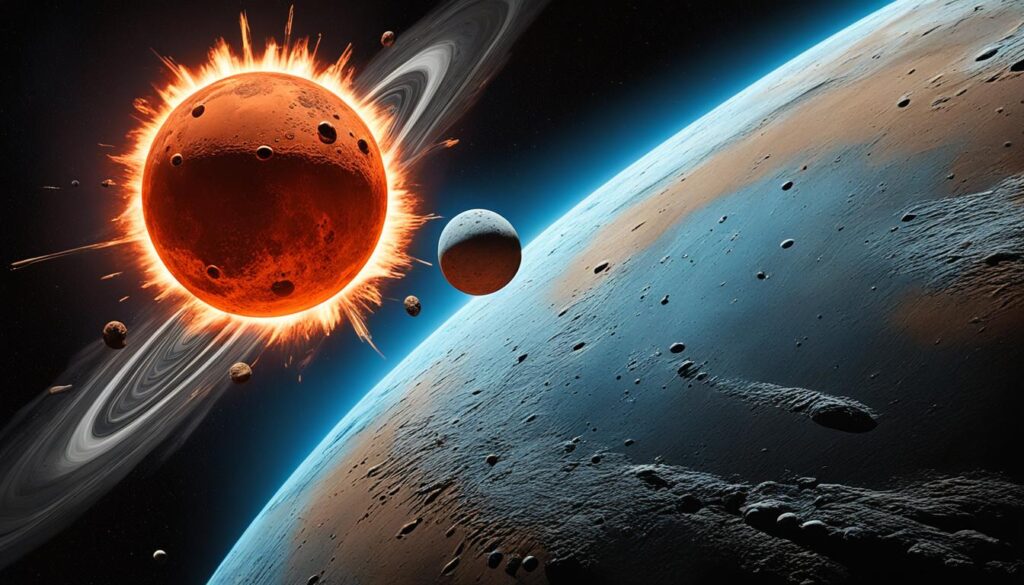
The formation of the Moon and its impact on the earth
The formation of the Moon and its impact on the Earth: The story of our Moon’s creation is deeply tied to Earth’s history. It shines light on our planet’s past. The big event happened about 4.5 billion years ago, when Theia hit the young Earth.
This crash sent tons of debris into space, which then came together to form our Moon. This wasn’t just a big bang in history. It also played a huge role in shaping Earth, affecting everything from the oceans to life itself.
By studying moon rocks brought back by Apollo astronauts, we’ve learned its formation took a while. It’s believed the Moon’s surface cooled down and became stable over 150 to 200 million years ago. When we look at the Moon, we see the powerful forces that have shaped Earth’s landscape and life.
The formation of the Moon: Key Takeaways
- The Giant Impact Hypothesis suggests a dramatic origin of the Moon, supporting its formation from Theia’s impact with Earth.
- Lunar samples reveal the Moon’s mantle has a composition distinct from Earth’s, hinting at its tumultuous birth.
- Research suggests a lasting legacy of carbon on the Moon, challenging prior assessments of its elemental makeup.
- The Moon’s gravitational influence is paramount, dictating Earth’s tidal patterns and climatic stability.
- Apollo missions’ pivotal role in advancing theories of lunar formation cannot be overstated.
- Understanding the impacts of moon formation is essential for grasping the broader implications for Earth’s history and future exploration.
The Mystique of Moon’s Origin
The Moon’s birth is more than a cosmic event; it’s a critical moment for Earth. Experts agree on the Giant Impact Hypothesis for the Moon’s creation. This theory involves Theia, a body much smaller than Earth, crashing into our planet. This event, over 4.5 billion years ago, led to the Moon’s formation.
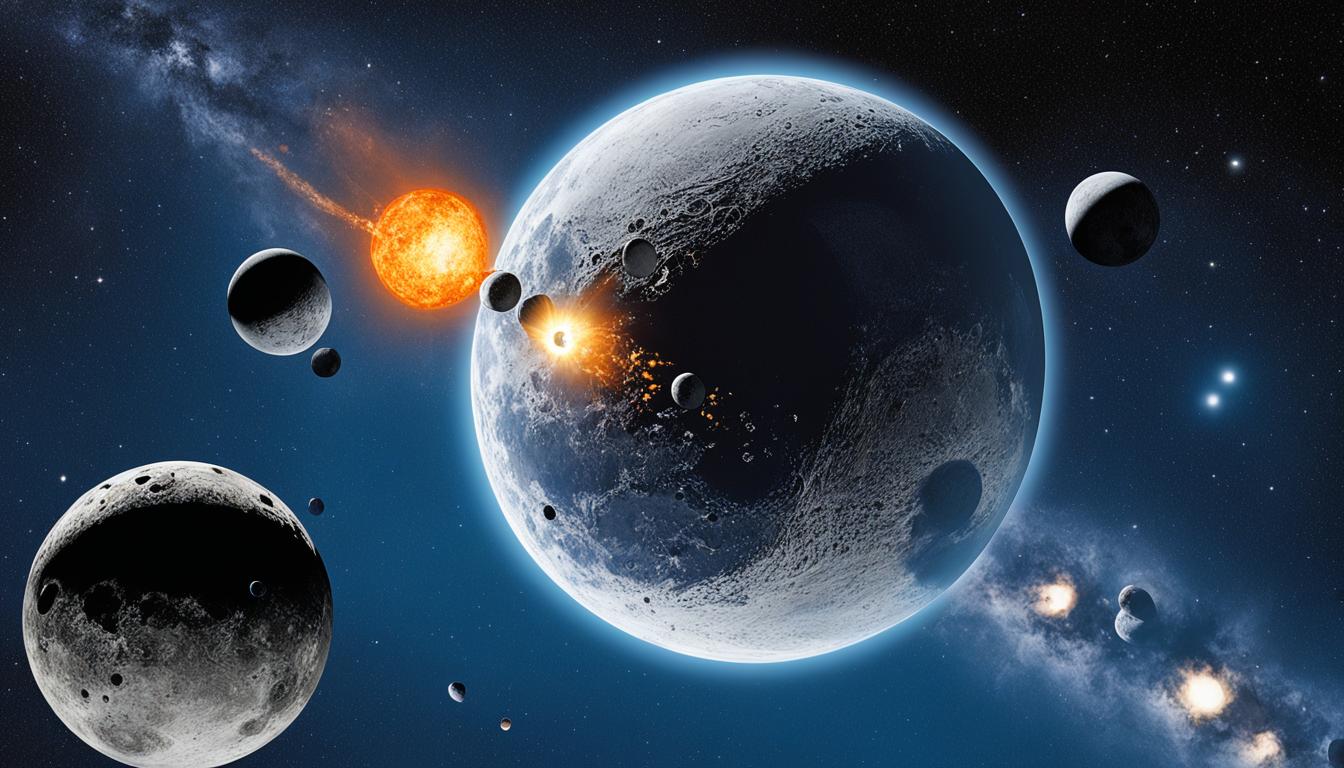
Giant Impact Hypothesis Explained
This hypothesis examines the aftermath of a massive collision. Earth and Theia’s crash produced a cloud of debris. Over time, this debris became the Moon. It has similar oxygen traits to Earth. Yet new ideas, such as the Fast-Spinning Earth and Half-Impact Earth, challenge this theory.
The Role of Theia in Moon’s Birth
Theia was crucial to the Moon’s formation, accounting for about 10 percent of Earth’s mass. Recent research suggests an even bigger collision than we thought. This might explain why Earth and Moon rocks are so alike. Still, not all scientists are convinced, pointing to small differences in oxygen isotopes.
From Molten Debris to Satellite: Moon’s Early Years
After its chaotic start, the Moon became a solid body. Despite being smaller, it’s significant in the cosmos. The ancient impacts show the incredible amount of matter involved. The Moon’s pull affects Earth’s natural rhythms. Its cycle lasts about 27.3 days. Sitting an average of 384,400 kilometers from Earth, the Moon plays a key role in our planet’s story.
Moon’s Gravitational Influence on Earth
The gravitational influence of the Moon on Earth is more than just a feature of the night sky. It plays a key role in shaping Earth’s environment. The Moon affects ocean tides, which are crucial for marine life and ecosystems. Its impact on tides helps mix ocean waters. This mixing affects the climate by changing ocean currents.
Lunar Impact on Tides and Climate
The Moon’s pull causes the ocean’s tides to rise and fall. This movement is vital for spreading nutrients in marine habitats. Also, the Moon’s gravitational force helps keep Earth’s climate stable. It does this by reducing polar motion and ensuring it always shows the same face to Earth.
The Synchronization of Earth’s Spin and Moon’s Orbit
Earth’s rotation is in sync with the Moon’s orbit due to their gravitational bond. This ensures we always see the same side of the Moon.
The Moon also fuels our curiosity and scientific research. The Apollo missions brought back Moon rocks, helping us learn more about the Moon and Earth. These rocks, with their low water content and well-preserved surface, offer clues about both the Moon’s and Earth’s past.
| Lunar Characteristic | Impact on Earth |
|---|---|
| Gravitational Pull | Drives ocean tides, influences climate |
| Stabilizing Influence | Reduces polar motion, stabilizes climate |
| Relative Size and Proximity | Unique in the solar system, it deeply affects Earth’s stability |
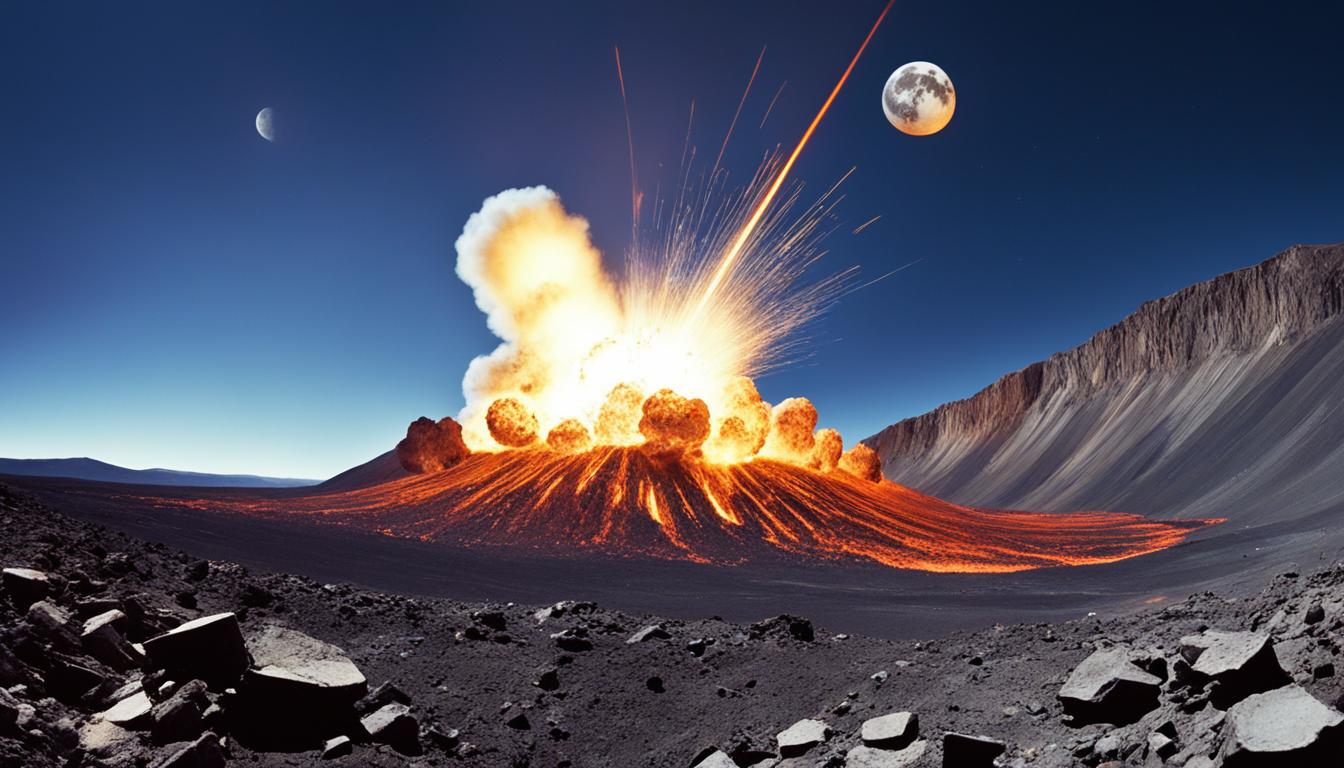
The Moon’s size is almost the same as Mars’s, making it unique. Many moons in our solar system are smaller compared to their planets. But our Moon’s size significantly affects Earth’s balance and history. The Moon is a key player in Earth’s history and its ongoing stability.
Lunar Evolution Effects on Early Life Forms
The story of life on Earth is closely tied to the Moon’s evolution. Our planet and the Moon have shared a deep bond since life first appeared. This relationship is dynamic, showing how changes on Earth and the Moon influence each other.
Chemical Pathways Enabled by Moon’s Formation
The Moon greatly influences biological patterns. For example, birds rely on the Moon for migration and navigation, using the night sky as a guide. Coral reefs spawn during the full Moon from October to December, illustrating how lunar cycles help life flourish. Coastal animals have adapted to the strong tides caused by the Moon’s pull.
Earth’s Early Atmosphere: CO2, H2, and The Spark of Life
The Moon’s formation played a key role in shaping the chemical basis of life. Earth gained essential elements for life from a massive impact that formed the Moon.
The Earth-Moon relationship also helps keep our climate stable, which is crucial for evolution over the ages. Moonlight influences animal activity, from lions hunting to beetles navigating, highlighting nature’s beautifully balanced systems.
The Moon’s impact goes from altering life’s rhythms to ensuring Earth’s stability in space. It’s been central to the story of life on our planet, urging us to delve deeper into how the Moon’s history is interwoven with Earth’s life.
The Formation of the Moon and Its Impact on the Earth
The Moon’s formation greatly shapes our planet. By understanding its origins, we see its key role in Earth’s history. Many believe a huge crash led to the Moon’s existence. This event changed Earth’s surface and influenced the behavior of life and the ocean.
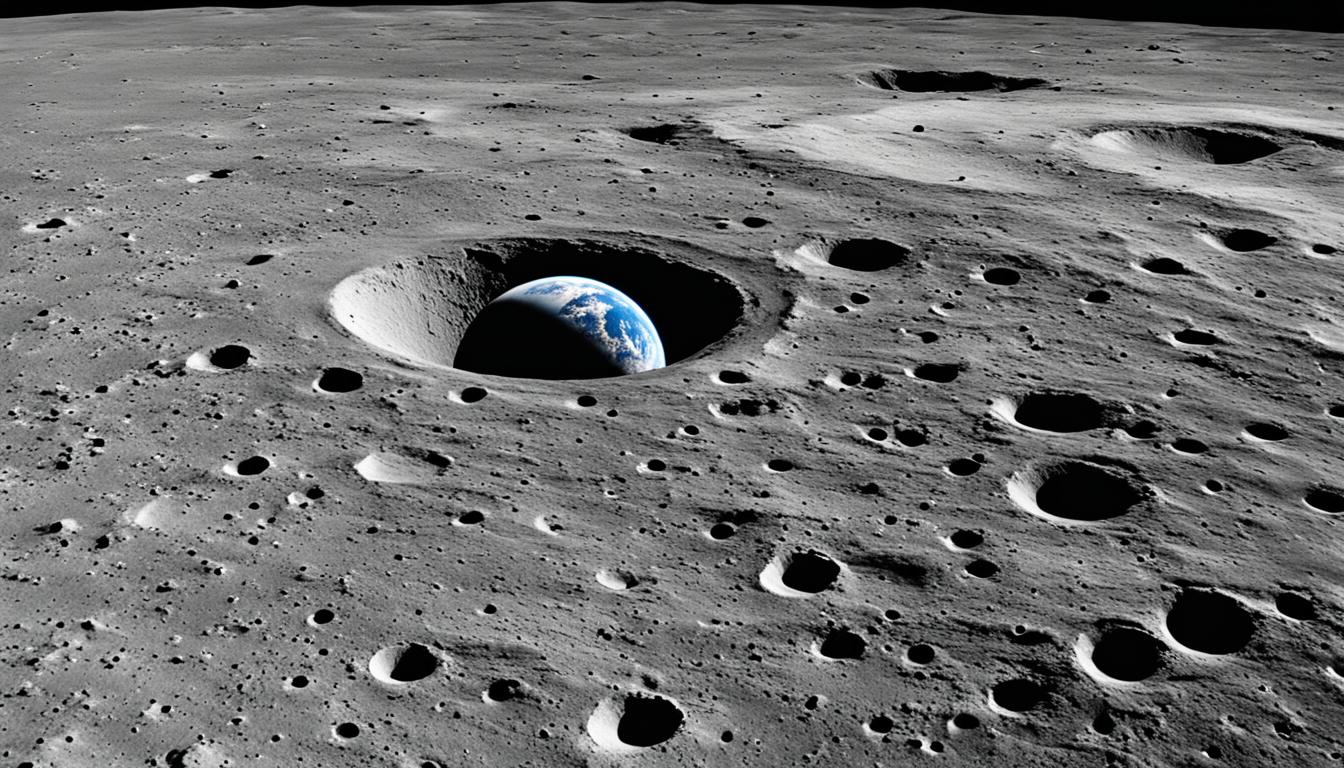
The Moon’s impact touches our daily lives. Its tidal forces affect the world’s oceans, which are important for marine life and coasts. The Moon’s pull keeps Earth’s tilt in check, affecting our climate.
People have always been fascinated by the Moon. It sparks wonder in the night sky. This connection has inspired myths, art, and literature. It shows the Moon’s effect is both mental and physical.
To fully grasp the Moon’s role, we must look at all its effects. These range from its gravity to the inspiration it gives us by being in the sky.
Understanding Moon Phases and Their Earthly Significance
The Moon’s phases are not just beautiful; they play a big part on Earth. This lunar cycle influence moves from growing to shrinking, impacting life in many ways. It affects our culture and the natural world.
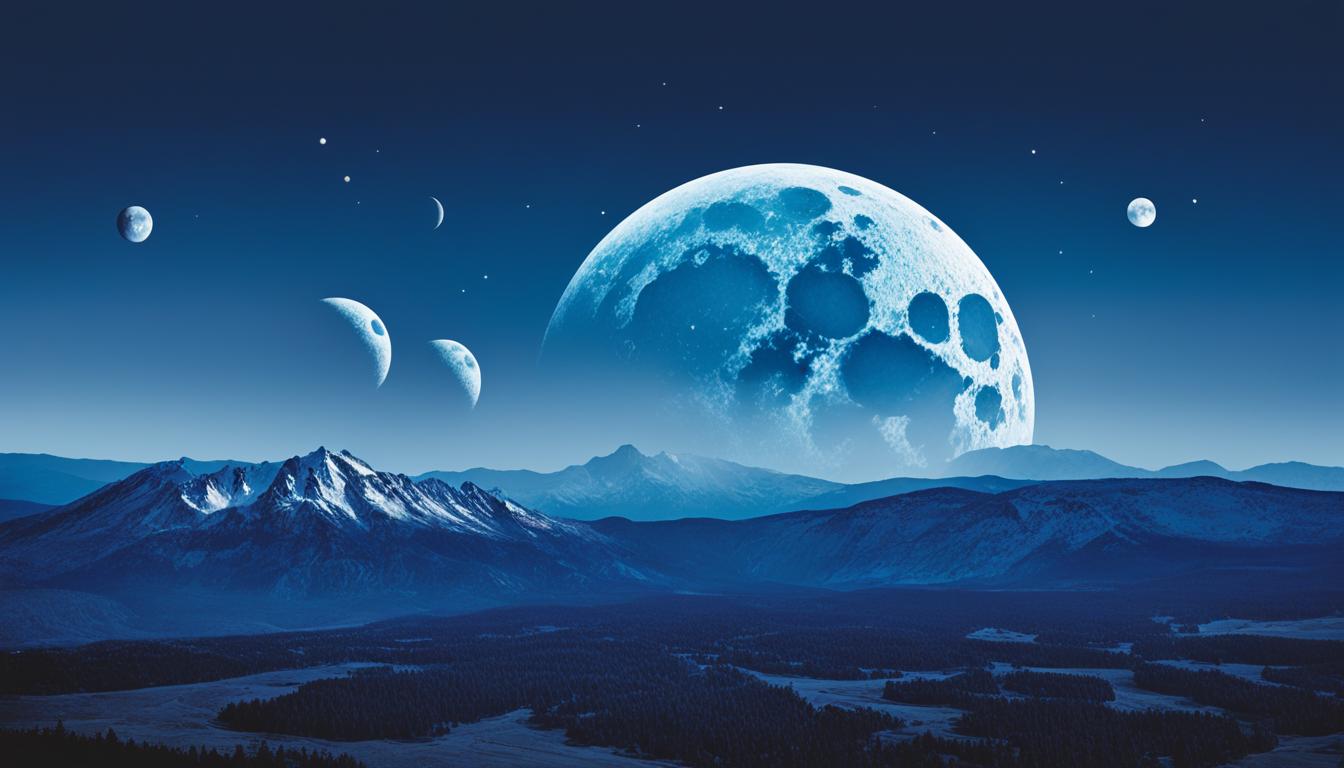
Cultural and Biological Reactions to Lunar Cycles
For ages, humans have felt the effects of the moon phases. Our ancestors used the lunar calendar to mark time. They linked the full Moon to good harvests and saw the new Moon as a fresh start. Today, many festivals and traditions still follow the Moon’s cycle.
On the biological side, the influence of the lunar cycle is also strong. Marine species often breed in response to the Moon, helping them thrive. Land animals change their behavior based on the Moon’s light, too.
Scientific Perspectives on Lunar Phases
Scientists see the moon phases as more than just pretty. They’re key to Earth’s story. While older beliefs estimated a high rate of meteorite dust falling to Earth,10 newer studies show it’s much lower. This shows the deep connection between Earth and its Moon.
When astronauts landed on the Moon, they found less dust than expected. Underneath, there’s a thick layer of regolith. These layers tell of a long history of meteor strikes. It shows how the Moon and Earth have been linked over time.
Indeed, the Earth and Moon’s relationship affects tides, ecosystems, and maybe even human behavior. The Moon’s phases are subtle but important.
Collision to Catalyst: The Moon-Forming Impact’s Role in Earth’s Evolution

Learning about the start of our Moon is more than just a creation story. It shows a big shift from a space disaster to the start of life. Moon formation theories suggest that about 4.5 billion years ago, after a huge collision with a planet named Theia, the Moon formed. This huge event not only created the Moon but tied Earth and Moon together forever.
The crash that created the Moon helped set the stage for life on Earth. It’s like the Moon was a key player in Earth’s journey to support life. This event is why Earth and the Moon have grown together over billions of years.
Ideas on Autotrophic Starts from the Impact
Our understanding of the Moon’s history has grown. We now know the early Moon was once all liquid and took up to 200 million years to become solid. This challenges old views. The crash that made the Moon might have set Earth on a new course, setting the stage for life. The time it took for the Moon to cool down was essential. It led to stable conditions for life to begin on Earth. This shows how important the Moon’s role has been in our planet’s life story.
Co-evolution of Earth and Moon from Magma to Modern Day
Lunar missions have confirmed how the Moon slowly changed from liquid rock to what we see now. Earth and the Moon together make a unique system. The Moon’s impact on Earth, such as tides and rotation, became fixed as it cooled from magma. This bond shows how Earth and the Moon depend on each other.
Earth and the Moon’s partnership began with a powerful impact. It has grown stronger through cosmic events. This relationship highlights how collisions can lead to new beginnings.
The shared history of Earth and Moon shows how the Moon’s creation was crucial. It might have kick-started not just our planet’s physical form but also the evolution of life. Delving into their past, we learn more about the complex and beautiful outcome of their earliest days together.
Exploring Lunar Origins: Modern Theories and Discoveries
The Moon’s formation story is key to unlocking both its history and Earth’s. The Giant Impact hypothesis suggests a Mars-sized body, Theia, collided with our young Earth. This massive impact is believed to have created the Moon from the debris.
This theory gained strong support from findings from the Apollo missions. These missions brought back moon rocks that provided new insights. Yet, they also uncovered mysteries that challenge scientists today.
New tools have shown that Earth and the Moon share similar elements, such as platinum. These findings support current theories about how the Moon was formed. The Apollo missions only explored a small part, so NASA’s Artemis missions aim to collect more samples. They hope to find more clues about the Moon’s history from different areas.
Discoveries of lunar meteorites add to our knowledge of the Moon. Such finds help us understand why Moon minerals are drier than Earth’s. Studying lunar rocks shows the Moon’s surface hasn’t changed much over time. It’s shaped mainly by impacts and radiation.
Apollo Missions and Their Legacy on Lunar Research
The Apollo missions were a major milestone in space exploration and in the study of the Moon. They brought back a huge amount of samples that changed how scientists see the Moon. These discoveries showed the Moon is less dense than Earth. This helps scientists compare the two worlds.
The Advancing Technology in Lunar Analysis
Technology has greatly advanced our understanding of the Moon. It shows both the similarities and differences between Earth and the Moon. Robotic missions are now set to collect more data. This could lead to new insights and change our theories about the Moon.
The Moon’s effect on Earth’s orbit reveals a deep connection between the two bodies. It’s a part of the cosmic forces that shape our universe.
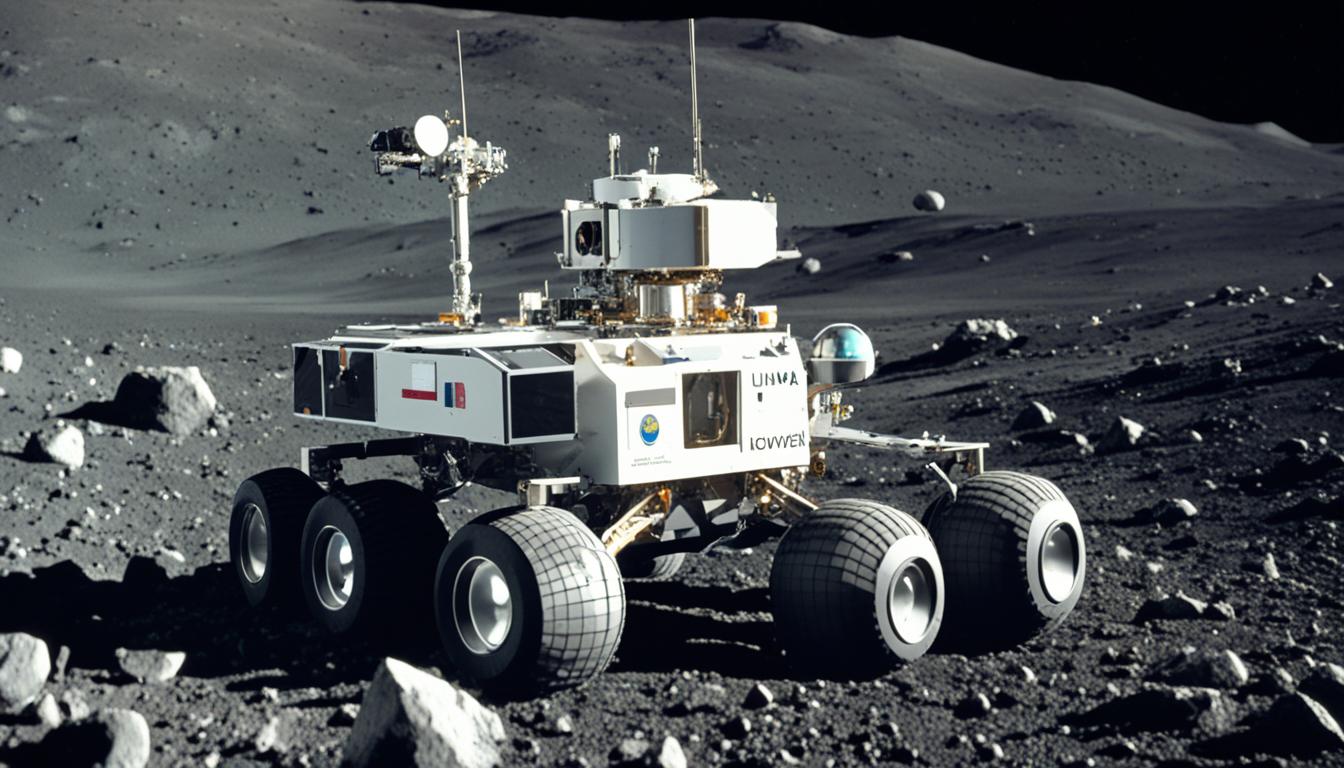
Technology helps us learn about the Moon’s role in Earth’s climate and life. Future lunar research depends on both technological advances and global teamwork. This will push humanity further into space exploration and understanding.
Lunar Rock and Dust: Deciphering Moon’s Mysteries
Exploring the Moon’s makeup and history fascinates scientists and star-watchers alike. The Apollo trips from 1969 to 1972 returned with over 800 pounds of lunar samples. These samples reveal the Moon’s secrets.
The Moon’s dry plains are home to basalt and breccia fragments. These 800 pounds of space materials are safely kept at the Johnson Space Center. They hope to unlock mysteries about the Moon’s formation and its effects on Earth. Some of these samples were kept in helium containers or vacuum-sealed on the Moon. This preserved a moment in time almost five decades ago.
New technology lets us examine these samples up close. This shows the Moon’s geological tales from select areas. It’s different from Earth, where weather and plate movement have changed the geologic record.
Science today is eager for new insights from these untouched samples. Scientists use advanced tools on tiny bits of lunar material. They are learning how solar radiation affects the Moon over time. This helps us better understand the Moon’s past and its connection to Earth.
Research on lunar rocks and from old Apollo missions shows that the Moon and Earth share a story. They suggest the Moon began from a magma ocean on early Earth. A huge event, likely a crash with a Mars-sized object called Theia, may have formed the Moon. Computer models and recent studies support this idea.
Future moon missions aim to explore new places, like the Moon’s south pole. Samples from these spots could tell us more about how the Moon formed. This may change how we see the Moon and Earth’s growth.
These important moon samples get to scientists in simple mail packages. They may not look special, but they could change how we see the universe.
Unraveling the Earth-Moon System Dynamics
The dance between Earth and the Moon is a story full of mystery. It shows us a long history of interactions and mutual influences. Scientists are working hard to understand the dynamics of the Earth-Moon system. They want to know more about the relationship between the Moon and Earth and how it has shaped our planet.
The Early Relationship Between Earth and Its Natural Satellite
The Moon has been with Earth since it was created in a massive collision, it seems. Rocks from the Moon have different amounts of zinc in them. This tells us what the Moon is made of and hints at what was happening right after it formed.
When looking more into the connection between Earth and the Moon, we learn from studies of lunar rocks. They show us stories of how the Moon’s rocks formed, with minimal changes in their composition. But samples from certain moon missions show different kinds of volcanic activity over time.
Modeling the Forces and Motions of the Earth-Moon Duo
Scientists use complex models to study the gravitational interactions and motions between Earth and the Moon. These models help us better understand the dynamics of the Earth-Moon system. They show us how Earth and the Moon work together as they move through space.
The Moon has areas with heavy and light versions of certain elements. This shows a surface affected by many impacts and changes over time. The Moon-earth relationship gets more interesting when we see that the Moon has lost a lot of volatile elements like zinc and chlorine.
| Sample Type | Average δ66Zn Value (‰) | Zinc Concentration (p.p.m) | Comments |
|---|---|---|---|
| Ferroan Anorthosites | -11.4 to +4.2 | Variable | Isotopic variability indicative of formation processes |
| Lunar Basalts | +1.4±0.5 | ~2 | Average values with minimal isotopic fractionation |
| Pyroclastic Green Glass 15426 | -0.98 | ~50 | Enriched in zinc, lighter isotopic value |
| Regolith Samples | Up to +6.4 | Not Specified | Enriched in heavier isotopes of zinc |
Knowing these details helps us better understand the relationship between the Moon and Earth. It shows us the drama of planetary evolution. It highlights key events that have shaped the Earth-Moon system as it is today.
Captivating Questions about Moon’s Formation Impact
Our Moon’s birth story is a thrilling tale of cosmic events. It began with a giant collision in which debris from a Mars-sized body struck Earth, forming the Moon. This dramatic event shows how space events shape our world. It’s not just a theory; it tells us Earth and Moon are deeply connected. They share chemical traits, showing they came from the same origin, not by chance.
We explore big questions about how the Moon came to be. For example, studying lunar meteorites and Apollo samples reveals the Moon’s quiet geological history. Its craters are evidence of a wild, informative past. Signs also show that the Moon was once much hotter than Earth was in the early Days. This raises questions about the Moon’s thermal journey over time.
Beyond its rocky surface, the Moon influences Earth’s climate. Its gravity helps keep our climate stable, showing its critical role in making Earth livable. Scientists also think there might have been two moons at one point. They believe a smaller moon merged with ours, altering its surface and deepening its mysteries.
| Theory | Discovery Date | Main Components | Impact on Earth |
|---|---|---|---|
| Giant Impact | 20th Century | Debris from the Theia-Earth collision | Formation of the Moon, stabilization of the climate |
| Capture Theory | Proposed late 1800s, Debunked | The Moon formed elsewhere and was captured by Earth’s gravity | Considered unlikely due to isotopic similarities |
| Co-accretion | 20th Century | Formation simultaneously with the Earth from nebular dust | Emphasizes a joint evolutionary history |
Discussing these theories of moon formation expands our knowledge. The Moon’s effect on our climate touches our lives and history. It plays a key part in Earth’s story, its natural forces, and its people.
Earth-Moon Relationship: A Story of Symbiosis and Creation
The Earth and the Moon have a strong bond that has helped shape our world. This partnership is key to making Earth a home for diverse life forms and protecting it from space threats. Their mutual gravity has been crucial for Earth’s life-supporting conditions.
How Lunar Presence Has Shaped Earth’s Biodiversity
The Moon’s gravitational pull affects Earth’s tides, which are crucial for the evolution of marine and coastal organisms. It helps distribute nutrients, aiding aquatic life. This has enriched Earth’s biodiversity. Evidence from sedimentary rocks indicates that oceans that supported early life reformed about 3.8 billion years ago.
The Moon’s Role in Protecting Earth From Cosmic Matter
Our Moon acts as a shield, blocking space debris that could damage Earth. This defense helps keep Earth’s atmosphere and oceans stable, allowing life to flourish. Ancient rock formations in Australia suggest the Moon’s vital role in the early development of life around 3.4 billion years ago.
The Earth-Moon connection is critical for supporting life on our planet. It shows how the Moon has protected and nurtured Earth from the beginning. Our knowledge of space makes us more grateful for the Moon’s ongoing support amidst the universe’s vastness.
The Transformative Lunar Impact on Earth’s Habitability
The moon-forming event occurred 60-175 million years after the solar system began. This event brought about a celestial body that had a profound effect on Earth’s ability to support life. These massive interactions changed Earth’s landscape and even its ability to nurture life.
The Moon has played a vital role in creating our oceans. Its gravity impacts Earth’s tilt and rotation. These effects help regulate our climate, which is crucial for the development of diverse ecosystems.
The Formation of Oceans and Climate Regulation
Initially, the Moon was just 14,000 miles from Earth, much closer than it is now. This proximity had a strong influence on our oceans and their patterns. Even as the Moon moves away by about 1.5 inches yearly, it continues to affect Earth. Its gravitational pull is key to the ocean tides and marine life cycles.
Implications of Lunar Creation on Life’s Diversity
The Moon’s unique surface played a role in Earth’s biological diversity. Its distinct feldspar crust came from special cooling and chemical conditions. This might have helped life begin in diverse ways, two billion years after the first life appeared on Earth. The Moon’s mare, covering 16% of its surface and formed about 1.1 billion years ago, shows how the Moon and Earth’s life histories are linked.
Studies on the Moon’s water cycle are revealing. The Moon has all three water states from different sources. These studies show how the Moon’s formation was crucial for supporting life on Earth.
In summary, the Moon’s creation has been key to Earth’s climate and oceans, and life’s diversity. The Moon’s gravity and unique geology have left a lasting mark on our planet’s ability to host life.
Lunar Cycle Influence: From Tides to Life Rhythms
The lunar cycle influence touches every part of life on Earth. It ranges from the lunar impact on tides to the rhythms of plants and animals. For instance, the tide can rise to 15 meters in the Severn Estuary. In contrast, it changes by only a few centimeters in the Baltic Sea. The Moon’s pull mainly creates these tides. They get shaped by how the Sun and Moon align, the air above us, and the coastline.
The effects of moon phases go deep into biology. Creatures big and small sync their life processes with the lunar cycle. Sandhoppers navigate using both sun and moonlight. Marine worms like Platynereis dumerilii time their breeding to the Moon’s cycle. The Moon even triggers mass spawning on the Great Barrier Reef after a full moon.
- Barau’s petrel seabirds plan their travel around the day length and moon phases.
- Joint-pine plants use moonlight to attract insects.
- Many organisms have their daily rhythms set by one lunar orbit.
Tides come in different patterns, affecting marine life and human beach activities. We’ve gotten better at tracking the lunar impact on tides. For example, the main lunar tide pattern lasts about 12 hours and 25 minutes.
Interesting fact: Daylight’s polarization is way brighter than moonlight’s. Still, creatures like Scarabaeus zambezianus dung beetles use moonlight’s weak polarization for gathering food.
The fascinating rhythm of Earth’s life follows the lunar cycle. This cycle governs natural events such as breeding and migration. Understanding the Moon’s impact helps us see the beauty in nature’s flow and patterns.
| Moon Phase | Biological Impact | Tidal Effect |
|---|---|---|
| Full/New Moon | More spawning events | Highest tides (Spring tides) |
| First/Third Quarter | Changes in migration | Lower tides (Neap tides) |
In essence, the lunar cycle influence shapes our shores and drives the dance of life’s diversity. It affects tides and the reproductive cycles. The Moon acts as a powerful, natural conductor of Earth’s varied rhythms.
The Cosmic Dance: Moon’s Effect on Earth’s Life Balance
The Moon plays a big part in keeping Earth’s life balanced. Its gravity affects many aspects of our planet. It does more than light up our night sky. The Moon’s pull has lengthened Earth’s days and influenced living cycles.
Days on Earth are getting longer because of the Moon. This slow dance between Earth and Moon has seen some changes over time. About 1.4 billion years ago, days were much shorter because the Moon was closer, which sped up Earth’s rotation.
But the Moon is moving away from us, about 3.82 centimeters each year. If this movement began more than 1.5 billion years ago, it could have caused major problems. Getting too close could have led to disaster for Earth.
Scientists today use TimeOptMCMC to learn about Earth’s history with the Moon. They study old rocks, like those in China’s Xiamaling Formation. This research helps us understand how the Moon has shaped Earth.
These studies show how the Earth and Moon have moved together through time. They reveal a past where the Moon’s closeness caused more chaos than now.
Looking at Arizona’s geological records tells us how the Moon influenced Earth’s ecosystems. This story, spanning over 450 million years, explores both beginnings and endings. You can read more about the lunar impact on Earth.
| Time Period | Rotational Period | Moon-Earth Distance |
|---|---|---|
| 1.4 billion years ago | 18+ hours | Closer Proximity |
| Present Day | 24 hours | Increasing annually by 3.82cm |
Our never-ending dance with the Moon brings discoveries about the balance of life on Earth. The Moon, quiet in the sky, has a big role in shaping our world. It influences oceans, weather, and life cycles. This cosmic dance is vital for life here.
Formation of the Moon Conclusion
Our Earth’s story is closely linked with the creation of the Moon. This event was huge, changing our planet forever. Scientists believe the Moon formed when another planet hit Earth. This crash started many changes, affecting everything from our oceans to how life grew.
The Moon’s pull controls the tides, shaping our seas. It keeps our weather stable, protecting life. This balance is crucial for life to thrive, showing the Moon’s big role in our world.
The Moon’s journey from a fiery start to a loyal partner is fascinating. It remains a mystery that scientists love to explore. The number marks our ongoing quest to learn more about the Moon. It shows our never-ending interest in understanding our cosmic neighbor.
Formation of the Moon FAQ
What is the Giant Impact Hypothesis?
The Giant Impact Hypothesis explains how the Moon was formed. It’s thought that about 4.5 billion years ago, a huge object called Theia crashed into Earth. This massive collision sent debris flying into space, which later coalesced to form the Moon.
What is the role of Theia in the Moon’s birth?
Theia was key to the Moon’s creation. When it smashed into Earth, it created lots of debris. This material eventually cooled down and became what we know as the Moon today.
How did the Moon’s formation impact tides and climate on Earth?
The Moon plays a big part in creating tides on Earth. Its gravity makes ocean levels rise and fall, creating tidal movements. It also keeps Earth’s tilt steady, which is important for our seasons and climate.
How did the Moon’s formation impact early life forms on Earth?
The Moon’s birth was big for early life on our planet. The crash that formed the Moon brought new elements and other stuff that helped kick-start life. Thanks to the Moon, early life forms got the chemicals they needed to grow and evolve.
How do lunar phases affect life on Earth?
The Moon’s phases touch lives in many ways. They shape art, religion, and stories across cultures. Animal behaviors, like how they mate or move, are also linked to the Moon. Plus, they help scientists study space and Earth’s relationship with the Moon.
What is the significance of studying the Earth-Moon system dynamics?
Studying how Earth and the Moon interact is vital. It helps us get why these two space orbs act the way they do. Scientists learn about the Moon’s formation and its effects on our planet, which reveal insights into gravity and stability in space.
What are some unanswered questions about the Moon’s formation impact?
There are still mysteries about how the Moon came to be. Questions about Theia, the crash, and how it all changed Earth keep scientists busy. They want to unravel these secrets to understand better our Moon and its key role in our planet.
How does the Moon’s presence protect Earth from cosmic matter?
The Moon is like Earth’s guardian against space rocks. Its gravity can turn away dangerous objects, helping to keep our planet safe.
How did the formation of the Moon impact Earth’s habitability?
The Moon’s creation changed Earth in big ways. It helped form our oceans and stabilize the climate. This made Earth a welcoming place for diverse life forms to flourish.
How do lunar cycles influence tides and life rhythms?
Lunar cycles deeply affect life on Earth. They control the tides, which are crucial for marine life and coastal areas. They also sway the natural rhythms of plants and animals, influencing things like when they reproduce or migrate.
How does the Moon’s effect on Earth contribute to life balance?
The Moon helps keep life on Earth in balance. Its effects on tides, climate, and living beings are all part of a complex ecosystem. By understanding this cosmic relationship, we see how everything on Earth is connected and dependent on everything else.
Source Links
- https://www.popularmechanics.com/space/moon-mars/a39454249/how-was-the-moon-formed/
- https://scitechdaily.com/new-theoretical-models-salvage-moon-forming-impact-theory/
- https://www.earth.com/news/lunar-anthropocene-how-humans-have-impacted-the-moon/
- https://www.ancient-origins.net/news-science-space/theory-moon-was-once-part-earth-deemed-unlikely-00934
- https://www.academicblock.com/science/our-solar-system/the-moon
- https://www.downtoearth.org.in/blog/science-technology/how-has-the-moon-transformed-our-evolution–90634
- https://www.icr.org/article/moon-required-for-life-on-earth
- https://answersingenesis.org/astronomy/moon/moon-dust-and-the-age-of-the-solar-system/
- https://ucmp.berkeley.edu/education/events/deamer1.html
- https://www.britannica.com/place/Moon/Origin-and-evolution
- https://www.theatlantic.com/science/archive/2019/07/lunar-samples-apollo-nasa/594625/
- https://www.ncbi.nlm.nih.gov/pmc/articles/PMC4506521/
- https://www.history.com/news/where-does-the-moon-come-from
- https://www.ncbi.nlm.nih.gov/pmc/articles/PMC2640990/
- https://news.uchicago.edu/explainer/formation-earth-and-moon-explained
- https://www.discoverwildlife.com/animal-facts/ways-moon-affects-wildlife
- https://en.wikipedia.org/wiki/Tide
- https://www.earth.com/news/days-are-getting-longer-as-the-moon-drifts-away-from-earth/