NATO summit tension between the US and Italy
At the NATO Summit, the U.S. and Italy engage in vital discussions on security cooperation and defense policy, addressing global defense strategy challenges.

A new showdown is looming between US President Donald Trump and Italian Prime Minister Giorgia Meloni. This comes just ahead of the NATO Summit in Turkey. The dispute is complicating leaders’ efforts to demonstrate unity on global security challenges.
Trump Administration pushes for State election changes
The tensions escalated on Sunday evening when Trump wrote. Timing is important here because leaders will face major questions. They will discuss global defense strategy, base access, and how to share the burden of conflicts and threats.
Here’s everything you need to know about the NATO summit to grasp what leaders are up against. The Trump-Meloni dispute is drawing attention as diplomats try to focus on military and budget issues.
here’s what to know about NATO’s
NATO Summit: Key Notes
- The NATO Summit opens with fresh tension after Trump reignited a public dispute involving Italy.
- The NATO alliance is trying to project unity while leaders debate spending, readiness, and shared responsibilities.
- Global defense strategy is expected to dominate private talks, even as political jabs grab headlines.
- Global security challenges, including the escalation in the Middle East and Europe’s defense posture, are pressing topics.
- Trump and Meloni are both expected to attend, making the optics hard to ignore.
- The controversy adds pressure to keep the summit focused on policy, not personality.
NATO Summit showdown: Trump vs. Meloni ahead of the Ankara meeting
The NATO summit is coming up, and a new online argument is making things tense. This clash is putting Washington and Rome in the spotlight. It shows how hard it is for leaders to keep their personal issues separate from their work together.
Truth Social post reignites tensions with “restraining order needed” image
Donald Trump posted an image on Truth Social of Giorgia Meloni looking up at him. It was marked with “restraining order needed.” This quickly became a big deal in the US and Italy, heating up the atmosphere before important talks.
At the time, Meloni hadn’t responded to the image. But by the next Monday, Italian officials brushed it off. They wanted to focus on real diplomacy, not just social media.
Where and when leaders meet: NATO Summit in Ankara, July 7–8
Trump and Meloni will meet in Ankara for the NATO summit on July 7–8. The summit is full of important talks and photo ops. Every moment counts.
Even small issues can affect the mood. This is important for how each leader presents their partnership to their people.
Why the dispute matters heading into defense policy discussions and international diplomacy
The timing is bad because leaders are about to discuss defense policies. A public fight can make it hard to show unity. Even if teams agree, public disagreements can make it tough.
For diplomacy, the real worry is not just one post. It’s the impact it has. When insults dominate the headlines, it’s harder to sell cooperation. This is key to a strong partnership.
What sparked the US–Italy dispute, and why it resurfaced now
The latest issue between Donald Trump and Giorgia Meloni started with personal attacks and policy disagreements. This has raised questions about the importance of tone, trust, and public pressure in high-level talks.
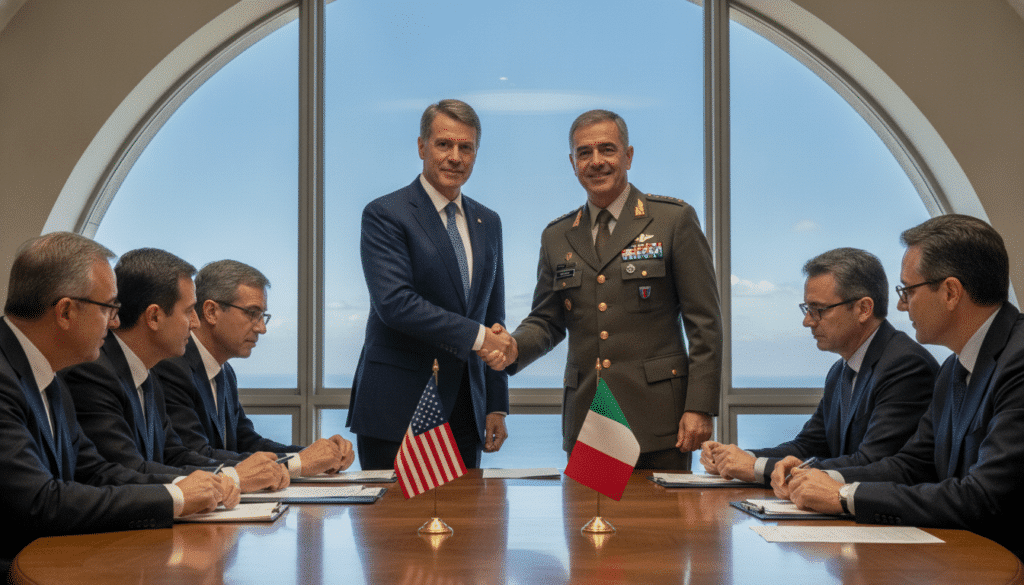
G7 photo controversy: Trump’s claim that Meloni “begged” and his “felt sorry” remarks
The trouble started when Trump talked about a moment at the G7. He said Meloni had “begged” him for a photo. He claimed he had agreed only because he “felt sorry,” which made the situation tenser.
This incident happened during military cooperation talks. Leaders usually try to keep things calm, even when they disagree. The photo became a symbol of Meloni’s supposed weakness.
Iran conflict fallout: accusations tied to denying Iran a nuclear weapon
Later, Trump criticized Meloni on Truth Social. He linked her popularity to her stance on Iran’s nuclear program. He said she had “turned down” the U.S. on this issue, then suggested she wanted to be friendly again after U.S. military action.
These claims made the issue of security cooperation public. It turned into a test of loyalty. Trump has a history of criticizing allied leaders when disagreements arise.
Military logistics claims: runways, landing strips, and alliance burden-sharing rhetoric
Trump also said Meloni wouldn’t allow the U.S. to use Italy’s runways or landing strips. He called it a big logistical problem. He also talked about the U.S. spending a lot to protect Italy and other allies.
By linking access and spending, Trump framed the issue as part of a global defense strategy debate. He made day-to-day coordination, like bases and transit routes, a key part of his message.
Meloni’s response on X: “completely fabricated” and “Italy and I do not beg”
Meloni responded on X, calling Trump’s comments “completely fabricated.” She said she was “stunned” by his words about allies. She emphasized, “Italy and I do not beg.”
Her response aimed to change the narrative without leaving the NATO alliance. It showed that public messaging is now as important as policy in military and security cooperation.
Italy’s official reaction and the stakes for the NATO alliance
Rome has tried to calm things down without losing sight of the big picture. They see this as a minor issue, emphasizing the strong bond between the U.S. and Europe. This bond is what keeps NATO strong.
Tajani’s message: transatlantic relations beyond individual statements
Foreign Minister Antonio Tajani wants to separate words from actions. He believes in the strength of transatlantic ties, beyond just what leaders say.
This approach values steady diplomacy over quick statements. It also supports the ongoing military cooperation that relies on trust and shared goals.
Salvini declines to engage as the controversy spreads
Interior Minister Matteo Salvini has decided not to add fuel to the fire. He told reporters he won’t comment on this anymore.
This choice helps focus on Italy’s domestic issues and avoids confusing messages abroad. For NATO, this quiet approach helps keep security cooperation on track, even in a busy news cycle.
Crosetto emphasizes security cooperation with a “vital ally like the U.S.”
Defense Minister Guido Crosetto highlights Italy’s strong bond with the U.S. He didn’t react to the controversy, focusing on the alliance with a key partner.
He emphasizes the importance of ongoing cooperation, like training and intelligence sharing. These efforts are more critical than any single headline, given the global challenges we face.
Domestic context: Italian public sentiment, polling concerns, and the 2027 election horizon
Italian politics is always in the background. Prime Minister Giorgia Meloni faces voters again in 2027. Recent polls show many Italians have negative views of Donald Trump.
Concerns about the U.S.-Israel war in Iran add to the pressure. Foreign crises can influence how voters see alliances. This makes the partnership with the U.S. a key issue at home, not just abroad.
Meloni was once seen as close to Trump, but now there’s more distance. For NATO, the real test is maintaining steady military cooperation amid domestic politics and global challenges.
NATO Summit: Conclusion
The NATO summit starts in Ankara on July 7–8, and Donald Trump’s Truth Social post has brought old issues to the surface. This timing is awkward because leaders are expected to show unity, not argue. For those watching in the United States, the question is whether the noise will fade once the meetings start.
The dispute involves personal attacks and claims about Iran and security burdens. It also touches on access to Italian runways, a topic that can complicate defense talks. Yet, the NATO alliance relies on practical planning, and public arguments rarely change the need for joint readiness.
Italian officials are trying to keep the story from affecting U.S.–Italy relations. They emphasize steady cooperation and shared goals in international diplomacy. Their message aligns with the Hague Summit Declaration, which calls for bigger commitments and clear follow-through. If leaders in Ankara follow this path, the focus might shift from feuds to capabilities.
Outside the meeting rooms, there are real pressures, like finding a solution in Ukraine and avoiding wider conflict. Reports on talks and security guarantees highlight the fragility of progress. For example, recent coverage of the Ukraine peace deal highlights the challenges of a possible framework. And with warnings about critical infrastructure and nuclear risk, the summit becomes more about results than personalities.