Is President Trump Satisfied with Current Economic Conditions?
Discover insights as President Trump expresses his approval of the prevailing economic conditions amidst a changing economic landscape.
Current Economic Conditions
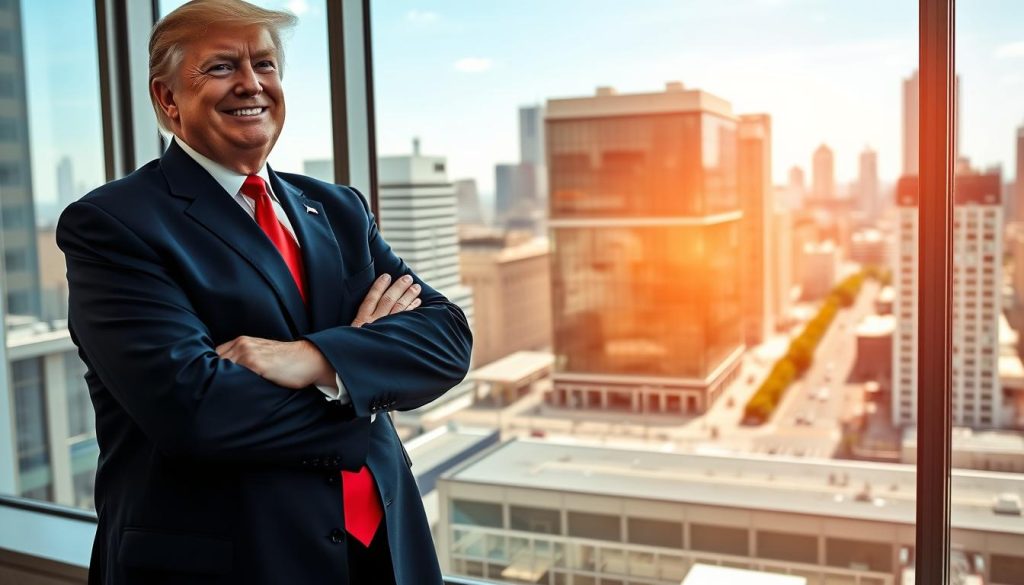
President Donald Trump calls today’s Economic Conditions “his economy now.” He’s confident in this message. He shared it in a big moment tied to the Super Bowl, aiming for a wide audience.
Trump sees a stronger business environment in the data. This includes growth, jobs, and lower costs for families. The White House points to rapid GDP growth, lower inflation, and improved affordability as signs of progress, as reflected in recent updates.
Trump’s message is upbeat, but many Americans feel the pinch. Despite market rebounds and hiring, polls show people are struggling. He’s taking his economic message on the road, focusing on jobs, prices, and the business environment before the midterms.
His team links today’s economic situation to past successes. They say these successes raised wages and opened more opportunities. The administration’s broader argument is based on the Trump administration’s accomplishments. Current trade talks could also change the economic outlook and business environment.
Investors and employers are watching the China tariff debate closely. Changes in tariffs can quickly affect costs and supply chains. Reporting on possible tariff changes has brought fresh attention, as Trump argues for easing pressure on China while helping U.S. buyers and businesses.
Key Takeaways
- Trump is calling the current Economic Conditions “his economy now” and seeking direct credit for recent trends.
- His remarks came in a Super Bowl-related setting designed to reach a broad national audience.
- The article’s central tension: Trump’s upbeat economic outlook versus public dissatisfaction, as reflected in polling.
- He is tying his message to the business environment, focusing on jobs, affordability, and investment.
- Trump frames praise for gains as his responsibility while blaming Joe Biden for higher prices on some staples.
- Trade policy, including possible changes to China tariffs, is emerging as a key factor for the economic outlook.
Trump Claims the “Trump Economy” Has Already Arrived
President Trump is focusing on the good economic news. He’s sharing this in a big way, aiming to make voters feel the improvement in their daily lives.
Super Bowl interview highlights on NBC Nightly News with Tom Llamas
The interview was during the Super Bowl and featured Tom Llamas from “NBC Nightly News.” It was taped in the Oval Office, making the conversation feel both formal and friendly.
Llamas asked when the “Trump economy” started. Trump quickly explained who to thank and who to blame for today’s prices.
Trump’s key quote and framing: “I’d say we’re there now… I’m very proud of it.”
Trump’s answer was clear: “I’d say we’re there now… I’m very proud of it.” He also said Democrats have stopped talking about affordability. He blamed them for the current economic issues.
He pointed to Joe Biden for the high costs of some items. But a fact check of GDP and tariffs called into question his claim of 5.6% growth.
The Labor Department said the economy grew at a 4.4% annual rate in the third quarter of 2025. It hasn’t hit 5% in any quarter after 2021. The U.S. output even dropped in the first quarter of 2025, partly due to a surge in imports.
There’s a data gap due to a government shutdown. Trump mentioned a White House official’s estimate of 5.4% growth. But other estimates were much lower.
Political timing: promoting his economic message ahead of the November midterms
Trump talked about growth and investments, saying “hundreds of billions” and “trillions” were coming into the U.S. He claimed $18 trillion was being invested “as we speak.” He said new plants and factories would open soon, before his term ends.
This message is aimed at the November midterms. It’s meant to reach voters in key areas. But polls show only 33% approve of Trump’s handling of the economy, as reported in this article about his North Carolina speech.
Economic Conditions and How Americans Are Responding
President Trump talks up the economy, but many families feel it’s tighter. Polls show people’s confidence can fall behind the headlines. This gap affects how they see new economic signs and trends.

Public sentiment gap: Most Americans tell pollsters they are not satisfied with the state of the economy
Recent surveys show a cautious mood. A Pew Research Center snapshot found 28% of adults think the economy is good. But 72% say it’s fair or poor.
There’s a big difference between parties. Republicans are more optimistic, while Democrats are not. These views shape how people see economic signs and trends in their daily lives.
Polling snapshot: NPR/PBS poll showed Trump’s approval rating on the economy at 36% (December 2025)
A recent NPR/Marist/PBS News survey found that 36% approve of Trump’s handling of the economy. But 59% disapprove. This shows that messages about the economy don’t reach everyone the same way.
Many say Trump’s policies have made things worse. Only a few think they’ve helped.
What voters weigh most in the current economic climate
Last November’s elections highlighted affordability as a key issue. Democrats focused on costs in Virginia, New Jersey, and New York. They won, keeping prices a big part of the debate.
- Health care costs are a top worry.
- Food and goods prices are a constant source of stress.
- Housing costs and rent hikes are squeezing budgets.
Trump blames Democrats for affordability issues. He says he inherited a mess and that Democrats are backing off because the economy is strong. Many voters, though, focus on everyday costs and trends.
Key economic indicators and economic trends to watch in the coming months
Sorting out truth from spin requires looking at key indicators. GDP grew 4.4% in Q3 2025. But there was a contraction in Q1 2025, linked to trade and tariffs.
Data gaps add uncertainty. Because of a Labor Department shutdown, Q4 data are unavailable; estimates like the Atlanta Fed’s 5.4% are used. This makes it hard to be sure about trends.
Trump points to promised foreign investment and new factories. But his $18 trillion claim is disputed. The White House says it’s $9.6 trillion. This mismatch makes voters skeptical of economic claims.
Current Economic Conditions Conclusion
President Donald Trump says we’re in the “Trump economy” now. He points to stronger markets and more investment. He’s proud of it, saying, “I’d say we’re there now… I’m very proud of it.”
His team believes economic growth is back. They want voters to see it as Trump’s doing.
But many Americans are not happy. Polls show they’re not satisfied. His approval rating on the economy is around 36%.
Markets seem strong, with major indexes rising. Tech names are also getting attention. Yet, some experts think things could get worse if growth slows.
Trump’s rallies aim to show progress and job creation. He wants to prove his policies work. Democrats will focus on affordability and high costs, like housing and groceries.
The outcome depends on future data. We’ll see how spending, hiring, and inflation change. If markets stay strong and people keep spending, Trump’s argument will be stronger.
But recession risks are always there. This will be part of the discussion on covering stocks and recession risk.