2026: New US Immigration Laws & Restrictions
Discover the latest updates on new immigration laws and restrictions starting Jan 1st 2026 impacting entry into the United States.
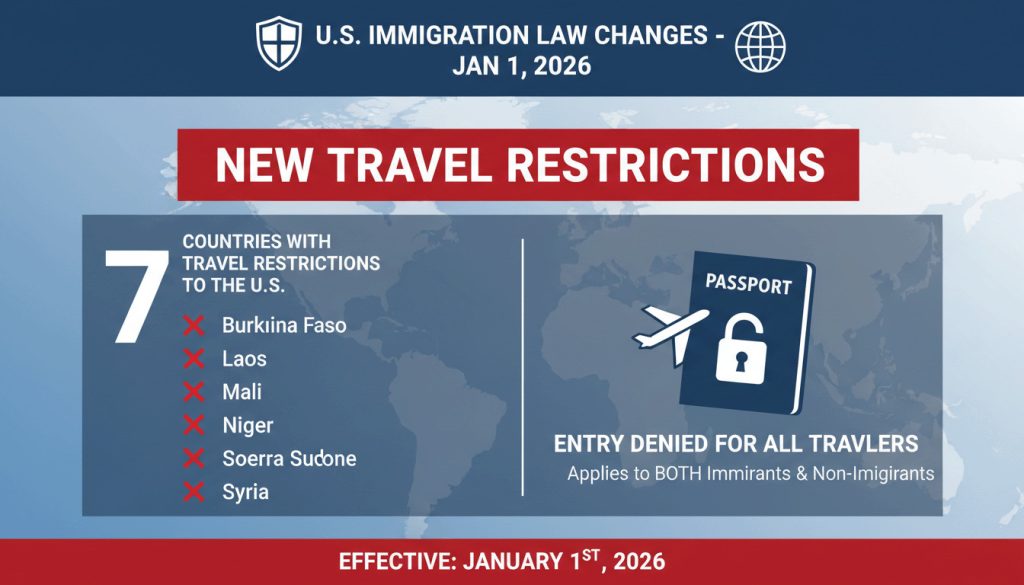
New US Immigration Laws and restrictions are set to take effect on Jan 1st, 2026, according to ABC News. These changes will limit who can enter the United States. The goal is to make entry more secure and reduce loopholes at the border and in consular processing. See how the White House Pressures DHS to Speed Up Deportations.
These updates are linked to executive actions signed by President Donald Trump in 2025. The new rules will take effect on Thursday, Jan. 1. They apply to both immigrants and nonimmigrants and aim to strengthen visa and travel rules. Also, see that the U.S. VISA application will now include a Social Media examination.
President Donald Trump’s appearance at Mar-a-Lago in Palm Beach, Florida, on Dec. 29, 2025, drew significant attention. He was there for a joint press conference with Israeli Prime Minister Benjamin Netanyahu. A photo from the event, by Jonathan Ernst/Reuters, highlighted the upcoming changes.
The White House explains the security reasons behind these changes in a press release. For those interested in visa rules, the State Department’s January 2026 Visa Bulletin provides essential information on visa caps and wait times.
US Immigration Laws Key Takeaways
- New immigration laws and restrictions starting Jan 1st, 2026, are described as a security-focused shift in entry policy.
- Updated CBP guidance obtained by ABC News indicates that travel restrictions will begin Thursday, Jan. 1.
- U.S. immigration updates 2026 link the new limits to executive actions signed earlier in 2025 by President Donald Trump.
- The policy is described as covering entry for both immigrant and non-immigrant travelers.
- Attention intensified after the Dec. 29 Mar-a-Lago press conference with Benjamin Netanyahu, photographed by Jonathan Ernst/Reuters.
- Visa caps and wait times are essential, and the State Department’s January 2026 Visa Bulletin offers key timing signals.
What’s Changing in US Immigration Updates 2026
Many travelers wonder what’s changed and when. The latest immigration laws for 2026 have a precise start date. They also make it harder for some to board flights or enter the country.
New policies are being felt in many ways. For example, airlines are checking more, and U.S. arrival points are asking more questions. These changes are based on official guidance and internal notices.
CBP guidance indicates new travel limits begin Thursday, Jan. 1
ABC News reports that U.S. Customs and Border Protection (CBP) has updated its rules. Starting Thursday, Jan. 1, people from seven countries can’t travel to the U.S. This affects boarding, transit, and entry at airports and land crossings.
These immigration law updates concern a broader system. They involve airlines, consular systems, and CBP inspections working together. Travelers may face more checks on who they are, why they’re traveling, and if they can enter.
Executive orders signed earlier this year put the restrictions into effect on Jan. 1
The new rules come from executive orders signed in 2025. President Donald Trump’s orders set the limits for Jan. 1, 2026. This means a significant change, not a slow start, so travelers should check their status before leaving.
For those following immigration policy changes, it’s essential to see how rules are applied every day. National coverage also shows broader enforcement changes, including those outlined in immigration changes taking effect across the U.S.
Applies to immigrants and nonimmigrants per a Dec. 29 document
A Dec. 29 document shows the rules apply to both immigrants and nonimmigrants. This means many people could be affected, not just new visa applicants.
- Immigrants include those seeking permanent residence through family or work.
- Nonimmigrants are temporary visitors, such as tourists, students, and certain workers.
Both groups being covered means more people are affected. The new rules can change travel plans for those with valid documents, but they may face border checks.
New immigration laws and restrictions starting Jan 1, 2026
New immigration laws and restrictions begin on January 1st, 2026. They change who can fly, get a visa, or enter the U.S. Many families and employers will notice the most significant change. This is because of the updated travel ban list.
These new rules focus more on country-based limits. Travelers will face stricter screening and may be denied entry. Coverage of the new travel restrictions shows that they affect both immigrants and non-immigrants.

Seven countries have been added to the list of those restricted from travel to the United States.
Seven countries are now restricted from traveling to the U.S. This rule applies to both immigrants and non-immigrants.
- Burkina Faso
- Laos
- Mali
- Niger
- Sierra Leone
- South Sudan
- Syria
National security and public safety rationale from the White House
The White House says these new laws are about border safety and visa checks. They focus on national security and public safety.
Supporters say this makes it easier to check identities, track threats, and enforce rules once people arrive.
Criticism from immigrant advocates who say the ban targets African and Muslim countries
Immigrant advocates question the fairness and impact of these laws. They say it unfairly targets African and Muslim countries. It could also split up families who were already waiting.
As these laws take effect, advocacy groups want more explicit rules on exemptions and waivers. They say the details are key for those needing urgent travel for health, safety, or family reasons.
Immigration Regulations 2026: Countries Impacted and Visa Policy Updates
For many families and employers, the 2026 immigration updates are more than just a new list. They reflect broader changes, including security checks, visa access, and new legal rules for immigrants.
These updates on immigration laws 2026 are linked to new proclamations and agency guidelines. They affect who can apply, who can travel, and which documents are needed before a trip.
Countries covered by the updated restrictions list
The new rules are wider than the seven countries in the headlines. A single policy change can change how people outside the U.S. get visas.
Those following us immigration updates 2026 often look for the latest, clear list. A helpful resource is NAFSA’s summary of the January 1, 2026, travel ban, which explains how the categories work.
Continuation of restrictions affecting travelers from Afghanistan, Burma (Myanmar), Chad, the Republic of the Congo,
The policy update also keeps full restrictions on travelers from several countries. This matters for planning interviews, family petitions, and other legal steps for immigrants.
- Afghanistan
- Burma (Myanmar)
- Chad
- Republic of the Congo
- Equatorial Guinea
- Eritrea
- Haiti
- Iran
- Libya
- Somalia
- Sudan
- Yemen
Because the list includes countries already restricted, these updates feel like a continuation for some. They mean lawyers and applicants often review documents and timelines before planning.
Partial travel restrictions noted for Venezuela and Cuba
The document also talks about partial travel restrictions for Venezuela and Cuba. This is different from full limits. It means some visa types are paused, while others can move forward, based on the applicant’s situation.
For those following our immigration updates 2026, remember that “partial” doesn’t mean no impact. It can affect interview scheduling, visa validity, and entry screening for immigrants.
H-1B visa changes: shift from random lottery to a weighted, wage-prioritized selection system
Along with the travel rules, there’s a change in employment-based immigration. This change to the H-1B visa program went into effect on Monday. It allows employers to hire noncitizens with specialized skills or trades.
Selection was once random. USCIS spokesman Matthew Tragesser said some employers exploited this. The new system aims to match Congress’s intent, strengthen U.S. competitiveness, and encourage petitions for higher-paid workers.
Tragesser also said USCIS will keep updating the H-1B program to support business needs while preventing abuse. In the same news cycle, a debate among some Trump supporters over Trump’s H-1B visa comments appeared alongside the reporting. The administration is prioritizing tightening visa restrictions for other countries.
Immigration attorney Rosanna Beradi said the change will severely limit who qualifies. It will make it harder for international students to stay in the U.S. after graduation. She believes it could worsen brain drain. The rule effectively eliminates the lottery system while prioritizing high-wage earners, a shift many are tracking as part of updates to immigration laws in 2026.
US Immigration Laws Conclusion
As of Thursday, Jan. 1, 2026, new immigration policies will start. CBP will enforce these rules in accordance with President Donald Trump’s executive orders. Travelers need to be aware of these changes, as ports of entry may apply new regulations immediately.
The new immigration rules of 2026 affect many people. A document from Dec. 29 shows they apply to both immigrants and non-immigrants. This means the rules could impact visits, study, work, and other temporary stays.
Seven countries will face new restrictions: Burkina Faso, Laos, Mali, Niger, Sierra Leone, South Sudan, and Syria. Afghanistan, Burma (Myanmar), Chad, the Republic of the Congo, Equatorial Guinea, Eritrea, Haiti, Iran, Libya, Somalia, Sudan, Yemen, and Venezuela will also see changes. This creates uncertainty for many families and employers.
These changes also affect work and entry into the U.S. The H-1B process is changing to a wage-based system. The White House says this is for national security and public safety. But immigrant advocates worry it will unfairly target African and Muslim countries.
US Immigration Laws FAQ
What are the new security-related travel and immigration restrictions taking effect Jan. 1, 2026?
New rules for travel to the U.S. start on Jan. 1, 2026. These rules are part of a bigger effort to make visa and travel checks stricter.
When do the new US immigration updates 2026 start being enforced at ports of entry?
The new rules start on Thursday, Jan. 1, 2026. Travelers from certain countries might not be allowed to enter the U.S.
What is the legal basis for the Jan. 1, 2026, restrictions?
The rules are based on executive orders signed by President Donald Trump in 2025. They will be enforced starting Jan. 1, 2026.
Who do the Jan. 1, 2026, travel limits apply to—immigrants, nonimmigrants, or both?
Both immigrants and nonimmigrants are affected. The rules apply to those seeking visas and travelers under new immigration laws.
Which seven countries are newly restricted from travel to the United States starting Jan. 1, 2026?
Seven countries are now restricted: Burkina Faso, Laos, Mali, Niger, Sierra Leone, South Sudan, and Syria. Travel to the U.S. from these countries is banned starting Jan. 1, 2026.
What reason does the White House give for the new immigration laws and restrictions starting Jan 1st, 2026?
The White House says the restrictions are for national security and public safety. They aim to strengthen visa and travel rules.
What criticism have immigrant advocates raised about the Jan. 1, 2026, travel restrictions?
Critics say the ban unfairly targets African and Muslim countries. They argue it will unfairly affect certain regions and faith groups.
Are there other countries already covered by travel restrictions?
Yes, some countries already face travel restrictions. These include Afghanistan, Burma, Chad, and others.
What does the guidance say about Venezuela and Cuba?
Venezuela and Cuba face partial restrictions, not full bans. This is different from the restrictions on other countries.
How do the Jan. 1, 2026, travel restrictions connect to broader immigration regulations in 2026?
The restrictions are part of a larger effort to tighten visa and travel rules. This includes changes to employment-based immigration.
What changed in the H-1B visa program earlier this week?
The H-1B visa program changed earlier this week. It now favors higher-wage candidates, moving away from a random selection process.
Why did USCIS say it changed the H-1B selection process?
USCIS says employers abused the old system. The new system aims to support higher-skilled workers and prevent wage exploitation.
What did immigration attorney Rosanna Beradi say about the new H-1B weighted system?
Rosanna Beradi believes the change will limit who can get visas. She worries it will make it harder for international students to stay in the U.S.
How many H-1B visas are involved in the program, according to USCIS?
USCIS says there are 85,000 H-1B visa applications. This number is at the center of debates on immigration.
What public events were referenced as part of the reporting context around these updates on immigration laws 2026?
ABC News mentioned President Donald Trump’s appearance with Israeli Prime Minister Benjamin Netanyahu. This was at Mar-a-Lago in Florida.
What should travelers and visa holders do ahead of Thursday, Jan. 1, 2026?
Travelers should check the latest CBP guidance. They should also confirm airline rules before traveling. The new rules may affect entry and processing.