What is the Lazarus Effect? Unraveling the Mystery
Discover what is the Lazarus Effect and explore this fascinating phenomenon of apparent revival after death. Learn about its scientific basis and real-world cases

Ever thought about the line between life and death? The Lazarus effect is a mystery that pushes our limits. It originates in the Bible but now addresses science and medicine, posing fundamental questions about life and death.
The “Lazarus effect” comes from a Bible story about caring for the poor. Today, it refers to people who return to life after doctors thought they were gone. This rare event has changed how we respond in emergencies and has sparked big debates in medical ethics.
Looking into the Lazarus effect is more than just a story. It concerns the science of life and death, touching on brain science, cardiovascular health, and emergency care. It prompts us to reconsider what we know about the process of coming back to life.
Scientists have been studying this for over 15 years. They’ve looked at how our minds and bodies react when we almost die. This research helps us understand the complex mix of physical and mental factors in near-death experiences.
Let us examine the science of the Lazarus effect, review real-life examples, and discuss the debates it raises. Join me as we examine this topic and its role in contemporary medicine and society.
- The Lazarus effect challenges our understanding of life and death.
- It has roots in biblical stories but has evolved into a medical phenomenon.
- The concept raises ethical and philosophical questions in medicine.
- Research on the Lazarus effect impacts emergency response protocols.
- Understanding this phenomenon involves multiple scientific disciplines.
Understanding What is the Lazarus Effect: Origins and Definition
Lazarus effect in medical terms:
The Lazarus effect is a medical phenomenon that fascinates many. It’s when someone comes back to life after being declared dead. This raises big questions about life and death.
Biblical Origins of the Term
The term “Lazarus effect” comes from the Bible. It concerns a man named Lazarus, whom Jesus raised from the dead four days after his death. This story has always been a symbol of hope and life after death.
Modern Scientific Context
Lazarus effect science explanation:
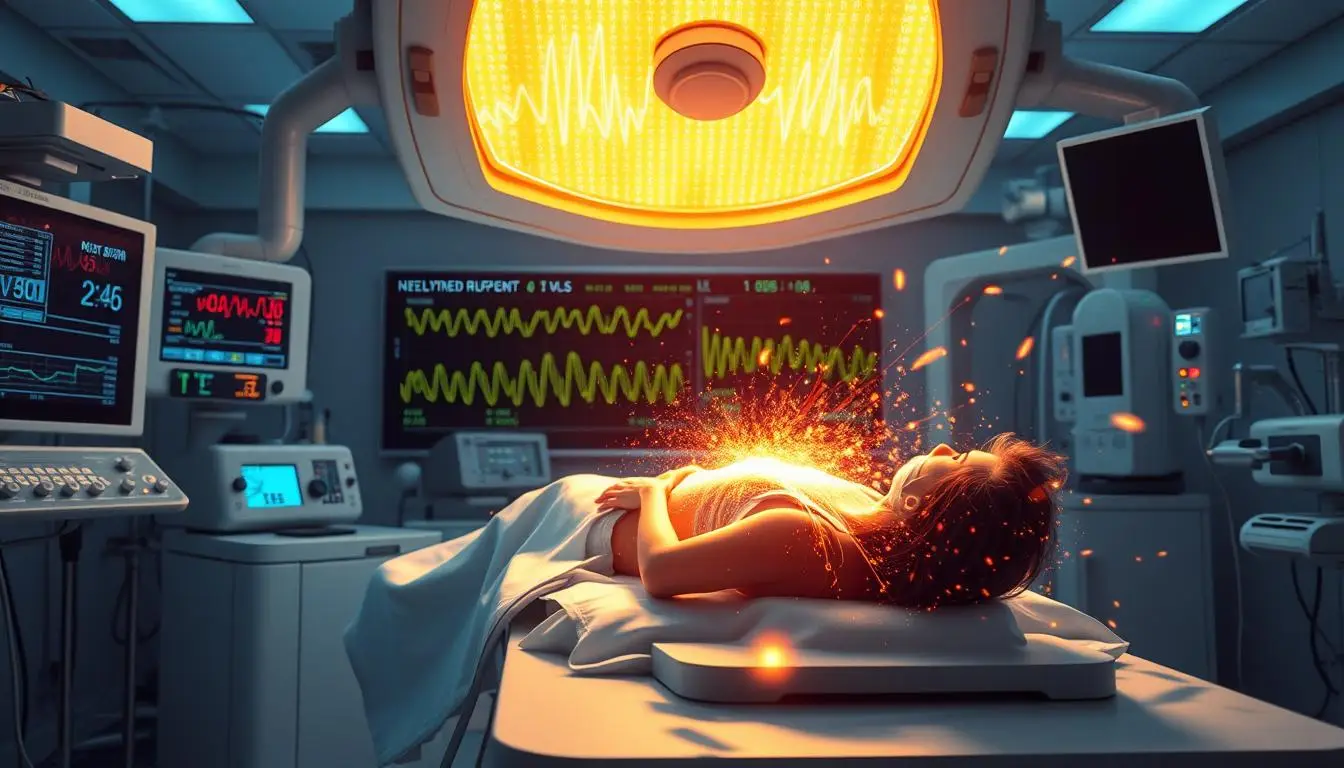
In modern medicine, the Lazarus effect is the phenomenon in which a patient begins breathing again after CPR has failed. It was first noticed in 1982. There have been fewer than 100 cases worldwide. Physicians are trying to determine how this happens.
Evolution of the Concept in Medical Science
The Lazarus effect has changed from a miracle to a rare medical event. It has been reported in medical journals 38 times. Most people who experience it are over 60, with only 10 cases in kids.
Learning about the Lazarus effect has changed how doctors work. They now watch a patient’s signs for longer before saying they’re dead. This shows how medical science is advancing in its understanding of this phenomenon.
The Science Behind the Lazarus Phenomenon
The Lazarus effect explanation:
The Lazarus effect is a mystery that scientists are trying to solve. It’s when someone comes back to life after all hope seemed lost. This challenges what we think we know about life and death.
From 1982 to 2018, 65 cases of the Lazarus effect were documented in medical journals. Amazingly, 18 people fully recovered. By 2022, the number had increased to 76 cases across 27 countries, of which 10 involved children.

The Lazarus effect is significant because it occurs in individuals of all ages. It’s seen in babies as young as 9 months and adults up to 97 years old. Most of these cases (68%) involved individuals aged 60 or older.
Scientists hypothesize there are several reasons for this phenomenon. These include:
- Delayed drug effects
- Electrolyte imbalances
- Temporary cardiac stunning
- Hyperventilation and alkalosis
- Auto-PEEP (Positive End-Expiratory Pressure)
The significance of the Lazarus effect also affects how we manage emergencies. Physicians now monitor patients for at least 10 minutes after CPR is discontinued. This is to detect any cases of autoresuscitation.
Even though it’s rare, six people fully recovered without brain damage. Their survival times varied from minutes to months. This phenomenon prompts us to reconsider our views on life and death, as well as on how we care for people at the end of life.
Medical Applications and Documented Cases
The Lazarus effect has long fascinated physicians. It’s when patients seem to come back to life after being declared dead. This challenges our understanding of what happens in clinical settings.
Notable Clinical Examples
Medical literature has documented 63 cases of Lazarus Syndrome. Most of these patients were 60 years or older. Life signs were noticed within 5 minutes in 30 cases and between 6 and 10 minutes in 14 patients.
Statistical Frequency in Modern Medicine
The Lazarus effect happens in about 0.7% of adult patients with cardiac arrest. Younger patients are more likely to experience it, possibly because they have better health. Arrests caused by respiratory or metabolic problems are more likely to result in autoresuscitation than those caused by cardiac problems.
| Age Group | Incidence | Common Causes |
|---|---|---|
| Adults | 0.7% | Respiratory/Metabolic |
| Younger Patients | Higher than 0.7% | Better Physiological Reserve |
Protocol Changes Based on Documented Cases
These cases have led to changes in the performance of CPR. Longer CPR times have been linked to the Lazarus effect, but we don’t fully understand why. Patients with kidney or lung diseases are more likely to experience this. Approximately 35% of patients who return to life survive to discharge, and 85% of them recover well.
“The mismatch between published case studies and observed incidents suggests that the incidence of Lazarus Syndrome may be higher than reported.”
Controversies and Ethical Implications
The significance of the Lazarus effect raises big ethical questions in medicine. It makes us question what death really means and how we decide when to stop treatment. Let’s examine the main issues this phenomenon raises.
Medical Ethics Considerations
The Lazarus effect makes us question when life ends. This is even harder when we learn that auto-resuscitation can happen up to 10 minutes after CPR stops in 82% of cases. It’s a complex area that puts doctors and families in a difficult position.
Research Challenges and Limitations
It’s hard to study the Lazarus effect because it’s rare, mainly in trauma patients. We can’t test on people who are dying, so our knowledge is based on a few observations. This makes it tough to make solid conclusions or set clear rules.
Impact on Emergency Response Protocols
The Lazarus phenomenon has sparked debates about how long to continue resuscitation efforts. Some say we should watch longer after it seems like someone has died. But, without CPR, auto-resuscitation doesn’t happen. This affects how we respond in emergencies and how we handle organ donations.
| Aspect | Impact |
|---|---|
| Definition of Death | Challenged and unclear |
| Resuscitation Efforts | Extended duration considered |
| Organ Donation | Timing and procedures affected |
The Lazarus effect also affects cancer treatment decisions. With 606,880 cancer deaths expected in the U.S. in 2019, doctors have to make tough choices. They must weigh hope against reality, like when some patients show a Lazarus-like recovery. These cases make it hard to know when to keep trying to save a life versus when to stop.
Conclusion: The Future Research and Its Significance
The Lazarus effect is a rare phenomenon in which patients appear to return to life after all hope seems lost. Research on this effect is changing how we see life and death. It happens in about 0.7% of adult cardiac arrests, more often in the young.
This phenomenon makes us question our medical practices. The American Heart Association recommends that CPR be continued for at least 30 minutes. However, the Lazarus effect prompts reconsideration of this rule, leading to a review of how we determine when someone has died.
Future research aims to identify methods to predict and treat the Lazarus effect. This could help us save more lives and better understand the boundary between life and death. As we learn more, we’ll also explore deeper questions about consciousness and human strength.
The Lazarus effect is significant, reshaping how we think about medical ethics and patient care. It shows the importance of being open with families about this rare event. As we learn more, it could bring new hope to patients with severe illnesses, as recent cancer trials have shown. It shows that, in medicine, miracles and breakthroughs are always possible.
FAQ
What is the Lazarus Effect?
The Lazarus Effect is when someone’s heart starts beating again after they were thought to be dead. It’s named after the biblical story of Lazarus. This medical event is rare but has become a part of our understanding of death.
How did the term “Lazarus Effect” originate?
It derives from the Bible, where Jesus raises Lazarus from the dead. Today, it describes the process by which someone’s heart starts again after they have been declared dead.
What causes the Lazarus Effect?
We’re not sure why it happens, but it might be due to delayed drug effects or changes in the body’s chemistry. It’s a mystery that challenges what we know about death and coming back to life.
How common is the Lazarus Effect?
It’s very rare. It’s hard to say how often it happens because not all cases are reported. But it has led to changes in how doctors try to save lives.
What are the ethical implications of the Lazarus Effect?
It raises big questions about when someone is really dead. It prompts doctors and families to wonder how long to continue trying to save someone. It also makes us think about what happens after we’re declared dead.
How has the Lazarus Effect impacted medical protocols?
It has changed how doctors try to save lives. They now watch patients longer after they’re declared dead. It has also changed how we respond to emergencies and manage organ donation.
What is the significance of studying the Lazarus Effect?
Examining the Lazarus Effect helps us better understand life and death. It shows us how strong the human body can be. It might also help doctors save more lives.
Are there any limitations in researching the Lazarus Effect?
Yes, there are big challenges. It’s hard to find enough cases to study. There are also rules about how to study it. These make it tough to learn more about it.
Source Links
- http://blog.adw.org/2019/03/learning-lessons-lazarus-rich-man-2/ – Learning the Lessons of Lazarus and the Rich Man – Community in Mission
- https://www.pearsonhighered.com/assets/samplechapter/0/2/0/5/0205420486.pdf – 138_175_Ch05_61753
- https://www.emergencyresilience.com/blog/lazarus-phenomenon-autoresuscitation-definition-possible-causes/ – Lazarus Phenomenon (Autoresuscitation): Definition & Possible Causes – Emergency Resilience
- https://en.wikipedia.org/wiki/Lazarus_syndrome – Lazarus syndrome
- https://my.clevelandclinic.org/health/articles/24876-lazarus-effect – What Is the Lazarus Effect?
- https://pmc.ncbi.nlm.nih.gov/articles/PMC10380628/ – Lazarus Phenomenon or the Return from the Afterlife—What We Know about Auto Resuscitation
- https://www.news-medical.net/health/What-is-Lazarus-SyndromeAutoresuscitation.aspx – What is Lazarus Syndrome (Autoresuscitation)?
- https://com-bos.ca/en/the-lazarus-effect-mechanisms-and-clinical-implications-of-autoresuscitation/ – The Lazarus Effect: Mechanisms and Clinical Implications of Autoresuscitation – COM-BOS
- https://pmc.ncbi.nlm.nih.gov/articles/PMC6950944/ – Lazarus phenomenon in trauma – PMC
- https://pmc.ncbi.nlm.nih.gov/articles/PMC7531032/ – Predicting a “Lazarus Effect” in Patients with Advanced Cancer Near the End of Life: Prognostic Uncertainty, Oncologists’ Emotions, and Ethical Questions
- https://www.linkedin.com/pulse/lazarus-effect-myth-medical-reality-chinyere-d4gof – The Lazarus Effect: Myth or Medical Reality?