Veeramamunivar: The Italian Scholar Who Helped Shape Tamil Literature
Discover how Veeramamunivar, an Italian Jesuit priest, enriched Tamil literature through grammar, dictionaries, and literary works still studied today
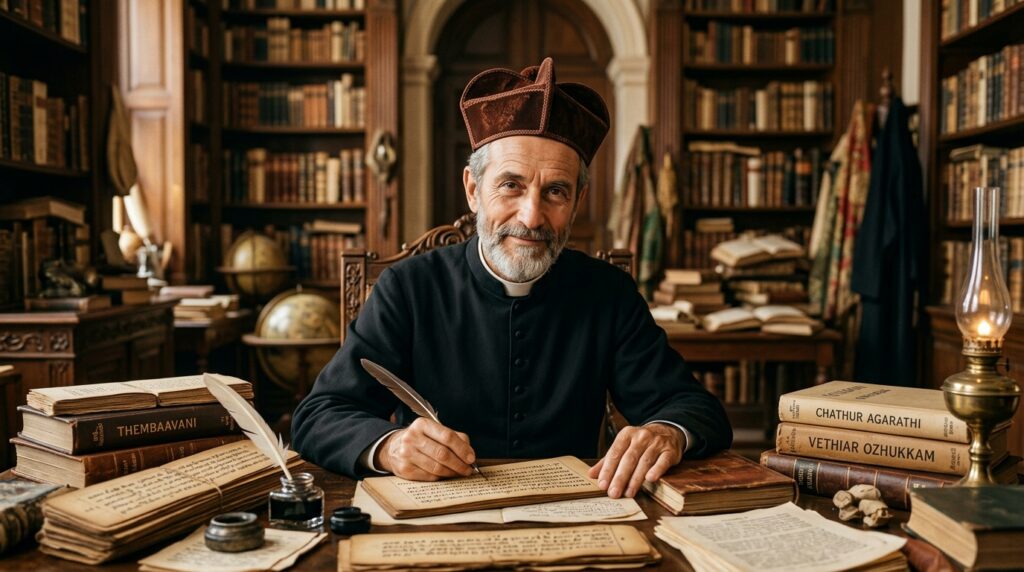
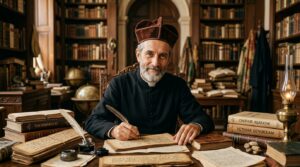
Born Constantine Joseph Beschi in 1680, this Italian Jesuit missionary traveled to South India. He became an unlikely literary hero in Tamil history. He arrived as a priest to spread his faith, but fell in love with Tamil language and culture.
Local communities called him Veeramamunivar, showing his deep respect for Tamil tradition. He mastered Tamil and wrote poetry, grammar texts, and literary works still studied today. His writing joined two worlds, blending European scholarship with authentic Tamil expression.
Beyond literature, his spiritual legacy continues to grow. In August 2025, the Catholic Church formally recognized him as a Servant of God. This honor shows his lasting influence as a man of faith and champion of Tamil heritage.
Key Takeaways
- Constantine Joseph Beschi was an Italian Jesuit missionary who became a celebrated Tamil poet and scholar.
- He is widely known by his Tamil name, Veeramamunivar, earned through his literary achievements.
- His works include Tamil grammar guides, dictionaries, and epic poetry still referenced today.
- He successfully blended European scholarly methods with authentic Tamil literary traditions.
- The Catholic Church declared him a Servant of God on August 3, 2025.
- His legacy connects religious history with South India’s rich cultural and linguistic heritage.
Who Was Veeramamunivar?
The Tamil name veeramamunivar hides the remarkable story of an Italian priest and one of South India’s celebrated scholars.
Born in Italy, costanzo giuseppe beschi crossed oceans as a gifted linguist and Jesuit missionary in South India. He arrived to spread Catholic teachings, then found a deep, lasting love for Tamil and its people.
Over time, Beschi became Veeramamunivar, a name showing his spiritual devotion and command of Tamil culture. His two identities tell connected stories: a missionary devoted to faith and a scholar who shaped Tamil literature.
Veeramamunivar’s influence reached far beyond religious work. He made pioneering contributions to Tamil grammar, lexicography, and poetry, and scholars still study his texts today. His talent earned recognition as a true Tamil littérateur, a rare honor for someone born outside the region.
His legacy also reaches into religion. In August 2025, the Catholic Church declared him a Servant of God, recognizing his lifelong devotion and service.
Together, these achievements make Veeramamunivar a lasting bridge between cultures, faiths, and languages.
The Early Life of Costanzo Giuseppe Beschi in Italy
Before becoming known as Veeramamunivar in Tamil Nadu, Costanzo Giuseppe Beschi lived in northern Italy. His story began in a small town, far from South Asia, among the quiet hills of the Duchy of Mantua. This early period shaped the man who later mastered a language and culture thousands of miles from home.
Understanding his roots in Italy helps explain how this italian jesuit missionary developed the discipline and curiosity that guided his later achievements.
Family Background and Education
Costanzo Giuseppe Beschi was born on 8 November 1680 in Castiglione delle Stiviere, a small town within the district of Mantua.
He grew up when classical education was highly valued across Italy. His family valued learning, and young Beschi received his secondary education at the Jesuits’ High School in Mantua.
There, he studied rhetoric, humanities, and grammar. These subjects trained him to examine language precisely. Little did anyone know this schooling would later help him create some of Tamil history’s finest literary works.
Entry into the Jesuit Order
In 1698, Beschi made a choice that shaped his life. He joined the Society of Jesus, beginning a path of faith, scholarship, and missionary work.
His Jesuit training took him first to Ravenna and then to Bologna, cities known for intellectual traditions. Between 1701 and 1703, he studied philosophy in Bologna and built a strong foundation in logic and reasoning.
From 1706 to 1710, he studied theology and deepened his understanding of Catholic doctrine. During these years, he also mastered several languages, including:
- Latin
- French
- Portuguese
- Greek
- Hebrew
This education in many languages gave him remarkable skill in grammar and translation. In 1709, Beschi became a priest and entered the religious vocation that soon carried him across the world.
By the end of his training, this italian jesuit missionary had the spiritual calling and intellectual tools for his mission in India. His years in Italy formed a quiet foundation for a legacy that would flourish thousands of miles away in Tamil Nadu.
The Journey to India: Becoming a Missionary
Stories from Jesuits returning from India stirred young Costanzo Giuseppe Beschi and changed the course of his life. Reports of distant missions and people awaiting the Gospel filled Jesuit colleges across Italy. For Beschi, these accounts became a calling he could not ignore.
Determined to serve as an Italian Jesuit missionary in South India, Beschi sent a formal request to Superior General Michelangelo Tamburini. His petition showed spiritual conviction and readiness for the difficult assignment. Tamburini approved it, allowing Beschi to join the Jesuit mission at Madurai.
Religious and Linguistic Training
Before sailing, Beschi received careful training for missionary life in an unfamiliar land. Jesuit programs stressed both strong theology and practical skills for cross-cultural ministry. This focus shaped every missionary the order sent abroad.
- Advanced theological study to strengthen doctrinal understanding
- Introductory language instruction to prepare for unfamiliar tongues
- Guidance from veteran missionaries who had already served in Asia
- Spiritual exercises meant to build resolve for isolated, challenging postings
This training gave Beschi more than religious knowledge. It built the discipline and flexibility he needed to master Tamil. He mastered Tamil so completely that local scholars barely believed he was foreign-born.
Departure for the Tamil Region
After training, Beschi left Lisbon, Portugal, on a journey that tested his endurance and faith. Early eighteenth-century ocean travel was slow, uncertain, and often dangerous. Still, he continued toward his new mission field.
He reached Goa in October 1710, setting foot in India for the first time. From there, Beschi traveled south and gradually learned its new landscapes and customs. His destination was deep in Tamil-speaking territory, far from his Italian home.
By May 1711, he reached Madurai, beginning his lifelong commitment to the Tamil region. Tamburini’s approved request had become the first chapter of a remarkable transformation. The Italian Jesuit missionary who arrived that year would soon earn a much greater place in Tamil society.
Arrival in Tamil Nadu and Cultural Immersion
When Beschi entered the Tamil region, his true education began; no seminary in Italy could prepare him. He wanted to understand a civilization shaped by centuries of poetry, philosophy, and devotion. This curiosity soon made him a dedicated tamil language scholar in his own right.
Inspired by Jesuit missionary strategies in China, Beschi made a bold choice. Rather than cling to his European identity, he chose total immersion. He adopted the saffron robe of a sannyasi, traditional garb for an Indian ascetic, to earn trust.
First Impressions of Tamil Society
Tamil society offered Beschi a world rich in ritual, hierarchy, and spiritual tradition. He soon learned that acceptance required more than memorizing vocabulary. It demanded genuine respect for customs, social structures, and daily rhythms that shaped Tamil life.
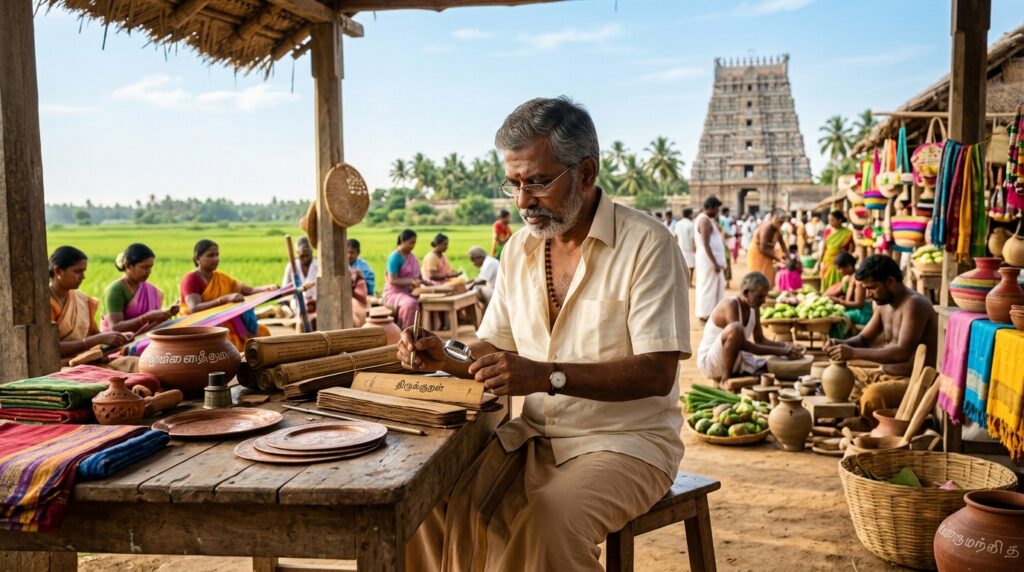
His journey took him through several important cultural centers. He visited Tirunelveli, Ramanathapuram, Thanjavur, and Madurai, learning local dialects, literary traditions, and regional customs. Each stop improved his language skills and deepened his understanding of Tamil culture.
Challenges of Adapting to a New Culture
Beschi’s commitment to Tamil culture came at a steep personal price. Between 1714 and 1715, he faced intense persecution from local authorities who viewed his presence with suspicion. He narrowly escaped a death sentence, showing the dangers missionaries faced across cultural and religious divides.
Despite these hardships, Beschi refused to abandon his mission. His perseverance recalls the biography of William Petropulos, where determination and sacrifice created a lasting legacy. His willingness to risk everything showed his belief in bridging two very different worlds.
These early trials strengthened his resolve instead of weakening it. They led him toward deeper study of Tamil language, literature, and spirituality. This hard-won experience later shaped his legacy as one of history’s most respected tamil language scholars.
Adopting the Name Veeramamunivar
Long before the world knew his birth name, Tamil communities gave Beschi a name of their own. His firm faith and principles earned him the affectionate nickname Dhairiyanathar, meaning “The Fearless Guru.” Local people gave this title only after seeing his courage.
Beschi spoke his mind, even when powerful figures or old customs opposed him. People noticed and respected his courage in debates and discussions. This boldness shaped how early Tamil communities viewed him.
The name most people recognize today came through a different path. After his epic poem Tembavani became a literary classic, the Academy of Poets granted him the title Vīramāmunivar. The name roughly means “Courageous, Great Ascetic,” honoring his discipline and literary daring.
This was no small honor. Tamil literary circles held classics to a high standard. Few outsiders earned this validation, and the title placed Beschi among writers who shaped Tamil poetry for generations.
A secondary historical account adds another layer to this story. Some records say Tamil king Vijaya Ranga Chokkanatha personally honored Beschi for his literary achievements. Historians debate whether this royal endorsement happened exactly as described, but the account shows Tamil society valued his work.
Together, these naming moments reveal three distinct layers of recognition:
- Dhairiyanathar — earned through personal courage and conviction in everyday encounters
- Vīramāmunivar — awarded by literary scholars following the success of Tembavani
- Royal acknowledgment — a possible honor from King Vijaya Ranga Chokkanatha, further cementing his status
Few European missionaries achieved this level of acceptance within Tamil society. By the time he became known as veeramamunivar, Beschi was no longer seen as a foreign visitor. Many viewed him as a true son of Tamil letters.
Mastering the Tamil Language
Years of disciplined work changed Beschi from a foreign missionary into one of history’s most respected tamil language scholars. He studied more than books in a distant classroom. He lived among Tamil speakers and learned to think and write in their language.
This change came through daily practice, not sudden inspiration. Each parish, conversation, and region strengthened his command of Tamil.
Learning Methods and Local Mentors
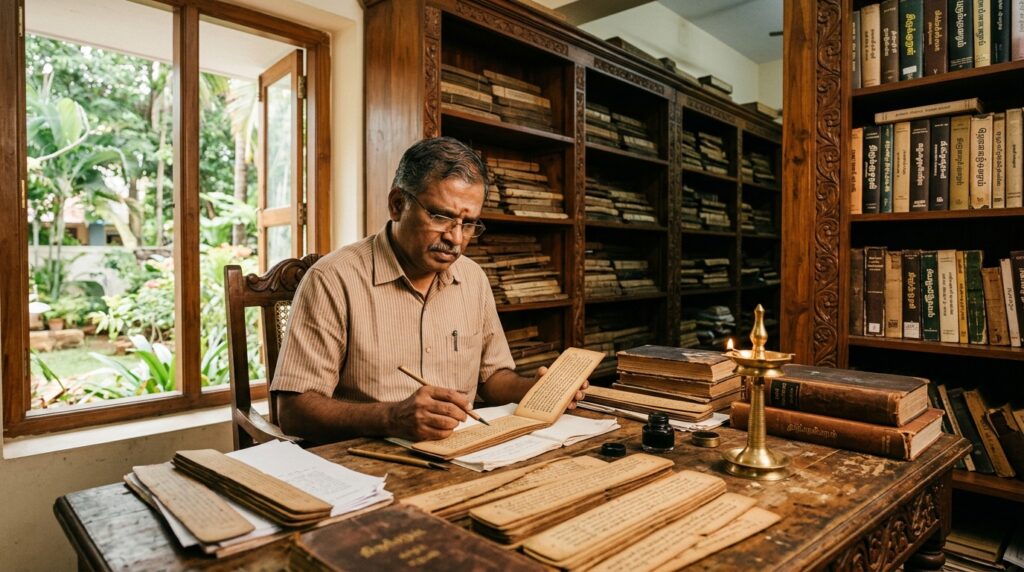
Beschi’s serious language education began during six years as a missionary in Elakurichy. The village lies near Tiruvaiyaru in the Ariyalur district.
This long posting gave him constant contact with spoken Tamil in a natural setting. He later served as parish priest in Kamanayakkanpatti, one of Tamil Nadu’s oldest Christian communities.
There, he spoke daily with villagers, local poets, and religious teachers. They helped improve his understanding of Tamil grammar and vocabulary.
His approach to learning relied on several key practices:
- Engaging in daily conversation with Tamil-speaking villagers and community elders
- Studying classical Tamil poetry alongside local scholars and pandits
- Practicing religious sermons in Tamil to sharpen oral fluency
- Observing regional dialects across different parishes to broaden his vocabulary
These methods gave him practical knowledge, not just textbook familiarity. Local mentors corrected his pronunciation and introduced literary traditions that few outsiders encountered.
Achieving Fluency and Literary Command
Beschi continued missionary work in the Thanjavur area until 1738. He strengthened his language skills through constant practice.
In 1740, he settled on the Coromandel coast. During this period, his writing became much more mature.
Beyond Tamil, he studied several other Indian languages, including:
- Sanskrit, for its connection to classical literary traditions
- Telugu, useful for communication across neighboring regions
- Urdu, which broadened his reach among diverse communities
Despite this range, Tamil remained his greatest passion. He knew it best and clearly loved it most.
That devotion appeared in the literary works he later produced. It also made him a distinctive tamil language scholar among European missionaries of his era.
Few foreigners achieved such fluency in Tamil. Fewer still used it to create lasting literary works.
His mastery made him more than a missionary. He became a true tamil language scholar who helped shape Tamil literature.
Tembavani: The Epic Masterpiece
When scholars discuss 18th century Tamil poetry, Thembavani often appears as a landmark work. This long verse epic marks the high point of Beschi’s literary career. With 3,615 stanzas, the tembavani epic poem combines Christian theology with classical Tamil verse.
This section explores the epic’s story, structure, and scholarly praise. Together, these features explain its lasting place in 18th century tamil poetry.
Plot and Religious Themes
Thembavani means “The Unfading Garland” in Tamil and follows salvation history. Saint Joseph stands at its center as Beschi’s main hero, not a minor biblical figure. This choice explores faith, humility, and divine providence through one character’s life.
The story moves from creation and humanity’s fall through centuries of waiting. It reaches Joseph’s birth, life, and death with the holy family. Beschi joined these biblical events into one story, following classical Tamil epics that local audiences loved.
Literary Style and Structure
Beschi organized his tembavani epic poem into three major cantos, or kaandams. Each canto covers a different part of the sacred story:
- Bala Kaandam – covering childhood and early formation
- Thirukkalyana Kaandam – focused on marriage and family life
- Thirunadaka Kaandam – detailing mission and culminating events
Beschi used classical Tamil meter with great precision, drawing on Sangam-era techniques. He added alliteration, assonance, and vivid nature images, creating a musical style. Few foreign-born writers matched his confidence with Tamil prosody.
Reception Among Tamil Scholars
Beschi did not simply publish his work and await acceptance. He submitted Thembavani for formal review by the Academy of Poets, a respected group of Tamil literary authorities. Their approval of the epic as a true classic brought an extraordinary honor to a European-born writer.
“Thembavani demonstrated that sacred Christian narrative could be rendered with the same grandeur, discipline, and beauty found in the greatest works of Tamil literature.”
This recognition had lasting effects. The scholarly community gave Beschi the title Veeramamunivar, which followed him throughout his life and beyond. Many modern readers see this event as proof that merit, not birthplace, shaped belonging in Tamil intellectual circles.
Today, Thembavani remains one of the boldest efforts to unite two literary worlds. Its survival across centuries reflects Beschi’s skill and the lasting appeal of devotion and perseverance.
Other Literary Contributions to Tamil Literature
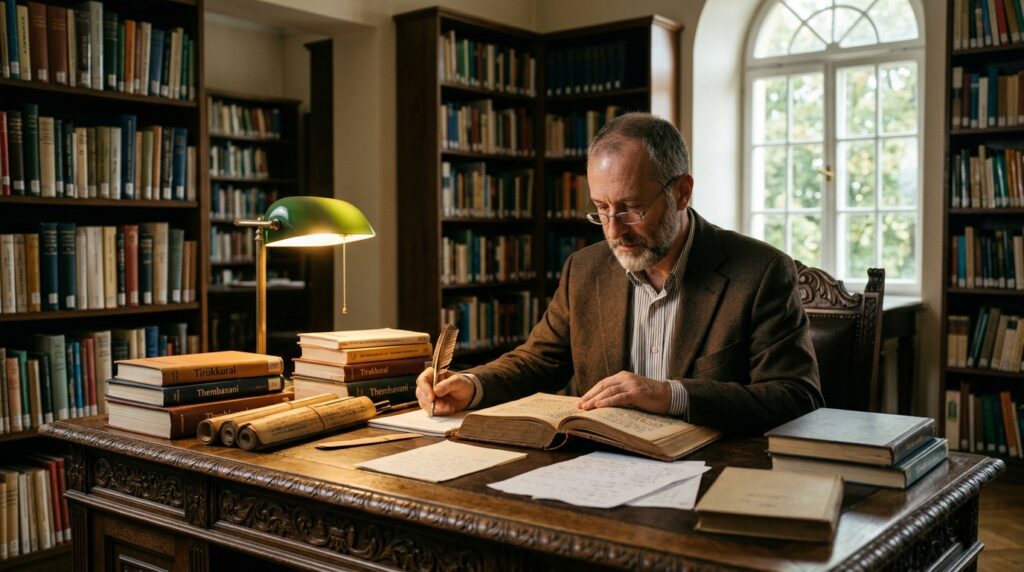
Beyond the pages of Tembavani lies a treasure trove of lesser-known but equally fascinating writings by Beschi. His tamil literature contributions spanned poetry, grammar, satire, and religious prose. Each piece shows a writer who refused to stay within one genre or audience.
Scholars who study his full catalog often feel surprised by the range of beschi tamil works. Some pieces entertained ordinary readers. Others trained priests and catechists for daily duties.
Poetic Works Beyond the Epic
Beschi composed Kaavalur Kalambagam, a prabandham-style poem following classical Tamil verse traditions. This form required precision and rhythm. His mastery showed he could follow strict poetic rules as skillfully as in his longer epic.
He also wrote Thonnool, a grammatical treatise and teaching tool for students learning Tamil composition. It laid groundwork for later scholars to expand formal grammar studies.
Perhaps his most beloved poetic contribution remains Paramarthaguruvin Kadhai. This satirical tale follows a naive religious teacher and his equally clueless disciples through comic misadventures.
Paramarthaguruvin Kadhai endures as one of the earliest examples of Tamil prose satire, admired for its humor and sharp observation of human folly.
Readers still enjoy this story today for its wit and accessible language. It shows Beschi’s lighter side, as he poked fun at human weakness instead of preaching solemnly.
Prose and Didactic Writings
Not every piece Beschi wrote aimed to entertain. Many served practical, religious purposes instead.
He authored Vedhiyar Ozukkam, a guide for catechists training new converts. It outlined proper conduct and teaching methods for those spreading Catholic doctrine across Tamil-speaking communities.
Beschi also produced polemical writings against Lutheran missionaries active in the region. These texts defended Catholic theology and challenged rival interpretations circulating at the time.
- Didactic religious books written specifically for Catholic instruction
- Guides that trained local catechists in proper conduct and teaching
- Polemical essays countering Lutheran missionary arguments
Together, these prose works show the practical side of his mission. He wasn’t simply a poet seeking literary glory; he built tools other missionaries and teachers could actually use.
Taken as a whole, his poetry and prose cement his place among Tamil literature’s most prolific figures. Few writers of any era blended scholarly grammar, religious instruction, and popular satire with such ease.
Contributions to Tamil Grammar and Lexicography
Veeramamunivar became famous for his epics, but his grammar and dictionary work also changed Tamil. He knew poetry alone could not secure the language’s future. Scholars, students, and missionaries needed reliable tools to study Tamil well.
This practical vision led him to create resources that lasted beyond his lifetime. Many of these beschi tamil works remain key references for linguists studying classical and modern Tamil today.
Compiling the First Tamil Dictionaries
Veeramamunivar created the first Tamil-Latin dictionary, giving European missionaries a direct bridge to the language. This achievement opened Tamil literature to a new audience outside India.
He did not stop there: his greatest project, the Chaturakarati, arranged Tamil vocabulary into four sections. They covered words, synonyms, categories, and rhyme patterns. Nothing like this structure had existed in Tamil scholarship.
He also produced three dictionaries covering Tamil-Latin, Tamil-Portuguese, and Tamil-Tamil pairings. Together, these books formed a complete lexicographic toolkit that language historians still study.
Grammar Treatises for Tamil Learners
Dictionaries alone could not teach grammar, so he wrote two more Tamil grammars for learners. These books explained complex rules for European students and local scholars.
His most lasting reform changed the written script itself. He introduced a system of placing a dot, known as puḷḷi, above Tamil consonants. The dot showed that a consonant had no vowel sound.
He also refined how long vowels appeared in writing, replacing older forms like அர with the clearer ஆ. This change improved reading accuracy and reduced confusion across Tamil texts.
“A language organized is a language preserved.”
That belief guided his grammar reforms. His work on spelling and structure still shapes how Tamil is printed and taught in India and abroad.
Modern Tamil typography still reflects these early decisions. Few beschi tamil works show his influence as clearly as these lasting grammar reforms.
Veeramamunivar’s Role in Tamil Catholic Literature
Few scholars opened Tamil wisdom to Europe. Veeramamunivar did so through pioneering work in tamil catholic literature. His translations and writings built a bridge between two cultures that rarely spoke before.
His work reached beyond theology. It carried Tamil thought abroad and brought Christian teaching to Tamil hearts.
Religious Texts and Translations
One bold project focused on the Thirukkural, Thiruvalluvar’s timeless collection of ethical verses. Veeramamunivar translated large portions into Latin and added detailed commentary to explain their meaning.
European readers saw the depth and beauty of Tamil literary thought through his version. It proved that wisdom and poetry could flourish beyond European traditions.
He also translated parts of Devaaram, Thiruppugazh, Nannool, and Aaththichoodi for audiences across Europe. He carefully handled Thevaram hymns adapted for Christian worship. These songs gave Tamil Catholics music and poetry rooted in their own heritage.
Bridging Christian Theology and Tamil Tradition
Veeramamunivar’s influence reached beyond writing. He helped found several churches that still serve active congregations today.
- Poondi Matha Basilica – a major Marian pilgrimage site in the Thanjavur district
- Vyagula Matha Church – honored for its devotion to Our Lady of Sorrows
- Perianayagi Madha Shrine – a cherished center of local Catholic tradition
- Adaikala Maadha Shrine – a place of refuge blending Tamil custom with Catholic practice
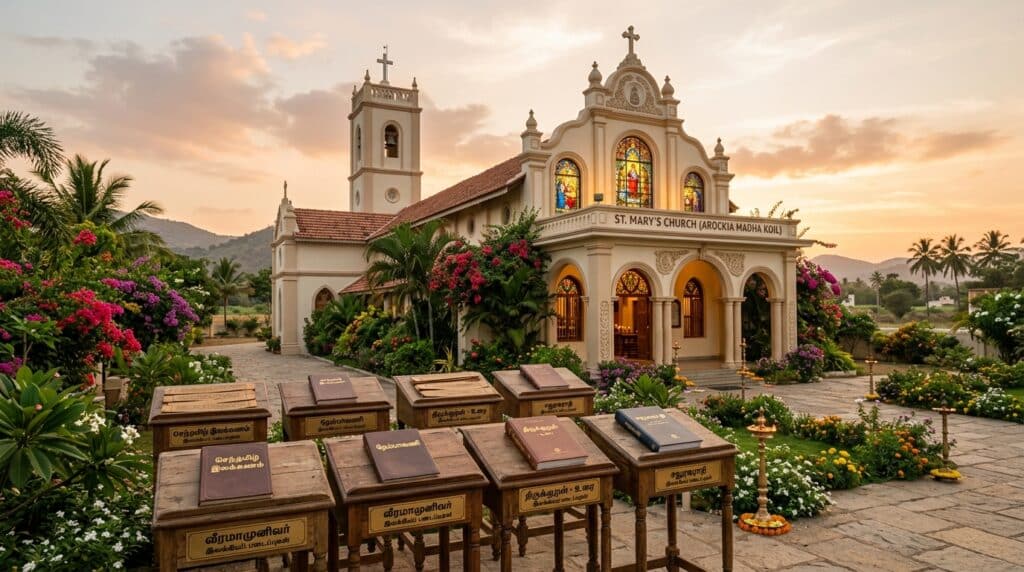
These sites show how Veeramamunivar joined theology, language, and daily life. He wove Christian ideas into Tamil custom and song, rather than simply translating them.
Because of this blend, generations of worshippers have practiced their faith through a familiar, sacred voice. Veeramamunivar’s legacy shows that tamil catholic literature can hold spiritual depth and artistic grace.
Influence on Later Tamil Scholars
Beschi’s true legacy rests not only in his writing, but also in the writers he inspired. His careful study created more than poems and dictionaries; it sparked a new generation of Tamil writers.
He did not simply publish his work and leave. Beschi actively mentored young Tamil scholars, shared his methods, and urged them to develop their own voices. He believed Tamil literature grew stronger when writers joined tradition with fresh ideas.
His mentorship left a lasting mark. Many students adopted his grammatical innovations and poetic methods, then used them in original works. Some became respected writers and carried forward the literary movement Beschi had begun.
- He showed writers how to blend classical Tamil poetic forms with new religious and narrative themes.
- He demonstrated that grammatical precision could coexist with creative freedom.
- He encouraged local scholars to document and preserve Tamil linguistic traditions for future generations.
- He proved that an outsider could earn deep respect by genuinely honoring a language and its people.
A scholar reflecting on this era captured its meaning well:
“Beschi did not merely study Tamil; he breathed new life into it, and in doing so, he taught an entire generation to see their own language with fresh eyes.”
This spirit of cross-cultural literary exchange continued after Beschi. Other European Tamil scholars followed his example for decades after his death. Many later foreign missionaries and linguists reached Tamil Nadu, inspired by his humility, patience, and respect for local tradition.
His influence reached far beyond his own writing. He helped build a bridge between cultures, which countless Tamil writers and European scholars continued to cross for generations.
Legacy Among European Tamil Scholars
European Tamil scholars who studied Tamil language and literature could hardly miss Beschi’s contributions. His writings crossed continents and reached scholars who had never visited Tamil Nadu. They still saw the strength of his language work.
Among these admirers was Robert Caldwell, a respected 19th-century linguist and historian. He pioneered the study of Dravidian languages. Caldwell cited Beschi’s life and writings in his detailed history of the Tinnevelly region. His account covered Beschi’s literary work and the circumstances of his death.
This recognition mattered greatly. Caldwell’s scholarship placed Beschi in a wider academic discussion of South Indian languages. It gave european tamil scholars a clear source for studying Tamil’s grammar and literature.
Decades later, admiration for Beschi took physical form. In 1980, a commemorative tablet was installed in his native town of Castiglione delle Stiviere, Italy. It marked the 300th anniversary of his birth.
“Dante of the Tamil language”
This title placed Beschi beside one of Italy’s most celebrated literary figures. The comparison was serious, because Beschi shaped Tamil literary identity as Dante shaped Italian identity.
This recognition shows that Beschi’s scholarship enriched Tamil literature and reached beyond it. It created a lasting link between European academic circles and Tamil tradition. European Tamil scholars continued to study and honor that link long after his death.
Recognition and Commemoration in Modern Times
Modern recognition of Veeramamunivar’s tamil literature contributions includes public monuments, academic work, and religious honors. Tamil Nadu, scholars, government bodies, and the Catholic Church honor his service to a language that was not his own.
These tributes show lasting gratitude. They also show how a European missionary became part of Tamil cultural identity.
Public Monuments and Cultural Landmarks
Physical monuments offer the clearest signs of Veeramamunivar’s legacy. Visitors to Chennai and Madurai can still see places honoring his memory.
- In 1968, the State of Tamil Nadu erected a statue of Beschi at Marina Beach in Chennai, placing him among the great figures of Tamil heritage.
- The Fifth World Tamil Congress, held in Madurai in January 1981, led to a second statue being erected in Madras, further cementing his place in public memory.
- A commemorative tablet was installed in his hometown of Castiglione delle Stiviere, Italy, in 1980, marking a meaningful link between his birthplace and his adopted homeland.
- Educational institutions across Tamil Nadu continue to reference his name in literary and linguistic studies, keeping his work part of everyday academic life.
Scholarly and Religious Recognition
Formal recognition of his tamil literature contributions continues today. Universities and research institutes still study his grammar books and dictionaries. His epic poem Tembavani remains a subject of literary analysis in Tamil studies programs.
Religious recognition came most recently. On August 3, 2025, Beschi was formally declared “the Servant of God” by the Catholic Church. This title opens the path toward sainthood. The declaration reflects his dual legacy as a devoted missionary and gifted writer.
Together, these honors confirm a powerful truth. Veeramamunivar did not just document Tamil literature; he became part of it. His name still appears in discussions of Tamil language and faith.
Conclusion
Few historical figures bridged two cultures as fully as veeramamunivar. Born Constantine Joseph Beschi in Italy, he crossed oceans and languages to shape Tamil literary tradition. His journey from Jesuit missionary to celebrated poet and grammarian shows faith, discipline, and love for another culture.
His tamil literature contributions remain remarkable in scope. His work ranged from Tembavani’s grand poetic vision to practical grammars and dictionaries that shaped generations’ language learning. His work touched nearly every area of Tamil scholarship. He treated Tamil as a living art, not merely a conversion tool.
What makes Veeramamunivar’s story endure is his balance of devotion and scholarship. He served his Catholic mission sincerely while honoring Tamil poetic forms, grammar rules, and cultural values. That commitment helped his writings outlast their religious purpose and become lasting literary landmarks.
Nearly three centuries after his passing, his name still appears in classrooms, research papers, and public memorials across Tamil Nadu. His life proves that curiosity about another culture, joined with discipline and respect, can create work beyond borders. Veeramamunivar’s legacy reminds readers that language and literature can connect distant worlds.