300 TSA Agents Quit After Weeks of No Pay
Discover why 300 TSA agents recently resigned following a prolonged period without pay. Uncover the impact on airport security and travel.
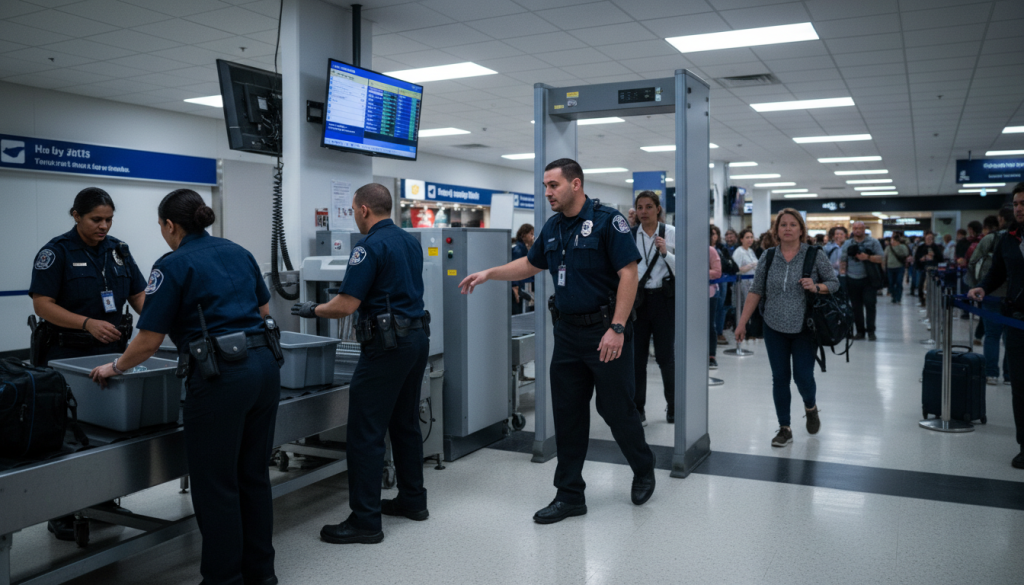
The Department of Homeland Security shutdown has put TSA agents in a tough spot. They work at the busiest airports without pay. This started on Feb. 14, and about 50,000 TSA officers have been unpaid.
Internal TSA data shows 305 employees left from Feb. 14 to March 9. This affects travelers, as fewer hands mean longer lines and slower screening.
Airports are open, but TSA staff shortages cause long lines and slow checkpoints. Travelers are advised to arrive early. In some places, wait times are much longer than usual.
The issue isn’t just today’s lines. The missed pay worries TSA officers. This is a big concern, as lawmakers debate next steps. If the shutdown lasts into spring break, travel demand will be even higher.
Key Takeaways
- TSA agents have been working through a DHS shutdown that began Feb. 14.
- About 50,000 Transportation Security Administration officers have worked without pay during the lapse.
- CBS News reported internal TSA data showing 305 employee separations from Feb. 14 to March 9.
- Fewer TSA security staff can translate into slower checkpoints and longer lines for travelers.
- Airports have urged passengers to arrive earlier as staffing pressures build.
- If the shutdown continues into spring break, crowded terminals could face sharper delays.
What the DHS shutdown means for TSA agents and airport checkpoint staffing
When DHS funding stopped on Feb. 14, the pressure at checkpoints grew fast. Travelers kept coming, but there were fewer TSA agents to help. This put a lot of stress on the remaining staff, who had to deal with long lines and full bins.
Delays and staffing gaps were not just in one place. Airport security line delays were a big problem everywhere. It was because there were fewer people to screen, guide, and help.
Internal TSA statistics obtained by CBS News: more than 300 employees left during the shutdown
According to CBS News, over 300 TSA employees left during the shutdown. This happened between Feb. 14 and March 9.
When experienced staff leave, it changes how things work at the checkpoint. The work doesn’t get less, but there are fewer people to do it. TSA agents have to handle everything from bag checks to ID checks.
Unscheduled absences more than doubled as officers worked without pay
More TSA officers called in sick during the shutdown. In fact, unscheduled absences more than doubled because they were not getting paid.
A DHS spokesperson said this was the third time in nearly six months. They warned of more staffing issues and longer wait times for travelers. For airport security, this means dealing with more work and gaps every day.
Nationwide callout rate rose to about 6% during the shutdown vs. about 2% before funding lapsed
The callout rate went up to about 6% during the shutdown. Before, it was about 2%.
This change is big. Even a few missing TSA agents can cause delays. They have to do careful checks that can’t be rushed.
Spikes in absences on key dates: 9% (Feb. 23), 8% (March 6), and 7% (March 9)
There were big spikes in absences on certain dates. 9% on Feb. 23, 8% on March 6, and 7% on March 9. These sudden increases made it hard for supervisors to keep everything running smoothly.
- Fewer officers are available to keep every checkpoint lane staffed
- More pressure on airport security personnel who direct lines and manage crowd flow
- Tighter margins for TSA screening officers handling alarms, pat-downs, and bag searches
Airport security personnel call out hotspots and operational strain at major U.S. airports
During the shutdown, airport security teams faced sudden staffing gaps. This caused long lines and slower checkpoint checks. Those who showed up worked in tighter shifts, making breaks and swaps hard to manage.
Tracking showed “hotspots” where shortages threatened operations. Houston had 44, New Orleans 35, and Atlanta 32. The highest day saw 87 hotspots, showing strain across the country.
Double-digit callout rates strained screening operations and increased wait times
At many airports, callout rates hit double digits. This slowed down the screening. Supervisors had to merge checkpoints or cut lanes to keep things moving.
- JFK averaged 21% absences during the shutdown.
- Hartsfield-Jackson Atlanta International Airport averaged 19%.
- William P. Hobby Airport averaged 18%.
- Louis Armstrong New Orleans International Airport averaged 14%.
- Pittsburgh International Airport averaged 13%.
Houston’s William P. Hobby Airport saw 53% callouts on March 8 and 47% on March 9
Houston’s William P. Hobby Airport was hit hard. On March 8, 53% of TSA agents didn’t show up. The next day, 47% were absent.
Wait times grew long. On March 8, security wait times exceeded 3 hours. Travelers were told to arrive four to five hours early for flights. Reports showed lines extending into parking areas, causing missed flights.
Major airport absence averages during the shutdown put pressure on daily throughput
Even on non-extreme days, averages put pressure on airports. JFK and Atlanta saw 21% and 19% absences, respectively. This forced tough choices on operations.
In New Orleans, the strain was clear. Officials advised early arrival after missed flights. Leah Turney waited four hours before security, missing her trip. Ellen Caldwell noted the difference in earlier, faster travel times.
Weather compounded staffing gaps, with blizzard-driven callouts at JFK and Newark on Feb. 23
Bad weather made staffing issues worse. A blizzard on Feb. 23 caused 77% callouts at JFK and 53% at Newark. This slowed screening and reduced airlines’ flexibility.
Winter operations add challenges, from de-icing to crew rest rules. This can lead to terminal crowding. Storm updates showed how quickly disruptions spread. In these times, airport teams face the same surge, even as flights change.
TSA security staff departures, training timelines, and longer-term workforce risks
When pay stops during a shutdown, it can affect staff for a long time. Even when jobs open up, training takes a while. New officers aren’t ready to work a lane right away.
CBS News reporting showed how departures and absences can pile up at checkpoints. With spring break coming, fewer officers mean longer lines and harder shifts.
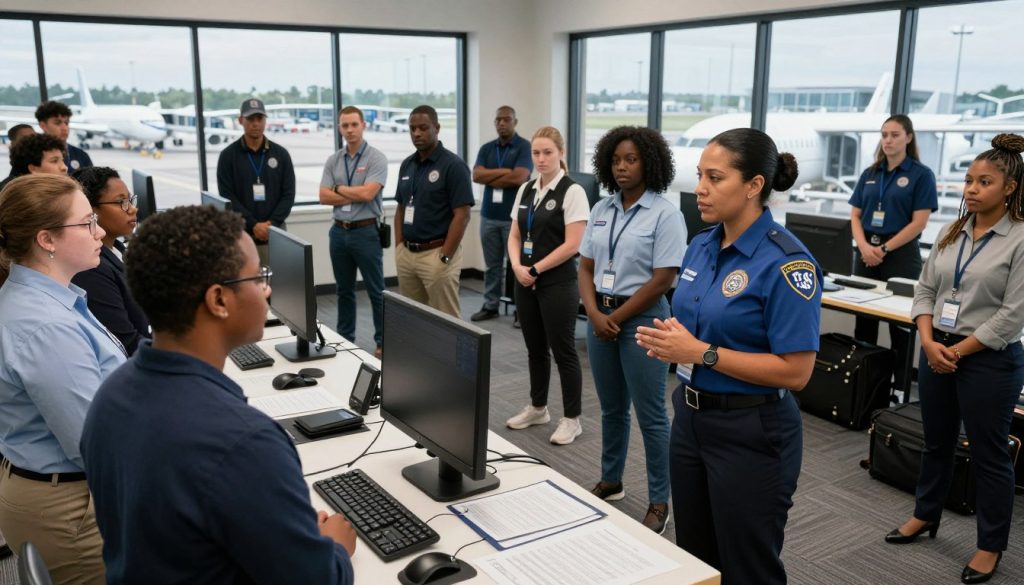
TSA says new hires need four to six months of training before they can work alone. This timeline means there’s a gap between now and when we get more staff, even with many job openings.
As the shutdown goes on, more employees might leave. The first missed paycheck was on Friday. This can lead to more people calling out or quitting, as they try to meet basic job needs and pay bills.
Former TSA Administrator John Pistole called shutdowns a big hit to morale. He said enemies might see a chance to exploit the situation when there are fewer officers and lines are long. He mentioned the 2025 shutdown, when nearly 1,100 security officers left because they needed to work.
- Slow backfills because TSA agent training must be completed before officers can screen independently.
- The higher risk of turnover when pay is missed makes TSA employment opportunities feel less stable.
- Added strain when staffing falls below what TSA job requirements demand for safe, steady operations.
Trusted-traveler programs also faced challenges. DHS first said it would suspend TSA PreCheck, then decided to keep it open with different rules at each airport. U.S. Customs and Border Protection paused Global Entry, then later turned it back on as the shutdown dragged on.
The fight in Washington was ongoing. White House press secretary Karoline Leavitt said President Trump wanted DHS fully funded and open. Senate Minority Leader Chuck Schumer and Sen. Brian Schatz said talks were stuck. They argued for funding TSA and other DHS parts separately from ICE and CBP funding, saying Republicans blocked that plan.
Conclusion
Internal TSA data show a clear pattern during the DHS funding lapse that began on Feb. 14: 305 employees left their jobs from Feb. 14 to March 9. The callout rate also jumped, averaging about 6% during the shutdown, up from 2% before.
On certain days, the callout rate hit 9% on Feb. 23, 8% on March 6, and 7% on March 9. For TSA officers, this means fewer lanes open and slower passenger flow.
The greatest impact was observed at airports with high callout rates. Houston’s William P. Hobby Airport saw 53% on March 8 and 47% on March 9. Major airports like JFK averaged 21% and Atlanta 19% during this time.
When TSA staff numbers drop, airports often close lanes and checkpoints. This makes waiting in line much longer.
If the shutdown continues, things could get worse. TSA agents may not get paid and could leave their jobs. Replacing them takes months, as new hires need training.
Other agencies might lay off workers rather than just furlough them. This is a big concern, as seen in shutdown layoff reports.
Travelers and airlines are watching closely. They hope Congress will restore DHS funding soon. They also hope staffing levels will improve before the busy travel season starts.
Longer lines are just one worry. A slowdown in government services could affect many areas, as seen in coverage of the shutdown’s impact.
In the long run, there are plans to improve TSA screening. These plans aim to reduce the impact of funding issues on screening. They also ensure TSA staff and agents are held accountable.