Government Shutdown Standoff Drags On Into Day 5
Explore the ongoing impact as the government shutdown enters day 5, with DHS at a standoff due to contentious ICE raids. Stay updated on the latest.
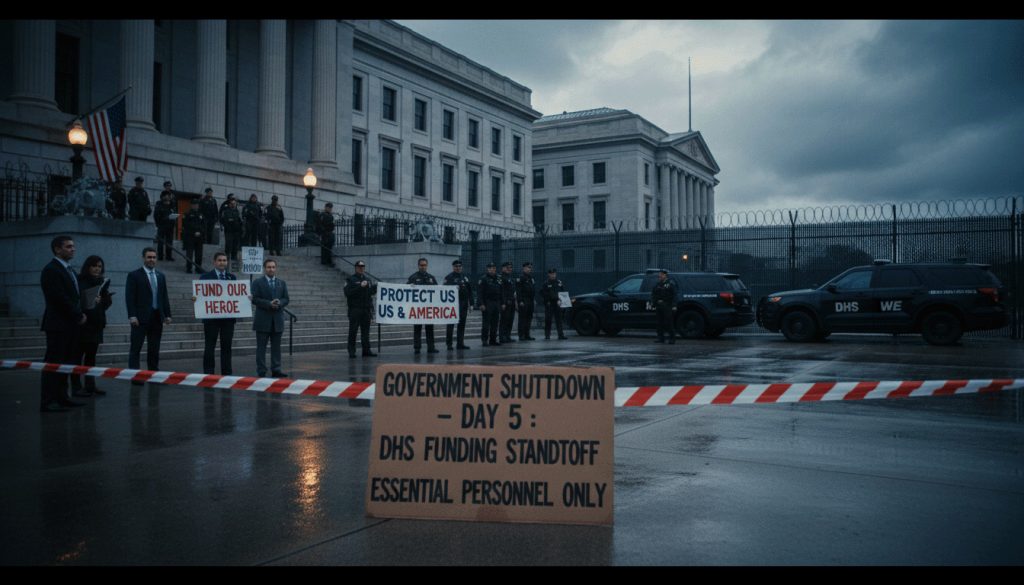
Day 5 of the partial government shutdown kept Washington on edge on Wednesday. The fight is over a Department of Homeland Security (DHS) funding lapse. It also involves a growing dispute over immigration enforcement and ICE practices.
Both Democrats and the White House are refusing to budge. Airports, borders, and emergency planning are getting more attention. This is because DHS is key to national security and daily travel.
This shutdown started when the budget deadline passed and spending bills stalled. A small part of the federal workforce is affected. But the stakes are high because DHS is central to national security and daily travel.
For a detailed live view of the DHS-focused lapse, follow this government shutdown news coverage.
Public pressure has surged after two fatal shootings of American citizens in Minneapolis. These shootings involved federal agents and have raised questions about ICE. Lawmakers are now debating whether to include new immigration rules in a funding deal or in separate legislation.
What happens next matters beyond Capitol Hill. The article will track the cause of the lapse, what each side demands, and how DHS agencies and services are affected. For a clear rundown of how the lapse began and where the votes stand, reporting on the government shutdown provides a helpful snapshot.
Key Takeaways
- The partial government shutdown is in its 5th day, driven by a lapse in DHS funding.
- Negotiations remained unresolvedon Wednesday, with Democrats and the White House dug in.
- Immigration enforcement and ICE practices are central to the dispute shaping the government shutdown timeline.
- Two fatal shootings in Minneapolis involving federal agents have intensified scrutiny and raised the political stakes.
- DHS-linked services—from travel-related functions to emergency coordination—are under growing strain as the shutdown continues.
- Broader context on ripple effects and pay risks has appeared in ongoing coverage of the government shutdown.
Government Shutdown Update: DHS Funding Lapse Enters Fifth Day as Talks Stall
DHS funding lapsed on Saturday. By Wednesday, the partial lapse had reached its fifth day, and talks on Capitol Hill were stalled.
In this government shutdown update, the main issue is simple. Lawmakers can’t agree on how to keep the Department of Homeland Security running. They also can’t agree on new rules for immigration enforcement.
For many Americans, the federal government shutdown feels far away. But when it affects travel plans or emergency planning, it becomes real. In Washington, each day without a deal makes things harder and positions more rigid.
What’s driving the standoff: DHS funding and immigration enforcement reforms
The main reason for the shutdown is Democrats’ wanting to change how Immigration and Customs Enforcement works. Republicans say DHS funding should not be tied to these changes. Democrats believe these changes are necessary.
- Mandatory body cameras for agents
- Judicial warrants before agents can enter private property
- A ban on ICE agents wearing face masks during enforcement actions
- Stricter use-of-force policy requirements
- New training standards for agents
Reports show how these demands clash with GOP limits on warrant requirements and agent gear. For more on the negotiations, see this DHS funding standoff report.
Key players and latest signals: Karoline Leavitt, Hakeem Jeffries, and the White House
White House Press Secretary Karoline Leavitt said the talks have been conducted in good faith. She warned that the longer the lapse lasts, the more “Americans are going to be impacted by this.”
House Minority Leader Hakeem Jeffries sees it differently. He said the White House needs to ac,t and DHS funding should match other law enforcement standards.
Behind the scenes, both sides have made offers, but few details are public. This lack of transparency has led to more spin and fewer clear signals as the shutdown drags on.
Democrats’ counteroffer and why the White House called it “very unserious.”
Late-stage bargaining has turned into a credibility fight. Leavitt called Democrats’ counteroffer “very unserious,” while Democrats have used similar language about Republican offers.
The policy debate has been influenced by reports on disputed use-of-force cases. An ABC News review identified cases in Minneapolis and Chicago in which initial statements were later questioned, resulting in administrative leave for the involved agents.
As negotiators exchange drafts, the shutdown reasons keep coming back to the same question. Should DHS funding move first, or should enforcement reforms come with it?
Trump’s role so far: no direct conversations with Democrats, per Leavitt
President Donald Trump has shown support for protecting ICE and expressed dislike for some Democratic demands. Leavitt said Trump has not spoken directly with Democrats, despite earlier plans for personal involvement.
The White House has kept the door open for more talks but maintains a firm stance. For more on the deadline pressure and the risk of a longer lapse, see this DHS shutdown outlook. The shutdown debate remains tied to immigration enforcement rules.
Federal Government Shutdown Impact on DHS Agencies and Public Services
The shutdown’s impact is felt where it matters most: airports, disaster response, and security. Most federal programs are funded until September 30. But DHS is different, and daily life can feel the strain.

Which agencies are affected: TSA, FEMA, Coast Guard, and Secret Service
Within DHS, the shutdown’s effects are evident across agencies that keep us moving and safe. The Transportation Security Administration continues screening, but staffing stress is mounting. During a prior shutdown, TSA closed checkpoints at Philadelphia International Airport, illustrating how quickly conditions can tighten.
FEMA, the U.S. Coast Guard, and the U.S. Secret Service also face shutdown rules. This slows down support functions. For more on what stays open and what bends, check this guide.
Workforce effects of government shutdown: Most DHS employees are reporting, but pay may be delayed
Over 270,000 people work for DHS, and most are expected to report. In a recent shutdown, over 258,000 were deemed essential, while about 22,000 were furloughed. This keeps core missions running, but can cause pay delays for many employees.
For travelers, the risk is clear. If the shutdown lasts weeks, lines can grow, and screening lanes can thin. For more on DHS during a shutdown, see this explainer.
FEMA operational constraints: travel paused for most work, disaster relief travel continues
FEMA’s work is shaped by its budget. The agency has paused almost all routine travel, except for disaster relief. This means slower coordination, delayed reimbursements to states, and disrupted training.
“These limitations are not a choice but are necessary to comply with federal law. FEMA continues to coordinate closely with DHS to ensure effective disaster response under these circumstances,” a FEMA spokesperson said.
Why some operations continue: ICE and CBP remain operational after prior funding infusions
Not all DHS functions slow down at the same rate. Immigration enforcement is a key part of the fight, yet ICE and CBP can keep operating. They got major funding through President Donald Trump’s spending and tax-cut bill last summer. This means deportation operations can continue even during a shutdown.
This uneven reality affects communities differently. After the Minneapolis killings, calls for accountability and reform grew. ICE’s role became even more central, heightening tensions. The shutdown’s effects on federal staffing and services have also been reported, including the sudden termination of thousands of federal workers.
Even outside DHS, warnings about suspended public services and security delays have emerged. These disruptions spread quickly, affecting access to services. For more on these effects, see this report on a failed shutdown vote.
Conclusion
This government shutdown is now in its fifth day. It’s a partial shutdown because of a funding lapse at DHS. Immigration enforcement reforms are at the heart of the debate. For many families, the primary concern is the lack of a clear end in sight. clear end in sight.
Karoline Leavitt called the Democrats’ offer “very unserious.” Hakeem Jeffries said Democrats won’t give up on their demands. This keeps the shutdown in place, even though DHS agencies continue to operate. The economic damage from a prolonged shutdown can be significant, as shown by shutdown cost estimates.
The political situation is complex. Donald Trump hasn’t talked directly with Democratic lawmakers, Leavitt said. The biggest issues concern how ICE operates and who oversees it. This includes concerns raised in reporting on ICE detentions, which call for greater oversight.
Look for updates on public offers and changes to enforcement rules in the next government shutdown. If the shutdown lasts, more problems could arise for DHS units. Military pay protection might be a first step if talks fail again, as discussed in shutdown pay proposals.