
President Trump Resists AI Regulation in America
Explore how President Trump resists AI Regulation in America amid debates on tech policy and the future of AI governance in the US.
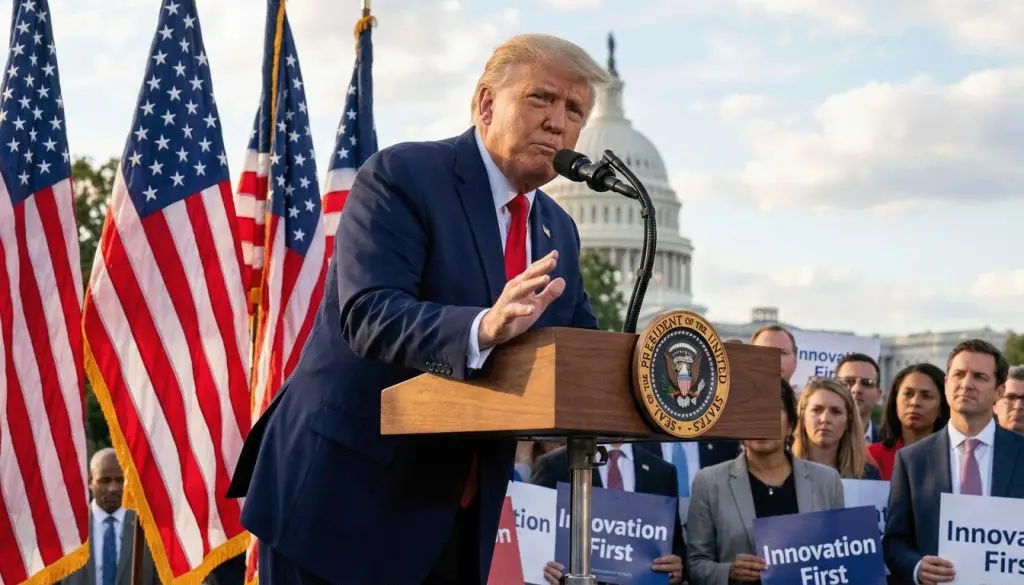
The Fight for AI Regulation in America
AI Regulation in America: President Donald Trump plans to sign an executive order this week. It will set a single national “One Rulebook” for artificial intelligence. He believes the U.S. could lose its lead if companies face too many approvals across 50 states.
On Truth Social, he shared that the nation is “beating ALL COUNTRIES.” But he warned that momentum could stall without a unified standard.
This move marks a significant shift in U.S. technology policy. Advisers have looked at ways to limit state rules and make approvals easier—a draft plan considered directing the Department of Justice to challenge “onerous” state laws.
This could reshape AI governance in America and test the limits of federal power.
Supporters see it as a way to bring clarity and speed for developers. Critics, on the other hand, see it as a threat to states’ rights and privacy safeguards. Over the summer, a 10-year moratorium on state AI rules was proposed in the “Big Beautiful Bill.” It was then removed in a 99-1 vote.
As debates continue, reporting on state-level AI rules shows the political divide. It highlights President Trump’s efforts to resist AI regulation in America while protecting national competitiveness.
Florida has been a key player in data privacy measures and parental controls. It has also set limits on unauthorized use of likenesses, as detailed in this overview of Florida’s AI and digital rights efforts. Legal scholars also note that past fights over emergency powers and tariffs could foreshadow court tests if Washington moves to preempt states in AI governance in America, as explored in this analysis of executive authority and trade.
AI Regulation in America: Key Takeaways
- Trump plans to issue an executive order creating a national “One Rulebook” for AI.
- He warns that a 50-state patchwork could slow U.S. innovation and jobs.
- The draft approach reportedly considered DOJ action against strict state laws.
- Senators stripped a 10-year moratorium on state AI rules from a significant bill.
- Florida’s recent moves on digital rights highlight the state–federal clash.
- Debates over executive power in trade hint at likely legal tests for AI.
- The stakes center on U.S. technology policy and global competition.
President Trump Resists AI Regulation in America
The debate over AI regulation in the US is heating up. President Trump wants a single federal rule for AI. Supporters say this will speed up innovation. Critics worry it could change how states regulate AI.
https://www.youtube.com/watch?v=qZFg6m1f5I0
An executive order this week to create a single national AI “One Rulebook.”
Trump plans to introduce an executive order for a unified AI rule. He’s tired of the current gridlock and wants to bypass state bills. His team believes this will simplify regulations and reduce red tape.
Industry leaders agree on the need for a clear national policy. Sundar Pichai and others say it’s essential to compete with China. They also warn about the complexity of state regulations. Read more about the planned order in this coverage of the “One Rule” plan.
Limiting states’ ability to regulate AI sparks GOP and bipartisan backlash
Efforts to restrict state power over AI have met opposition from both parties. Some argue that states are innovation labs and should have their own rules. Others fear that federal control could undermine consumer and civil rights.
This disagreement fuels the debate over AI regulation. Supporters of a federal rule say it will help startups and keep jobs in the US. Critics argue that it might overlook specific needs in areas like education and health.
Trump’s argument: avoiding a 50-state patchwork to keep the U.S. ahead in AI
Trump believes a patchwork of approvals slows down progress. He says companies face too many hurdles before launching new AI tools. He sees speed and uniformity as key to US leadership in AI.
Proponents argue that uneven rules can deter cross-border deployments and increase costs. Critics say uniformity should not compromise accountability. This debate is central to AI regulation in the US, affecting jobs, privacy, and safety.
Draft approach reportedly considered DOJ action against “onerous” state AI laws.
Reports suggest a draft order would have the DOJ challenge strict state AI laws. Another idea is to use federal funding to influence states to adopt lighter mandates. These moves aim to centralize AI regulation at the federal level.
Legal scholars note that similar disputes over emergency powers and trade have tested federal authority in court. The outcome could shape the AI regulation debate in the US for years, as new rules, bills, and court decisions evolve.
Policy stakes and political dynamics in the artificial intelligence regulation in the USA
The debate over AI governance in America has turned into a high-stakes battle. It involves federal power, state authority, and market speed. This battle shapes how tools reach schools, hospitals, and city agencies.
Voters, founders, and civil society watch closely. They see how the us government ai policy balances innovation and guardrails.

How the trump administration’s tech regulations shape the US government’s AI policy
The White House wants a single national “One Rulebook.” Trump administration tech regulations aim to preempt state caps and audits. This is to keep timelines short and costs lower.
Supporters say this will streamline procurement. It will also set clear lanes for labs like OpenAI and Google DeepMind. They believe it will anchor the US government’s AI policy to national competitiveness.
Critics argue that AI governance in America needs local input. They warn that a broad preemption could blunt city-level testing of algorithmic bias and civil rights. The friction raises more profound questions about technology policy in the United States and who gets to set the baseline.
The “Big Beautiful Bill” fight and the failed 10-year moratorium on state AI rules
The Senate stripped a decade-long pause on state AI rules by a 99–1 vote. This showed a limited appetite for sidelining states. A later bid to tuck a similar measure into defense legislation also faded, keeping the field fragmented.
Reporting on the failed moratorium shows a new reality. Statehouses will keep moving. For companies, this means pilots in Colorado or California may face different obligations than tools deployed in Texas or Kentucky.
Republican divisions over states’ rights versus national AI governance in America
Within the GOP, two camps now spar. One side favors a firm federal standard to speed rollouts and protect national security interests. The other defends state sovereignty, arguing local leaders should tailor safeguards to residents and markets.
This split magnifies pressure on committee chairs and agency heads. It also complicates timelines for any unified statute, as bipartisan skeptics resist sweeping overrides. The result is a volatile map for AI governance in America.
Industry impact: compliance burdens, innovation claims, and interstate consistency
Tech firms argue that harmonized rules would cut legal risk. They say it would avoid duplicate audits and enable faster product updates. Yet, a multi-state framework now looks durable, making interstate consistency a moving target.
- Real-time monitoring of state bills and rulemakings
- Modular internal controls for rapid policy shifts
- Cross-jurisdiction documentation to reduce litigation risk
Policy research, including the evolving “California effect,” highlights how state momentum can shape national incentives. See this analysis of risks of state-led AI governance for context on spillovers. As technology policy in the United States continues to evolve, firms must adapt as the U.S. government AI policy debate continues.
AI Regulation in America: Conclusion
President Trump wants a single national rule for AI in America. He plans to sign an executive order this week. This move aims to simplify regulations and accelerate the use of AI.
But the AI regulation scene in the US is complex. Congress, courts, and states are all playing roles. They are figuring out their parts in the fight for AI Regulation in America and the world.
The White House sees the “One Rulebook” as a way to cut through red tape. They believe it will help deploy AI faster and avoid confusion. Yet, the debate on AI rules in the US is far from over.
The plan goes beyond just talking. It includes plans to challenge state laws seen as too strict. It also discusses funding limits set by state rules. This has sparked a lot of discussion.
Experts say the plan focuses on deregulation and innovation. But it doesn’t clearly state how to keep AI safe. For more on this, see this analysis of the AI Action Plan.
The debate on AI rules in the US is heated. Industry wants clear rules, while lawmakers want to ensure AI is safe. This is a big challenge.
Politics is a big obstacle. The Senate voted almost unanimously against a 10-year ban on state AI rules. This shows there’s significant disagreement.
Some people are worried about job losses and the influence of big companies. This has made the debate even more intense. For more on this, see the MAGA fight over AI.
The future of AI rules in the US is uncertain. If the order stands, it could set the standard for AI use. But if it doesn’t, the rules will vary by state. Either way, the market and the public want clear, safe rules.
AI Regulation in America FAQ
What does President Trump mean by a national “One Rulebook” for AI?
He wants a single rule for AI across the U.S., replacing the different rules in each state. It aims to make things easier and speed up innovation.
When is the executive order on AI regulation expected?
He plans to sign it this week. He wants to act fast because Congress is slow on tech policy.
Why does President Trump oppose state-by-state AI rules?
He thinks 50 different rules would slow things down. He believes it would hurt the U.S. in AI. He said on Truth Social that 50 approvals are not practical.
How would the executive order affect states’ ability to regulate AI?
The details are not clear yet. But the administration wants to limit state laws. They want a single national AI policy.
Did the administration consider legal action against states with strict AI laws?
Yes, they talked about suing states with tough AI laws. This is part of their plan to stop state rules without Congress.
What is the White House “AI Action Plan,” and how does it fit in?
It was released in July. It suggests not giving federal money to states with strict AI laws. It’s a way to stop state rules and focus on national policy.
Why is there GOP and bipartisan backlash about AI Regulation in America?
Many Republicans don’t like Washington telling states what to do. Democrats and some Republicans worry about losing consumer protections.
What happened with the “Big Beautiful Bill” and the proposed 10-year moratorium on state AI laws?
Republicans wanted a 10-year ban on state AI rules. But it was changed and then removed in a Senate vote. Later, they tried to add it to a defense bill, but it failed.
How do the Trump administration’s tech regulations shape AI regulation in the USA?
They focus on federal rules, using the DOJ and money to stop state laws. They see a national standard as key to success and clarity.
What are the main political dynamics around AI governance in America?
It’s a fight between a single federal rule and state rights. It has brought together unusual allies and made many skeptical of broad federal rules.
What’s the industry impact of a federal “One Rulebook”?
Companies might save money and move faster. But critics say it could limit local innovation and consumer protection.
Could the executive order face legal challenges for AI Regulation in America?
Yes. Opponents might say it goes too far or ignores state rights. Court decisions will decide how strict any national rules are.
How does this relate to President Trump’s resistance to AI regulation in American headlines?
He’s against state rules, not all rules. He wants a single set of rules to keep the U.S. ahead in AI.
What should businesses do while policy is in flux?
Keep an eye on federal actions and state laws. Be ready for DOJ actions. Plan for changes as rules evolve.
How does Donald Trump’s stance on AI regulation compare with Congress’s?
He wants quick action and federal rules. Congress is slower, showing different views on tech policy.
What is at stake for U.S. leadership in AI?
Supporters say a single rule can keep the U.S. leading. Critics worry about weaker protections and fewer local solutions.
How does the debate affect AI regulations in the US long-term?
The outcome will shape AI rules in the U.S. It will affect which rules are in place, where to invest, and how quickly AI is adopted.


