Escalating Iran War Draws More Countries Into Conflict.
Explore the latest updates as the Iran War intensifies, drawing more nations into the fray amid rising Middle East tensions.
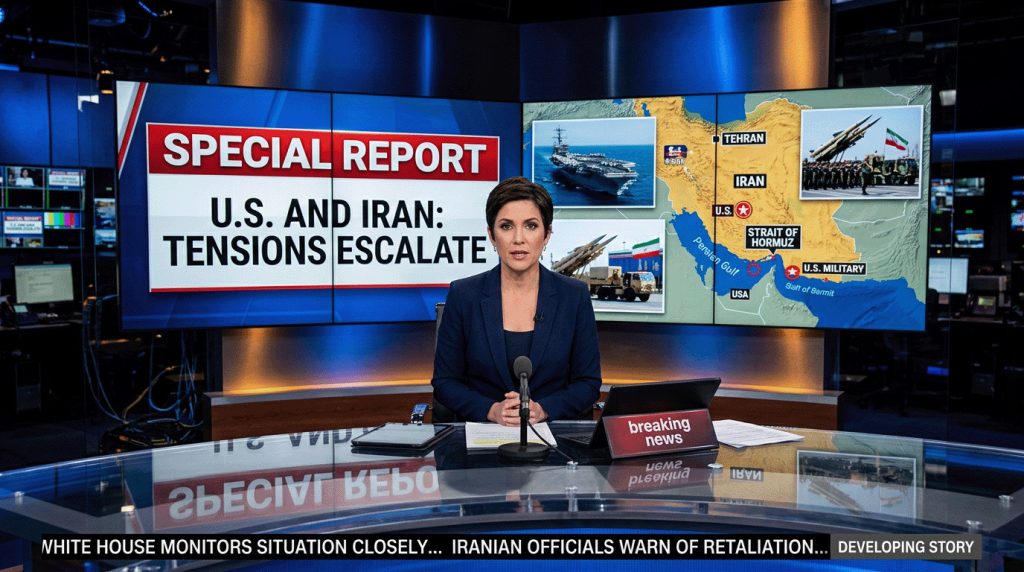
From Dubai, United Arab Emirates (AP), the Iran war is widening fast. U.S. and Israeli forces have hit targets inside Iran for six days. Iran has kept up attacks on Israel, U.S. bases, and Gulf partners, deepening tensions and pushing the crisis closer to a true international conflict.
The fighting has spread in daily steps, affecting 14 countries. Military alerts, airspace warnings, and pressure on ports and pipelines are seen. Disruptions are affecting oil supply planning and global air travel routes, with airlines rerouting to avoid risk corridors.
The human toll is also rising. At least 1,230 have been killed in Iran, more than 120 in Lebanon, and around a dozen in Israel. Six U.S. troops have been reported killed. More details on the war’s spread are in this report.
The latest strikes focus on military leadership and the iran nuclear program. Each round prompts a wider set of responses. Diplomats weigh options, while the pace of escalation shapes politics in Washington and abroad. Allies debate how far to go and how to prevent a long regional war.
Iran has signaled it wants Washington involved in efforts to reduce fighting. It argues the U.S. role could be key. This message, reported in coverage of Iran urging Trump, adds another layer to today’s Middle East tensions and regional instability.
Iran War Key Takeaways
- The Iran war has entered its sixth day of U.S. and Israeli strikes and Iranian retaliatory attacks.
- The fight is evolving into an international conflict, with impacts now felt across 14 additional countries.
- Regional instability is affecting oil logistics planning and forcing changes to global air travel routes.
- Reported casualties include at least 1,230 killed in Iran, more than 120 in Lebanon, and around a dozen in Israel.
- Six U.S. troops have been reported killed as Middle East tensions intensify.
- Military leadership targets and the Iranian nuclear program remain central drivers of escalation.
Escalation Timeline and Key Developments Across the Region
The Iran war has escalated quickly, drawing in new players and heightening tensions in the Middle East. Airspace closures and alerts have strained U.S.-Iran relations. This has implications for U.S. partners, who are watching closely.
Each strike in the military conflict in Iran has added to the region’s instability. It has raised questions about what will happen next.
Key events in this escalation timeline include major strikes on nuclear sites and quick retaliation. The focus on Iran’s nuclear program has raised the stakes. Middle East tensions have spread to nearby capitals and key bases.
Trump says he should help choose Iran’s next supreme leader after Ayatollah Ali Khamenei is killed
President Donald Trump said he should help pick Iran’s next supreme leader after Ayatollah Ali Khamenei’s death. He dismissed Mojtaba Khamenei as a possible successor, calling him “a lightweight.” Trump wanted “someone who will bring harmony and peace to Iran.”
From the White House, Trump urged Iranians to “help take back your country.” He warned, “Or you’ll face absolutely guaranteed death.” He also mentioned “Delcy in Venezuela,” pointing to Delcy Rodríguez taking power after a U.S. military operation.
U.S. and Israeli strikes intensify on the sixth day, targeting military leadership and the nuclear program
By day six, the U.S. and Israel were carrying out nationwide strikes in Iran. They targeted military leadership, weapons networks, and the Iranian nuclear program. The military conflict in Iran was growing, with new fronts opening.
Israel issued a mass evacuation warning for Beirut’s southern suburbs amid clashes tied to Hezbollah. Two hospitals reportedly moved patients and staff. U.N. peacekeepers said clashes, including ground combat, were occurring in southern Lebanon as more Israeli forces crossed the border.
Hegseth warns American firepower over Tehran is “about to surge dramatically.”
U.S. Defense Secretary Pete Hegseth warned that American firepower over Tehran was “about to surge dramatically.” Speaking at U.S. Central Command (CENTCOM), he described more fighter squadrons, more capabilities, more defensive capabilities, and more frequent bomber pulses. This message has direct foreign policy implications for allies.
Adm. Brad Cooper, who leads CENTCOM, said U.S. forces had sunk more than 30 Iranian ships. An Iranian drone carrier was attacked and set ablaze, releasing footage showing the vessel burning after multiple strikes. Iran did not immediately acknowledge the attack.
Israel claims major battlefield gains, including widespread destruction of Iran’s air defenses and missile launchers
Israeli officials said strikes had destroyed most of Iran’s air defenses and missile launchers. They framed the campaign as a push to blunt iran missile defense threats and reduce incoming fire. Lt. Gen. Eyal Zamir said waves of strikes destroyed 80% of Iran’s air defenses and 60% of its missile launchers, while cautioning, “The threat has not yet been removed.”
Even with those claims, Iran continued to launch missiles and drones across the region. This kept pressure on U.S. partners and reinforced the sense of an international conflict spreading outward. Separate reporting on threats to U.S. bases, the Strait of Hormuz, and widening response options has fueled debate over us-iran relations and the foreign policy implications of how long the Iran war can stay contained, as described in reporting on rising risks.
Iran War: Retaliatory Attacks, Missile Defense Responses, and Regional Instability
The Iran War is now affecting more areas. Middle East tensions are rising, causing missiles, drones, and air-defense alerts in capitals. These places once hoped to stay out of the conflict.
This situation is making the region more unstable. It’s also making relations between the U.S. and Iran more unpredictable. The risk of a long conflict is growing, affecting energy markets, airports, and shipping lanes.
Iran targets Israel, U.S. bases, and American-allied countries as the international conflict widens
Iran launched strikes against Israel and U.S. sites in the Gulf. This added more pressure to an already tense situation. In several places, officials reported interceptions, while scattered impacts caused deaths, injuries, and property damage.
Disruption spread quickly: airspace closures stranded travelers, and the Strait of Hormuz became a choke point. This threatened a major share of global oil flows. Analysts warn that Middle East tensions can lead to lasting instability when attacks cross borders and sectors, as described in regional reverberations.
Beyond the Gulf, Azerbaijan accused Iran of drone attacks after a crash near an airport injured civilian workers. Another drone fell near a school. President Ilham Aliyev called it a groundless act of terror and aggression. Iran denied launching drones toward Azerbaijan, showing the fog of international conflict.
Kuwait activates air defenses as missiles and drones threaten the region; the U.S. Embassy in Kuwait closes
Kuwait activated air defense systems as incoming missiles and drones raised the threat level. This highlights the expanding role of iran missile defense dynamics across partner states. The U.S. State Department also announced it was closing the U.S. Embassy in Kuwait, showing the impact of the Iran war on daily security decisions.
Officials reported a deadly drone strike in Kuwait that killed six American soldiers. This incident intensified Middle East tensions and added to fears of deeper instability if attacks continue to hit areas hosting U.S. forces.
UAE reports a drone shot down near Al Dhafra Air Base; Qatar takes precautions near the U.S. Embassy in Doha
The United Arab Emirates said air defenses shot down a drone near Al Dhafra Air Base, which hosts U.S. forces. Falling shrapnel wounded several people. Qatar evacuated residents near the U.S. Embassy in Doha as a precaution and later reported a missile attack, keeping attention on protection around diplomatic and military sites.
Separate reporting on strikes linked to U.S. facilities, including developments tied to Qatar’s air defenses and disruption to flights, has kept the spotlight on how quickly us-iran relations can pull the region toward broader escalation, as noted in updates on attacks on the U.S.
Bahrain reports an Iranian missile strike on a state-run oil refinery; Saudi Arabia intercepts a drone near its border
Bahrain said an Iranian missile hit a state-run oil refinery, sparking a fire that was later extinguished with no casualties reported. Iran has repeatedly denied targeting oil infrastructure and other civilian sites, even as strikes have landed near commercial areas during this international conflict.
Saudi Arabia reported destroying a drone in a province bordering Jordan, signaling how widely air defenses are being used as threats move across the Gulf and Levant. The result is a cycle where Middle East tensions and regional instability reinforce each other, keeping the Iran war at the center of a fast-moving security picture.
- Airspace disruptions have forced cancellations and reroutes across key Gulf hubs.
- Energy shipping risks in the Strait of Hormuz have added volatility to prices and markets.
- Expanding interception efforts show how iran missile defense concerns now shape regional planning.
Iran War: U.S.-Iran Relations, Foreign Policy Implications, and the Iran Nuclear Program
The war in Iran is testing U.S.-Iran relations in public and private talks. Foreign policy implications are spreading, affecting sanctions, security, and energy routes. The Global Conflict Tracker is a key resource for those following the conflict.
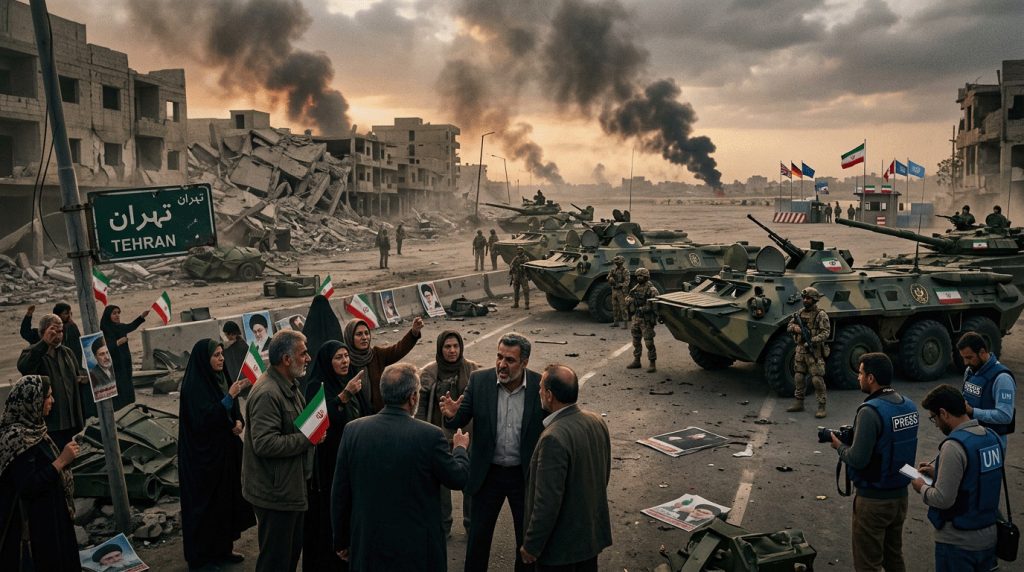
Questions grow over U.S. and Israeli war aims: regime change versus policy change
President Donald Trump’s comments on Iran’s leadership have sparked debate. Some see the goal as changing Iran’s behavior, while others think it’s about regime change. The Iranian nuclear program is central to these plans, with implications growing with each target.
U.S. and Israeli attacks have focused on Iran’s military and nuclear systems. This blurs the line between deterrence and a broader campaign. This ambiguity also raises tensions in the Middle East, as everyone plans for the conflict’s spread.
Iran rejects claims it seeks talks, citing failed nuclear negotiations and lack of trust in U.S. leadership
Iran’s ambassador to Egypt, Mojtaba Ferdousi Pour, denied seeking talks to end the fighting. He pointed to failed nuclear talks and a lack of trust in the U.S. His words harden relations and narrow the room for talks as the conflict grows.
Iran’s clerical leaders have also escalated their rhetoric. Ayatollah Abdollah Javadi Amoli called for violence, complicating any quick end to the conflict. In Washington, officials are considering how these signals affect the foreign policy implications of continued strikes.
Reports of maritime escalation near Sri Lanka and in the Indian Ocean raise the stakes for global security
Iran warned the U.S. would regret a maritime incident near Sri Lanka. Foreign Minister Abbas Araghchi accused the U.S. Navy of sinking an Iranian frigate in the Indian Ocean, killing at least 87. Sri Lanka rescued 32 crew members, and another Iranian warship is being escorted to a base.
This maritime incident adds to the global conflict, further straining already stretched forces. It raises shipping risk and insurance costs, making the Middle East tensions even more critical. Each disputed incident at sea can overwhelm diplomatic efforts between the U.S. and Iran.
U.S. domestic politics: House Republicans help defeat a resolution to halt the bombardment; Senate rejects a similar
The Iran war is changing the U.S. debate on war powers and strategy. House Republicans blocked a resolution to stop the bombardment, and the Senate did the same the day before. These votes show how domestic politics are now tied to foreign policy decisions.
This political reality affects what U.S. leaders can promise or threaten abroad. As relations with Iran worsen, lawmakers are weighing the costs of troop exposure and long-term deterrence. The pressure to show resolve is high, but there’s concern about deepening Middle East tensions and prolonging the region’s crisis.
Iran War Conclusion
By day six, the Iran war had grown into a bigger crisis. U.S. and Israeli attacks kept hitting Iran, while Tehran fired back with missiles and drones. This made the Middle East even more unstable.
Now, several key points are shaping the future. Donald Trump talked about picking Iran’s next leader, and Pete Hegseth warned of more U.S. attacks. Israel also claimed it damaged Iran’s defenses, raising questions about Iran’s missile defense.
The war’s cost is already clear, with deaths in Iran, Lebanon, Israel, and among U.S. troops. Missiles and drones have caused alerts in Kuwait, the UAE, Qatar, Bahrain, and Saudi Arabia. This shows how instability is spreading.
A deeper look at the risk of further fighting is provided by Brookings’ analysis of the danger of war in Iran.
Maritime tensions near Sri Lanka and across the Indian Ocean add to the tension. Iran’s refusal to talk after nuclear talks failed keeps the war path. Allies and rivals are watching closely, as coverage of the escalating Israel-Iran confrontation shows.