Affordable Care Act Tax Credit Ending Soon, Senate Rejects Extension.
Time-sensitive news: The tax credit under the Affordable Care Act may end soon as the Senate turns down its extension. Get the latest details here.
#image_title
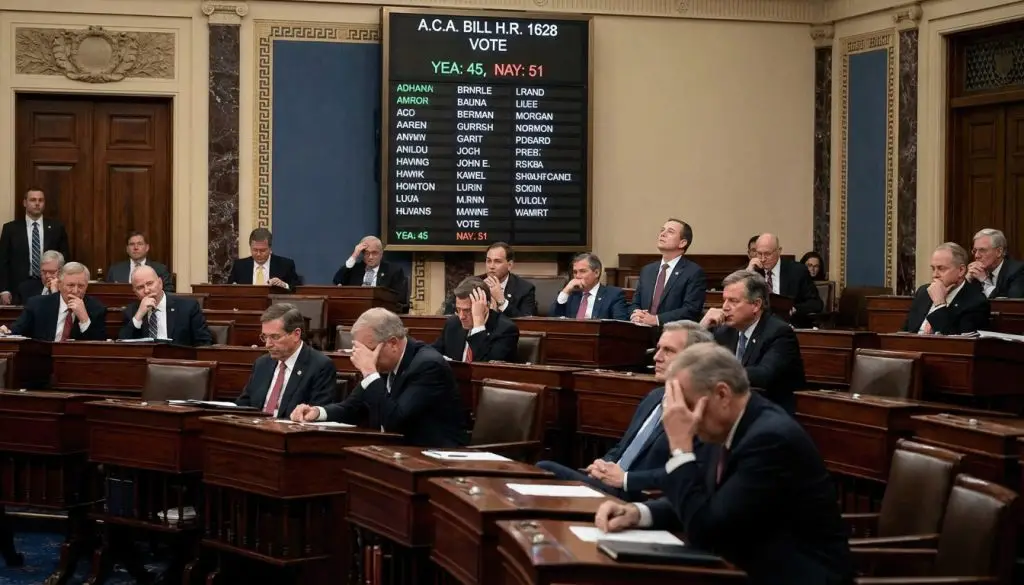
The U.S. Senate voted down a plan to keep Affordable Care Act tax credits. This means people on Healthcare.gov and state marketplaces might see higher premiums on Jan. 1. Despite months of talks, no agreement was reached on keeping or changing the subsidies at the heart of the healthcare law.
AP reported from Washington, showing a tense end to the talks. Leaders warned of higher costs for millions. Senate Democratic Leader Chuck Schumer called for action, saying, “Let’s avert a disaster.” Republicans, on the other hand, wanted a significant change, not just a fix.
Senate Majority Leader John Thune said extending subsidies without addressing the law’s real issues was not the answer. The debate now moves to the House, where Speaker Mike Johnson must address differing views on subsidies and plans.
Votes were close but not enough: 51–48 against a three-year subsidy extension and 51–48 against a health savings account alternative. With time running out, families face big decisions. This U.S. Senate coverage provides more details. If leaders revisit the issue after the shutdown deal, relief might come sooner.
Affordable Care Act Key Takeaways
- The U.S. Senate blocked both an ACA subsidy extension and a health savings account alternative.
- Enhanced tax credits under the Affordable Care Act are set to expire on Jan. 1, risking premium increases.
- Leaders split: Chuck Schumer pressed to protect subsidies; John Thune criticized masking Obamacare costs.
- Both measures failed 51–48, short of the 60-vote threshold in the Senate.
- Marketplace plans on Healthcare.gov and state exchanges face immediate cost pressure without subsidies.
- House action remains uncertain as debates over the healthcare law continue.
Senate Rejects ACA Tax Credit Extension as Jan. 1 Deadline Nears
With the clock ticking toward the new year, senators faced a critical vote on the ACA. They debated the future of Obamacare subsidies, showing no clear path to agreement. The chamber weighed costs and coverage, highlighting the challenges ahead.
What happened: Dueling votes fail in a narrowly divided Senate
Two votes to keep tax credits in place before Jan. 1 fell short of the 60-vote threshold, leaving the issue unresolved. This exposed deep divisions over the individual mandate and cost control.
Details from a report on the dueling votes in the Senate show how close margins can block progress. Even with bipartisan interest, finding common ground is hard.
Democratic plan vs. GOP alternative: subsidies vs. health savings accounts
Democrats proposed a three-year extension for Obamacare subsidies. They argued it would stabilize the market and prevent coverage gaps during a critical time.
Republicans offered a plan based on health savings accounts. This approach aims to support consumers directly, reflecting conservative goals tied to the individual mandate.
Key votes and margins: 51-48 procedural defeats on both bills
Both motions failed by a 51-48 vote, short of the 60 votes needed. Four Republicans joined Democrats to advance the motion, but it was not enough.
The GOP plan also failed, highlighting the challenges of passing legislation in the Senate. This outcome puts pressure on ongoing negotiations without a clear solution.
Leadership stakes: Schumer’s warning and Thune’s critique of Obamacare costs
Majority Leader Chuck Schumer warned that inaction would lead to higher costs for families. He urged a vote before premiums increase. Minority Whip John Thune countered that a simple extension hides the real cost growth.
A previous shutdown deal only promised a vote, not passage, as noted in this article on the 43-day standoff. With time running out, leaders must decide if new negotiations can find a way forward or if another plan will emerge.
Impact on Affordable Care Act Marketplace Plans and Consumers
As open enrollment continues, ACA consumers face a new math on affordability. Those who shop on Healthcare.gov and state exchanges will see net costs shift as enhanced tax credits end. Even while core protections hold steady, families will have to adjust to higher monthly bills and narrower savings.

Who is affected: Millions buying coverage on Healthcare.gov and state exchanges
Millions who rely on marketplace help are in focus. Most enroll through Healthcare.gov or state exchanges and have used subsidies to reduce premiums. Analyses show that older buyers and those in high-cost areas face sharper premium increases, especially in areas with steep unsubsidized prices.
Research mapping uneven premium impacts highlights how location, age, and income interact under expiring supports. For a deeper view of the geographic burden, see this analysis of rising marketplace premium payments.
Expected changes: Premium spikes as COVID-19-era subsidies expire on Jan. 1
With the COVID-19-era boosts gone, many will see immediate premium increases. The hit varies, but net costs will rise most for those whose discounts came from enhanced credits. Shoppers comparing Affordable Care Act marketplace plans may find that different metal tiers now produce better value than last year.
- Check updated notices from Healthcare.gov and state exchanges.
- Re-run eligibility to confirm current tax credit amounts.
- Compare plan networks and drug coverage alongside price.
Key issues: pre-existing conditions protections remain, but net costs rise
Rules guarding people with pre-existing conditions remain in place, and essential health benefits are ensured. Even so, higher net costs can strain budgets for middle- and lower-income ACA consumers. Some may consider plan switches, narrower networks, or higher deductibles to keep premiums in check.
“Coverage stays guaranteed, but affordability is the pivot point,” health policy watchers note, pointing to the gap between sticker prices and real-world budgets.
Medicaid expansion vs. marketplace implications across states
States with Medicaid expansion continue to cover eligible adults up to expansion thresholds, providing a steadier path for those who qualify. Above those limits, residents relying on marketplace aid will feel the loss of enhanced support more acutely. In non-expansion states, marketplace enrollees often depend more on subsidies so that premium increases may feel sharper.
Earlier enrollment waves showed how Medicaid expansion and marketplace subsidies worked together to cut uninsured rates, especially among low-income adults; see the nationwide evidence on ACA coverage gains for context that helps frame today’s shifts.
Practical takeaway: Reassessing plan options is essential this season. For many ACA consumers, a fresh look at Healthcare.gov or a state exchange can reveal ways to manage premium increases while preserving doctors, prescriptions, and benefits that matter most.
Affordable Care Act Conclusion
The Senate vote ended with twin procedural defeats, 51–48. This means no extension of ACA subsidies before Jan. 1. Many will see higher marketplace premiums on Healthcare.gov and state exchanges.
Chuck Schumer called it urgent consumer protection. John Thune said it would hide rising Obamacare costs. The split shows the country’s deep divide on healthcare policy and U.S. health insurance.
Months of partisan battles, a prolonged shutdown, and abortion coverage disputes led to this. Democrats wanted a three-year extension of the Affordable Care Act subsidy to stabilize the markets. Republicans backed health savings accounts and broader changes, following President Donald Trump’s direction.
The immediate result is clear: net costs will rise. But protections for pre-existing conditions will stay in place.
Consumers now have a short time to review plans and check their eligibility. They need to compare options and understand premium help and plan rules under the Affordable Care Act. For more on subsidies and benchmark plans, see this overview of the ACA’s premium tax.
House leaders are looking for ways forward. But divisions might delay any fix until the new year.
The following steps will test Congress’s ability to find common ground on ACA subsidies, premiums, and costs. The debate will also impact Medicaid expansion and future reforms in U.S. health insurance. Lawmakers must balance affordability with budget concerns. The future of healthcare policy depends on whether a bipartisan deal is reached or if another Senate vote fails.
Affordable Care Act FAQ
What happened in the Senate on the Affordable Care Act tax credits?
The Senate voted down two plans to keep higher Affordable Care Act tax credits. They voted 51-48 against a Democratic bill to extend subsidies for three years. They also voted 51-48 against a Republican plan focused on health savings accounts. Both plans needed 60 votes to pass.
How do the Democratic and Republican plans differ?
Democrats wanted to keep the enhanced ACA subsidies to lower premiums. Republicans suggested using health savings accounts instead. They argued this would give money directly to consumers, not insurers.
What were the key votes and margins?
Both plans failed with a 51-48 vote. Four Republicans joined Democrats to support the Democratic bill. But it didn’t get the 60 votes needed. The Republican plan also failed by the same margin.
What did Senate leaders say about the stakes?
Senate Majority Leader Chuck Schumer warned of a disaster if no action was taken. Republican Leader John Thune said extending subsidies would hide the real cost of Obamacare.
Who will be affected by the lapse in enhanced ACA tax credits?
Millions will see higher premiums without the subsidies. This is most true for those who rely on subsidies to afford plans.
What changes should consumers expect on Jan. 1?
With the subsidies gone, many will face higher premiums. It’s wise to review and compare plans during open enrollment.
Do protections for people with pre-existing conditions remain?
Yes. The core ACA rules, like guaranteed issue and coverage for pre-existing conditions, stay. But without the subsidies, many will find plans less affordable.
How does Medicaid expansion factor into the impact?
Medicaid expansion states will keep covering low-income adults. Those above Medicaid limits will likely see higher premiums. In non-expansion states, more people will feel the premium increase because they rely on subsidies.
What’s the timeline, and is there any chance of a fix before premiums reset?
The Senate’s rejection means no fix before Jan. 1. House leaders discussed a vote, but divisions and the tight calendar make it unlikely to affect January premiums.
Why did bipartisan talks fall apart?
After a 43-day shutdown, talks seemed hopeful. But disagreements over abortion and the ACA’s costs ended them. Republicans wanted new abortion limits, while Democrats drew a line.
What are Republicans proposing instead of extending subsidies?
Republicans suggest health savings accounts to support consumers directly. They say this approach gives patients more control. Democrats argue it won’t cover real costs for most.
How are House Republicans approaching the issue?
Speaker Mike Johnson promised a vote, but the conference is divided. Moderates want to extend subsidies, while conservatives seek broader changes. Some suggest a short-term extension to allow for future reforms.
Did any Republicans support moving forward on the Democratic bill?
Yes. Susan Collins, Josh Hawley, Lisa Murkowski, and Dan Sullivan voted to proceed. But even with their support, it didn’t reach 60 votes.
What are Democrats warning will happen next?
Democrats say many will face sticker shock with higher premiums. Schumer blames Republicans for the increase after the Senate failed to act.
How should consumers respond during open enrollment?
Consumers should check Healthcare.gov or their state exchange. Review premium and tax credit estimates and compare plans. Switching plans or insurers might help offset the loss of the subsidy. It’s also essential to check provider networks and prescription coverage.
Does this change affect employer coverage or Medicare?
No. The vote only affects enhanced ACA marketplace subsidies. Employer-sponsored insurance and Medicare are not affected.
Could Congress revisit the issue next year?
It’s possible but uncertain. The failed votes mark months of stalemate. Leaders are far apart on the ACA, Medicaid expansion, and affordability. Any new effort would need bipartisan agreement, which has been elusive.
Where can people get help understanding their options?
Consumers can visit Healthcare.gov, call the marketplace call center, or connect with local navigators. Many state-based exchanges offer in-person and virtual help at no cost.