Chemical leaks in Southern California spark panic as thousands flee
Chemical leaks in southern California have sparked panic, prompting thousands to flee as authorities rush to manage the environmental contamination and ensure safety.

Chemical leaks in Southern California spark panic as thousands flee
Chemical leaks caused a quick emergency in central Orange County late Friday. Thousands had to leave their homes with little notice. The main worry was a leaking tank at an aerospace facility in Garden Grove.
The fear of a chemical explosion grew as updates changed through the night. More Health News.
Families were anxious and confused, searching for reliable alerts and road closures. Many were worried about environmental contamination. Reports of odd smells and changing evacuation lines added to the confusion.
Some people went to public shelters and evacuation centers. Others stayed with friends and relatives. Teams working on chemical leak detection and spill containment were seen, showing the seriousness of the situation.
By the end of the evening, the evacuations affected tens of thousands of people. The big questions were how long the evacuations would last and when it would be safe to return.
Chemical leaks in Southern California: Key Notes
- Chemical leaks triggered urgent evacuations across central Orange County.
- A leaking tank at a Garden Grove aerospace site drove fears of a possible explosion.
- Residents reported stress, mixed messages, and trouble finding reliable updates.
- Concerns about environmental contamination grew as the night wore on.
- Chemical leak detection and spill containment methods shaped the early response.
- Many people sheltered in public centers or with friends and family.
What happened in Orange County: a leaking tank at the Garden Grove aerospace company triggers an evacuation
Central Orange County was put on high alert due to a leaking tank at GKN Aerospace in Garden Grove. The tank’s condition raised fears of a possible failure. This led public agencies to focus on managing the chemical spill and figuring out their next steps.
Residents followed updates closely, trying to distinguish fact from rumor. Many also wondered about the chemical spill prevention measures in place before the situation worsened. Other Health related stories: Growing Concern over the Ebola virus outbreak reaching the U.S.
Fear and uncertainty spread Friday night across central Orange County
By Friday night, the mood shifted from concern to unease. People watched for sirens, checked the air’s smell, and refreshed emergency alerts. They were unsure of what would happen next.
Neighbors compared notes in driveways and group chats, discussing whether the threat was growing or stabilizing. Clear spill response procedures were important, but many found them hard to follow because they kept changing.
Evacuations expanded across six cities as officials warned of an “unprecedented” risk of failure or explosion
Evacuation orders widened to Garden Grove, Cypress, Stanton, Anaheim, Buena Park, and Westminster, affecting tens of thousands. Officials warned of an “unprecedented” risk of failure or explosion, which heightened anxiety.
With more streets added to the map, families tried to leave without causing gridlock. The urgency to move quickly showed how fast chemical spill management can shift from planning to action.
Residents scrambled to pack essentials and make last-minute shelter plans
Miguel Loo, 30, said his family moved fast, grabbing medication, important documents, and supplies for their French bulldog, Wednesday. They worried about what they had to leave behind, including the risk of burglary during evacuations.
Finding a place to stay was not simple. Loo said Memorial Day weekend rates jumped to about $200–$400 for rooms that would normally run $60–$70, adding financial stress on top of the emergency.
- Some residents went to organized evacuation sites.
- Others arranged couches, spare rooms, or short stays with relatives and friends.
- Many packed chargers, prescriptions, pet food, and a few days of clothing.
Key unanswered questions: how long evacuations will last and whether the area is truly safe
Two questions came up again and again: how long the evacuation orders would last, and whether the area was truly safe. Late Friday, officials did not offer a firm timeline, leaving families to plan day by day.
For many, the uncertainty also raised broader worries about chemical spill prevention at industrial sites near neighborhoods. Residents wanted to know what safeguards were working, and what spill response procedures would look like if conditions changed overnight.
Chemical leaks: chemical leak detection, emergency spill response, and hazardous materials clean-up are underway
In central Orange County, crews are working hard to find and clean up chemical leaks. People are waiting for alerts and listening for sirens. They check messages as the situation changes.
The main goal is to reduce risks and limit exposure. Once it’s safe, they will start cleaning up hazardous materials.
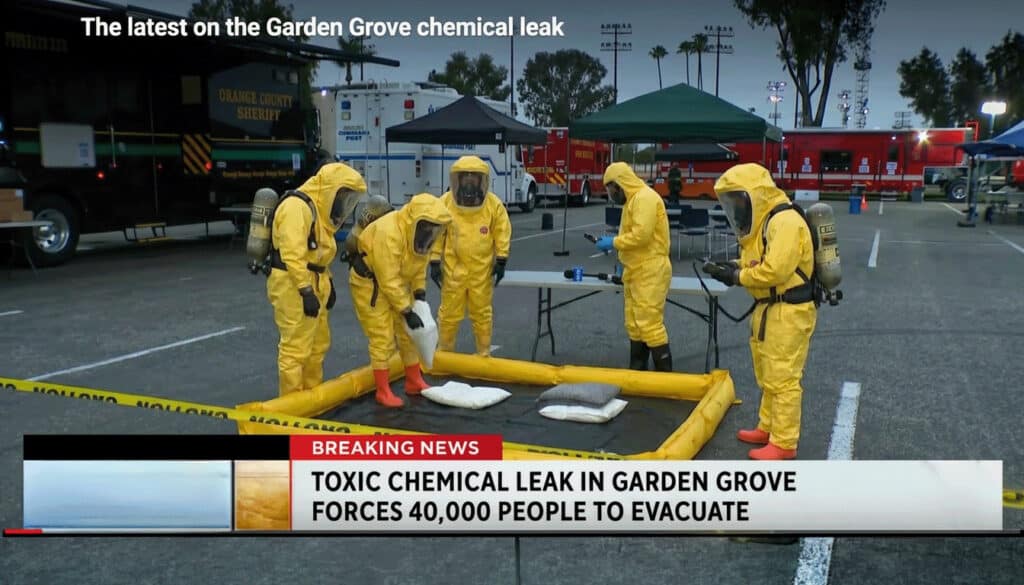
Firefighters responded after reports of an issue with chemical tanks, followed by changing guidance hour-by-hour
Firefighters arrived Thursday afternoon after a report of trouble with chemical tanks. Some families were allowed to return, only to be told to leave early Friday again. This left many unsure when it was safe to do things.
Responders are working on spill containment methods. They want to keep conditions from getting worse. But information keeps changing as they gather more data.
Evacuation centers and shelters: Cypress Community Center and Garden Grove Sports & Recreation Center operations
Cypress Community Center became a waiting point late Friday. Evacuees were sorting bags and trying to rest. They were waiting for clear instructions.
At the Garden Grove Sports & Recreation Center, about 250 people had checked in by Friday evening. It was unclear if overnight lodging would be available. People were in really good spirits while waiting.
Health and exposure concerns: Residents reported headaches and unusual odors
Health worries spread fast, with some reporting headaches and unusual odors. Miguel Loo felt dizzy with a headache during the evacuation. Leticia Rinker smelled gas and felt her head hurt.
Rinker evacuated with her pets. She spent the day in her car at the evacuation center. The emergency response became personal, focusing on basic needs like food and water.
On-the-ground chemical spill response and chemical spill management priorities
Officials and residents agreed on key needs: steady leak detection, stabilization work, and perimeter control. Clear updates were as important as physical barriers. Some neighbors were hesitant to leave despite orders.
- Maintain a tight safety perimeter and limit entry to trained personnel supporting chemical spill response.
- Use spill containment methods that reduce spread while crews assess air movement and site conditions.
- Coordinate evacuations and shelter operations so families can plan for pets, caregiving, and medications.
- Prepare for hazardous materials cleanup related to potential environmental contamination concerns.
For those interested in standard response steps, resources such as chemical spill planning and response guidance outline common practices for uncertain events.
Chemical leaks in Southern California: Conclusion
By Friday night, a chemical leak at GKN Aerospace forced evacuations in six Orange County cities. Thousands had to leave their homes. Officials warned that the situation could worsen, citing risks they called “unprecedented.”
People moved quickly, but the situation was far from settled.
Evacuees wanted one thing most: clear, consistent updates. They kept checking their phones for news. They wanted to know when it would be safe to go back home.
Until officials gave them solid answers, the wait felt endless.
At evacuation centers, the human cost was clear. Families sat in plastic chairs for hours, waiting for news. They worried about pets, missed medications, and unexpected costs.
They also wondered if their homes and cars were safe.
Now, officials will decide when to lift or extend evacuation orders. They will also provide shelter for those who need it. Crews will keep watching for health issues as they clean up the spill.
For residents, progress will mean safer air, clearer guidance, and a return to normal life.
Alarming New Covid-19 Strain Spreads Across 25 U.S. States.