Impact of Saturday’s Government Shutdown on Civilian Jobs
Explore the far-reaching effects as the government shutdown started Saturday will affect thousands of civilian jobs across the U.S.

A limited U.S. government shutdown started Saturday. It’s the third year of Donald Trump’s second term. The talks in Congress with the White House broke down.
The main issue is immigration enforcement. Democrats want new rules for federal agents after two deaths in Minneapolis. They blame federal agents for the shootings.
They want agents to work without masks and need judicial warrants for arrests. Republicans disagree, creating a standoff. This affects jobs and services.
Workers face quick changes if funding isn’t passed. Some might get furloughed, while others work without pay. This affects customer service and public operations.
For details on what stops and what keeps going, see how a government shutdown could affect you.
Lawmakers left for a 10-day break. But talks will continue, and they might return if a deal is made.
The November shutdown lasted 43 days. This shows that even a small shutdown can cause big problems.
Reports show the shutdown’s wide impact. It affects paychecks, travel, and safety jobs, as NBC Washington’s shutdown deadline impact explains. Other sources warn of big cuts in health workers and regulators.
If the shutdown lasts, agencies may permanently cut jobs. This is different from past shutdowns. Reports on sudden firings and job cuts are already coming in, as government shutdown fallout shows.
Government shutdown Key Takeaways
- The shutdown began Saturday after White House–Democrat talks in Congress failed, creating fresh government shutdown news for workers and employers.
- Democrats are pressing immigration agent limits tied to the Minneapolis shootings of Alex Pretti and Renee Good; Republicans oppose key proposals.
- The government shutdown can result in furloughs and required work without pay, depending on who is deemed essential.
- A 10-day break for lawmakers makes a fast resolution less likely, even as leaders say negotiations will continue.
- A record 43-day shutdown in November shows how quickly a limited lapse can expand and deepen the damage.
- Some reports warn that extended shutdowns can trigger reductions in force, not just temporary furloughs, underscoring the need for this update on the government shutdown.
The government shutdown, which started Saturday, will affect thousands of civilian jobs
The government shutdown, which started saturday is narrower than many past standoffs. But it lands hard on daily routines. It is centered on the Department of Homeland Security, so the civilian jobs affected cluster in agencies that people see at airports, borders, and disaster response.
Even with a limited scope, a government shutdown on Saturday can quickly create significant stress. Pay uncertainty and shifting schedules typically first appear in public-facing roles, then spread to support offices and contractors associated with DHS work.
What happened and why the government shutdown began on Saturday
The government shutdown saturday began after Democrats rejected a White House offer on Thursday. Senate Minority Leader Chuck Schumer called the offer “not serious, plain and simple.”
House Minority Leader Hakeem Jeffries blamed House Speaker Mike Johnson for adjourning Congress instead of keeping talks going in Washington. Jeffries said, “We’ve drawn a hard line in the sand… ICE needs to be dramatically reformed. Period. Full stop.”
Senate Majority Leader John Thune said Democrats “really don’t want the solution.” Donald Trump said negotiations were ongoing but framed his focus as protecting law enforcement: “We have to protect law enforcement… The Democrats have gone crazy.”
Schumer also posted a video on X showing federal immigration agents using force and said Democrats would keep opposing added ICE funding until ICE is “reined in” and violence ends. More details on how the lapse was triggered appear in coverage of the partial shutdown timeline.
Which workers are included: about 13% of the federal civilian workforce
This shutdown affects about 13% of the federal civilian workforce, with the disruption largely limited to DHS. That means the civilian jobs affected are concentrated, not spread across every cabinet department.
Within DHS, many employees are designated essential, so they keep working even during a funding gap. Others are furloughed, and many families face the same basic question: when does the next paycheck arrive?
- Essential staff stay on duty, often without pay, until funding is restored.
- Nonessential staff are furloughed, with work paused and access curtailed.
- Support functions can slow, even when frontline work continues.
Agencies hit first: DHS funding lapse and what it means for civilian jobs affected
The first pressure point is an appropriations lapse at DHS, affecting agencies including ICE, Customs and Border Protection, the Secret Service, the Coast Guard, and FEMA. Early reports suggest DHS work may not be widely disrupted right away, but thousands of civilian jobs affected sit in limbo as offices juggle staffing plans and cash flow.
FEMA is a clear example: even if core response work continues, reimbursements to states and some training can stall. This guide provides a rundown of agency-level impacts, including those of DHS components, for affected services.
A visible ripple hit Capitol Hill, too. The official House delegation to the Munich security conference was canceled; Alexandria Ocasio-Cortez and Nancy Pelosi traveled in a personal capacity, and Jim Himes wrote on X that some were going “on our own dime.” Jason Crow told NBC News that Mike Johnson ordered hotel reservations, military flights, and conference credentials canceled, while Ocasio-Cortez called the moment “very grave” and said the country is in a “new era, domestically and globally.”
TSA and airport operations: screening delays as a key government shutdown impact
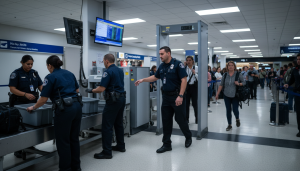
For most travelers, the government shutdown began Saturday, so they arrived at the checkpoint. TSA screens passengers and bags, and most officers are considered essential, so they report to work even when pay is delayed. That mix—high-stakes work and missed pay—can strain morale and attendance.
As the lapse drags on, more unscheduled absences can lead to longer waits during peak hours. This breakdown summarizes reporting on TSA and Coast Guard pay interruptions and the risk to airport security and disaster relief services.
Airlines and travel groups have warned that the longer a government shutdown lasts, the more security lines can back up at commercial airports. In long shutdowns, staffing stress has also rippled into the broader aviation system, with growing economic costs and delays documented as shutdowns near record length in this report on travel disruptions.
For now, the most immediate signal is simple: more uncertainty for affected civilian jobs and more waiting for the public, even when the lights stay on, and screening continues to move.
Government shutdown impact and consequences: what changes now and what may worsen over time
A short funding gap can quickly cause significant problems. The first signs are often seen at airports, border crossings, and in daily services. Many families struggle with uncertainty as jobs that must keep running are affected.
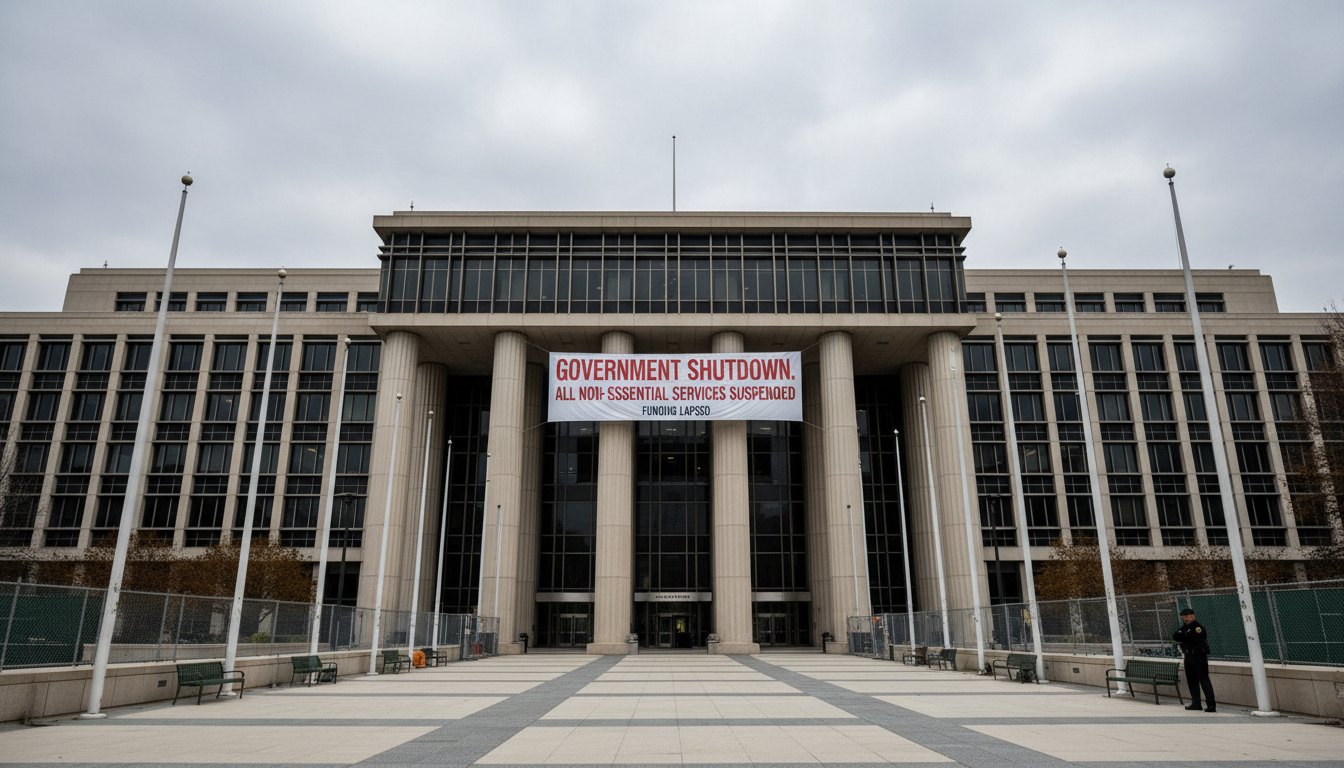
Near-term effects vs. longer-term government shutdown effects on travel and staffing
Initially, airports and checkpoints remain open, but stress mounts. TSA officers must work without pay, which can hurt their morale and finances.
Over time, problems worsen, not all at once. Travel groups say an extended shutdown can lead to more absences and delays. This makes lines longer and terminals busier, as seen in airport screening delays.
- Immediate pinch points: longer lines at checkpoints and slower bag screening.
- Over time, risks: more unscheduled absences and uneven staffing at busy hubs.
Air travel outlook: longer security lines possible, but fewer flight-cancellation risks
The biggest issue in air travel is usually the wait times, not cancellations. Airlines may wait for late passengers, and crowded checkpoints can lead to missed connections.
But the risk of widespread cancellations is lower than many think. Air traffic management is more stable during this shutdown. This stability is important for jobs in the travel industry, even when people cut back on trips and spending, as explained in the shutdown impact on workers and the.
Why do FAA air traffic controllers continue to receive paychecks during this shutdown?
This shutdown is about a funding gap in Homeland Security, not the whole government. FAA air traffic controllers are paid from a separate account, so they continue to receive their paychecks.
This separation helps avoid some disruptions, but it doesn’t solve all problems at airports. TSA staffing and checkpoint flow can affect travel, even with controllers working.
Other operational risks: disaster relief and immigration enforcement if the lapse drags on
If the shutdown lasts longer, problems can spread beyond airports. Disaster response planning and certain support functions may slow down. Delays can grow, even when essential work continues.
At the border, Customs and Border Protection and Immigration and Customs Enforcement continue operations, funded by prior budgets. But staffing stress can slow them down. With lawmakers on break, finding a solution is uncertain, further exacerbating the shutdown’s effects on jobs and services, as noted in “What the Shutdown Means for Families.”
Government shutdown Conclusion
This Saturday-start limited government shutdown is significant, but it’s not a complete stop. It mainly affects civilian jobs. About 13% of the federal civilian workforce is impacted.
The shutdown’s effects are clear at airports. TSA officers may work without pay, which can slow lines. Travelers should expect delays as the shutdown goes on.
Despite this, air travel is unlikely to completely break down. FAA air traffic controllers keep getting paid. But if the shutdown gets worse, thousands of FAA staff could lose their jobs.
More details on staffing issues can be found in government shutdown news.
The main worry now is time. Talks broke down over immigration issues, and lawmakers are on a 10-day break. The last big shutdown lasted 43 days.
As the shutdown drags on, more problems will arise. Families are worried about pay delays, job cuts, and other issues. There’s also talk of mass federal job cuts and debates over military pay during shutdowns (federal job cuts and military pay during shutdown).