Portable Power Station vs Generator: Which Is Better in 2026?
Discover the key differences in portable power station vs generator performance, cost, and use cases to choose the best backup power solution for 2026

Portable Power Station vs Generator
We may earn a commission when you purchase through links on this page, at no additional cost to you.
Portable Power Station vs Generator: Blackouts are becoming more common in America. Having a reliable backup electricity source is now a must. It’s not just about convenience anymore. It’s about being ready for storms, unexpected power cuts, or just wanting to feel secure. Best Portable Power Stations for Home Backup (2026 Guide)
When picking between a power station and a generator, knowing how each works is key. Generators use fuel such as gasoline or propane to generate electricity. On the other hand, portable battery systems store energy in rechargeable cells for clean, quiet power whenever you need it. Small power stations for mobile phones. See prices on Amazon, our top choice for budget-friendly reliability.
Battery-based units are becoming more popular for their eco-friendliness and low maintenance. They’re great for camping, home backup, and outdoor work. By 2026, both options will be even more efficient and affordable. This guide will help you choose the right one for your needs, whether it’s for emergencies, outdoor fun, or living off the grid.
Power Station vs Generator Key Takeaways
- Traditional units burn fuel to create electricity, while battery systems store pre-charged energy for later use
- Portable battery solutions offer quiet, emission-free operation ideal for indoor and outdoor settings
- Fuel-burning models typically provide higher output for extended use during longer outages
- Rechargeable units require minimal maintenance compared to engine-based alternatives
- The best choice depends on specific needs like runtime, portability, and environmental concerns
- 2026 technology improvements have enhanced efficiency and affordability for both options
Introduction: Understanding Portable Power Solutions
Power outages are common in the United States. This makes backup power solutions essential. Homeowners, campers, and those preparing for emergencies need to choose wisely. Knowing the differences between a power station and a generator helps make the right choice.
Today, we have two main ways to get backup electricity. One uses stored energy from batteries; the other generates power on demand from fuel. Each has its own benefits for different users.
What is a Portable Power Station?
A portable power station is like a big phone power bank. It stores electricity in batteries to power things like appliances and tools. They are silent powerhouses that give clean energy without noise or fumes.
These units use advanced battery tech. Most use lithium-ion or LiFePO4 batteries. The latter lasts longer and is safer. They can power things like refrigerators and laptops for hours or days.
Recharging these devices is flexible. You can plug them into outlets, charge them in cars, or use solar panels. This makes them great for camping, outdoor events, and home backup.
“The shift toward battery-based power storage represents a fundamental change in how Americans approach energy independence and emergency preparedness.”
What is a Generator?
A generator converts mechanical energy into electrical power. It burns fuel to drive an alternator, which produces electricity. This method has been used for backup power for a long time.
Generators can use different fuels, such as gasoline, propane, or natural gas. Some can switch between fuels. They need regular maintenance, like oil changes and spark plug checks.
Generators produce electricity as long as they have fuel. This is different from power stations that store energy. Generators are good for high-power needs and can run indefinitely with fuel.
Key Differences Between the Two
The main difference is how they work. Power stations store energy in batteries that need to be recharged. Generators make power as they go, using fuel.
There are many practical differences:
- Noise levels: Power stations are silent, while generators are loud
- Emissions: Power stations have no emissions, but generators do
- Indoor safety: Power stations are safe indoors, but generators must be outside
- Operational readiness: Stations need to be charged ahead of time, while generators start right away
- Maintenance needs: Stations need little upkeep, but generators require regular service
Knowing the differences between a power station and a generator helps choose the right one. The choice depends on power needs, how often you use it, environmental concerns, and budget.
Power stations are a safe, quiet, and effective solution for today’s power needs. Their battery tech keeps getting better, giving longer runs and faster charges. Generators are great for high-power needs where convenience or environmental impact doesn’t matter.
How Each Works: Mechanisms of Power Generation
Power stations and generators both provide electricity when the grid is down. But they work in very different ways. Knowing how each technology works helps us choose the right one for our needs. The key difference is whether they store electricity or make it on the spot.
Energy Storage and Conversion in Modern Power Stations
Portable power stations are like advanced batteries that store electricity for later use. They use high-capacity lithium-ion or LiFePO4 batteries to hold energy until needed. These batteries store energy as direct current (DC), like car batteries and USB chargers.
When you plug in appliances, the power station changes the stored DC electricity into alternating current (AC). This change happens quickly and quietly. The result is clean, stable power like what electric companies give to homes.
Power stations can recharge in many ways:
- Wall outlet charging: The fastest way, usually taking 4-8 hours for a full charge
- Vehicle charging: DC charging from car alternators while driving, great for trips
- Solar panel charging: The slowest, but sustainable and fuel-free
- Combination charging: Some models can charge from multiple sources at once for faster recharging
Some call these devices portable solar power generators when used with solar panels. But this name is misleading. Power stations don’t make electricity from sunlight themselves. They store energy collected by solar panels. The panels generate the power, and the station stores it.
“The beauty of battery-based power stations lies in their ability to accept energy from virtually any source and deliver it as clean AC power without combustion or moving parts.”
Combustion and Mechanical Energy Conversion in Generators
Generators work differently. They use an internal combustion engine and an alternator to turn mechanical energy into electrical current. This process happens right away, making power as needed, not storing it.
The process starts with fuel burning in the engine’s cylinders. This creates controlled explosions that move pistons up and down. This motion turns a crankshaft, changing it into rotational energy. The spinning crankshaft then turns an alternator, which makes alternating current through electromagnetic induction.
Generators can run on various fuels, giving them flexibility:
- Gasoline: Most common and widely available, but has a limited shelf life
- Propane: Burns cleaner, stores indefinitely, and works well in cold weather
- Natural gas: Convenient for home standby systems with existing gas lines
- Diesel: More fuel-efficient for larger industrial generators
Standard generators produce raw AC power directly from the alternator. While it works, the power can vary with engine speed. These changes can damage sensitive electronics like computers and smartphones.
Inverter generators improve performance by adding an extra step. They generate AC power from the alternator, then convert it to DC, and back to clean AC electricity. This three-step process lets the engine run at variable speeds, saving fuel and reducing noise.
Inverter technology also gives a stable voltage output. This makes inverter generators safe for sensitive electronic devices and quieter. But these benefits come at a higher upfront cost than regular generators.
When comparing generator vs power station efficiency, generators are better for continuous use. They can run forever as long as there’s fuel. Power stations, on the other hand, have limited energy based on battery capacity. This difference affects their use cases and overall efficiency.
Use Cases: When to Choose Each Option
Knowing when to use each power solution can save you money and frustration. It ensures you have electricity when you need it most. The choice between these technologies depends on your specific situation and power needs.
Both devices have different uses in various settings. Knowing these uses helps you make the right choice for your lifestyle and energy needs.
Perfect Situations for Battery-Powered Solutions
Portable power stations are best when you need quiet, portability, and clean energy. They’re perfect for weekend campers who want to enjoy modern comforts without disturbing nature.
These systems are great for places where emissions are a health or safety risk. They’re safe to use indoors during power outages, unlike fuel-burning options.
- Camping and outdoor recreation – Powering LED lights, portable refrigerators, fans, and charging devices without noise or fumes
- RV overnight power – Running appliances silently inside your vehicle while you sleep comfortably
- Short-term home backup – Keeping refrigerators, medical equipment like CPAP machines, internet routers, and essential lighting operational for several hours to a full day
- Outdoor events and tailgating – Providing clean power for sound systems, lighting, and food preparation equipment
- Remote work locations – Supporting photography equipment, videography gear, and mobile workstations where quiet operation is essential
Construction sites with noise restrictions also benefit from these emission-free power sources. They provide reliable electricity without violating local ordinances or disturbing nearby residents.
Optimal Applications for Fuel-Powered Units
Generators are key when sustained high-wattage power is needed, but quiet operation or portability are not. They’re essential for extended emergencies that require continuous power.
These units handle demanding tasks that quickly drain battery reserves. Their ability to run indefinitely with a proper fuel supply makes them indispensable for certain scenarios.
Ideal generator applications include:
- Extended power outages – Supporting entire households for multiple days during severe weather events or grid failures
- Construction and job sites – Operating high-wattage power tools, welders, compressors, and heavy equipment simultaneously
- Large appliance operation – Running central air conditioning, electric water heaters, and multiple major appliances during emergencies
- Remote locations with limited recharging options – Situations where refueling proves easier than waiting hours for battery recharge
- Commercial applications – Food trucks, mobile businesses, and temporary event infrastructure requiring substantial continuous power
Many RV enthusiasts use both technologies for the best results. They run generators for high-draw appliances like air conditioners during the day. Then, they switch to quiet battery stations at night for comfort and run smaller devices.
This hybrid approach maximizes the strengths of each system. Generators can even recharge power stations, creating a versatile energy ecosystem that adapts to changing needs throughout the day.
For those exploring portable power station vs generator options, understanding these real-world applications clarifies which solution—or combination—best serves their unique requirements. The right choice depends on your specific power demands, usage duration, and environmental considerations.
Advantages of Portable Power Stations
Modern portable power stations offer many benefits. They solve common power issues and meet off-grid energy needs. The power station benefits include practical use and environmental care.
These devices are cleaner and more convenient than traditional fuel-burning options. They fit well into today’s lifestyle, whether for camping or home backup. Let’s look at what makes them popular in the U.S. See our guide to the Best Portable Power Stations for your Home.
Whisper-Quiet Performance
One key advantage of a power station is its quiet operation. Most models are silent when powering devices. Only sometimes does a cooling fan turn on, and it’s very quiet.
For comparison, normal conversation is about 60 decibels. This quiet makes power stations great for places where noise is a problem. Campers can enjoy nature without the noise of engines.
Their quiet operation opens up many uses. Homeowners can use them indoors at night without disturbing others. RV users can power their appliances in quiet campgrounds.
“The silence is golden when you’re trying to enjoy the outdoors or get some sleep during a power outage.”
Many places have rules against loud noises. Power stations meet these rules, providing essential power without disturbing anyone.
Easy to Carry and Store
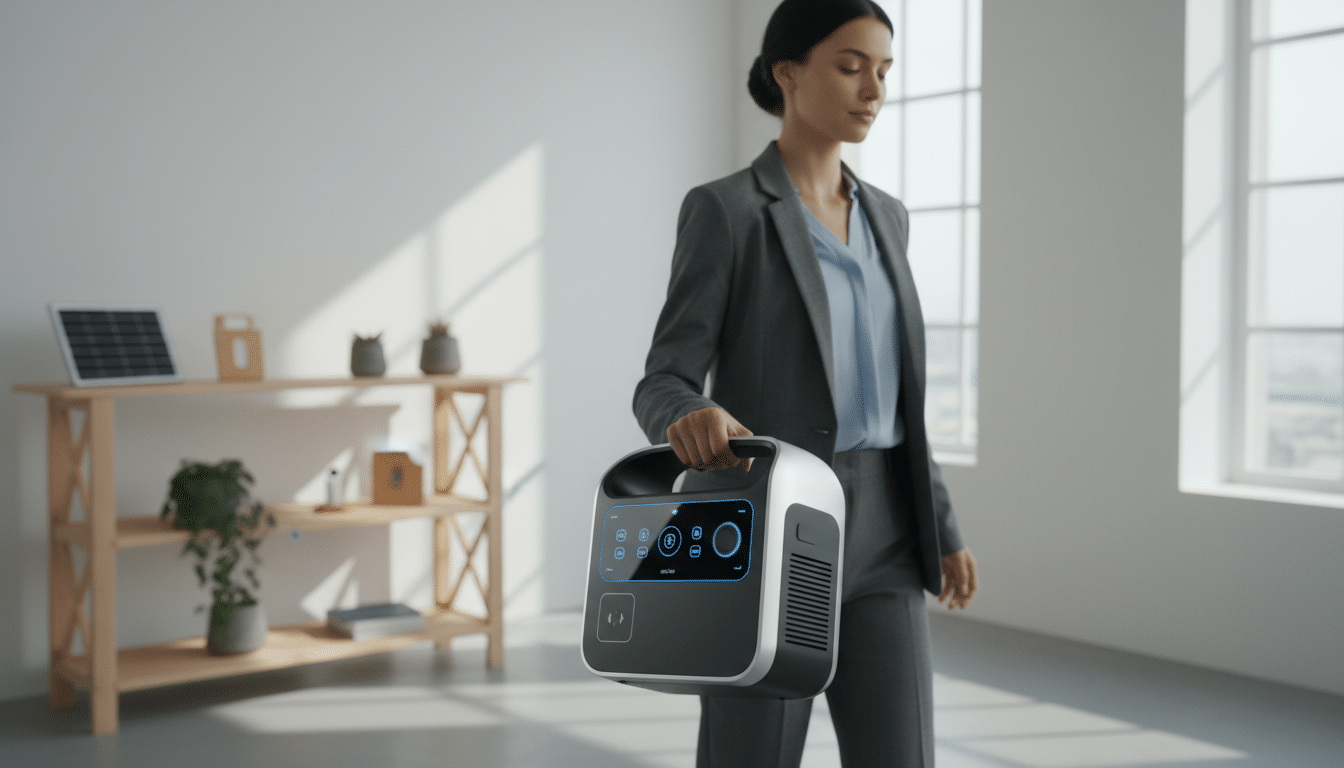
Modern power stations are small and light. Most weigh 15 to 30 pounds. This makes them easy to carry by one person.
They are designed to be portable. Many have handles like suitcases, making them easy to carry. They fit well in car trunks or home closets without taking up much space.
This design is very practical. Users can move them around easily. Outdoor lovers can pack them with other camping gear without using too much space.
- Vehicle storage requires minimal space compared to generators
- One-person carrying eliminates the need for help
- Compact size enables indoor storage in small apartments
- Easy transportation between locations without lifting equipment
This is different from much heavier generators. The size difference is important for those with physical limitations or limited space.
Environmental Responsibility
Power stations are eco-friendly, a major benefit today. They produce zero direct emissions because they run on battery power. This means no harmful exhaust or pollution.
This makes them safe to use indoors without worrying about ventilation. Families can use them inside during emergencies without fear of carbon monoxide. This is safer than generators that need to be used outside.
Using them with solar panels makes them even more eco-friendly. This creates a renewable energy system that’s good for the planet.
More eco-friendly benefits include:
- No fuel spills or contamination risks to soil and water
- Elimination of oil changes that create disposal waste
- No fuel storage concerns or evaporation losses
- Reduced dependence on fossil fuels for electricity generation
Power stations also provide clean electrical output. They use an inverter to produce stable, pure-sine-wave electricity. This is safe for sensitive electronics like laptops and smartphones.
The consistent voltage and frequency protect devices from damage. This is better than generators that can produce dirty power.
Disadvantages of Portable Power Stations
No power solution is perfect, and portable power stations have their own set of drawbacks. They offer great convenience and clean energy, but have limits. The main issues are power station capabilities and how fast they recharge after use.
These issues don’t make power stations bad choices. But they mean some situations might be too much for them.
Limited Power Output
Battery capacity is a big problem for portable power stations. A 1000Wh unit can power a 100W device for about 10 hours. But a 1000W microwave will drain it in just one hour.
Most portable models can only handle 1500-2000W continuously. This means you can’t run many high-draw appliances at once. You have to choose which devices to power.
Air conditioners are a big challenge for power station capabilities. A standard RV air conditioner needs a lot of power to start, often 3000-3500W. Most portable power stations can’t handle this without special equipment.
To power an RV air conditioner well, you need a unit with significant capacity, usually 2000-3000Wh. The inverter also needs to be robust to handle startup surges. This leads to bigger, more expensive models.
Expandable battery systems can reach 5kWh or more, addressing capacity issues. But they become less portable and much more expensive. What was once a compact solution becomes like a small home backup system.
Charging Time Factors
When a power station runs out during an outage, users face hours of waiting before it’s ready again. This makes them less good for long emergencies without extra charging sources. The wait time varies widely depending on how it’s charged.
Charging from AC power is the fastest. Small units recharge in 1-2 hours, while bigger ones take 3-6 hours. But this needs grid power or a generator, which isn’t useful during blackouts.
Solar charging gives real independence but depends on the weather. A sunny day can recharge a small unit in 6 hours with good solar panels. But cloudy days can make it take 15+ hours.
Even the smallest power stations take up to an hour to recharge from AC. Solar charging takes even longer, from 5 to 15 hours, depending on the panel and weather. This long wait is a major problem in emergencies, where power is needed continuously.
The battery’s limited capacity means there’s no quick way to replenish power once it’s gone. Unlike generators, power stations need dedicated charging time. Users must plan well and may need to buy more units or larger solar arrays for extended off-grid periods.
Advantages of Generators
Generators are popular because they meet tough energy needs. They work well when lots of power is needed. Knowing what makes generators good helps people choose the right backup power.
Generators can give more power than batteries. They keep electricity flowing for a long time. This is great for long power cuts or for work needs.
Robust Continuous Power Delivery
Generators are good for sustained high-wattage output. They can power many things at once. This is because they have more power than batteries.
A 7,500-watt generator can run many things at once. This includes air conditioners, refrigerators, and lights. No battery can do this for long.
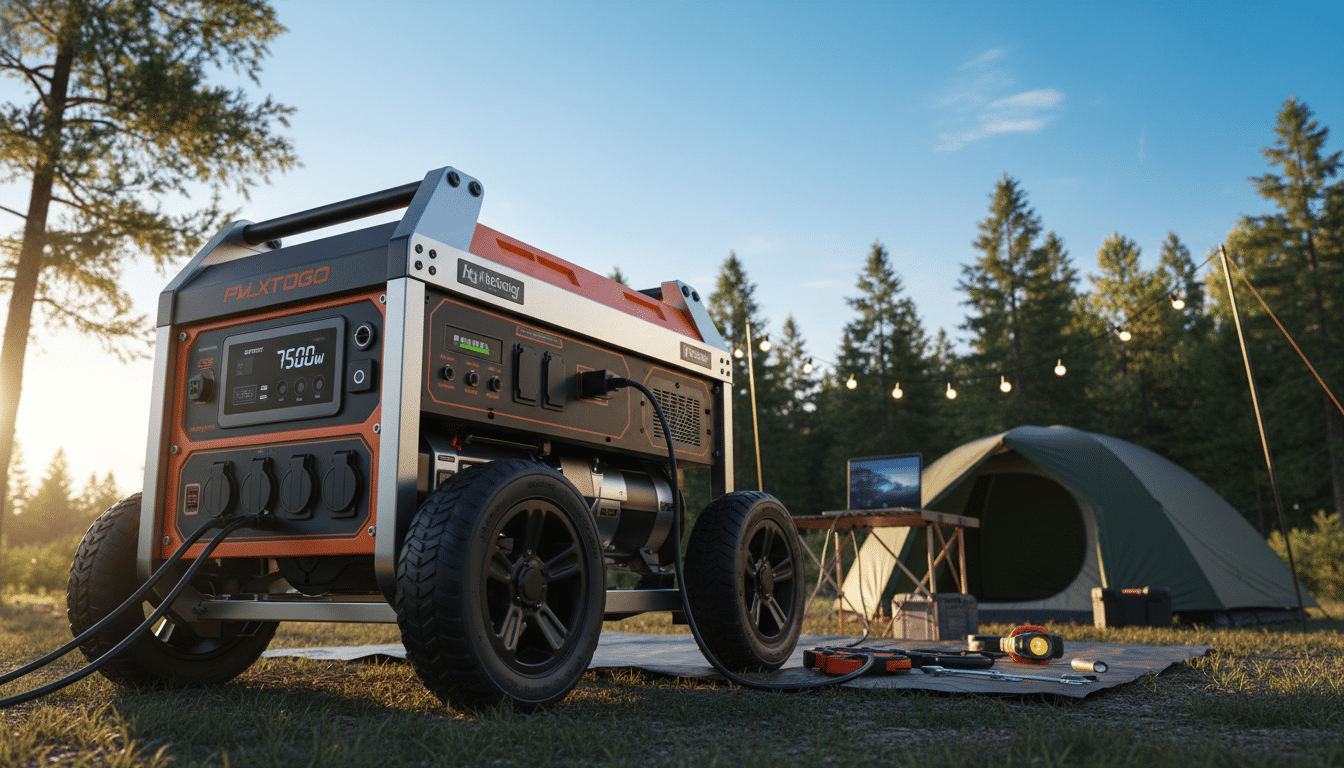
For workers, generators are even more useful. They can power tools like table saws and welders. One generator can power a whole crew’s tools all day.
Continuous operation is another big plus. Generators keep going as long as there’s fuel. They only stop to refuel, but never while running.
Multiple Fuel Options for Flexibility
Generators can use different fuels. This makes them more useful. Dual-fuel models use gasoline or propane, and tri-fuel models add natural gas.
Gasoline generators have the most power. They use gas from any station. But gasoline can go bad over time.
Propane models are cleaner and quieter. They have less power than gasoline but don’t go bad. This makes them good for emergencies.
Natural gas generators use home gas lines. They run forever as long as the gas is on. They’re great for homes that lose power a lot.
Tri-fuel generators offer true energy security. They can switch to another fuel if needed. This is very useful in emergencies.
Generators are great for many needs. They power homes during long outages or run tools on job sites. Their power and flexibility make them important in 2026.
Disadvantages of Generators
Generators offer many benefits but also have downsides. They work well during power outages and outdoor activities. Yet they can affect comfort and safety and increase long-term costs. Knowing these drawbacks helps buyers decide if generators meet their needs.
Generators need constant care and have limitations not found in power stations. This is key for homeowners, campers, and those who value power availability.
Constant Noise That Disrupts Peace
Generators usually make 65-85 decibels of noise. This is as loud as heavy traffic or a vacuum cleaner. They’re not good for quiet nights in residential areas.
Campgrounds often ban generator use after 8 PM. This limits their use for long outdoor stays.
Local noise laws can also be a problem. Some places have rules about when and how loud generators can be. Breaking these rules can lead to fines or complaints from neighbors.
Inverter generators are quieter. They make 50-60 decibels at low load, like a normal conversation. But they get louder, reaching 65-75 decibels, when running many appliances.
The constant noise can be stressful. It can cause headaches and make living with a generator unpleasant.
Demanding Upkeep and Safety Concerns
Generators need a lot of maintenance. They require regular care to keep them working well. This adds time and money to owning one.
Important maintenance tasks include:
- Oil changes every 50-100 hours of use
- Cleaning or replacing the air filter to prevent engine damage
- Checking and replacing spark plugs as needed
- Adding fuel stabilizer when storing with gasoline
- Cleaning the carburetor when the fuel gets old
- Running the generator monthly to keep it lubricated
Generators also pose safety risks. They can’t be used indoors because of carbon monoxide in the exhaust. They must be at least 20 feet away from doors, windows, and vents to avoid poisoning.
Generators must be covered in the rain, and extension cords can be a hazard. The cords can be a risk, even in the dark.
Storing generators is also a challenge. Gasoline can go bad in 3-6 months without a stabilizer, posing fire and engine risks. Generators can be heavy, over 200 pounds, making them hard to move and store safely.
Generators need regular maintenance to be reliable. Without it, they may not start, work less efficiently, or break down when you need them most.
Cost Analysis: Upfront and Long-term Expenses
When comparing power stations and generators, it’s not just about the price tag. The real cost includes fuel, maintenance, and replacement parts over time. Knowing both the upfront and ongoing costs helps you make a choice that fits your budget and needs.
See our guide to the best portable power generators for 2026.
Looking at the long-term costs is key. A cheaper generator might seem good at first, but fuel and maintenance can add up fast. Power stations cost more upfront but have lower operating costs, changing the financial picture over time.
Price Comparison of Power Stations vs Generators
The initial cost difference between power solutions is big. A 2000W inverter generator costs $500 to $800, appealing to those on a budget. On the other hand, a portable power station with a 2000Wh capacity costs $1,200 to $2,000, almost double the price of the generator.
The price gap widens at higher capacities. A 7500W generator costs $700 to $1,200. A power station with similar power requires 6-8kWh of battery capacity, costing $3,000 to $6,000, a big premium over generators.
Power stations are more expensive due to advanced battery tech and components. They include advanced battery management systems, high-quality inverters, and multiple output options. Yet, the market is getting more competitive, making power stations more affordable.
By 2026, prices will have dropped a lot. What cost $3,000 in 2020 now sells for about $1,500. This drop shows how technology and competition are making power stations more accessible for cleaner, quieter backup power.
Here’s a practical breakdown of typical pricing in 2026:
- Entry-level power stations (500-1000Wh): $300-$600
- Mid-range power stations (1500-2500Wh): $800-$1,800
- High-capacity power stations (3000Wh+): $2,000-$5,000
- Small inverter generators (2000-3000W): $400-$800
- Mid-size generators (4000-7000W): $600-$1,200
- Large generators (8000W+): $1,000-$3,000
Long-term Cost of Ownership
The ongoing costs of power solutions are different. Generators need regular fuel, which can add up during long outages. Reliable backup power is key, whether for winter power failures or summer storms.
A 5000W generator uses about 0.5 gallons per hour. For a week-long outage, that’s 28 gallons at $3.50 per gallon, for a total of $98. Annual fuel costs for frequent outages can be hundreds of dollars.
Generators also need regular maintenance, adding to costs. Annual maintenance includes oil changes ($20 to $40), air filter replacements ($15 to $30), and spark plug replacements ($5 to $15). Over time, repairs such as carburetor cleaning or pull-cord replacements may be needed, adding additional expenses.
Power stations have a different cost profile. Recharging a 2000Wh unit costs about $0.24 at average U.S. electricity rates. For users with solar panels, recharging is free, saving a lot of money over time. This makes power stations more attractive, despite their higher initial cost.
Yet, power stations have their own long-term cost: battery degradation. Most units keep about 80% capacity after 500 to 2,000 charge cycles. Eventually, batteries need to be replaced, for 40% to 70% of the original price.
Here’s a five-year cost comparison breakdown:
- Generator total costs: Initial price ($700) + fuel ($400-$800 annually) + maintenance ($60 annually) = $2,300-$4,700 over five years
- Power station total costs: Initial price ($1,500) + electricity ($12-$24 annually) + possible battery replacement ($600-$1,000 if needed) = $1,560-$2,620 over five years
- Power station with solar: Initial price ($1,500) + solar panel setup ($300-$600) + minimal electricity = $1,800-$2,100 over five years
The numbers show an interesting pattern. While generators are cheaper up front, their ongoing fuel and maintenance costs often exceed the total cost of a power station within three to five years. For frequent users or those in areas with regular outages, power stations are usually more economical over time, despite their higher initial price.
Portability and Ease of Use
When choosing a backup power source, convenience is key. Being able to move and use a device easily makes a big difference. The power station benefits include how simple it is to handle these devices in daily life.
It’s important to know the differences between power solutions. Weight, size, and ease of use affect how often we use them.
Weight and Size Considerations
Portable power stations are easy to carry around. A 1000Wh unit weighs 20 to 25 pounds and is about the size of a small suitcase. This makes them easy to fit in a car trunk or carry with one hand.
Mid-size models with 2000Wh capacity are a bit heavier but not too hard to move. They fit in small spaces like RVs or under desks.
Generators are harder to move. A 3500W model weighs 60 to 100 pounds and is bigger. You need two people or wheels to move it, and it takes up a lot of space.
Bigger 7500W generators are even heavier, over 200 pounds. Moving them is a big job, needing a dolly or many people.
Power stations are also easier to store. They can sit on tables or in closets. Generators require outdoor storage and must be at least 20 feet from buildings when in use.
Portable Power Station vs Generator Setup Time and Complexity
Power stations are easy to use. Just press a button, plug in, and you’re good to go. No technical skills needed, no fuel checks, and no safety worries.
Charging happens indoors, making it convenient. Many models charge from wall outlets, car adapters, or solar panels. The interface shows battery level and estimated runtime on an LCD screen.
Generators are more complicated. You need to follow the steps each time you use them:
- Position the generator at a safe distance from the building (minimum 20 feet from doors, windows, and vents)
- Connect extension cords or transfer switch cables to deliver power indoors
- Check and top off oil levels before each use
- Ensure fresh fuel is available and properly added to the tank
- Prime the engine if the model requires it
After setup, start the engine and let it warm up. You must watch the fuel and oil levels while using it.
Shutting down a generator is also complex. It needs a cool-down period, fuel shutoff, and proper storage. Regular maintenance is needed to keep it working.
In emergencies, power stations offer instant backup electricity. Generators need a lot of setup, which can be hard in stressful situations.
For camping or outdoor events, power stations are a breeze to use. They let you enjoy activities without the hassle of fuel-powered equipment. They’re quiet and safe to use indoors, making them perfect for any location.
These practical benefits make power stations more appealing, even with lower output. Their lightweight, small size, and simple operation make them ideal for those who value convenience.
Safety Features: Which Is Safer?
Power stations and generators have their own safety rules. Knowing these rules helps users use their equipment safely. Each has its own safety needs, requiring different precautions.
The choice depends on where you plan to use it. Safety rules change a lot between indoors and outdoors.
Built-in Safety Features in Power Stations
Modern power stations have many safety features. These features work all the time without needing you to do anything.
The battery management system (BMS) is key. It watches over many things to keep you and your devices safe.
Power stations have important safety features like:
- Overcharge protection stops charging when batteries are full
- Over-discharge prevention keeps batteries healthy and long-lasting
- Short circuit protection cuts power if there’s a wiring fault
- Temperature sensors turn off if things get too hot
- Surge protection on outputs keeps electronics safe
One big advantage of power stations is that they don’t produce any exhaust. This makes them safe to use indoors. You can use them in bedrooms, basements, RVs, or any closed area without worrying about carbon monoxide.
They’re sealed, so there’s no risk of fuel spills or burns. They also have ground fault protection and automatic cooling fans to keep things cool.
These safety features are a big advantage of a power station. They’re safe for families and anyone worried about safety. They’re easy to use and don’t require much training.
Safety Protocols for Generators
Generators require strict safety rules because they produce carbon monoxide exhaust. This gas is colorless, odorless, and deadly in closed spaces. This is why generators must always be used outside.
Outdoor use is a must. Generators should be at least 20 feet away from any openings. Carbon monoxide can quickly build up indoors, causing over 70 deaths a year in the U.S.
Generator safety includes:
- Never use generators inside homes, garages, basements, or crawl spaces
- Keep them away from building openings to prevent exhaust from getting in
- Install carbon monoxide detectors inside for extra safety
- Make sure they have enough space for good airflow
- Use weatherproof covers that let air in during rain
Refueling safety is very important. Always turn off the generator and let it cool before adding fuel. Gasoline spilled on hot parts can catch fire or explode.
Proper grounding is key to avoiding electric shock, especially in wet conditions. Grounding rods should be connected to the generator frame as specified by the manufacturer.
Storing fuel is also a challenge. Gasoline must be in approved containers, kept away from living areas, and handled carefully to avoid fires. This adds complexity that power stations don’t have.
Generators need a lot of attention to safety. They require constant awareness of their position, ventilation, refueling, and exhaust management. Power stations are simpler and safer, with automatic protections that prevent dangers.
Environmental Considerations: Eco-friendliness
Choosing between generators and portable power stations is now a big deal. People care more about the environment in 2026. The choice between these options is not just about power.
It’s important to know how each affects the air, carbon emissions, and the planet. Now, how green a power tool is matters as much as how well it works.
Emissions from Generators
Generators pollute the air and contribute to climate change. A 5000-watt gasoline generator used for eight hours a day for a week emits 200 to 300 pounds of carbon dioxide. That’s like driving a car 200 to 300 miles.
Generators also release harmful pollutants. These include:
- Carbon monoxide, a dangerous gas
- Nitrogen oxides that make smog
- Unburned hydrocarbons that create ozone
- Particulate matter that harms breathing
A study by the California Air Resources Board found something scary. Running a gasoline generator for just one hour pollutes as much as driving a car for hours. This is bad for places with poor air quality.
Propane and natural gas generators are cleaner than gasoline ones. They emit 20 to 30 percent fewer emissions and don’t spill fuel. But they also release pollutants into the air.
Generators also make a lot of noise. This noise can disturb wildlife, ruin the peace in camps, and cause fights in neighborhoods. It’s bad for both people and nature.
Sustainability of Power Stations
Portable power stations have zero direct emissions. They’re safe to use indoors and outdoors. This makes them better than generators for many reasons.
Using power stations with solar panels makes them even better. They can run on clean energy from the sun. This means you can live off the grid without harming the environment.
Solar charging turns power stations into green energy centers. They can make electricity during the day and store it for the night. This process can go on forever without harming the environment.
Power stations are also very quiet. This keeps nature peaceful and lets people enjoy the outdoors. It’s a big plus for the environment.
Some say making batteries is bad for the planet. But new LiFePO4 batteries last a long time. They can last up to 10 years, spreading the environmental cost over time.
Many companies now recycle old batteries. This helps reduce waste and supports a green economy. It’s a step in the right direction.
Power stations don’t spill fuel, which can pollute soil and water. This is a big advantage over generators. It keeps the environment safe from accidents.
In summary, power stations are better for the planet. They don’t pollute, can be charged with solar energy, and last a long time. For those who care about the environment, these benefits are worth more than the cost or power output.
Conclusion: Portable Power Station vs Generator: Making the Right Choice for Your Needs
Power outages are happening more often in the United States. Having a backup power source is not just handy—it’s vital for many homes. Power stations and generators serve different needs.
Understanding Your Power Requirements
The debate between power stations and generators doesn’t have a clear winner. Generators provide a lot of power during long outages. They can run big appliances and last for days.
Power stations, on the other hand, are great for short outages. They’re quiet and perfect for indoor use and moderate needs.
Before deciding, figure out how much power you really need. Make a list of your must-have devices and their power use. This helps avoid overbuying power.
Smart Solutions for Different Situations
Some people use both generators and power stations. They use generators during the day for heavy loads. Then, they switch to power stations at night for quiet use.
Use a power station for camping, RV trips, indoor backup, or quiet needs under 2000W. Choose a generator for big power needs, long outages, or running essential appliances all day.
New technology is coming out fast. By 2026, there will be better power stations and generators. Think about what you really need, choose wisely, and get reliable backup power. 2026 guide to the Best Portable Power Stations for Home Backup needs.