How to Feed a Family of Four on $20 a Day
Discover practical tips and meal ideas to Feed a Family of Four on $20 a Day without sacrificing nutrition or taste in every meal.

Feed a Family of Four on $20 a Day
Grocery prices in the U.S. are rising, making it hard for families to afford food. The USDA’s Thrifty Food Plan suggests a family of four should spend about $250 to $300 weekly on groceries. This seems impossible for many families. But, it’s actually possible to feed a family of four on $20 a day with real, filling food.
This guide is for real life, not just for Instagram. It shows how to make budget-friendly meals that taste great and keep everyone full. Families don’t need fancy ingredients or lots of free time. They just need a good plan, a smart grocery budget, and a simple approach.
The strategies here focus on meal planning, reducing waste, and smart shopping habits. Extreme couponing and eating only plain rice are not part of this plan. Instead, it’s about making affordable meals that are normal, nutritious, and worth enjoying together.
Whether shopping at Walmart, Aldi, or a local store, these tips work with what’s available. Each section explains a key part of the puzzle, from setting a weekly budget to turning leftovers into meals everyone loves.
Key Notes
- A realistic grocery budget for a family of four can work at $140 per week with careful meal planning.
- Budget family meals rely on affordable staples like rice, beans, oats, eggs, and frozen veggies.
- Shopping smart at stores like Aldi and using store brands can save 20–30% compared to name brands.
- Batch cooking and planned leftovers make it easier to feed a family of four on $20 a day without daily kitchen stress.
- Reducing food waste is a quick way to stretch affordable meals for a family of four across the week.
- Repeating meals with small changes keeps things predictable for kids and manageable for busy parents.
Budget-Friendly Family Meals That Actually Work in the United States
It’s not hard to feed a family on a tight budget. Families across the country make every dollar count. They know what they can afford and what they can’t.
What “$20 a Day” Covers and What It Doesn’t
A $20 daily food budget is about $5 per person. It covers all meals and snacks at home. But it doesn’t include eating out or special treats.
Many meals are very cheap. For example, a Creamy Tomato Basil Pasta costs under $4 for a family of four. This leaves room for other meals and snacks without overspending.
Why Budget Family Meals Depend on Repetition, Not Perfection
A good budget meal plan doesn’t need new recipes every night. It uses a few favorite dishes that everyone likes. Here’s how:
- Pick 8–10 dinners everyone enjoys
- Rotate them over two weeks
- Add one new recipe each week to keep things interesting
Repetition cuts waste, speeds up prep, and makes the grocery list predictable.
How to Balance Cost, Nutrition, and Kid Preferences
Kids can be picky, but parents want healthy food. Using staple ingredients like rice, beans, eggs, and frozen veggies is key. They’re both affordable and nutritious.
Letting kids choose between two approved meals keeps everyone happy. This makes budget meals feel less like a burden. A clear budget helps plan spending strategies.
Set a Realistic Grocery Budget for a Family of Four
Every family needs a clear spending target before buying anything. A good grocery budget is based on real numbers, not dreams. By setting a weekly goal, families can buy in bulk, find sales, and use what they already have.
Turning a Daily Limit Into a Weekly Spending Plan
Aiming for $20 a day means $140 a week. This amount is much more helpful at the store. It lets families buy essentials like rice or pasta when they’re cheaper. Families who plan meals wisely can save up to 30% and spend $125 to $150 less each time they shop.
Creating a Price-Per-Meal Target
Dividing $140 into per-meal targets helps keep spending in check. A good split is:
- Breakfast: $3–$4 (oatmeal, eggs, toast)
- Lunch: $5–$6 (leftovers, sandwiches, simple wraps)
- Dinner: $8–$10 (the largest meal of the day)
- Snacks: $2–$4 (fruit, crackers, homemade options)
These targets make it easier to afford meals for a family of four. Each meal has a limit, so overspending at dinner won’t ruin the day.
Planning for Snacks, Drinks, and School Lunches
Snacks and drinks can quickly drain your budget. Choosing water, milk, and homemade lemonade over juice boxes and soda saves money. Making school lunches from leftovers or batch-prepped sandwiches also helps stretch your budget without extra trips.
Shopping with a list can cut impulse buys by up to 40%, keeping families focused on what they actually need.
With a clear weekly plan and meal-level targets, families are ready to choose specific strategies to make every dollar count at checkout.
Economical Meal Planning Strategies for Feeding a Family on a Budget
Having a plan is key when you’re on a tight budget. Without one, you might end up wasting food and overspending. Good meal planning helps you use your money wisely and keeps dinner time calm.
Building Meals Around Low-Cost Staples
Start with cheap pantry items like dried beans, rice, oats, pasta, and eggs. The USDA says dried beans are just $0.15–$0.20 per serving. They’re a super cheap protein source. Adding seasonal veggies makes meals even more affordable.
Ultimate Chicken Alfredo Pasta Bake: Creamy Comfort Food Perfected.
Cheap Eats: Delicious Budget-Friendly Meals.
Choosing Recipes With Overlapping Ingredients to Stretch Your Grocery Budget
Smart families choose recipes that use the same ingredients. For example, a bag of shredded cheese can top Monday’s quesadillas and Wednesday’s pasta. This method reduces waste and keeps costs steady. A simple rule is:
- Buy one protein, use it in at least two different dishes
- Pick vegetables that fit three or more recipes that week
- Choose sauces or seasonings that cross over between meals
“Plan your meals around what’s on sale, not around what sounds exciting. Excitement fades — savings don’t.”
Setting a Simple Rotation for Breakfast, Lunch, and Low-Cost Family Dinners
Use a two-week rotation to avoid the daily stress of meal planning. Breakfasts might include oatmeal, scrambled eggs, and pancakes. Lunches can include sandwiches, soup, or leftovers. Dinners can be pasta dishes, rice bowls, or one-pot meals like chili or stew.
This approach creates a routine for your family. It makes meal planning easier and less stressful. It turns budget meals into a manageable part of your life.
Feed a Family of Four on $20 a Day
Turning a tight budget into real meals takes a clear daily plan. Families can stay on budget by knowing exactly what each meal should cost. Here’s a practical look at how to feed a family of four on $20 a day. It includes meals, smart swaps, and snack strategies.
Sample Daily Framework: Breakfast, Lunch, Dinner, and Snacks
A realistic day of cheap family meals might look like this:
- Breakfast (~$3): Scrambled eggs with buttered toast and a banana
- Lunch (~$4): Peanut butter and jelly sandwiches with apple slices
- Dinner (~$10): Spaghetti with meat sauce, a simple green salad, and garlic bread
- Snacks (~$3): Stovetop popcorn and seasonal fruit
This breakdown leaves every dollar accounted for. Affordable family recipes like pasta dishes and egg-based breakfasts stretch ingredients across the whole household.
Cost-Saving Swaps That Keep Portions Filling
Small changes make a big difference over a week. Ground turkey often costs less per pound than ground beef. Frozen vegetables — like broccoli, peas, and corn — deliver the same nutrition as fresh at a fraction of the price. Store-brand oats and cereals from Aldi or Walmart’s Great Value line cost $1–$2 less per box than name brands.
These swaps are the backbone of inexpensive meals for families trying to stay under a strict daily cap.
How to Prevent “Second Dinner” Snack Spending
Late-night grazing can wreck a grocery budget fast. The fix? Serve dinners with enough protein and fiber to keep everyone full. Beans, lentils, and whole-grain pasta do the job well.
Consistent meal timing helps regulate appetite, even for growing kids who eat out of boredom.
Setting a predictable eating schedule — and sticking to it — keeps cheap family meals sustainable day after day. With the right structure in place, shopping smarter becomes the natural next step.
Smart Shopping Habits That Reduce the Total Grocery Bill
What happens inside the store is just as important as your meal plan. Making a few small changes in how you shop can save you dozens of dollars each week. You won’t have to sacrifice quality or variety.
Store Brands, Unit Pricing, and Shopping the Perimeter
Store brands at places like Kroger, Aldi, and Walmart are 25–30% cheaper than name brands. They often have the same ingredients. Families can save money by choosing store brands and checking unit prices.
Shopping the store’s perimeter for produce, dairy, eggs, and meat is smart. These items are the foundation of affordable meals. They cost less than processed foods found in the center aisles.
Timing Purchases Around Weekly Sales and Markdowns
Most grocery stores release digital sales circulars every Wednesday. Planning your budget around these sales helps keep costs down. Meat departments often discount items 30–50% in the morning.
- Check the store app before making a list
- Buy proteins on sale and freeze them for the week ahead
- Stock up on pantry staples only when they hit a low price
Why Convenience Foods Usually Break Cheap Family Meals
Pre-packaged snacks, frozen dinners, and single-serve items are very expensive. A box of instant oatmeal packets costs about $4. Plain oats, on the other hand, cost $2 and last longer.
Buy ingredients, not products. That single rule does more to stretch your grocery budget than any coupon app ever will.
By avoiding convenience items, you can save money. This allows you to buy fresh fruits, vegetables, and proteins. These are the key ingredients for affordable meals.
Affordable Family Recipes Built From Low-Cost Pantry Staples
The secret to eating well on a tight budget starts in the pantry. A well-stocked shelf of staples turns affordable family recipes into a daily reality. These ingredients are cheap, shelf-stable, and endlessly versatile — perfect for families who need reliable meals without the stress of overspending.
Beans, Rice, Pasta, and Oats as the Backbone of Every Meal
Dried beans cost about $0.50 per pound and make six cooked servings. Rice costs around $1 per pound and yields 8 servings. A box of pasta costs between $1 and $2. Rolled oats are just as affordable. These four staples form the foundation of inexpensive meals for families across the country.
Buying these items in bulk at stores like Aldi or Walmart can save 15–25% compared to smaller packages. Stock up when prices drop, and a family can build low-cost family dinners for weeks at a time.
Using Eggs and Frozen Vegetables for Everyday Cooking
Eggs cost roughly $0.25 each and deliver high-quality protein. They work in omelets, fried rice, pasta dishes, and quick sandwiches. Frozen vegetables retain the same nutritional value as fresh options — at up to 40% less cost. Together, eggs and frozen veggies make budget-friendly, fast, and nutritious recipes.
A family of four can eat a complete, balanced dinner for under five dollars when pantry staples do the heavy lifting.
Stretching Meat With Soups, Casseroles, and Skillet Meals
Meat doesn’t need to be the star of every plate. In dishes like chili, shepherd’s pie, and stir-fries, a small portion of ground turkey or chicken goes a long way. Grains and vegetables fill out the bulk, keeping costs down.
The best low-cost family dinners use meat as a flavor accent instead of the main event. Try these approaches:
- Pasta e fagioli with a quarter pound of ground beef
- Chicken stir-fry stretched with frozen vegetables and rice
- Skillet mac and cheese loaded with broccoli
- Four-ingredient potato soup topped with shredded cheese
These budget-friendly recipes prove that eating well on $20 a day isn’t about sacrifice — it’s about smart ingredients.
Frugal Family Meal Prep to Make $20 a Day Sustainable
It’s possible to manage a tight food budget for a week. But doing it for months requires a plan. Frugal family meal prep turns meal planning into a weekly routine.
Batch Cooking Once, Eating Twice
Doubling a recipe saves time and energy. A big pot of chili on Sunday feeds everyone that night and again on Wednesday. Seasoned ground turkey works for tacos one night and stuffed peppers the next. This method cuts cooking time in half without reducing the number of meals.
“The best budget meal is the one you already cooked three days ago.” — Budget Bytes founder Beth Moncel
Prepping Ingredients to Avoid Last-Minute Takeout
One unplanned takeout order can ruin a week’s budget. A single prep session on Sunday can prevent this. Families can spend about 90 minutes on tasks like:
- Cooking a big pot of rice or pasta
- Chopping onions, peppers, and carrots for the week
- Marinating chicken thighs or pork shoulder in zip-top bags
- Washing and drying salad greens
With ingredients ready, cooking on a tired Tuesday night takes just 20 minutes.
Portioning for Leftovers and Next-Day Lunches
Packing leftovers into individual containers right after dinner saves time in the morning. It stops the urge to buy expensive lunches. This habit keeps the budget in check every day. Frugal meal prep isn’t about spending all weekend cooking. It’s about a little effort now for big savings later.
Low-Cost Family Dinner Ideas That Use Leftovers on Purpose
Smart families don’t just save leftovers — they plan for them. Cooking a big batch of protein on day one is a great idea. A single rotisserie chicken can become chicken tacos, chicken salad wraps, and chicken soup later in the week.
Make Delicious Meals on a Budget: Simple Tips.
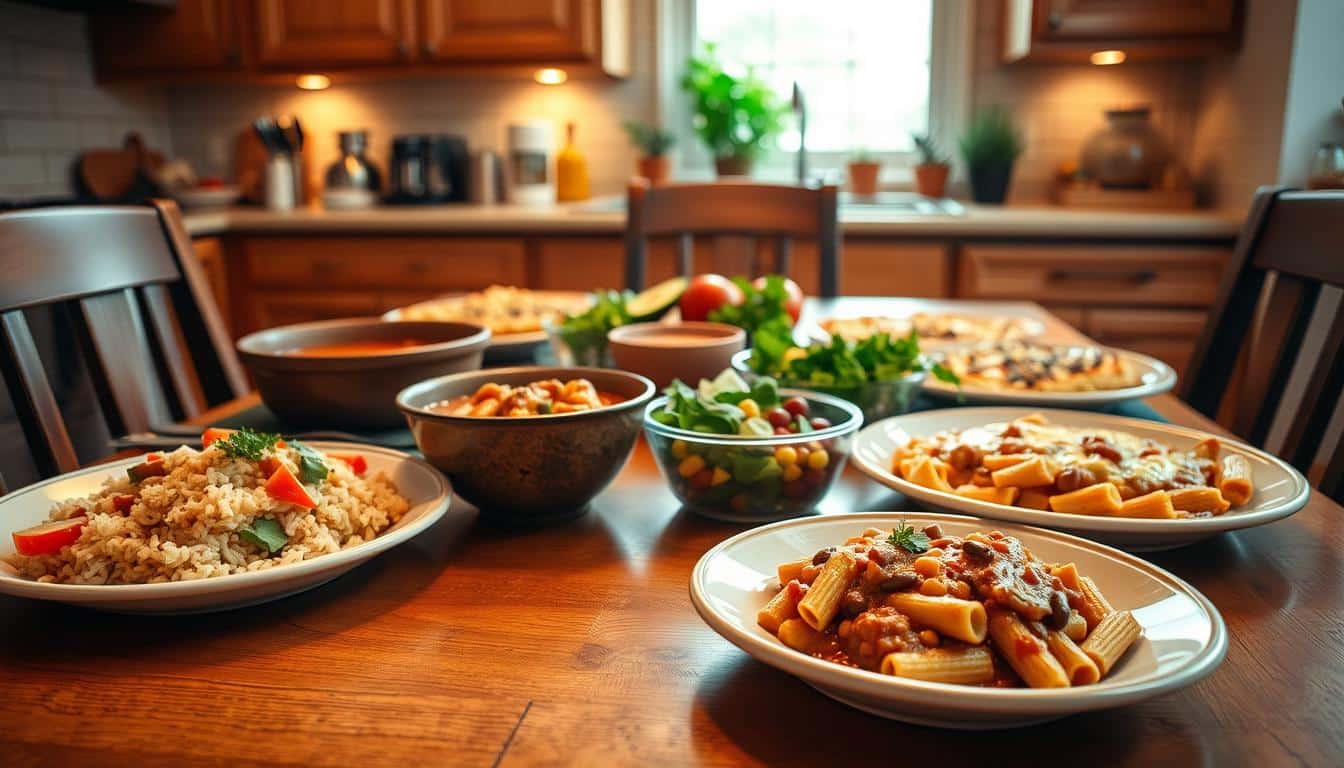
This method is a big help for families on a tight budget. About 90 minutes of prep on Sunday can save 30 to 60 minutes each weeknight. This is according to meal planning experts. Saving time means less chance of eating out.
Here are some popular ways to use leftovers:
- Pot roast turns into shredded beef sandwiches or breakfast hash
- Leftover rice becomes fried rice or creamy rice pudding
- Extra pasta works as a cold pasta salad with veggies
- Mashed potatoes reshape into crispy potato pancakes
- Bread ends transform into French toast or bread pudding
A two-pound batch of chicken can fuel meals for up to four days when paired with pantry staples like beans, canned tomatoes, and whole-wheat pasta.
Keeping these dishes safe is key. Casseroles stay fresh in the fridge for up to three days. Freezer-friendly options last even longer. Chicken should be reheated to 165°F.
These budget-friendly dinner ideas show that you don’t have to eat the same thing every night. A little creativity can turn one cooking session into a week of delicious dinners.
Saving Money on Family Meals by Reducing Food Waste
The USDA says Americans throw away 30 to 40 percent of their food each year. For a family, that’s a lot of waste. Cutting it in half could save about $1,500 a year. Start saving money by using what you already have at home.
“Eat the Fridge First” Nights to Use Perishables
Set aside one or two nights a week for meals made from what’s already in the fridge. Use up wilted greens in a stir-fry. Leftover chicken and tortillas make a tasty meal. A few veggies become a delicious frittata. These clean-out-the-fridge dinners help avoid throwing away good food.
Freezer Strategy for Bread, Cooked Rice, Meat, and Produce
The freezer is key to saving money without extra shopping trips. Families on a budget should freeze these items before they go bad:
- Bread heels and extra slices — great for French toast or breadcrumbs
- Overripe bananas — perfect for smoothies or banana bread
- Cooked rice and grains — ready for fried rice or burrito bowls
- Marked-down meat — portioned into freezer bags for future meals
Turning Scraps Into Stock, Soup, or Next-Day Add-Ins
Don’t throw away onion ends, carrot peels, and celery tops. Put them in a freezer bag. When it’s full, they make a delicious, free vegetable stock. Use this stock for soups, gravies, and grain dishes to add flavor without extra cost.
Every dollar saved from wasted food is a dollar that stays in the grocery budget — no coupons needed.
Low-Cost Family Food Ideas for Kids, Picky Eaters, and Big Appetites
Feeding a family can be a challenge. Kids have different tastes, from plain noodles to cheesy dishes. Teenagers need lots of food. The good news is, you can find affordable meals that please everyone.
Make-Your-Own Meals That Keep Everyone Happy on a Tight Budget
DIY meal stations are a great way to save money. Think taco bars with ground beef, cheese, and salsa. Or baked potato nights with your favorite toppings.
Friday pizza nights are also a hit. Using store-bought dough and simple sauce lets everyone create their own pizza. This way, everyone gets to choose what they like, and there are fewer complaints.
Tasty Ten-Dollar Family Meal Recipes You Can Make Today.
High-Volume, Low-Cost Sides That Fill Plates
Big appetites need big portions. Budget-friendly meals include filling sides that are cheap:
- Roasted potatoes seasoned with garlic and olive oil
- Rice pilaf made with broth and dried herbs
- Homemade skillet cornbread
- Buttered egg noodles
These sides make any meal bigger. A five-pound bag of potatoes costs under $4 and can feed a family for multiple meals.
Kid-Friendly Meal Ideas: Easy Recipes Your Family Will Love.
Inexpensive Snack Options That Don’t Disappear in a Day
Snacks can quickly empty your wallet. Smart snack planning is key. Air-popped popcorn costs about $0.10 per batch. Homemade granola bars, cut carrots with yogurt dip, and peanut butter on crackers are also affordable.
A family that plans its snacks spends less on impulse buys at the checkout line — and wastes less food at home.
Stretch Your Grocery Budget With Fairness and Intentional Choices
A flat daily spending limit seems easy. But every family member has different needs. A growing teenager eats more than a toddler. To feed a family on a tight budget, you need to plan for real life, not just numbers.
Why Flat-Cost “One-Size-Fits-All” Approaches Can Feel Unfair
A $5-per-person rule doesn’t work for everyone. A 14-year-old athlete needs more calories than a kindergartner. Growth spurts, food allergies, and dietary restrictions change costs. It’s better to spend based on who needs what, rather than just splitting everything evenly.
“Budgeting isn’t about spending less on everyone. It’s about spending smarter on each person.”
Using a Value-Based Mindset to Spend More Where It Matters Most
A budget-friendly meal plan lets you make smart splurges. Spend a bit more on quality protein for dinner. Then, balance it with simple oatmeal for breakfast and leftover lunches. This way, you can stretch your grocery budget all week without feeling deprived.
Try ranking meals by importance each week:
- Dinners with the whole family get the largest share of spending
- Breakfasts stay simple and low-cost
- Lunches rely on leftovers or pantry staples
- Snacks use budget-friendly bulk items like popcorn or bananas
Authentic Greek Salad Recipe: Fresh, Flavorful, and Simple.
Planning for Higher-Need Days Without Derailing the Whole Week
Some days just cost more. Game days, birthday meals, or unexpected guests can throw off a $140 weekly target. Adding a small buffer of $5–$10 to each week’s plan helps. This way, you can keep feeding your family on a tight budget for months, not just one good week.
Feed a Family of Four on $20 a Day: Conclusion
Feeding a family of four on $20 a day is not about sacrificing taste or quality. It’s about making smart choices in planning, shopping, and cooking. These small changes can make a big difference. Many families save $200 to $400 each month by following these habits.
For budget meals to work, they need to be a part of everyday life, not just a quick fix. Batch cooking and using leftovers can make meals easy and fun. This way, kids eat well, and less food is wasted.
It’s possible to save money on meals without losing flavor or nutrition. By planning meals, using simple recipes, and shopping for sales, families can stretch their grocery budget. Everyone can enjoy delicious meals together, even on a tight budget.