Fugitive Federal Immigration Officer Captured in Texas
Fugitive Federal Immigration Officer apprehended in Texas, bringing relief to local communities and highlighting ongoing efforts in immigration enforcement.

Federal Immigration Officer Captured in Texas
Authorities said a Federal Immigration Officer wanted in a Minnesota shooting case was captured Friday in Texas. The arrest comes after new charges were filed. These charges are related to a Jan. 14 nonfatal shooting in Minneapolis during the Trump administration’s immigration crackdown.
The suspect, Christian Castro, is an officer with Immigration and Customs Enforcement. Prosecutors say the federal immigration officer became the focus of a fast-moving investigation after the shooting was reported. Then, he left the state as the case advanced.
This development is drawing national attention. It raises fresh questions about oversight when an immigration enforcement officer is accused of violence. It also adds pressure on agencies to explain how a federal immigration agent is tracked, held to account, and brought back to court when serious allegations surface.
Key Notes
- A Federal Immigration Officer linked to a Minneapolis shooting case was arrested in Texas, authorities said.
- Christian Castro, an ICE officer, is the suspect named in the case.
- The federal immigration officer was charged after a Jan. 14 nonfatal shooting in Minneapolis, according to prosecutors.
- The arrest comes amid broader scrutiny of immigration enforcement operations in the United States.
- The case is renewing debate about accountability for a federal immigration agent accused of wrongdoing.
- Investigators say the immigration enforcement officer became a fugitive after charges were filed.
Arrest in Texas After Minnesota Shooting Charges
Eleven days after Minneapolis prosecutors filed charges, Christian Castro was arrested in Texas. This case is notable because Castro worked as an Immigration and Customs Enforcement officer. This role often involves fast-paced and critical situations.
Christian Castro, an Immigration and Customs Enforcement officer, was taken into custody 11 days after charges were filed
Prosecutors accuse Castro of assault and falsely reporting a crime. Hennepin County Attorney Mary Moriarty called the arrest a critical step forward. She said it’s a big move as the case goes through the courts.
Hennepin County prosecutors say the Minnesota Bureau of Criminal Apprehension located Castro, 52, in Texas
The Minnesota Bureau of Criminal Apprehension found Castro, 52, in Texas. This search and arrest happened across state lines. It shows how quickly a case can grow when a suspect moves.
Texas Rangers and the Department of Homeland Security Inspector General’s Office assisted with the arrest
Minnesota authorities got help from the Texas Rangers and the Department of Homeland Security Inspector General’s Office. This cooperation involved state and federal partners. It included a homeland security officer during the operation.
The DHS Inspector General’s Office is different from ICE. It acts as a watchdog for DHS agencies, including ICE. This distinction was important as officials explained the roles of each group. They discussed oversight and on-the-ground coordination with an immigration law enforcement team.
Officials sought comment from ICE, the DHS Inspector General’s Office, and the Texas Rangers; court records did not list
Messages were sent to ICE, the DHS Inspector General’s Office, and the Texas Rangers. Online court records didn’t list an attorney for Castro. It’s unclear whether he has one as the immigration enforcement agent’s case moves forward.
Federal Immigration Officer at the Center of Jan. 14 Minneapolis Shooting
The Jan. 14 case in Minneapolis involves Christian Castro and an apartment duplex. Prosecutors say a quick, tense sequence unfolded. Now, a federal immigration officer is under serious scrutiny.
Prosecutors allege Castro fired through a home’s front door, wounding Julio Cesar Sosa-Celis in the thigh
Prosecutors claim Castro shot through the front door. The bullet hit Julio Cesar Sosa-Celis in the thigh. This injury was not fatal, but it started a criminal case.
The case focuses on the shot’s angle, the doorway, and the claimed threat. It also looks at what was said right after the shooting, including statements from a federal immigration agent.
Incident followed a chase involving another man, Alfredo Alejandro Aljorna, to a Minneapolis apartment duplex
Prosecutors say the incident followed a chase with Alfredo Alejandro Aljorna. He ran to the Minneapolis apartment duplex where he and Sosa-Celis lived. An immigration enforcement officer and another officer were close behind.
These details are important. They help investigators understand the risk in that tight entryway. They also help figure out what actions were reasonable before the gunshot.
Hennepin County Attorney Mary Moriarty said Sosa-Celis and Aljorna were legally in the U.S.
Hennepin County Attorney Mary Moriarty said Sosa-Celis and Aljorna were legally in the United States. This point has been made clear to avoid confusion. It also counters assumptions about why they were in the country.
Charges include assault and falsely reporting a crime related to the nonfatal shooting
Prosecutors charged Castro with assault and falsely reporting a crime related to the Jan. 14 shooting. The charges reflect the injury and the subsequent reporting. Investigators are examining whether the written narrative aligns with the physical evidence and the recorded timelines.
ICE Director Todd Lyons has also made a broader allegation. He said Castro was one of two agents who lied about the incident. This adds another layer to the case as it moves forward, and a federal immigration officer remains at the center.
Operation Metro Surge and Scrutiny of Immigration Enforcement Agents
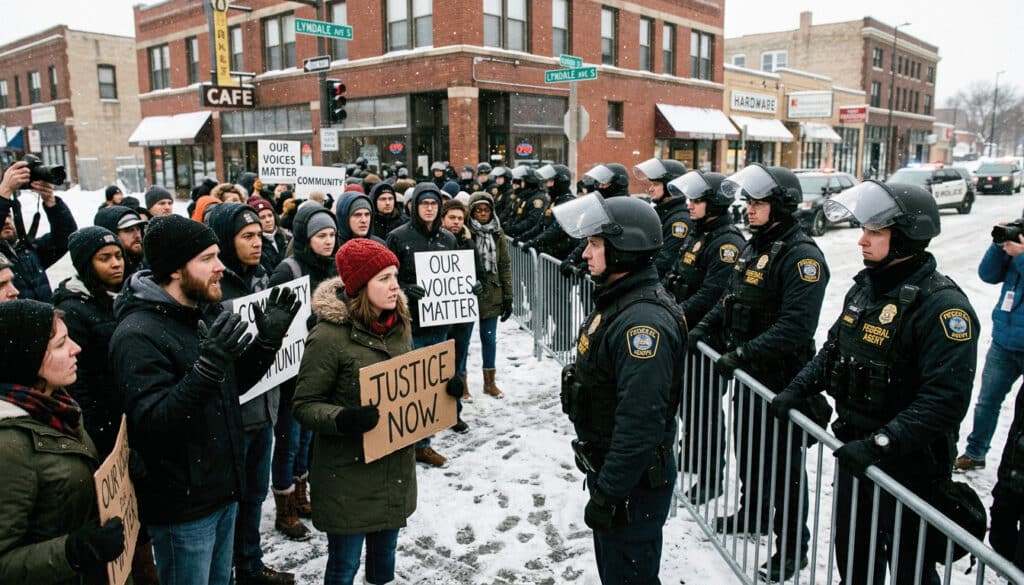
Operation Metro Surge changed Minneapolis–St. Paul’s daily life. Federal teams swept through neighborhoods, transit hubs, and job sites. This crackdown aimed to speed up deportations, but it also made immigration agents more visible.
Records show that Operation Metro Surge began in late 2025 and spread across Minnesota by early 2026. Thousands of people, including homeland security officers and federal immigration units, took part.
Thousands of personnel, and more eyes on every encounter
With so many agents around, simple stops could quickly become tense. Community groups reported more street sweeps. Federal leaders said the focus was on serious crimes and immigration issues.
The surge also led to protests near federal buildings and detention sites. Reports suggested troops might be ready to deploy during the unrest. This added to the tension in Minnesota, as seen in coverage of readiness planning.
How the early claims changed after court review
Early filings accused two men of attacking an immigration officer with a broom handle and a snow shovel. A judge later threw out those charges. This shifted focus to the truth of the reports.
ICE and the Justice Department then looked into whether officers lied. After local charges were filed, ICE said they were reviewing the officers’ statements. They warned of possible discipline, calling the local case a “political stunt.”
What Minneapolis video appears to show
Minneapolis security cameras captured the events leading up to the shooting. The video doesn’t clearly show the exact moment of the gunfire. It does show a quick sequence near the front steps.
- A person holds a snow shovel near the street, then backs toward the house and tosses it into the yard.
- A person being chased runs up from the street, falls on the sidewalk, gets up, and continues toward the house.
- A brief, roughly 10-second scuffle appears to involve three people near the front steps.
- A vehicle with flashing lights arrives, and another person walks up as the scene shifts.
Castro’s case, among others, is tied to the crackdown
Prosecutors say Christian Castro is the second immigration agent charged over the crackdown. Another case involves agent Gregory Donnell Morgan Jr., accused of pointing a gun at people in a car. He turned himself in last week, and his lawyer disputes the allegations.
As scrutiny grew, the situation remained tense. Deaths during protests raised questions about the use. County leaders sought evidence in various investigations. Even federal agents nearby faced scrutiny, as Minnesota officials and the Trump administration debated who could investigate their actions.
Federal Immigration Officer Captured: Conclusion
Christian Castro’s arrest in Texas is a big step after Minnesota prosecutors charged him. He is accused of assault and lying about a crime. This happened after Julio Cesar Sosa-Celis was shot but survived on January 14 in Minneapolis.
The case highlights the role of an immigration officer in street encounters. Questions about Castro’s statements and past federal accusations are being looked into. This raises questions about accountability for immigration officers.
The arrest comes after a big federal effort in Minneapolis–St. Paul. Now, there’s more focus on how the crackdown was handled. This includes looking at what was said and done after the shooting.
Even with Castro’s arrest, many questions remain. There was no lawyer for him at the time, and officials are waiting for answers from ICE and others. The case is closely watched by the legal system and the public.