National Guard Leaves LA and Chicago in Wake of Major Supreme Court Ruling
National Guard units depart Los Angeles and Chicago following a landmark Supreme Court decision during the post-Trump era.
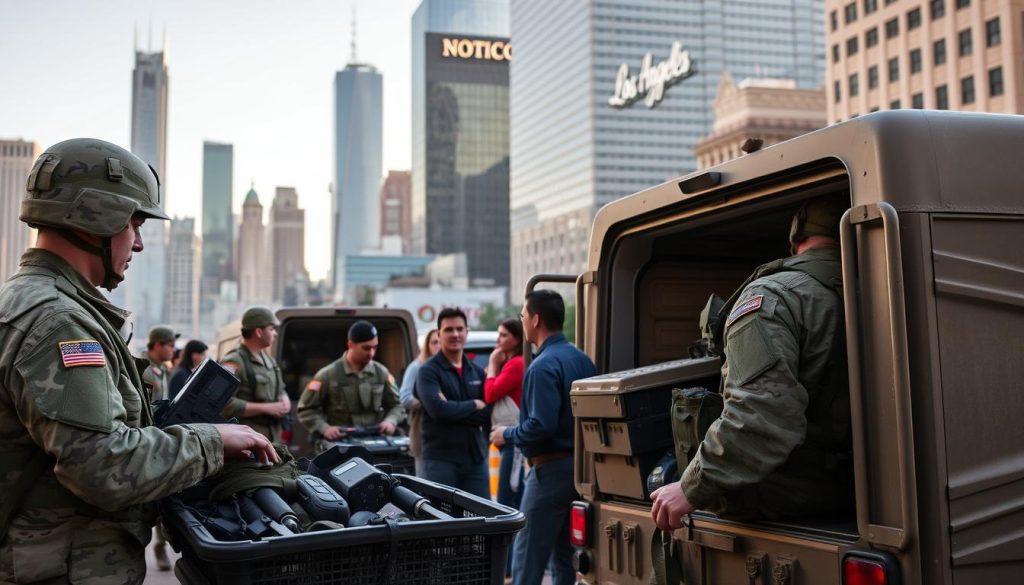
The Trump administration quietly pulled National Guard troops from Los Angeles and Chicago. This happened after courts blocked key parts of its domestic deployment plan. The troops left last month, but there was no public announcement from the White House or the Department of Defense.
Public reports, led by The Washington Post, indicate a shift driven by judges and the Supreme Court. The Supreme Court upheld a Chicago restraining order in Trump v. Illinois. U.S. Northern Command said forces in Chicago, Portland, and Los Angeles “completed demobilizing activities.”
More than 5,000 troops were sent home from California, about 500 from Chicago, and 200 from Oregon by January 21. The Pentagon’s numbers show the scale. The Congressional Budget Office estimated the cost at nearly half a billion dollars.
This raises significant questions about a president’s authority to deploy troops. It also questions what military service on U.S. soil means. A California ruling by Senior District Judge Charles R. Breyer, based on the Posse Comitatus Act, added to the pressure, as reported in this report.
Even with the troops gone, the legal fight is far from over. The debate over emergency powers and domestic deployments continues. This is outlined in coverage of the Insurrection Act questions.
National Guard Key Takeaways
- Federalized National Guard deployments in Los Angeles and Chicago ended quietly, with little public explanation.
- U.S. Northern Command confirmed the forces “completed demobilizing activities” in multiple cities.
- The Pentagon reported more than 5,000 troops returned from California, about 500 from Chicago, and about 200 from Oregon by January 21.
- The Congressional Budget Office estimated the deployments cost nearly half a billion dollars.
- Court rulings narrowed the government’s claimed authority and intensified scrutiny of domestic missions for reserve forces.
- The broader debate over military service on U.S. streets—especially under emergency statutes—remains unsettled.
What changed after the Supreme Court ruling
The Supreme Court’s decision changed the game for domestic deployments. What seemed like a broad push for federal control over the National Guard began to narrow. This change happened city by city, case by case.
For many service members, the ruling raised important questions. These questions included mission limits, command authority, and how quickly orders can change when judges get involved.
SCOTUS blocks the administration’s plan to send troops into Chicago
In December, the Supreme Court made a 6–3 ruling. This ruling blocked the administration’s plan to send troops into and around Chicago. The order was initially viewed as temporary, but it changed the landscape for the National Guard.
The majority said presidents can act in a crisis, but only after meeting a high bar. Reporting on the implications of the Supreme Court showed the impact of even a preliminary decision.
Federal judges rebuke the deployments as an attempt to create a “national police force.”
Lower courts were blunt about what they thought the deployments were trying to do. One judge called it a bid for a national police force with the president as its chief. This raised doubts about the purpose and scope.
This skepticism mattered because it aligned with core guardrails in federal law. It also raised questions about using a part-time military force like a street-level police force.
Legal challenges from Democratic-led cities and civil rights groups shape the pullback
Lawsuits from Democratic-led states and cities, joined by civil rights groups, pressed a consistent claim. They said the deployments appeared to be political theater that pulled troops into domestic disputes. This kept the spotlight on the National Guard and the government’s need to show exceptional circumstances.
In parallel, judges in other disputes were reshaping plans on the ground. An Oregon case blocked a redeployment and raised broader questions about cross-state use of forces. Coverage of the National Guard deployment to Oregon demonstrated how injunctions can alter timelines and tactics before appeals are resolved.
How Title 10 federalization differs from governor-led missions
The contested deployments in Chicago, Portland, and Los Angeles leaned on Title 10. This can place a state’s national guard under federal command, even over a governor’s objections. Even then, the mission is constrained, and troops generally cannot perform law enforcement tasks such as arrests or searches.
This line can be hard for the public to see because uniforms are worn near protests or transit hubs. A separate debate over troop patrols and arrest claims shows how quickly public messaging can collide with legal limits.
By contrast, other troop support in places like Memphis and New Orleans operated under governor-led arrangements. In this system, states control mission design and support rules. In this split system, the army reserve often operates in a separate lane, while the part-time military footprint affects staffing, training cycles, and readiness.
Legal analysts also focused on the statutory triggers for federalization. They noted that “regular forces” and “unable” can act as brakes on future moves. A detailed breakdown of four takeaways from the national guard highlighted how emergency rulings can shape what presidents try next, even without settling every argument.
National Guard deployments end in Los Angeles, Chicago, and Portland
The recent end of National Guard deployments in Los Angeles, Chicago, and Portland was swift. For many, it felt like just paperwork and bus schedules. It raised questions about the roles of the National Guard and state defense forces in crisis situations.
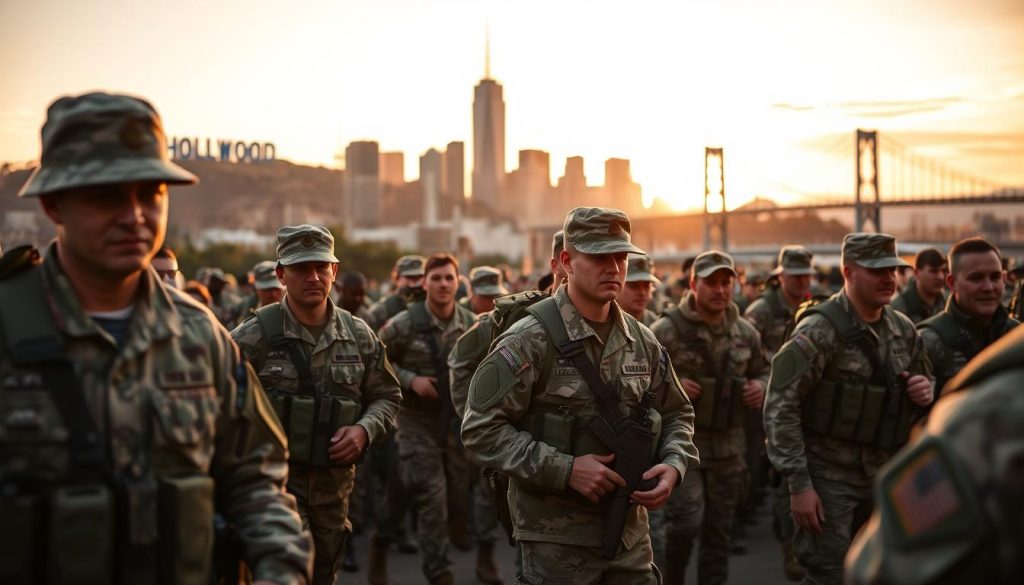
Quiet demobilization with no White House or Pentagon public acknowledgment
The demobilization happened quietly, with no statement from the White House or Pentagon. This was surprising, given that the deployments were seen as a strong response to crime and immigration. The federal government kept details to a minimum as units returned home, as reported in accounts of the quiet withdrawal.
Local agencies then had to explain the changes. The National Guard’s role decreased, while other federal teams assumed additional responsibilities. For many, the shift was sudden, with ongoing discussions about reserve forces and state defense forces.
U.S. Northern Command confirms troops “completed demobilizing activities.”
U.S. Northern Command confirmed troops in Chicago, Portland, and Los Angeles had “completed demobilizing activities.” This clear statement marked the end of their mission. It also matched the timeline reported by the Pentagon.
This statement was important. It showed the military’s role in supporting tasks, but not in enforcing laws. This limited their actions, affecting how reserve forces were used and when state defense forces were considered.
Numbers sent home by January 21: more than 5,000 in California, about 500 in Chicago, about 200 in Oregon
By January 21, the Pentagon reported all troops had been sent home. This included over 5,000 from California, about 500 from Chicago, and about 200 from Oregon. These numbers reflected the size of the National Guard presence, even after the mission scaled back.
In Los Angeles, thousands of Guard members were deployed alongside Marines. This reflected the quick increase in troops during a surge. This was detailed in the Los Angeles Summary.
Why troops were sent: violent crime messaging and immigration enforcement support—without law enforcement authority
The deployments aimed to address violent crime and support immigration enforcement. However, troops lacked law-enforcement powers. They could not arrest or conduct searches. Instead, they focused on visible presence and support roles within legal bounds.
This distinction was key in discussions about public safety. It highlighted the use of different resources in crises. National guard units provided structured support, while reserve forces offered specialized skills. State defense forces were used for state-specific tasks under local control.
National GuardConclusion
The administration’s plan to use the National Guard in Los Angeles, Chicago, and Portland faced many court challenges. The Supreme Court even stopped a troop move into Chicago. By January 21, all demobilization steps were completed, as confirmed by U.S. Northern Command.
This move ended a tense time for many families connected to the military. It made clear that the National Guard’s role is not just about security but also about maintaining control on the streets.
But this pullback also left a big question unanswered. There was no statement from the White House or the Pentagon. They had promised the deployments would help with crime and immigration. Legal experts have always said that using the National Guard is not without limits.
They noted that the Brennan Center’s analysis of Guard call-up limits clearly shows this.
Although the Title 10 orders ended, domestic missions did not stop entirely. Washington, D.C., is keeping its troops for longer. Debates over executive power are ongoing and affect many policy areas.
Staffing cuts and court battles have raised the same question about unilateral action. This is seen in reports on mass federal job cuts.
For cities and civil rights groups, the outcome showed that courts can stop troops from acting like regular police. It was a reminder for the army reserve and other part-time military groups. Domestic activations mean time away from civilian work and training.
Even as debates over speech and security grow, the main lesson remains. Using the National Guard on U.S. streets is tempting but legally questionable.