Trump’s Poll Numbers Slip Ahead of Midterm Elections
As midterms approach, President trump polls are showing a notable drop, raising concerns and questions about his political future and voter support.

Trump’s Poll Numbers: With midterms in 2026 on the horizon, President Trump’s polls are showing a new strain. The White House is trying to keep the focus on momentum.
In several national polls, U.S. voters are worried about the economy and inflation. They also worry about daily costs and the Iran war.
An NBC News poll conducted March 30–April 13 caught everyone’s attention. It found 63% disapproved of Trump’s performance. Half of them strongly disapproved, making the Trump approval rating a big topic again.
The survey also showed softer ratings on Iran and inflation/cost of living. This highlights how national polls can be influenced by pocketbook stress and perceptions of risk overseas.
President Donald Trump has challenged these findings. He uses Trump Truth Social posts and shares X polls he believes show stronger support.
By highlighting these online results, he aims to regain control of the narrative. He wants to reassure allies that U.S. voters are not slipping away as the next campaign stretch builds.
For a wider look at the election backdrop, readers can follow this election-season guide. The midterms 2026 map is starting to come into view.
The White House response has been direct. Spokesman Davis Ingle said the “ultimate poll” was November 5, 2024. On that day, nearly 80 million Americans elected Trump. He argued the president is working to create jobs, cool inflation, and increase housing affordability.
Trump’s Poll Numbers Key Takeaways
- President Trump’s national poll numbers are slipping as the 2026 midterms get closer.
- U.S. voters keep flagging concerns about the economy, inflation, and the cost of living.
- The Iran war is emerging as a pressure point in how voters judge leadership.
- An NBC News poll (March 30–April 13) reported 63% disapproval, with 50% strongly disapproving, shaping the Trump approval rating story.
- Trump Truth Social and X polls are central to Trump’s pushback against unfavorable headlines.
- The White House says jobs, lower inflation, and housing affordability are the administration’s core answers to public anxiety.
President trump polls shift as midterms near amid economic and Iran war concerns
As the campaign calendar tightens, fresh snapshots of public mood show a presidency under stress. The mix is familiar: pocketbook pressure, security fears, and sharper partisanship. In that swirl, Trump polls the economy and foreign policy simultaneously, and voters often connect the two.
What recent national polling is signaling
The NBC News poll, conducted from March 30 to April 13, reported 63% disapproval of his performance, including 50% who strongly disapprove. On Iran war approval, the same poll put his handling at 33% approve, with intensity running against him—54% strongly disapprove.
In daily living costs, the cost-of-living index stood at 32%, an 8-point drop. This decline shows up in how people talk about groceries, rent, and credit-card balances. More context on the broader slide is provided by recent approval tracking, which frames the latest movement as driven by the Iran conflict and economic frustration.
Other surveys point in the same direction on the war question. The Quinnipiac Iran poll found 40% of registered voters support U.S. military action against Iran, while 53% oppose it. This suggests broader caution than the loudest voices in politics imply.
Signs of softness inside the Republican base
Even when partisans lean his way, the tone can change fast when costs rise, or a conflict drags on. That’s where Republican support erosion becomes a practical concern, not an abstract warning. A few points of slippage among reliable voters can matter as much as a big swing among independents.
In voter conversations, the pressure points often sound concrete. They revolve around prices, job security, and whether Washington is focused on the right fights.
- Higher monthly bills and less room to save
- Unease about escalation and U.S. involvement overseas
- Frustration with partisan gridlock that delays fixes
Those themes also show up around economic messaging on the trail, including in coverage of his pitch to voters. The broader debate over growth, rates, and wages in a report on the Trump U.S. economy.
Generic ballot context and broader political stakes
National mood can spill into down-ballot choices, which is why strategists watch the generic congressional ballot so closely. When that indicator shifts, it can signal whether frustration remains personal to a candidate or spreads to the party brand.
The midterm election stakes are shaped by turnout and narrow margins, with economic anxiety hitting hard in suburban districts. If voters keep linking everyday costs to leadership, the debate over inflation, the Iran conflict, and trust in competence is likely to stay at the center of the 2026 fight.
Trump boosts X and Truth Social poll claims to counter dropping approval
Trump has used social media to shape his story. He shares polls on Truth Social and X, even when the sources are thin. This online buzz can be compared to deeper reporting on the election countdown.
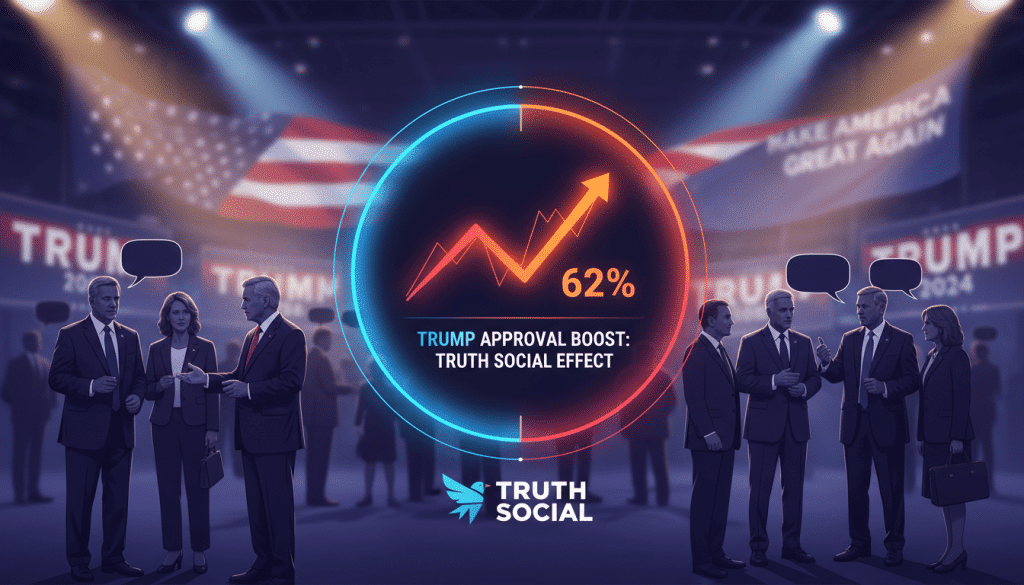
The “America First Now” screengrab and why it drew scrutiny
Trump, 79, shared a Truth Social post from America First Now X and linked to it, quickly spreading it.
The post looked like homemade polling, using old data. It referenced a Wall Street Journal poll from January. Critics noted a VPN warning, suggesting the account might be hiding its location.
The post was simple, asking people to show their loyalty:
“Simple poll. Please be honest! As of today, how much do you trust and support this man? A. 100% B. 50% C. 25% D. 0%.”
Amplifying a friendly pollster and partisan media framing
Supporters often share polls from familiar sources, such as John McLaughlin. This creates a loop in which favorable numbers are repeated and shared widely.
Media framing is key. Headlines and clips can make it seem like polls are cherry-picked. This can overshadow important details like sampling and timing.
How other polling contrasts with the boosted narrative
The Wall Street Journal poll in January showed a more complex picture. It found approval underwater and Democrats leading on the generic ballot. Republicans had narrower edges on some issues.
Foreign policy opinions also vary. Different surveys show different moods, depending on wording and timing. This makes it hard to find a single story. on wording and timing. This makes it hard to find a single story.
Analysts look for a few key things:
- Whether the results are current or recycled
- Whether the sample and method are clear
- Whether toplines match the full context
More insights into political messaging can be found in the people’s insights. Here, online dynamics are viewed alongside broader attitudes.
Trump’s Poll Numbers Conclusion
As the campaign season gets closer, President Trump’s poll numbers dropping is a common theme in surveys. The midterm outlook depends on whether voters decide on a clear view of his performance. The Trump approval trend shows strain, particularly in areas where everyday costs are high, and voters prioritize price over party loyalty.
There are also doubts about the Iran war, even though President Trump seems confident. This mix of public confidence and mixed polls makes the race feel like a test, not a victory lap. More information on this decline is found in Trump approval polls.
President Trump’s response includes a Truth Social strategy that focuses on positive imagery. This includes a screenshot linked to the “America First Now” X account. Critics say the post uses VPN and proxy warnings and picks selective Wall Street Journal data. It also highlights John McLaughlin polling on Newsmax, sparking more X poll controversy.
It’s unclear if this messaging will calm GOP nerves as the midterms approach. If the economy stays tight and Iran war polling stays uncertain, swing voters might keep moving away. For now, the louder the claims, the more the drop in President Trump’s polls will influence the story.