White House Blocks Strait of Hormuz in Dramatic Move
In a surprising move, the White House has enacted measures to block the Strait of Hormuz, raising concerns over global oil supply and maritime security.

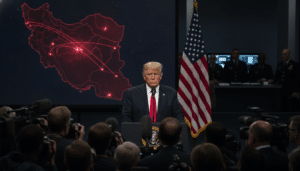
President Donald Trump announced on Sunday that the U.S. will block the Strait of Hormuz. This move comes after nearly 20 hours of talks in Islamabad failed. The Strait of Hormuz is a key waterway in the Persian Gulf, and traders are now on high alert for disruptions in the global oil supply. Soaring Oil Prices in the Strait of Hormuz
Trump stated that Iran’s refusal to give up its nuclear program was the main reason for the breakdown. In Washington, officials see this as a security measure to protect the region. The area is already tense, with many close calls at sea. Iran Deadline: Open Hormuz or Peace in 48 Hours.
The Strait of Hormuz is a narrow waterway off Iran’s coast. It’s a critical route for the world’s energy, carrying about 20% of global oil and liquefied natural gas every day. This channel connects oil producers in the Persian Gulf to buyers in Europe and Asia. Trump Calls on NATO to Secure Strait of Hormuz.
As a result, energy prices are rising, and there’s growing concern about fuel supplies. European airports have warned of a possible “systemic jet fuel shortage” in just three weeks if the Strait of Hormuz remains closed. This situation could test the global oil supply in real-time.
Strait of Hormuz Key Takeaways
- Trump said the U.S. plans a blockade of the Strait of Hormuz after Islamabad talks collapsed.
- He blamed the breakdown on Iran’s refusal to abandon its nuclear program.
- The Strait of Hormuz is a major maritime chokepoint tied to the global oil supply.
- The Persian Gulf could see higher military risk and tighter security at sea.
- Energy prices have moved higher as markets price in disruption.
- European airports warned that a jet fuel shortage could emerge within three weeks if the route stays shut.
White House orders U.S. Navy blockade after Islamabad peace talks collapse
After talks in Islamabad failed, the White House quickly moved from talking to taking action. The collapse raised big questions about who controls a key shipping lane. It also made everyone wonder what’s next for the region’s safety.
Trump’s announcement and timing after nearly 20 hours of negotiations
Donald Trump said the talks in Islamabad went for almost 20 hours and covered most issues. He said they failed over Iran’s nuclear program, after a final disagreement that neither side could solve.
A source told Axios that another point of contention was control of the Strait of Hormuz. This strategic waterway is watched closely by defense experts and energy markets. The timing was also important, as Trump made the announcement right after he said he had talked to Vice President JD Vance, special envoy Steve Witkoff, and Jared Kushner.
Key statements from Truth Social and the administration’s stated goal
In two Truth Social posts, Trump said, “Effective immediately, the United States Navy — the finest in the world — will begin the process of blockading any and all ships trying to enter, or leave, the Strait of Hormuz.” He also wrote, “IRAN IS UNWILLING TO GIVE UP ITS NUCLEAR AMBITIONS!” and “IRAN WILL NEVER HAVE A NUCLEAR WEAPON!”
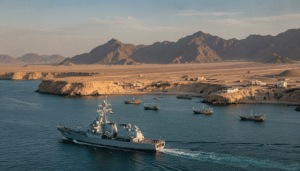
He threatened Iran, saying any Iranian who fires at U.S. forces or “peaceful vessels” will be BLOWN TO HELL.” He also said the U.S. military would start destroying mines Iran had laid in the strait. He told the Navy to “seek and interdict every vessel in International Waters that has paid a toll to Iran,” a move that could change an international trade route overnight.
In a Sunday morning Fox News interview, Trump said, “I could take out Iran in one day,” and claimed the U.S. could strike Iran’s energy and electric generating plants. He added, “The only thing left is their water,” calling it “very devastating to hit.”
For more context on escalation scenarios, readers have been tracking how a war with Iran would play as the Navy’s posture changes around the strait.
- Stated objective: force a verifiable commitment that Iran will not pursue a nuclear weapon.
- Stated method: maritime pressure tied to inspections, interdictions, and mine-clearing claims.
Iran’s response and competing narratives around the nuclear program
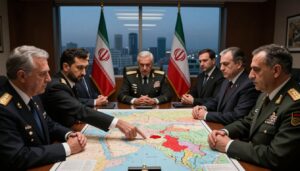
Iran’s chief negotiator, Parliament Speaker Mohammad Bagher Qalibaf, wrote on X that Iran entered talks in “good faith,” but the U.S. “failed to gain the trust of the Iranian delegation.” He added, “America has understood our logic and principles,” and said it is time for the U.S. to decide whether it can earn Iran’s trust.
Tehran has long said its nuclear program is civilian. Iran signed the 2015 nuclear deal that limited enrichment in exchange for sanctions relief, but the U.S. withdrew during Trump’s first term, a history that continues to affect any new proposal tied to the strategic waterway.
Political reaction in the U.S. and immediate skepticism from Democrats
After the talks, Vance said the administration’s benchmark was clear: “We need to see an affirmative commitment that they will not seek a nuclear weapon, and they will not seek the tools that would enable them to quickly achieve a nuclear weapon.” The White House described the blockade order as leverage designed to protect navigation and deter Iran.
Democrats reacted with immediate doubt about whether maritime pressure would work on an international trade route. Sen. Mark Warner (D-Va.), the top Democrat on the Senate Intelligence Committee, questioned the logic on CNN’s State of the Union: “I don’t understand how blockading the strait is somehow going to push the Iranians into opening it.” He also said U.S. intelligence shows Iran’s current leaders are “even more radical” than their predecessors killed during the war.
Even as Washington debated the politics, the practical stakes stayed centered on the shipping lane: enforcement rules, insurance risk, and how long any Navy operation could hold without widening the conflict.
The Strait of Hormuz is at the center of a maritime chokepoint threatening global oil supply
The Strait of Hormuz is located off Iran’s southern coast. Its impact is felt worldwide. It’s a narrow passage where tankers and LNG carriers pass through. When conflict happens nearby, the global oil supply feels it quickly.
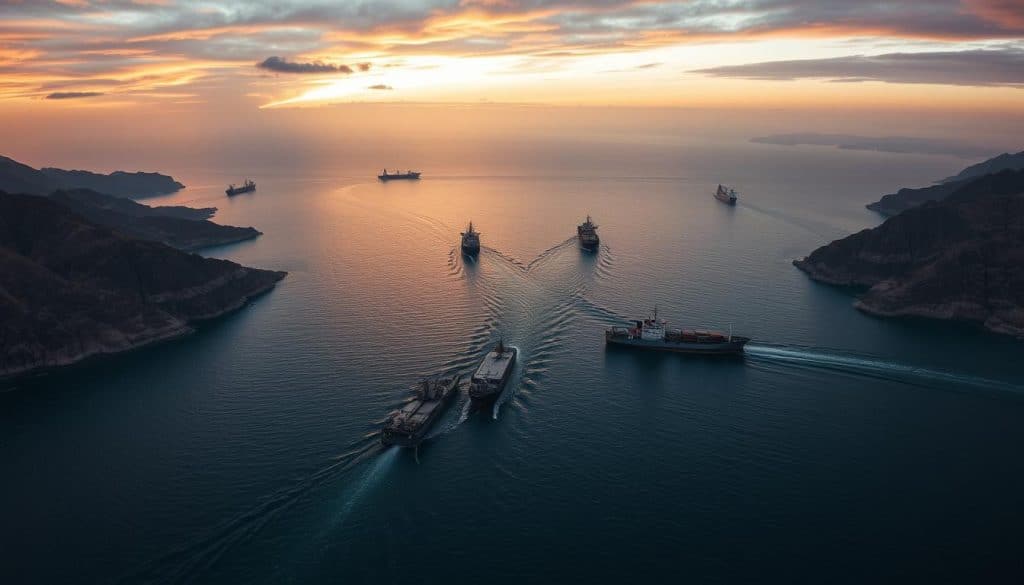
Trade groups and analysts highlight its geopolitical significance. A lot of energy moves through this one lane. Every day, about one-fifth of the world’s oil and liquefied natural gas goes through here. Other goods, such as agricultural and industrial products, also pass through.
A recent UNCTAD briefing on the Strait of Hormuz shows how disruptions can spread. They affect shipping, ports, and supply chains.
Why this strategic waterway matters to international trade and energy markets
The Strait of Hormuz is more than just a map detail. It’s a key factor in energy prices. A delay can lead to tighter inventories and higher prices.
This can affect diesel, petrochemicals, and fertilizers. These products impact our daily lives.
- High traffic density raises the risk of congestion when routes change.
- Security concerns can lift insurance premiums and bunker fuel costs.
- Longer voyages can strain vessel availability and freight rates.
Energy price surge and fuel-shortage warnings across Europe and Asia
Energy markets quickly react to uncertainty in the global oil supply. Brent crude has gone above $90 a barrel. Shipping costs have also increased due to risk pricing.
This can lead to higher costs for import-heavy economies. These costs can show up in household bills soon.
European airports have warned of a systemic jet fuel shortage in three weeks if the Strait is closed. This alert reflects a broader concern. Refinery runs, storage draws, and delivery schedules can all be affected when tankers hesitate to pass through the Strait of Hormuz.
What a U.S. blockade could mean for shipping traffic and enforcement
A threat of blockade can change behavior before any action. Carriers might pause sailings, reroute, or wait for naval escorts. This can reduce available tonnage.
Over the weekend, ship traffic slightly increased. 12 ships crossed on Saturday—the highest single-day total after a ceasefire was announced. This was reported by ship-tracking firm Kpler, as first reported by The New York Times. But the increase may not last.
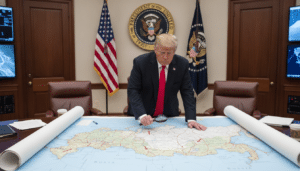
President Donald Trump has mentioned enforcement options. This could include stopping vessels from entering or leaving the Strait of Hormuz. He also talked about destroying mines that Iran allegedly laid in the channel.
Geopolitical significance and Middle East tension around control of the trade route
The geopolitics go beyond the nuclear standoff. Control of the Strait of Hormuz was a point of contention during talks. It shows its geopolitical significance as both a leverage point and a flashpoint.
When control is contested, tensions in the Middle East can rise quickly. This is why officials and markets watch this corridor closely. The same chokepoint that keeps energy flowing can also disrupt shipping lanes and commodity prices.
Strait of Hormuz Conclusion
President Donald Trump’s Sunday announcement made the Strait of Hormuz a key part of a fast-moving crisis. The White House said the U.S. Navy will start blocking ships in the narrow passage. This is because talks with Islamabad failed over Iran’s nuclear program.
The Strait of Hormuz is critical because it carries about one-fifth of the world’s daily oil and LNG. Any disruption here can raise prices and tighten supplies. Governments and airlines in Europe and Asia are worried about fuel risks, fearing jet fuel could run out soon.
The U.S. and Iran are also in a big dispute. The U.S. wants Iran to promise not to make nuclear weapons. But Iranian negotiators say the U.S. has not built trust and that their program is for peaceful use. Until this issue is solved, the Strait of Hormuz and global energy markets will stay on high alert.