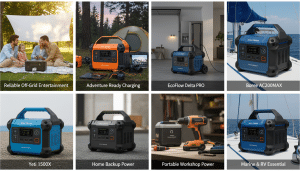
Power Outages Are Rising in the U.S. – Here’s How to Prepare
Power outages are increasing across the U.S. Learn essential preparation tips to keep your family safe and comfortable during blackouts.

We may earn a commission when you purchase through links on this page, at no additional cost to you.
Power Outages: American homes face a growing threat. Electrical disruption events are now common and serious. The grid’s reliability has dropped, backed by federal data.
In 2020, U.S. homes experienced an average of 2 power outages per year, lasting over 8 hours. The situation is getting worse. A July 2025 report warns of a big increase in blackout hours by 2030. Some could face over 800 hours without power. See our article on the Best Portable Power Stations for more info.
In August 2025, severe storms and grid stress caused outages from North Carolina to Missouri to Georgia. Thousands lost power. These events show that outages can happen anywhere, anytime.
But households can fight back. Modern portable power stations are a key solution for emergency preparedness. They are safer, quieter, and more versatile than traditional gas generators. This guide shows the top portable power stations to help families stay safe when the power goes out. 👉 Check the latest price on Amazon
Power Outages Key Takeaways
- Americans experienced an average of two yearly outages totaling over 8 hours in 2020, with federal agencies warning of dramatic increases ahead.
- The Department of Energy predicts that blackout hours could surge 100-fold by 2030, potentially reaching 800 hours annually for some households.
- August 2025 saw widespread disruptions across North Carolina, Missouri, and Georgia, highlighting the national scope of grid reliability issues.
- Portable power stations have emerged as safer, quieter alternatives to traditional gas generators for home emergency backup.
- Proactive preparation with reliable backup solutions is now essential for American families.
Understanding the Causes of Power Outages
Many factors are pushing America’s power system to its limits, making outages common. The grid wasn’t designed for today’s extreme weather, aging equipment, and high electricity demand. Knowing these causes shows why backup power is key.
When people check grid outage updates, they see the effects of these factors. Each one affects the others, making communities more vulnerable.
Natural Disasters and Weather Events
Weather is the main cause of power failures, responsible for 83% of outages. Hurricanes, storms, ice, heat, and wildfires stress the grid too much.
Research shows power outages have grown by 20% each year. These blackouts last longer, occur more often, and affect more people.
Coastal areas, the Great Lakes, and Gulf communities face the most weather risks. They get hit by strong winds, ice, and storms.
August 2025 saw examples of this:
- Slow storms in Charlotte damaged power lines, cutting off thousands of Duke Energy customers.
- A transformer sparked in Hillsborough, starting fires and cutting power to over 2,700.
- Heat waves pushed the grid to its limits in many states.
- Wildfires forced shutdowns in high-risk areas.
Weather patterns have changed a lot in the past 10 years. A 2025 study found outages happen more often during severe weather than before. The grid hasn’t kept up with climate change.
Infrastructure Issues
America’s electrical system is aging and struggling. Much of it was built decades ago, for a different time and weather.
Equipment can fail on clear days, catching people off guard. Transformers spark, poles deteriorate, and circuits overload. These quiet failures add up over time.
The weather and infrastructure create a dangerous cycle. Storms weaken the grid, making it more vulnerable to the next problem.
Consider these infrastructure weaknesses:
- Transformers are older than they should be.
- Underground cables are damaged by moisture and age.
- Insects and weather weaken wooden poles.
- Old switching equipment can’t handle problems fast.
- There’s not enough backup in key areas.
Animals are the second-largest cause of blackouts, after weather. Squirrels cause about 11% of outages. Trees, car accidents, and equipment failures also add to the problems.
Increased Energy Demand
Modern life demands more electricity than ever. Electricity use hit a record high in 2024 and continues to rise. This growth comes from many sources.
The rise of artificial intelligence has led to big data centers that use a lot of power. New factories and electric cars also add to the load. Homes are switching to electric heating and cooking, too.
Each change seems small, but together they change how America uses electricity a lot. The problem is, while demand goes up, reliable power plants are closing faster than they’re being replaced. This creates a big imbalance.
The combination of rising demand, fewer power plants, aging infrastructure, and more extreme weather is a perfect storm:
- Rising demand from new tech and electric cars.
- Declining supply as old plants close.
- Aging infrastructure that can’t send power well.
- Extreme weather events are getting worse.
These factors don’t work alone. They interact and make each other worse. A heat wave, for example, can stress both power generation and lines at the same time. Add old transformers and storms, and power failures are almost certain.
Understanding these causes shows why power outages are now common. It’s not just one problem but a system under pressure from all sides.
The Growing Frequency of Power Outages
Blackouts are becoming more common in America. The numbers show that power reliability is dropping fast. This is what many families have seen in recent years.
This change isn’t just a hassle. It shows that electricity is no longer something we can always count on. We now need to stay alert and ready.
Recent Statistics on Outage Trends
In 2020, people in the U.S. faced an average of two outages per year. These lasted about eight hours. But the future looks even worse.
A report in July 2025 was very scary. It said blackout hours could increase 100 times by 2030. Some people might lose power for over 33 days each year.
- Rising electricity demand – It could double by 2030 because of new tech and factories.
- Closing power plants – About 104 gigawatts of power will be lost from coal, gas, and nuclear plants.
- Inadequate replacement capacity—Only 22 gigawatts of new power are planned to replace it.
- Grid infrastructure aging – Much of the network is old and can’t handle today’s demand.
This mix of supply and demand makes the grid very vulnerable. The numbers show that more and more people will face power outages.
Comparing Urban vs. Rural Outages
Power failures hit rural and urban areas differently. Rural areas often have longer restoration times because they’re far from power plants. They also have fewer customers, making it harder for companies to maintain service.
Urban areas face their own problems. The grid gets congested, and demand spikes during busy times. When a substation fails, it can cause a chain reaction in neighborhoods.
People are changing how they deal with power outages. They check outage systems and look for updates online. Websites like PowerOutage.us track outages for over 154 million U.S. customers.
This shows a big shift. People now see electricity as something that can fail, like the weather. They check outage maps as often as they check the weather forecast. This shows a big change in how we think about the power grid.
With more outages, emergency preparedness is key for every home. Knowing about these trends helps families prepare for power outages. They can plan for backup power, emergency supplies, and staying strong during outages.
Impacts of Power Outages on Daily Life
Power outages cause more than just inconvenience. They affect health, work, and money. Dark rooms and silent appliances quickly turn into big problems. It’s important to prepare to protect what’s most valuable.
Power outages don’t pick favorites. They affect everyone, from school kids to working parents and older people. These problems last long after the power comes back on.
Effects on Work and Education
Remote work and online learning make many people vulnerable to power outages. When power fails, remote workers can’t work and miss deadlines. This can hurt their jobs in competitive markets.
Students in online classes also face big challenges. They miss live classes and can’t do assignments. Even if schools stay open, disabled traffic signals make getting there dangerous.
Long outages mean lost wages for hourly workers. Families without backup power face educational gaps. This is hard on students, who may already be struggling.
Health Risks and Safety Concerns
People who need electric medical equipment face emergencies without power. Things like oxygen concentrators and wheelchairs stop working. Battery backups only last so long before serious decisions are needed.
Three big dangers come with power outages: carbon monoxide poisoning, fire, and electric shock. Carbon monoxide poisoning happens when generators or heaters are used incorrectly. It’s a silent killer.
Fire risks grow when people use candles or overload circuits. Electric shock dangers come from downed lines or amateur electrical work. These are real risks that hurt people.
Every major outage brings victims to emergency rooms. Proper safety and backup power systems can save lives.
Economic Consequences
Power outages cost a lot more than just the obvious. Food spoilage can cost hundreds of dollars. A fridge keeps food cold for about four hours and a freezer for 48 hours when full.
Exposed food must be thrown out after two hours at temperatures above 40°F. This means big losses for refrigerators and freezers during long outages. Other costs add up fast, like hotel stays and damaged electronics.
Businesses face huge costs too. Lost inventory, halted production, and damaged customer relationships hurt a lot. Small businesses can’t usually handle these losses. Property values also drop in areas with frequent outages.
In April 2025, Springfield, Missouri, faced a big outage. Officials said it could last days. This shows how one storm can cause big economic problems for weeks or months.
These examples show that backup power is not just a luxury. It’s a smart investment for health, work, and money.
Preparing Your Home for Power Outages
Building a resilient household starts with knowing what supplies and strategies keep your family safe and comfortable during blackouts. The grid is failing more often, making emergency preparedness a must for American families. Taking action now means your household can stay normal even when the power goes out. Portable power stations for emergencies: find one that works for your needs.
Preparation has three key parts: the right supplies, a coordinated emergency plan, and reliable backup power systems. Each part helps in different ways to ensure survival and comfort during outages.
Building Your Emergency Supply Kit
The American Red Cross suggests specific items for an emergency kit to handle long power outages. Stock up on essential supplies before they’re gone to help your family during outages.
Water is the most important resource in emergencies. Families should have at least 1 gallon per person per day. For evacuations, a three-day supply is enough, but for staying home, you’ll need a two-week supply.
Food storage is also key, with non-perishable items that don’t need refrigeration or cooking. For evacuations, a three-day supply is sufficient, but for home outages, you’ll need a two-week supply. Canned goods, dried fruits, nuts, and energy bars are good choices.
Lighting and communication tools are also essential. Flashlights should always be used instead of candles because candles pose a fire hazard. Battery-powered or hand-crank radios, like NOAA Weather Radio models, are best for staying informed when cell towers fail.
The complete supply checklist includes several more categories:
- Extra batteries in various sizes for all devices
- First aid kit with complete medical supplies
- Prescription medications with at least a seven-day supply
- Multi-purpose tools for emergency repairs
- Sanitation and personal hygiene items
- Copies of personal documents in waterproof containers
- Cell phone chargers, including portable battery packs
- Family and emergency contact information written down
- Extra cash because card readers need electricity
Food preservation is also important during outages. Styrofoam coolers filled with ice can keep food cold. Digital thermometers help check food temperatures to see what’s safe to eat.
Developing a Coordinated Family Plan
Having the right supplies isn’t enough without a practiced emergency plan. Liberty Mutual says having a detailed plan and practicing it regularly is key. This way, your family knows what to do during emergencies.
The plan should include meeting spots if family members get separated. Choose a neighbor or relative as a communication hub to keep everyone connected when phones are down. This person can pass messages between family members who can’t reach each other.
Families with special medical needs need extra planning. The outage management system must cover medication needs, medical equipment, and evacuation plans. Having these plans in place prevents delays in emergencies.
Practicing your emergency plan turns theory into action. Children benefit from rehearsals that teach them without causing panic. Regular practice helps find plan weaknesses and improve your family’s readiness.
Investing in Reliable Power Backup
While basic supplies meet survival needs, backup power solutions provide greater comfort and functionality during outages. Modern power technology has become affordable and essential for every home.
Backup power keeps refrigerators running to save food and prevent waste. It also charges phones and provides internet access, keeping families connected. For those who rely on medical equipment, reliable backup power is a lifesaver.
Temperature control is another key benefit of backup power. Fans in summer and heaters in winter keep homes safe and comfortable. Extreme temperatures can be dangerous, so keeping your home at a safe temperature is vital.
The range of backup power options has expanded significantly. Portable power stations are quiet and safe for indoor use, while traditional generators are strong for whole-home needs. Knowing your options helps you choose the right system for your needs and budget.
Preparation isn’t about being paranoid or overly worried. It’s about taking smart steps to protect your family’s safety, health, and comfort in a world with more power outages. Families that prepare well can face any disruption with confidence.
Staying Informed During an Outage
Knowing what’s happening and when power might return makes an outage easier to handle. During power outages, not knowing how long they will last can be stressful. Getting reliable, real-time updates helps families make smart decisions.
Americans now check outage status like they do the weather or traffic. This shows how important information is during power disruptions. It’s as vital as flashlights and emergency supplies.
Finding Dependable Weather Information
Most power outages are caused by weather. Knowing the current and forecasted weather is key. It helps guess how long the outage will last.
A battery-powered NOAA weather radio is the best for weather updates during outages. It keeps broadcasting alerts even when the internet and cellular service fail. It provides critical weather updates that affect when power will be restored.
Smartphone weather apps are also useful, using cellular data when Wi-Fi is down. But it’s important to save phone battery during long outages. Checking weather forecasts wisely helps keep your phone charged.
Understanding weather forecasts helps estimate the duration of an outage. If severe storms last for hours, repairs will wait until it’s safe. Weather patterns affect how quickly repairs can start.
Leveraging Power Company Communication Tools
Most utility companies offer many ways to get outage updates. These tools give detailed information, helping residents understand their situation.
Online outage maps are the main source of real-time info from utilities. Companies like Duke Energy and Georgia Power have interactive maps. On August 17th, 2025, Georgia’s map showed 1,051 customers without power.
People search for “power outages near me” and “power outages by zip code today” for local info. Official utility maps provide the most accurate data, as they are produced by crews on the ground.
Signing up for text or email alerts from utilities sends updates directly to you. These systems notify you when power is back on, so you don’t have to check websites or apps constantly. Setting up alerts before an outage occurs ensures you stay informed when the power goes out.
Aggregator websites like PowerOutage. We collect data from over 1,000 utilities, covering more than 154 million U.S. customers. They offer a broader view than individual utility sites. They also stay up during big events when utility sites get too busy.
It’s important to understand utility communications. Restoration time estimates are guesses that change as damage is assessed. Utilities often give conservative estimates due to liability concerns and uncertainty.
When utilities say they’re “assessing damage,” it means they’re figuring out what’s wrong. ” Crews have been dispatched” means workers are on their way, but power restoration isn’t guaranteed. During the Springfield outage, officials said restoration would take “several days or more,” showing how specific timeframes aren’t always possible.
Staying informed is more than just knowing when power returns. It’s about making smart choices during the outage. This includes deciding whether to stay home or seek shelter, when to move refrigerated food, and whether to use backup power systems. Reliable information helps manage the situation proactively.
Generator Options for Homeowners
Today, homeowners have many backup power solutions to choose from. These range from traditional fuel-burning generators to new battery-powered systems. Each option helps protect families from power outages.
The right generator depends on several factors. These include budget, power needs, and safety. Some generators need a pro to install and go outside. Others are easy to set up in minutes.
Understanding Your Power Options
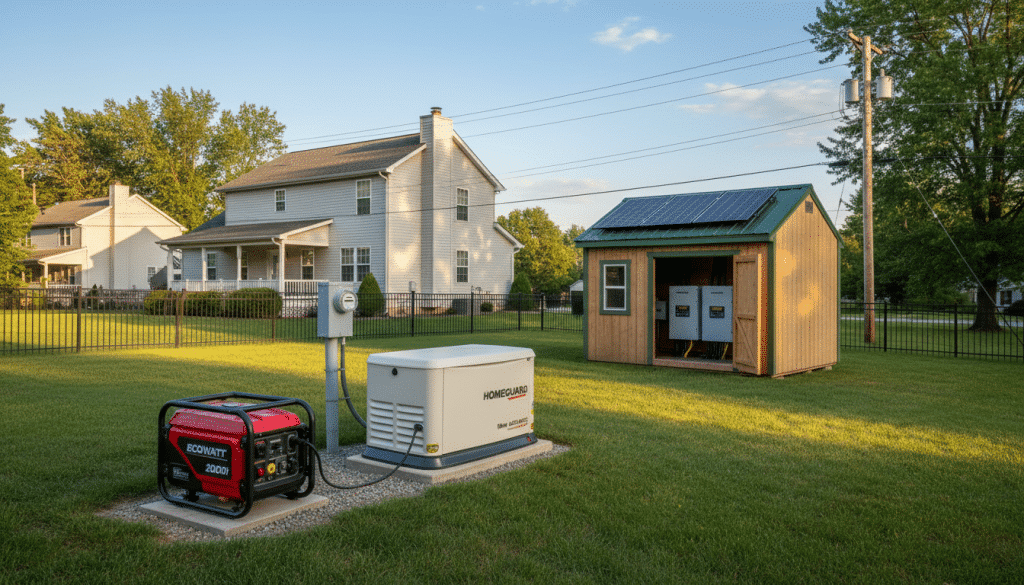
The backup power market has four main categories. Each is designed for different needs and budgets. Traditional portable gas generators have been a top choice for years.
These units burn gasoline to make electricity. They cost between $400 and $1,500, based on their power output.
Gas generators are reliable and affordable. But they produce harmful fumes and must go outside. They also make noise, need refueling, and require upkeep.
Standby generators are the premium whole-home solution for emergencies. They connect to gas or propane lines and start automatically when power goes out. Installation costs range from $10,000 to $15,000 or more.
Inverter generators are a middle option. They produce clean electricity, safe for electronics. They run more quietly and efficiently than traditional portable generators. But they also need to be used outside and use fossil fuels.
Portable power stations are the newest and biggest innovation. These large rechargeable batteries produce no emissions and run silently. They can be safely used indoors without the risk of carbon monoxide poisoning.
These systems recharge in many ways, including from wall outlets, car charging ports, and solar panels. Prices range from $300 to $3,000+, depending on the model and battery capacity.
Matching Solutions to Your Situation
Choosing the right generator starts with figuring out your power needs. List all essential devices and their wattage. A fridge needs 600-800 watts, while a CPAP machine uses 30-60 watts.
Laptops use 50-100 watts, and smartphones need little power to charge. LED lights use 10-20 watts each. This list helps determine the minimum power needed during outages.
A living situation is key in choosing a generator. Apartment dwellers and renters often can’t install standby generators or use fuel-burning units. Portable power stations become the only viable option for many urban residents.
Budget goes beyond the initial cost. Fuel-burning generators have ongoing costs for gasoline, oil, and maintenance. Portable power stations have no fuel costs and need little maintenance.
When considering installation costs, portable power stations are often a better deal. A $2,500 battery system offers serious backup power without the $10,000+ installation fees.
Versatility is important for many households. Will the backup power solution only serve emergencies or also support outdoor activities? Portable power stations excel at multi-purpose use and are safe in any environment.
Safety is critical. Carbon monoxide poisoning kills people every year from running fuel generators inside. Never use gasoline, propane, or natural gas generators inside homes, garages, basements, or any partially enclosed areas.
Electric shock hazards come from incorrectly connecting portable generators to home electrical systems. Always have a pro handle any wiring to household circuits. Fire risks increase when refueling hot generators or storing fuel improperly.
Portable power stations eliminate these three primary hazards. They produce no exhaust fumes, require no fuel handling, and safely connect through standard outlets. Families can use them indoors during severe weather without ventilation concerns.
For whole-home power needs, traditional standby generators are the best. But new high-capacity portable power stations now handle essential circuits through expandable battery systems. They grow with household needs.
Most households find portable power stations offer the best balance of safety, convenience, cost, and versatility. They represent the modern evolution of backup power solutions. They make emergency preparedness accessible to everyone, not just those who can afford expensive installed systems.
Tips for Managing Food Safety During Power Outages
Many families lose a lot of money when the power goes out. They lose food in the fridge or freezer. This can make them sick. Knowing how to handle food during a blackout is key.
Knowing how long food stays safe is important. A fridge full of food is a big investment. With the right steps, you can save money and keep your family safe.
Safe Food Storage Practices
Keep fridge and freezer doors closed as much as you can. Every time you open them, cold air escapes. This makes food go bad faster.
Use perishable items first, like dairy and meat. Then, use freezer items. Use non-perishable foods last.
A half-full freezer doesn’t keep food as long as a full one. Fill the space with water before a blackout. This helps keep food cold.
Use coolers with ice if the outage lasts for a long time. Put important items like meat and baby formula in them. Keep them cold by surrounding them with ice.
Get a digital thermometer for your kit. It tells you if food is safe without letting cold air out. This is important for keeping food safe.
When to Discard Perishables
Throw away perishable food if it’s been above 40°F for two hours. This includes meat, dairy, and leftovers. It’s better to be safe than sorry.
Some bacteria can make you sick even if you cook them. Never taste food to see if it’s good. It’s better to throw it out.
Some foods can handle warmer temperatures better than others. Hard cheeses are safer than soft ones. Always check if food is safe before eating it.
For frozen foods, check for ice crystals. If they’re below 40°F and have ice crystals, you can refreeze them. But if they’re thawed and warm, throw them out.
Throwing away food is hard, but it’s better than getting sick. Take pictures of the food for insurance. Some policies cover losses from power outages.
Think about getting a backup power source. It keeps your fridge running. This saves you money and stress. It’s a smart investment for any home.
What to Do After a Power Outage
When power comes back, it’s important to act carefully. This protects people and property from new dangers. Taking the right steps right away can prevent damage, fires, and safety issues.
Power surges often occur when power is restored. These spikes can harm electronics and cause fires. A careful recovery process keeps everyone safe and protects valuable items.
Inspecting Your Home for Electrical Problems
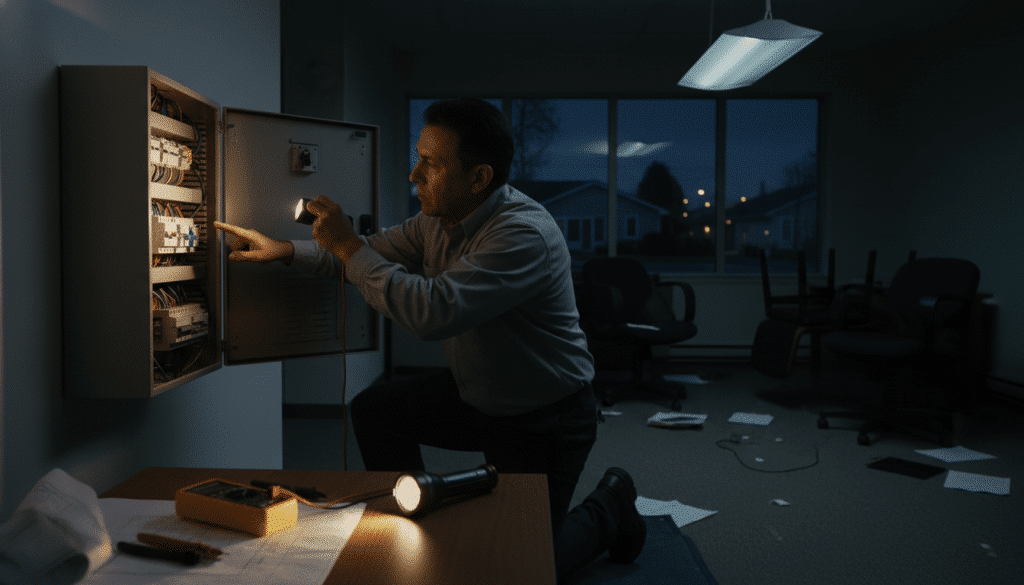
Don’t turn everything on right away. First, do a thorough check for damage. Keep all electronics and appliances off or unplugged.
Look for scorch marks around outlets, which mean overheating. Also, check for burning smells, which may indicate wiring damage. Watch for any sparking from outlets, switches, or appliances.
The circuit breaker panel needs special attention. Open the panel door and look for any tripped breakers. A breaker that keeps tripping means a serious issue that needs a pro to fix.
Appliances that were running when power failed need a close look. Listen for unusual sounds and smell for burning odors. These signs often mean motor or electrical damage that needs repair.
Follow this systematic restoration protocol to bring devices back online safely:
- Restore power to refrigerators and freezers first to preserve food
- Wait several minutes before turning on additional appliances
- Add one device at a time to avoid circuit overload
- Monitor each appliance for proper operation before moving to the next
- Save sensitive electronics like computers and televisions for last
Leaving one light switched on is helpful during restoration. This simple step provides instant notification when power returns. It allows homeowners to implement their restoration procedure without everything surging on at once.
Several less obvious systems need to be checked after extended outages. Refrigerators that run continuously without reaching the proper temperature may have a damaged compressor. HVAC systems should start smoothly without unusual noises. Water heaters need time to reheat but should show temperature increases within an hour.
Sump pumps require special attention, especially if the outage occurred during wet weather. Test the pump to ensure it activates properly. A failed sump pump after restoration can lead to basement flooding even after power returns.
Outdoor hazards pose serious dangers that require immediate attention. Never approach or touch downed power lines that may have fallen during the outage. These lines can remain energized and deadly even when they appear inactive. Keep children and pets away from any damaged electrical equipment.
Tree limbs resting on power lines pose an ongoing danger once power is restored. Report these situations immediately instead of trying to remove them. Damaged utility equipment on the property, such as broken poles or dangling wires, requires professional handling by trained crews.
Reaching Out to Your Utility Company
Communication with utility providers is key after a power failure. Even if electricity has returned, reporting the outage helps utilities track problem areas. Many outage management system databases rely on customer reports to identify infrastructure issues that need attention.
Contact the utility company immediately if damaged equipment appears on or near the property. Broken poles, dangling wires, or damaged transformers pose ongoing danger to the community. Quick reporting enables emergency response teams to address these hazards before someone gets hurt.
Gas line damage sometimes occurs during severe outage events, such as storms or accidents. Anyone who smells gas or suspects gas line problems should contact the gas utility immediately and evacuate the premises. Natural gas leaks create explosion and asphyxiation risks that demand urgent professional response.
Documentation becomes important for households that have suffered significant losses. Many utilities offer bill credits or compensation for extended outages. Insurance claims for spoiled food or damaged equipment require accurate outage information. Taking photos of damaged items and noting the exact duration of the outage strengthens any claim.
Effective utility communication includes several key elements:
- Have the account number ready when calling
- Note the exact times the power went out and was restored
- Document damaged equipment or spoiled food with photographs
- Request a claim reference number for follow-up
- Update contact information for future outage notifications
Some utilities automatically provide outage credits for prolonged disruptions, while others require a claim. Ask about compensation policies and filing deadlines. Understanding these procedures ensures households receive any credits they qualify for under utility programs.
Every outage offers valuable lessons for improving household preparedness. Evaluate what worked well and what didn’t during the disruption. Consider whether emergency supplies proved adequate, whether communication plans functioned smoothly, and whether backup power would have helped.
Use these insights to refine emergency plans and expand preparedness measures. Each experience builds resilience, making the next inevitable disruption easier to handle. The recovery phase provides the perfect opportunity to strengthen household readiness while the experience remains fresh.
Community Resources and Support
Across America, communities offer great help during power outages. They provide key support when we can’t handle emergencies on our own.
Local Emergency Services
Local emergency teams spring into action during blackouts. They set up cooling centers at libraries and community centers in the summer. These places are safe for those without power.
In winter, they open warming centers at schools and city buildings. Families can charge their devices and stay warm. Local services continue to work to address safety and medical needs.
It’s smart to sign up for emergency alerts before disasters hit. These systems send important updates by text and phone. The 211 hotline also connects you with local help.
Volunteer Organizations Ready to Help
The American Red Cross opens shelters for those without power. They offer food, supplies, and charging stations for your devices. You can use the Safe and Well registry at RedCross.org or call 1-866-GET-INFO to let family know you’re safe.
Churches and neighborhood groups also step up during emergencies. Checking on elderly neighbors and sharing what you have helps everyone. You can download emergency guides from FEMA and the CDC to get ready.
Building friendships before an outage makes communities stronger. The person you help today might need your help tomorrow.
Keep your family safe with power for phones, laptops, and emergency radios. Find the best power station for your family’s needs. Best Portable Power Stations for Home Backup (2026 Guide).