The Secretary of the Navy was fired over political disagreements
The Secretary of the Navy was fired over political disagreements and the Iran War, raising questions about leadership within the US Navy and its future direction.

President Donald Trump announced Thursday that Secretary of the Navy John Phelan is leaving. This move is due to disagreements over shipbuilding within the Department of Defense. The sudden change has turned a routine leadership shift into a major political story, with some linking it to the “Iran War.”
President Trump’s poll numbers fall as the midterm elections approach. Trump’s Poll Numbers Slip Ahead of Midterm Elections.
The timing of Phelan’s exit is significant, happening during a tense period for U.S. naval operations in the Middle East. Yet the naval secretary’s role focuses on organizing and training the fleet, not on leading combat missions.
This distinction is key as the secretary’s appointment becomes a battleground over budgets, schedules, and procurement choices that shape the Navy’s future.
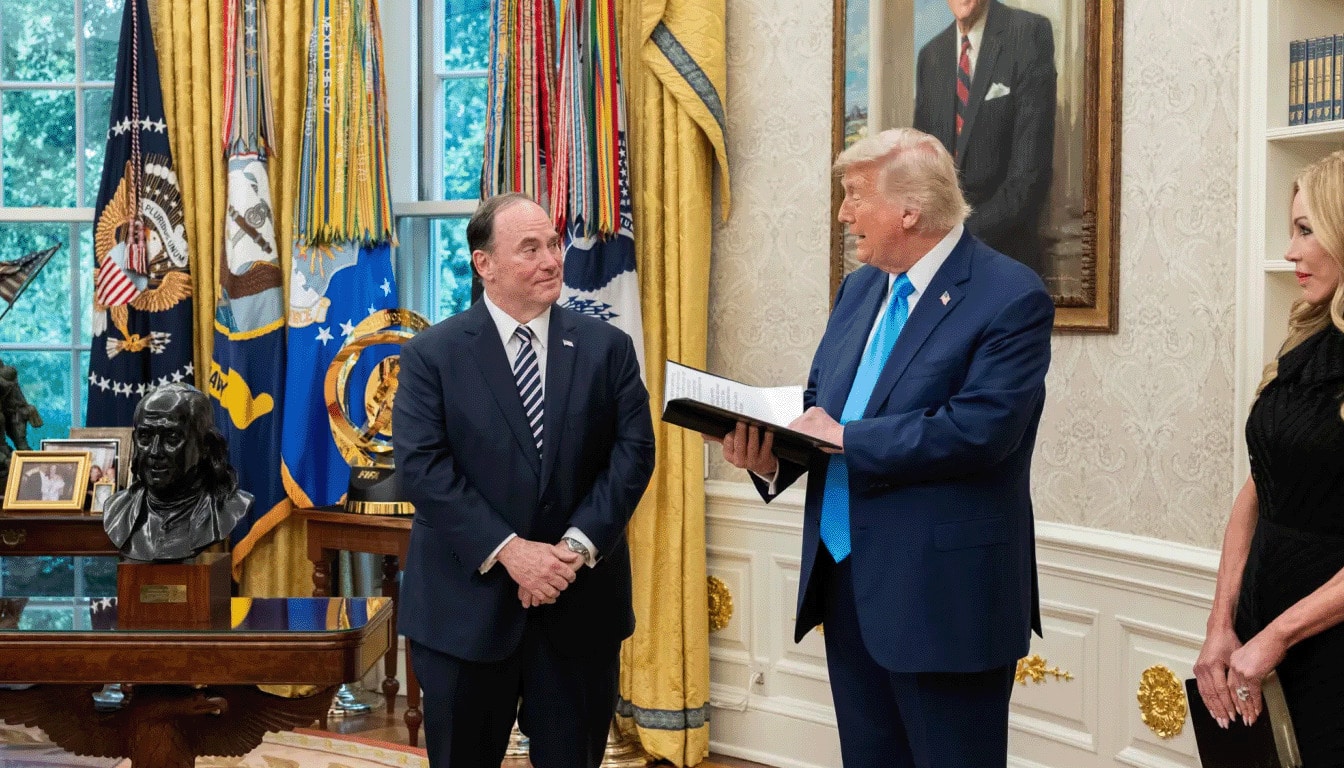
Phelan was confirmed as Secretary of the Navy in March 2025. He quickly became a prominent figure in Trump’s circle. A White House photo shows him speaking at Trump’s Mar-a-Lago club in Palm Beach, Florida, on Dec. 22, 2025. This photo highlights how closely his tenure aligned with the administration’s politics.
Before entering government, Phelan worked in finance. He founded Rugger Management in Palm Beach and co-founded MSD Capital and MSD Partners. These firms are linked to Michael Dell’s family office and third-party investor management.
Phelan’s background is impressive. He holds a master’s degree from Harvard Business School and graduated from Southern Methodist University, Phi Beta Kappa, and cum laude. He also completed the general course in economics and international relations at the London School of Economics.
For more on Phelan’s exit and the internal dispute, check out NBC News. Washington is now discussing the future of the Secretary of the Navy role and the next phase of U.S. Navy leadership.
Secretary of the Navy Key Takeaways
- Trump said the Secretary of the Navy left after a conflict tied to building and buying new ships.
- The secretary of the Navy’s job shapes readiness and procurement, but does not run combat operations.
- Phelan’s secretary of the navy appointment was confirmed in March 2025.
- His background includes Rugger Management, as well as MSD Capital and MSD Partners, both linked to Michael Dell.
- His education includes Harvard Business School, Southern Methodist University, and the London School of Economics.
- The naval secretary transition is being discussed alongside a broader narrative about the Iran War.
Why John Phelan Was Asked to Step Down Amid Pentagon Shipbuilding Conflicts
Shipbuilding plans in Washington can lead to heated debates. This issue landed on the desk of the US Navy Secretary. It quickly became a story of leadership within the Pentagon.
The debate was about budgets, schedules, and what to build first. These decisions affect the Deputy Secretary of the Navy. They also shape how civilian leaders manage shipyards and contracts.
Trump’s Oval Office comments on “conflict” over building and buying new ships
President Donald Trump spoke from the Oval Office. He said he “really liked” John Phelan and called him “a hard-charger.” Trump mentioned a “conflict” with others in the Department of Defense, mainly over building and buying new ships.
Trump emphasized the importance of unity among uniformed services and civilian leaders. He described Phelan as “a very good man.” Yet, he noted that opinions about Phelan varied.
Who announced the exit: Pentagon spokesman Sean Parnell and “effective immediately” timing
On Wednesday, Pentagon spokesman Sean Parnell announced Phelan’s departure. Parnell said Phelan was leaving “effective immediately.” He also stated that Undersecretary of the Navy Hung Cao would act as Secretary of the Navy.
In a formal statement, Parnell expressed gratitude to Phelan for his service. He wished Phelan well in his future endeavors.
Clarifying the internal dispute: not with Secretary of Defense Pete Hegseth, unnamed DOD officials
Trump clarified that the conflict wasn’t with Secretary of Defense Pete Hegseth. He didn’t name the other Defense Department officials involved.
Behind the scenes, the episode is part of a larger debate on procurement priorities. These debates often relate to the Secretary of the Navy’s responsibilities. They include readiness, acquisition, and long-term fleet planning.
Reports of prior friction between Phelan and Hegseth, according to sources familiar with the matter
An administration official told ABC News that Phelan was asked to step down. Sources also revealed that Phelan and Hegseth had clashed before.
Despite the change, work continues under the new leadership team. The team will make day-to-day decisions. These decisions will support the US Navy Secretary and maintain coordination with the Deputy Secretary of the Navy.
Secretary of the Navy Role, US Navy Leadership, and What It Means for the Iran War Narrative
When there’s a change at the top, people think it changes everything right away. But the real story is in how the Navy is run every day. This includes what civilian control means during a tense moment overseas. The departure of John Phelan, as reported in the latest Pentagon shake-up, sheds light on this.
Navy Secretary duties and the Secretary of the Navy responsibilities as the top civilian official
The Secretary of the Navy is the top civilian leader of the Navy. Simply put, their job is to make sure the Navy has what it needs to be ready. This includes people, ships, aircraft, and resources.
They also oversee budgets, maintenance plans, and long-range force design. Their role connects policy in Washington to readiness on the ground.
How the Secretary of Defense and regional commanders differ from the US Navy Secretary on combat operations
Even when Navy ships are in the news, the naval secretary doesn’t run combat missions. The Secretary of Defense directs military operations through regional commanders. They control missions in their areas.
This means a carrier presence near Iran may get a lot of attention. But it doesn’t change who gives the orders. It shows why Navy leadership can change at the civilian level, but strike planning stays with the commanders.
Why the Iran War storyline can be misunderstood: training and equipping vs. running combat missions
The Iran War story often mixes two things: preparing forces and using them. The civilian Navy office, along with senior leaders, focuses on training and equipping.
This matters when we hear about blockades or ships being stopped. Those actions are operational decisions. The naval secretary’s job is to ensure the force is ready, funded, and deployable when needed.
How leadership transitions can affect shipbuilding priorities, procurement, and readiness
Leadership changes are important because they affect what the Navy can do in the future. Shipbuilding schedules, repair backlogs, and buying munitions are key areas. Decisions here can be tough, like whether to build, buy, or delay.
With Hung Cao acting as Secretary, the transition may change how priorities are set. Even small decisions, such as budget trade-offs and supplier performance, can affect readiness planning.
- Procurement decisions affect delivery dates for ships and aircraft.
- Maintenance funding changes how fast vessels return to sea.
- Workforce planning shapes recruiting, retention, and training pipelines.
In this context, the Navy secretary’s duties are more about keeping the system running. For the public, understanding this helps separate battlefield news from the quieter work of Navy leadership and the naval secretary.
Secretary of the Navy Conclusion
John Phelan’s exit shifts focus from battles to shipbuilding. President Donald Trump said Phelan was removed due to disagreements over ship construction and purchases. This involved other Defense Department officials, but Trump didn’t name them.
The change happened quickly and officially. Pentagon spokesman Sean Parnell confirmed the new role was “effective immediately.” An administration official stated Phelan was asked to leave. Undersecretary of the Navy Hung Cao took over as acting Secretary, starting a new chapter amidst tension.
The Pentagon is facing leaks, firings, and public disagreements, eroding trust. Reports on Pentagon leadership turmoil highlight how fast internal issues can become public. This makes any change in the Navy Secretary seem bigger than it is, even if it’s about procurement and data, not combat.
For those following Iran, it’s important to understand the scope. The Secretary of the Navy oversees budgets, maintenance, training, and ship readiness. But combat operations are handled by commanders under the Secretary of Defense. So, the Navy Secretary’s change might impact long-term capacity but doesn’t directly signal Iran’s conflict strategies.