Winterize the Exterior: Get Your House Ready for Freezing Temps
Protect your home from the cold with essential tips to winterize the exterior and prevent freeze damage before winter hits.

Winterize the Exterior of your home: When cold weather is coming, getting ready for winter is urgent. This includes stacking firewood and sealing gaps. The first signs of trouble often appear outside, where pipes and lines are exposed to the cold. See professional tips for winterizing your home here on our free downloads page.
Winterizing your home keeps you comfortable and prevents water problems. Pipes near walls, hose bibs, or in unheated areas freeze quickly. This can lead to cracks and leaks. So, focus on steps that prevent pipes from freezing. Massive Winter storm to sweep across the Midwest, latest news.
Experts like Kevin J. Vander Hyde and Jason Troutman offer practical advice. They say small actions now can avoid big repairs later. For a full checklist, check out winter home readiness tips that cover often-missed outdoor details.
Weather patterns like La Niña affect storms and temperatures. This means timing is key. Start protecting your home from freezing temperatures early, not after pipes freeze.
The article then lists six essential tasks for winter prep. These include handling hoses, outdoor faucets, and finding weak spots around your home. The aim is to keep your plumbing system steady, reduce storm risks, and make mornings less stressful.
Winterize the Exterior of your home: Key Takeaways
- Winterize the Exterior as soon as cold weather enters the forecast.
- Exterior-adjacent pipes and exposed runs can freeze faster than most homeowners expect.
- Preparing your exterior for winter helps prevent pressure buildup that leads to cracks and leaks.
- Winterizing your home should prioritize outdoor faucets, hose connections, and unheated areas.
- Safeguarding your home from freezing temperatures is easier before the first hard freeze arrives.
- Professional guidance from Kevin J. Vander Hyde and Jason Troutman supports a practical, step-by-step approach.
Cold front alert: why winter freeze preparations for your house can’t wait
When a cold front hits fast, small weak spots can become big problems. It’s best to prepare your house for winter freeze early. This way, pipes and valves are easy to reach and inspect.
Homeowners often look for tips to protect against outdoor freezes. But the real risk often lies where you can’t see it. A chilly crawl space, drafty garage wall, or unheated attic can put your plumbing at risk.
How freezing temperatures affect your plumbing system and exterior lines
When it drops below 32°F, water in pipes can freeze and expand, potentially causing damage. Kevin J. Vander Hyde of Vander Hyde Services says this expansion increases pressure. This is why a pipe can fail, even if it looks fine outside.
Exterior lines and hose bibs are the first to be affected by the cold. Outdoor freeze protection tips, such as draining hoses and shutting off outdoor valves, help. Sealing drafts around rim joists and foundation gaps also plays a role.
What plumbers say really happens when pipes freeze and burst
Jason Troutman of Northlake Plumbing says the break often happens away from the ice. The ice blocks the flow, causing pressure to build. The pipe then fails at a weak point, often a joint or elbow.
This is why the damage can seem random. The line may stay plugged until it warms up. Then, water surges through and floods the area around the hidden crack.
- Ice blocks the flow, causing pressure to rise inside the line.
- The pipe fails at the weakest fitting, not always at the point where it froze.
- After thawing, leaks can spread fast into drywall, flooring, and insulation.
Why does preventing freeze damage to your property start before the first hard freeze
Preventing freeze damage is about timing and tools. A deep freeze leaves little time to react. This is true when the shut-off valve is hard to find or access.
Many homeowners use a quick checklist. They insulate exposed runs, keep indoor heat steady, and open sink cabinets on cold nights. For a practical refresher, simple tips for winterizing your home can guide you through the basics without overthinking it.
Outdoor freeze protection tips are important, but they work best as part of a whole-home plan. Winter freeze preparations done in advance reduce the risk of soaked floors and emergency calls. They also help prevent freeze damage when temperatures swing overnight.
Preparing the outside of your house for a freeze
When it gets cold fast, doing small tasks outside can save you from big problems. Start by taking care of lines and fixtures that get cold at night. These tips make it easy to get your home ready for winter.
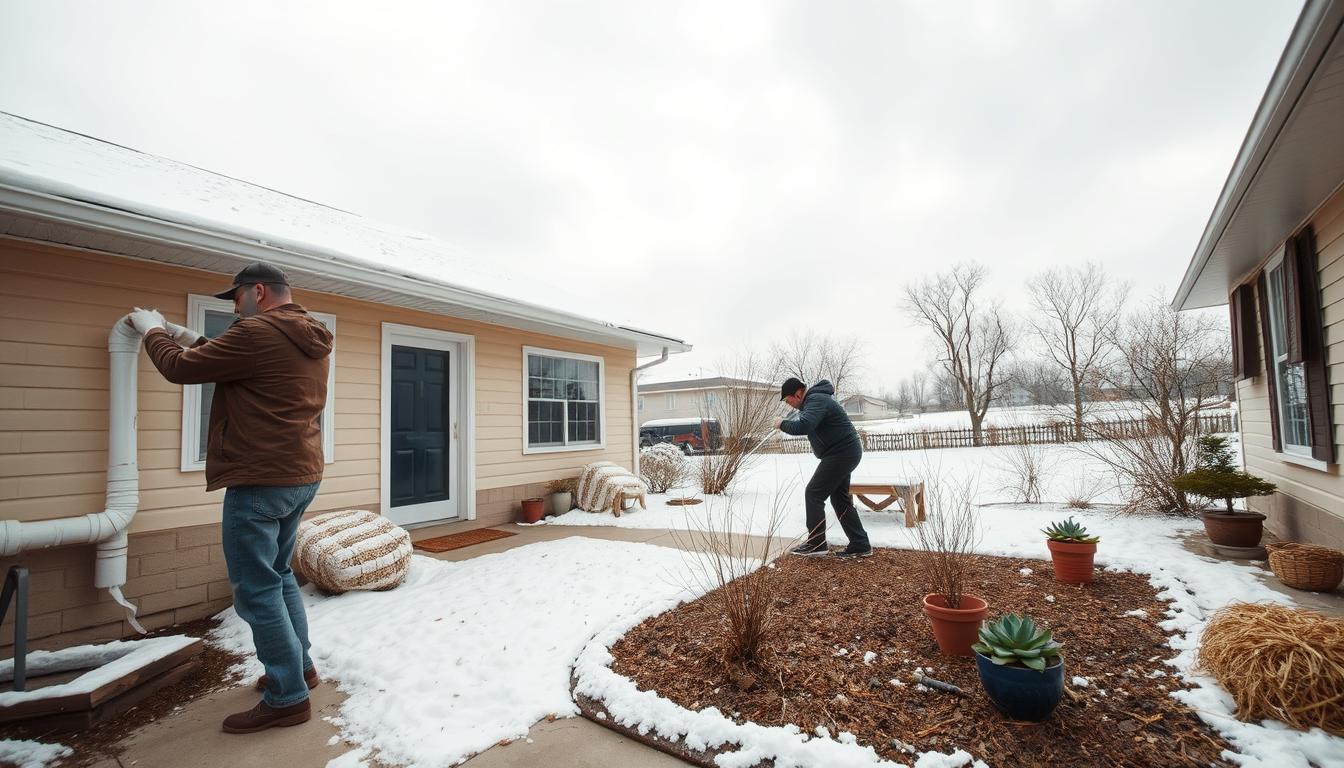
Insulate all exposed pipes in unheated areas like garages, crawl spaces, and attics
Pipes in places like garages and attics get cold first. Use foam sleeves or wrap insulation to keep them warm. This is important because ice can expand and damage pipes.
Also, pay extra attention to pipes along exterior walls. Areas like where water lines enter the foundation and near vents are at risk. For more tips on protecting pipes, check out these winter freeze tips.
Disconnect and drain outdoor hoses to stop freezing from backing up into the wall
Outdoor hoses hold water longer than you might think. Disconnecting them and fully draining them prevents ice from forming. This is a quick way to protect your home from winter.
Once hoses are dry, store them in a garage or shed. If an irrigation line is charged, draining it also helps. These tips help keep your plumbing safe from freezing.
Cover outdoor faucets with foam covers or insulated hose bib covers
After removing hoses, cover the faucet to block wind and temperature changes. You can find foam faucet covers and insulated hose bib covers at The Home Depot or Lowe’s. They offer protection without taking much time.
Also, check for gaps near sill plates and around hose bibs. Cold air can get into the wall cavity. For more winter prep tips, see these steps and focus on plumbing.
Protecting outdoor fixtures from cold weather with smart cold-weather home maintenance
Winter prep is more effective when it’s a regular routine, not a last-minute rush. Keeping outdoor fixtures safe from cold weather involves small checks and quick upgrades before the first freeze. This approach also helps protect your home from freezing temperatures when harsh winds, ice, and sudden cold hits.
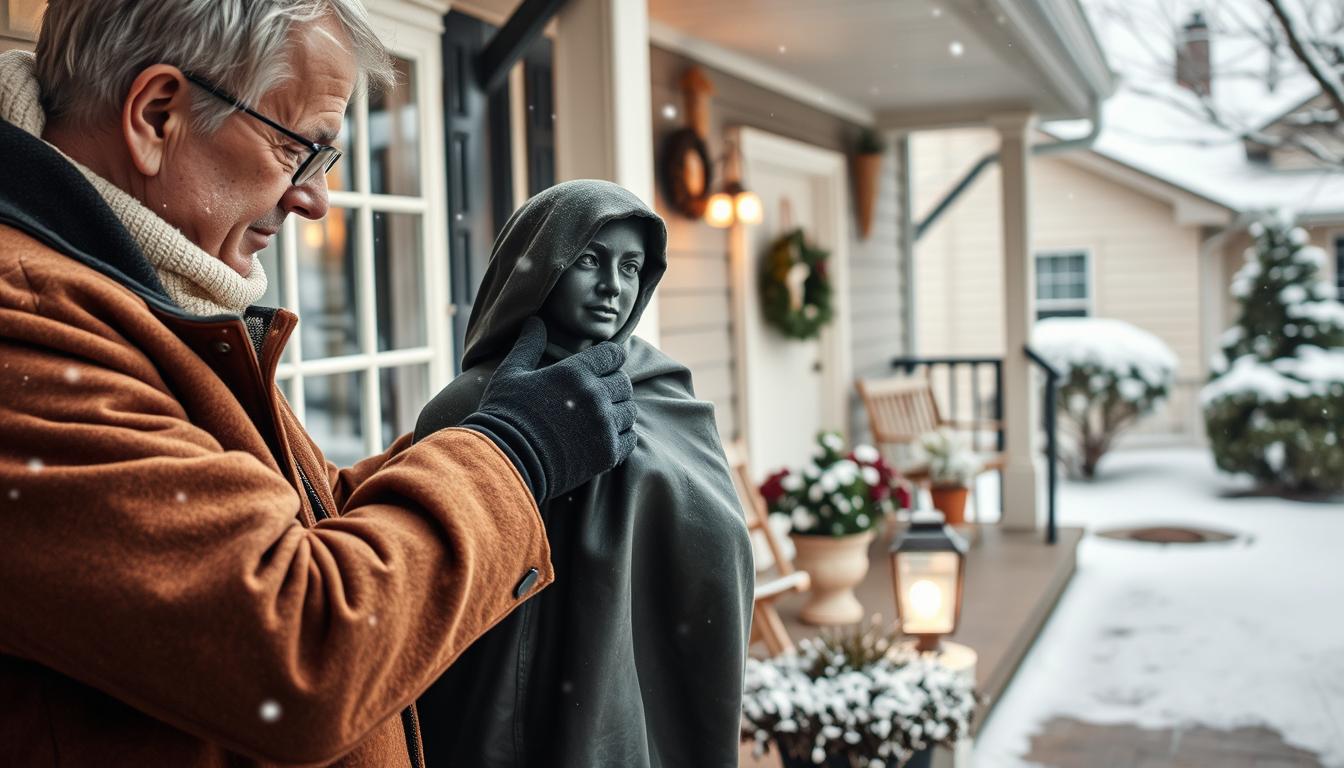
Winter is tough on outdoor lighting, outlets, and plumbing. A quick safety check can help. Homeowners can review winterizing outdoor electrical fixtures to keep water out and wiring safe from freezing rain. These steps are part of cold-weather home maintenance and prevent surprises in the middle of winter.
Use foam pipe insulation sleeves or heat tape for outdoor and exposed plumbing runs
Foam pipe sleeves slow down heat loss on exposed lines. They are easy to use and help reduce cold-air contact.
Heat tape adds extra protection when it gets very cold. It needs the right outlet and safe routing, so plan ahead.
Drip faucets overnight during a deep freeze to reduce pressure buildup in the system
A slow drip during a deep freeze can relieve pressure buildup. Plumbers suggest a steady trickle, not a stream, to keep water moving without wasting it.
Some homeowners let both hot and cold run at a thin trickle overnight. This keeps the system moving during the coldest hours.
Find the home’s water shut-off valve and consider smart leak detectors or an auto shut-off
Knowing where the shut-off valve is saves time if a pipe cracks. Make sure the valve turns smoothly, and everyone knows where it is.
Smart leak sensors and automatic shut-off valves offer peace of mind in freezing houses. They are part of cold-weather home maintenance, focusing on quick alerts and damage control. For more tips, check the critical areas homeowners forget to winterize.
Open cabinet doors at night so indoor heat can better reach pipes on exterior walls
Cabinets can trap cold air around pipes, like those under sinks on exterior walls. Opening cabinet doors at night helps warm air circulate around the pipes.
If a vanity is tight and pipes are deep, removing cabinet doors for a few nights improves airflow. This simple habit helps protect outdoor fixtures from cold weather and keeps your home safe from freezing temperatures.
Winterize the Exterior Conclusion
To winterize the Exterior, think beyond just sealing drafts. The real danger often lies in plumbing exposed to cold air. Ice can block the line, increase pressure, and cause weak spots to burst. The worst damage may appear when the pipe thaws and leaks.
Preventing freeze damage is simpler than it seems. Insulate exposed pipes in garages, crawl spaces, and attics. Use foam sleeves or heat tape where it’s coldest. Also, disconnect and drain outdoor hoses to prevent ice from pushing back into the wall.
Finish by covering outdoor faucets with foam covers or insulated hose bib covers. This protects them from freezing.
During extreme cold, winterizing your home is key. Lower the water pressure inside the system. Let faucets drip slowly, using both hot and cold water. Start with the faucet farthest from the meter.
Find the main water shut-off valve and consider adding smart leak detectors or an automatic shut-off. At night, open cabinet doors to warm pipes on exterior walls.
Timing is as important as tools when preparing your house for a freeze. These steps work best before the first hard freeze. For more exterior prep details, check out winter exterior winterization tips and plan early.