The U.S. bolsters its naval presence in the Strait of Hormuz as tensions rise amid the mounting Iran War and ongoing geopolitical concerns.
The Iran War took a sharp turn on Thursday. U.S. Central Command (CENTCOM) said three American warships faced an “unprovoked attack” in the Strait of Hormuz. This incident adds fresh strain to U.S–Iran tensions and raises questions about the conflict’s spread at sea.
According to U.S. Central Command (CENTCOM), the U.S. Navy destroyers involved were USS Truxtun, USS Mason, and USS Rafael Peralta. U.S. officials said the ships encountered missiles, drones, and small assault boats. But none of the vessels was struck, and all threats were eliminated.
🔥 See what people are buying
👉 Most Popular Items Right Now →
See Top picks →
CENTCOM said U.S. forces launched self-defense strikes soon after. They targeted Iranian facilities linked to drone and missile launch sites near Iranian ports by the Strait of Hormuz. This move shows how quickly a maritime clash can widen, affecting key shipping routes.
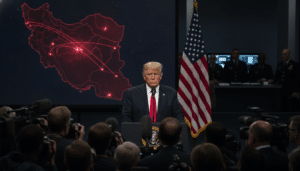
Even as the Iran War narrative hardens, the political story is moving fast. Iran alleges the U.S. shot first, while President Donald Trump says the ceasefire remains in effect, despite new strikes and threats of retaliation.
For readers tracking the u.s iran conflict and its impact on energy and trade, Strait of Hormuz risks are now back in focus. U.S.–Iran tensions are playing out on a narrow stretch of water with global stakes.
Key Takeaways
U.S. Central Command (CENTCOM) says three U.S. Navy destroyers came under attack during a Strait of Hormuz transit.
The ships named were USS Truxtun, USS Mason, and USS Rafael Peralta.
U.S. officials described missiles, drones, and fast-attack boats, with threats eliminated and no ship struck.
CENTCOM reported self-defense strikes aimed at Iranian facilities tied to launch sites near ports by the Strait.
Competing accounts are driving U.S–Iran tensions, with Iran saying the U.S. shot first.
President Donald Trump says the ceasefire remains in effect, even as the Iran War enters a volatile phase.
What happened in the Strait of Hormuz: U.S. Navy destroyers targeted, threats eliminated
During a Strait of Hormuz transit, U.S. forces faced a big increase in risk to maritime security. Fast threats were closing in on key shipping lanes. This event highlighted the tension between international relations with Iran and the need for safe navigation for commercial traffic.
“Unprovoked attack” claim from the U.S. military during Hormuz transit
The U.S. military said Iranian forces launched an unprovoked attack on three U.S. Navy destroyers. The account mentioned Iranian missiles and drones in the air. U.S. ships fired to keep fast-attack boats at bay.
The U.S. said the fight was intense and lasted for hours in contested waters. No U.S. ship was hit, and the threats were eliminated. This included several small boats that posed a danger to civilian vessels.
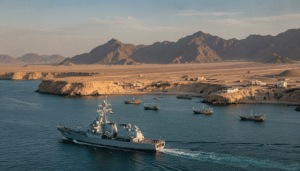
A CENTCOM-released image showed the USS Mason in the Middle East. The command said Mason was targeted on May 7, 2026, but not hit. More details were covered in this NPR report.
U.S. response: layered defense and “self-defense strikes” on Iranian ports
The U.S. used a layered defense to counter missiles, drones, and small boats. Afterward, U.S. forces carried out “self-defense strikes” on Iranian ports. These were linked to drone and missile launch activity.
President Donald Trump said Iran “trifled with us” and the U.S. “blew them away.” He called strikes on Iranian ports a “love tap.” Yet, he said the ceasefire remained “in effect,” as ABC News reported, during a visit near the Lincoln Memorial Reflecting Pool.
Where this happened and why it matters for shipping and international security
The clash took place in the Strait of Hormuz. Iranian outlets also mentioned nearby areas like the Gulf of Oman (Makran Sea) and Minab in Hormozgan province. This geography is critical because even short fights can affect shipping lanes used by oil tankers and container ships.
Regional partners also saw the impact: the United Arab Emirates intercepted two ballistic missiles and three drones. Debris moderately wounded three people. The UAE said it has intercepted 551 ballistic missiles, 29 cruise missiles, and 2,263 drones. It has also seen 230 wounded and 13 killed.
Iran War escalation: competing narratives, ceasefire disputes, and rising United States–Iran tensions
Tensions between the United States and Iran are rising. The question is who started the conflict and what a ceasefire really means. Both sides are pushing their limits, affecting diplomacy, military plans, and energy security.
Iran’s account: the U.S crossed the line and Iran “shot first.”
Tehran says the U.S. started the conflict near the Strait. Iran’s military command claims U.S. forces attacked Iranian oil tankers. This happened close to a major shipping lane.
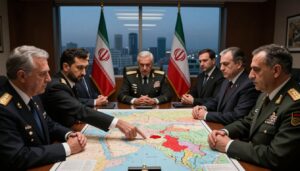
Brigadier General Ebrahim Zulfuqari said the U.S. had crossed a point of no return. He warned Iran’s response would be strong. Iran also said it launched air raids on ports and areas in Khamir, Sirik, and Qeshm Island.
Iran reported that a cargo vessel near Minab was hit and caught fire. Ten sailors were wounded, and five are missing. Iran said U.S. ships were damaged, but President Donald Trump denied this.
Ceasefire status: “still in effect” vs. “nominal ceasefire situation”
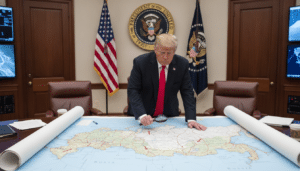
In Washington, President Trump says the ceasefire is in place. He warned Iran of harsher actions if they refuse a deal. This debate affects U.S. foreign policy in the Gulf.
Iran’s Foreign Ministry spokesman Esmail Baqaei called the truce a “nominal ceasefire situation.” He said a U.S. proposal is being reviewed in Tehran. A decision will be made soon.
Iran accused the U.S. of violating a ceasefire agreement from April 8, 2026. It condemned attacks on two oil tankers, it said, which were Iranian. Iran also said there were attacks on coastal areas, violating the U.N. Charter.
Diplomatic relations, the Iran crisis, and pressure points in u.s foreign policy
The conflict is affecting diplomatic relations and alliances. Secretary of State Marco Rubio said President Trump is considering responses to allies. NATO’s role in force projection is also being discussed.
Domestic politics are influencing strategy. Trump has threatened to leave NATO, but a 2023 law blocks withdrawal. The Pentagon plans to withdraw 5,000 troops from Germany due to criticism from Chancellor Friedrich Merz.
Sanctions and shipping enforcement are also causing tension. Iran said it seized the oil tanker Ocean Koi in the Sea of Oman. It accused the tanker of trying to disrupt Iranian oil exports.
The tanker had faced U.S. sanctions under a previous name. It reportedly changed its name to Jin Li. The UKMTO said it had no reports of a ship under these names. This has brought the Iran nuclear deal back into focus.
Iran War: Conclusion
The Iran War today is marked by conflicting claims and a brief sea battle. The U.S. reports that three destroyers—USS Truxton, USS Mason, and USS Rafael Peralta—faced threats. These included missiles, drones, and small boats during an attack in the Strait of Hormuz.
No hits were reported, and all threats were neutralized. The U.S. then launched “self-defense strikes” against Iranian launch sites near ports.
Iran’s leaders have a different account of the conflict. They claim the U.S. fired first, hitting ships and civilian areas. They call this a move beyond a “point of no return.”
Iran also reports wounded sailors and a burning vessel near Minab. They warn of possible retaliation.
Peace talks are also uncertain. Donald Trump says the ceasefire is holding, but warns of tougher actions. Iran sees the truce as weak, accuses the U.S. of breaking it, and is reviewing deal proposals.
U.S. naval actions in the Hormuz area could affect fuel prices and supply chains. Regional tensions have already led to reports of intercepts and casualties. Disputes over bases and sanctions add to the tension.
Other conflicts, like Iran’s attack on Al Udeid Air Base in Qatar, highlight the need for caution. Qatar quickly defended itself, showing the importance of restraint. For more on this, see this report on Qatar and Al.
🔥 See what people are buying
👉 Most Popular Items Right Now →
See Top picks →
Iran War: FAQ
What happened in the Strait of Hormuz on Thursday, according to the U.S. military?
The U.S. Central Command said three American guided-missile destroyers—USS Truxtun, USS Mason, and USS Rafael Peralta—were attacked. They were in the Strait of Hormuz. The attack included missiles, drones, and small assault/fast-attack boats.
But none of the U.S. vessels was struck. All threats were eliminated.
Which ships did CENTCOM say were targeted in today’s update on the Iran War?
CENTCOM identified USS Truxton, USS Mason, and USS Rafael Peralta. These are guided-missile destroyers in the Hormuz transit. This is amid heightened United States-Iran tensions and the broader U.S.-Iran conflict.
How did U.S. officials describe Iran’s methods of attack?
U.S. officials said Iranian forces used missiles, drones, and swarms of fast-attack boats. The boats got close, so U.S. warships opened fire to keep them at bay. Drones and missiles were engaged over several hours.
Did any U.S. warship get hit during the Hormuz transit?
The Pentagon and CENTCOM said no U.S. ship was hit. They said U.S. forces destroyed or neutralized every threat. Despite a renewed, fiercer, and more sustained assault, no ship was damaged.
What visual reference did CENTCOM cite about the USS Mason?
Reporting referenced a CENTCOM image showing the USS Mason in the Middle East. CENTCOM said Mason was among the ships targeted on May 7, 2026. It was not struck.
What did the U.S. do immediately after the attack?
CENTCOM said U.S. forces conducted “self-defense strikes” after the engagement. The strikes targeted Iranian-linked facilities. This included drone and missile launch sites and other infrastructure tied to Iranian ports abutting the Strait.
What is meant by “layered defense” in the U.S. account?
CENTCOM said U.S. warships and supporting aircraft used a layered defense. This means coordinated protection across multiple systems. It stops threats at different ranges and altitudes.
What did President Donald Trump say about the strikes and the ceasefire?
President Donald Trump said Iran “trifled with us” and the U.S. “blew them away.” He later described strikes on Iranian ports as a “love tap”. He insisted the ceasefire was “in effect,” including remarks to ABC News and comments at the Lincoln Memorial Reflecting Pool.
Where did the clash occur, and what other nearby locations were cited?
The U.S. military placed the clash in and around the Strait of Hormuz. Iranian outlets also referenced adjacent waters. This includes the Makran Sea (Gulf of Oman) and areas near Minab in Iran’s Hormozgan province.
Why does fighting in the Strait of Hormuz matter for shipping and international security?
The Strait is a strategic choke point for global energy and trade. Missile, drone, and small-boat engagements can quickly raise risks. This affects commercial shipping, oil tankers, regional air defenses, and allied security planning.
What did the United Arab Emirates report in the latest incident?
The United Arab Emirates said it intercepted two ballistic missiles and three drones. Debris moderately wounded three people. It also said it has intercepted 551 ballistic missiles, 29 cruise missiles, and 2,263 drones. With 230 total wounded and 13 killed (10 civilians, two armed forces members, and one foreign civilian military contractor).
What is Iran’s account—why does Tehran say the U.S. “shot first”?
Iranian officials say U.S. forces targeted Iranian ships near the Strait. They struck “civilian areas” on shore. Iran fired on U.S. warships in response, a direct clash of narratives.
What did Iran mean by saying “the u.s crossed the line, and the ‘point of no return”?
Iran’s central military command, the Khatam Al-Anbiya headquarters, said the U.S. “crossed the point of no return”. Spokesman Brigadier General Ebrahim Zulfuqari said Iran’s response would be “commensurate with the crime and more”.
What targets and locations did Iran claim were hit near the Strait?
Khatam Al-Anbiya said the U.S. targeted an Iranian oil tanker and another vessel near the Strait. It also described air raids—conducted in cooperation with regional allies—hitting port areas in Khamir, Sirik, and Qeshm Island.
What casualty and damage claims did Iranian media report near Minab?
Iranian state and semi-official media quoted Mohammad Radmehr of Hormozgan province. He said a cargo vessel near Minab was struck and caught fire. The report said 10 sailors were wounded and five were missing.
What are the competing damage assessments about the U.S. destroyers?
Iran claimed the U.S. ships suffered “severe and substantial damage”. President Trump said none were damaged. U.S. officials said none of the vessels was struck.
Is the U.S.–Iran ceasefire still in place?
President Trump has repeatedly said the ceasefire is still in effect. He warned the U.S. would hit Iran “a lot harder, and a lot more violently” if Tehran does not accept a deal.
Why does Iran describe the truce as a “nominal ceasefire situation”?
Iranian Foreign Ministry spokesman Esmail Baqaei described the situation as a “nominal ceasefire situation”. He said the latest U.S. proposal was under review in Tehran. A decision would be announced once final, keeping diplomatic relations uncertain.
What ceasefire breach accusations did Iran lodge against the United States?
Iran’s Foreign Ministry said the U.S. violated an understanding on a ceasefire dated April 8, 2026. It condemned U.S. actions against two oil tankers it said belonged to Iran in the Strait of Hormuz. It also alleged attacks on coastal areas overlooking the Strait late Thursday into early Friday, calling it a breach of Article 2(4) of the U.N. Charter.
What did Iranian Foreign Minister Abbas Araghchi say about diplomacy?
Foreign Minister Abbas Araghchi wrote that when diplomacy is on the table, the U.S. chooses a “reckless military adventure.” He added that Iranians “never bow to pressure,” underscoring how far apart the sides remain despite talk of negotiations tied to the Iran nuclear deal and broader talks.
How is the Iran conflict affecting U.S. foreign policy and allied basing?
Secretary of State Marco Rubio said President Trump had not decided how to respond to some allies denying use of their bases for Iran War operations. Rubio highlighted NATO’s role in force projection and said restrictions by some members were a problem to examine, sharpening alliance tensions within U.S. foreign policy.
What NATO friction was reported, including Spain’s position?
A: Spain was cited as the only NATO member to refuse support for ongoing operations flatly. Other nations reportedly allowed base use but not for offensive operations. Trump has threatened to leave NATO, calling it a “paper tiger,” though a 2023 law prevents withdrawal without Congressional approval.
Why is the Pentagon withdrawing 5,000 troops from Germany?
The Pentagon announced a plan to withdraw 5,000 troops from Germany after German Chancellor Friedrich Merz criticized the U.S. approach to Iran. Merz said the Americans had no strategy and were being “humiliated” by Iranian negotiators, adding strain to transatlantic coordination.
What happened to the oil tanker Ocean Koi, and how does it connect to U.S. sanctions on Iran?
Iran said it seized an oil tanker, Ocean Koi, in the Sea of Oman. It alleges the tanker tried to disrupt Iranian oil exports. MarineTraffic data showed the vessel off Oman for weeks, indicated it came from an Iraqi port, and showed no oil on board. The U.S. had sanctioned the tanker under a previous name. It was part of Iran’s shadow fleet, and it reportedly changed its name to Jin Li. The UKMTO told CBS News it had received no reports from a ship under the names Ocean Koi or Jin Li.
How do sanctions enforcement affect shipping risks in the Iran crisis?
Enforcement tied to U.S. sanctions on Iran and Iran’s shadow fleet can raise the odds of vessel boardings, detentions, and miscalculations at sea. In the current Iran crisis, that pressure combines with missile and drone activity, increasing uncertainty for insurers, shipowners, and regional navies.
What are the core claims both sides say are verified right now?
The U.S. says USS Truxton, USS Mason, and USS Rafael Peralta were attacked during a Strait of Hormuz transit by missiles, drones, and small boats. There were no hits, and all threats were eliminated. The U.S. then conducted “self-defense strikes” against Iranian port areas and launch sites. Iran says the U.S. shot first, struck shipping and “civilian areas,” and that Washington crossed a red line, with Tehran warning of retaliation.
What is the biggest uncertainty driving the latest U.S.–Iran escalation?
The central uncertainty is how both sides describe the same truce. Trump says the ceasefire is still in effect, while issuing sharper warnings and describing limited strikes. Iran calls it “nominal” and accuses the U.S. of breaches, while saying proposals remain under review—fueling a volatile loop in international relations and ongoing debate over whether the Iran nuclear deal framework can be revived.
To provide the best experiences, we use technologies like cookies to store and/or access device information. Consenting to these technologies will allow us to process data such as browsing behavior or unique IDs on this site. Not consenting or withdrawing consent, may adversely affect certain features and functions.
Functional
Always active
The technical storage or access is strictly necessary for the legitimate purpose of enabling the use of a specific service explicitly requested by the subscriber or user, or for the sole purpose of carrying out the transmission of a communication over an electronic communications network.
Preferences
The technical storage or access is necessary for the legitimate purpose of storing preferences that are not requested by the subscriber or user.
Statistics
The technical storage or access that is used exclusively for statistical purposes.The technical storage or access that is used exclusively for anonymous statistical purposes. Without a subpoena, voluntary compliance on the part of your Internet Service Provider, or additional records from a third party, information stored or retrieved for this purpose alone cannot usually be used to identify you.
Marketing
The technical storage or access is required to create user profiles to send advertising, or to track the user on a website or across several websites for similar marketing purposes.