Democrats Divided on Removing Trump: Impeachment Debate
Amid growing political controversy, the Impeachment Debate reveals deep divisions among Democrats regarding the removal of Trump and its legal implications.

In Washington, the Impeachment Debate is heating up again. More Democrats want to take action against President Donald Trump. But the party is split on when and how to do it. Democrats Call for Trump’s Impeachment Under the 25th Amendment
There are two main ways to remove Trump: through Congress or the 25th Amendment. Over 60 Democrats support impeachment. But getting Republican votes is a big challenge. Will the U.S. Reinstate the Military Draft in 2026 if War Erupts?
Lawmakers are debating if now is the right time to push for accountability. They worry that rushing could weaken their case.
Leadership is also feeling the strain. Senate Minority Leader Chuck Schumer and House Democrats can’t agree on a plan. This has led to public disagreements on what to do next.
Voters are hearing different views on urgency and due process. The debate is complex, with many factors at play.
Some Democrats see other ways to hold Trump accountable, like court oversight and reforms. They also watch how public opinion changes, influenced by stories like deep state conspiracy claims.
The party’s main problem remains: act quickly or take your time. Every statement about impeachment is a test of unity and a reminder of the political hurdles.
Impeachment Debate Key Takeaways
- Democrats are escalating the Impeachment Debate, but they are divided on strategy.
- The main options are presidential impeachment in Congress or the 25th Amendment route.
- More than 60 Democrats have backed impeachment, yet Republican support seems unlikely.
- Leadership uncertainty is growing as Chuck Schumer and House Democrats weigh different approaches.
- The political controversy centers on timing, political math, and what counts as effective government accountability.
- Public narratives around Trump are shaping how the Impeachment Debate is understood.
Democrats weigh impeachment proceedings versus the 25th Amendment amid political controversy
Democrats are at a crossroads. They must decide between impeachment and the 25th Amendment. Both options could change the political landscape and Congress’s work.
Legal issues, such as Trump’s immunity arguments, add to the debate. This makes the decision even harder.
Rising calls to remove President Donald Trump, but no shared timeline or strategy
More Democrats want action, but they can’t agree on when or how. Some say it’s urgent, while others fear rushing could fail.
Rep. Madeleine Dean of Pennsylvania thinks impeachment is not the best use of time. She suggests focusing on winning more seats first. Rep. Sara Jacobs of California, on the other hand, says all options should be considered, even if there’s disagreement on what that means.
Impeachment inquiry and congressional hearings: where the push stands now
Starting an impeachment inquiry in the House is a big hurdle. Speaker Mike Johnson’s opposition slows things down. Without his support, Democrats face challenges in setting the agenda and moving forward with hearings.
Rep. Al Green of Texas pushed for impeachment votes last year, but failed. Recently, Rep. John Larson of Connecticut proposed 13 articles of impeachment. These include claims of military actions in Venezuela and executive orders on birthright citizenship.
- Supporters say the evidence justifies impeachment.
- Critics point out the House math and the difficulty of holding hearings.
- It’s unclear if Larson will push for a vote on his resolution.
The unconventional option: invoking the 25th Amendment and its high threshold
Some Democrats consider the 25th Amendment. It would require Vice President JD Vance and a Cabinet majority to declare Trump unfit. This option seems direct, but is very challenging.
The 25th Amendment has never been used to remove a president. Even if it were, removing Trump would need two-thirds votes in both chambers. This makes it even harder than impeachment after a public inquiry and hearings.
Impeachment Debate inside Democratic leadership: strategy split between war powers, removal talk, and government
Democratic leaders are facing a tough choice. They can try to remove Donald Trump or limit his power. This debate has caused tension within the party, with some pushing for quick action and others focusing on the numbers needed.
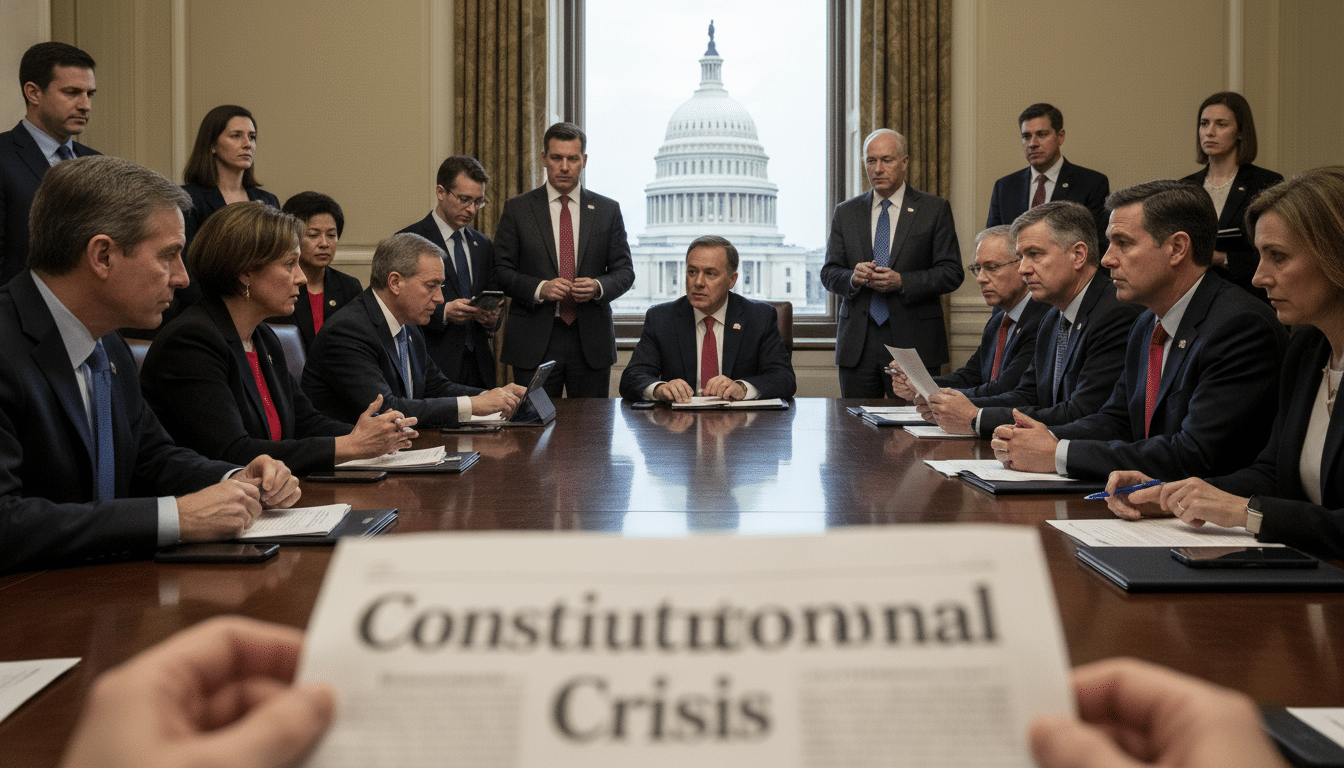
At the heart of the issue is making sure the government is accountable. There’s also a fear that a sudden foreign crisis could lead to a constitutional crisis.
Schumer’s approach: reining in presidential power through war powers and oversight
Senate Majority Leader Chuck Schumer doesn’t support impeachment or the 25th Amendment. Instead, he wants to pass another war powers resolution to limit Trump’s actions on Iran. Schumer believes Congress should play a bigger role in preventing war.
This strategy focuses on oversight and clear votes, not just removing Trump. It’s seen as a practical way to check the president’s power. It also responds to Trump’s threats against Iran and to the fear of unchecked power.
House dynamics: Jeffries signals openness to removal discussions and constitutional crisis concerns
In the House, Minority Leader Hakeem Jeffries hasn’t ruled out removal talks. He has pointed members to a briefing on the 25th Amendment by Rep. Jamie Raskin. This shows leadership is keeping options open.
Jeffries has also warned about the dangers of a constitutional crisis if Congress doesn’t act. This has sparked a debate on what accountability means in real time.
Rank-and-file divisions: political feasibility versus “all options.”
Democratic lawmakers are divided. Some, like Rep. Madeleine Dean, think winning majorities is more important than accountability fights. Others, like Rep. Sara Jacobs, believe in keeping all options open, even if they’re hard.
This division is seen in the House impeachment push. Rep. Al Green has forced votes on impeachment, but they failed. Rep. John Larson has filed more articles, but it’s unclear if he’ll push for a vote.
The article highlights the debate over strategy and timing. Lawmakers are weighing what can pass and what makes a statement. The Speaker’s stance makes formal proceedings unlikely.
Senate Democrats: limited appetite for drastic steps and debate over legal implications
In the Senate, only a few have openly supported impeachment or the 25th Amendment. Senators like Andy Kim and Chris Murphy have spoken out, with Kim calling for the 25th Amendment first, then impeachment if needed. The 25th Amendment’s high threshold is a big concern.
Sen. Sheldon Whitehouse doubts the 25th Amendment is a viable option now. He points out the need for the vice president, most of the Cabinet, and supermajorities in both chambers. This skepticism reflects worries about legal issues and the controversy that could arise.
Democrats are constantly debating between enforcement tools, electoral strategy, and public demand for accountability. This tension is also evident in related coverage of party strategy shifts, including Democrats’ divisions after President Biden’s bold policy. It shows how foreign policy and executive power debates can collide, with lawmakers arguing over what constitutes a constitutional crisis.
Oversight fights on Capitol Hill are also influenced by broader clashes over subpoenas and compliance, as seen in threats of contempt of Congress against Attorney General Merrick Garland. These disputes add to the tension, with Democrats debating which approach best serves accountability without weakening their legal case.
Impeachment Debate Conclusion
Democrats are pushing hard against President Donald Trump, but the Impeachment Debate is at a standstill. Over 60 Democrats support impeachment, yet they can’t agree on when or how. This means they’re making a lot of noise, but not taking action together.
Even those who support impeachment say it’s unlikely without Republican votes. With Speaker Mike Johnson, getting things done is tough. Every step is weighed down by legal issues, from evidence to what the Senate might do.
The 25th Amendment is most often discussed as a warning, not a real plan. It needs Vice President JD Vance and most of Trump’s Cabinet to start. Then, two-thirds of each chamber must agree to pass it. It’s been over 60 years, and it’s never been used to remove a president.
This lack of leadership keeps the situation unclear. Chuck Schumer is focusing on Iran-related issues, while Hakeem Jeffries is open to removing Trump. They’re united in their criticism but divided on the best way forward. They also worry about the legal issues that could affect their plans.