DHS No Funding Impact: What It Means for the Nation
DHS no funding impact raises concerns for national security, affecting various initiatives and programs critical to the Department of Homeland Security.
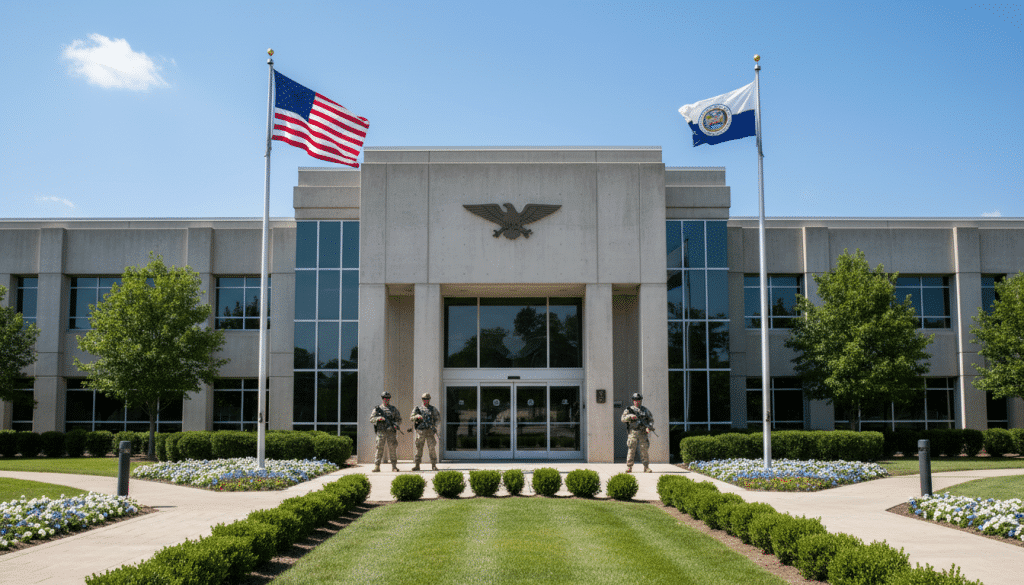
DHS No Funding Impact: The latest news from Washington is alarming. White House Office of Management and Budget Director Russell Vought warned senators that DHS is “disintegrating” without funding.
For the Department of Homeland Security, a funding lapse is not just a budget fight. It can lead to delays, backlogs, and missed steps in core homeland security work. Government Shutdown Enters Day 46 as Longest Partial Shutdown in U.S. History.
Lawmakers were informed that DHS hasn’t been funded since appropriations lapsed on Feb. 14, which has caused a cash crunch across the department.
DHS plays a key role in disaster preparedness, border operations, cyber coordination, and more. Without funding, planning becomes harder, affecting public safety services.
The funding fight is also adding to the pressure on federal agencies already facing shutdowns. Reports of DHS-related delays and disrupted services have raised concerns about readiness and national security. This is detailed in this government shutdown update.
Negotiations are also tied to demands for tighter oversight, clearer immigration-enforcement rules, and more transparent DHS reporting. These details are important because they affect how funds are used in real operations. This is highlighted in this DHS funding deadline report.
This article explains the practical impact of insufficient funding on DHS. It covers workforce stability and homeland security readiness. It also shows how a cash crisis at DHS can affect emergency response, travel systems, and public safety work.
DHS No Funding Impact Key Takeaways
- DHS news is being driven by a warning from Russell Vought that DHS is “disintegrating” without funding.
- The Department of Homeland Security has been operating without funding since appropriations lapsed on Feb. 14, triggering a cash crisis.
- A DHS funding lapse can slow planning and disrupt homeland security operations that rely on steady staffing and contracts.
- Shutdown conditions can increase delays and limit public-facing federal services supported by DHS roles.
- Funding talks include oversight and accountability demands that affect how DHS delivers services and reports results.
- Disaster preparedness and federal readiness can weaken when the Department of Homeland Security cannot operate normally.
DHS funding lapse and what triggered the current crisis
The current DHS funding breakdown started with a missed deadline. It has left the Department of Homeland Security in a tough spot. For many, the impact seems far away. But for DHS, not having money makes planning hard.
Appropriations lapsed Feb. 14, leaving the Department of Homeland Security unfunded
On Feb. 14, Congress missed the funding deadline. This has left DHS without money. Leaders now have to choose what to keep going and what to pause.
The shutdown is getting longer, as seen in the partial shutdown timeline. The Antideficiency Act limits spending without new approval. This adds pressure on DHS offices.
OMB Director Russell Vought’s Senate Budget Committee testimony that DHS is “disintegrating.”
On Thursday, OMB Director Russell Vought told the Senate Budget Committee that DHS is “disintegrating.” He explained the real effects: staffing risks, delayed decisions, and unstable services.
This warning came during a heated debate over reopening and immigration funding. Another update on the dispute is in the day-60 shutdown report. Lawmakers are struggling to find a solution.
Why the White House OMB and Secretary of Homeland Security Markwayne Mullin say the situation is becoming dire
The White House OMB and Secretary of Homeland Security Markwayne Mullin say things are getting critical. They worry about resignations and disruptions. Keeping essential functions going is getting harder.
The department needs steady funding for staffing, contracts, training, and working with local partners. Predictable budgets are key for many DHS initiatives, even for ongoing operations.
- Short-term fixes can keep some work going, but planning for the long term is harder.
- Uncertainty affects hiring, keeping staff, and managing programs across DHS.
- Public updates, including on the DHS website, change as guidance shifts.
Key quote for context: “There is no money for the entirety of the Department of Homeland Security,” told to Chair
Vought told Budget Committee Chair Lindsey Graham, “There is no money for the entirety of the Department of Homeland Security.” This highlights the funding gap as a broad issue, not just a small problem.
At the same time, officials noted early warning signs from the first weekend of the new team. The debate continues, and DHS waits for Congress to find a funding solution.
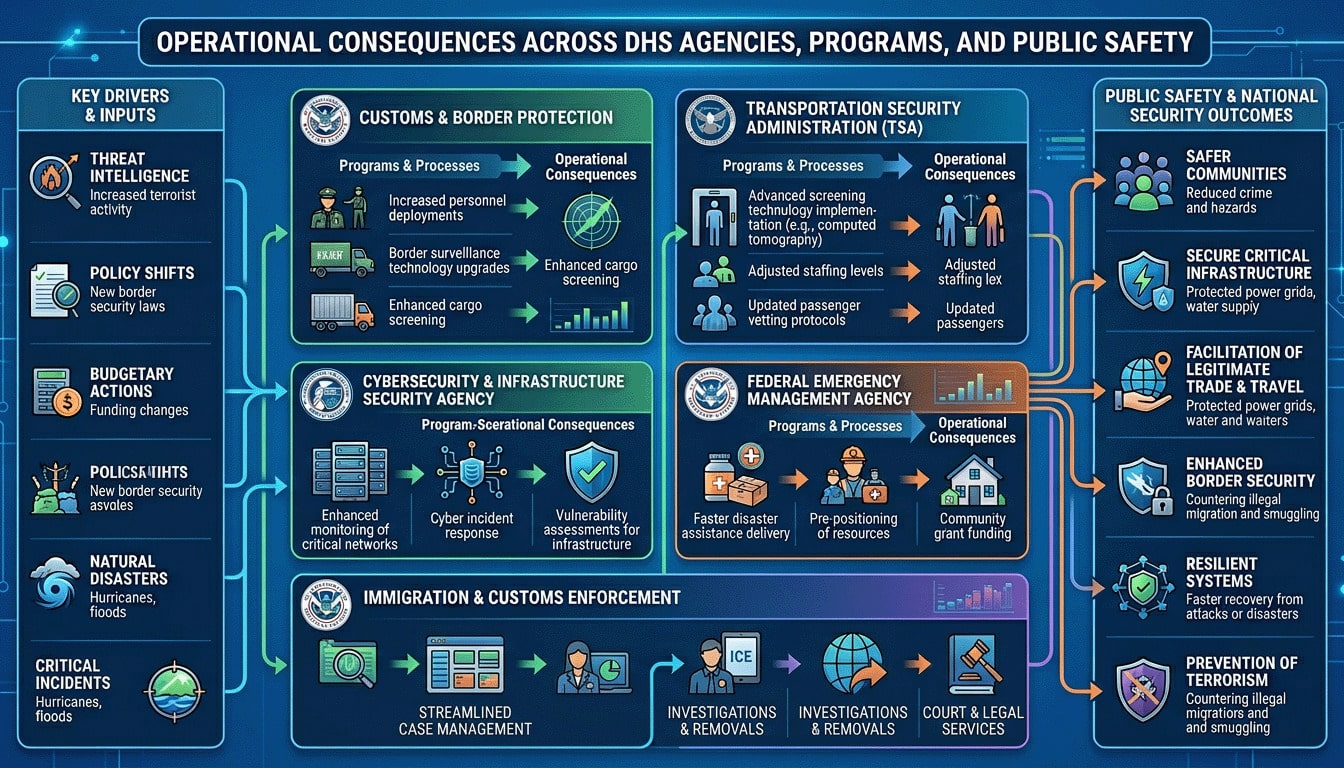
Operational consequences across DHS agencies, programs, and public safety
A funding lapse quickly affects real work. It leads to delayed travel, slower responses, and stressed offices. DHS leaders are working hard to keep things moving despite budget issues.
How leaders are “temporarily” trying to fund paychecks to prevent a workforce exodus and protect DHS careers
Russell Vought said in Senate testimony that he and Secretary Markwayne Mullin are finding ways to fund paychecks temporarily. They aim to avoid a sudden stop in DHS careers, which would disrupt daily operations.
They are using a short-term fix from last year’s One Big Beautiful Bill Act. This is a temporary solution to prevent a mass exodus, even as DHS programs face uncertainty.
Risk of federal workers quitting “in droves” and how that could affect homeland security operations
Vought warned that federal workers might quit in large numbers if Congress doesn’t act soon. Such a loss could severely impact homeland security, affecting staffing, processing, and enforcement tasks.
- Fewer trained staff for 24/7 missions and surge events
- Slower case handling and support for DHS programs
- Higher burnout as remaining teams take on extra duties
Operational challenges are already seen in detention and transport issues, as reported in DHS operational capacity reporting. Workforce limits, legal constraints, and tight spaces make ambitious goals hard to achieve.
Why Vought warned public safety could be at risk if Congress doesn’t restore funding
Vought said the issue is not just about the budget. He testified that public safety could be at risk if DHS is unfunded. The department’s work includes aviation, borders, cyber response, and threat prevention.
Unstable staffing can weaken coordination among components. Even routine planning can slow down if teams are unsure about funding.
Disaster relief fund impact: DHS components are unfunded and have reduced readiness for natural disasters
Vought also mentioned that all DHS components, including the disaster relief fund, are unfunded. He warned that the federal government is not prepared for a natural disaster from a funding standpoint.
This is critical because disaster response needs pre-positioned logistics, contracts, and staffing. If these are not ready, DHS programs supporting emergency management can slow down at the worst time.
DHS No Funding Impact Conclusion
The latest DHS news is about a simple claim: after Feb. 14, the Department of Homeland Security is starting to destabilize. Russell Vought said in Senate Budget Committee testimony that the problem is moving fast, not slow. He warned that daily operations are already feeling the strain as DHS runs out of room to improvise.
This warning is important because it’s not just about money. Leaders say the lack of funding could push workers out, weaken continuity, and slow down DHS initiatives. If payroll workarounds fail, the risk grows across core missions, from border and aviation support to disaster readiness and recovery.
Vought’s defining line, “There is no money for the entirety of the Department of Homeland Security,” highlights the issue. The pressure is not just in one office or region. It affects the whole department. Readers tracking DHS operations can see the same stakes in debates, like ICE enforcement scrutiny and how staffing choices affect rights and oversight.
In the end, the testimony calls for restoring full funding before capacity erodes further. Without a complete fix, the Department of Homeland Security could face deeper churn and thinner coverage during emergencies. Even as other DHS news highlights policy moves like relief for undocumented spouses, the main question remains: can DHS keep its initiatives stable enough to deliver public safety at scale?