Declassified UFO files released by the Pentagon
Exciting revelations await as the Pentagon’s declassified UFO files shed light on extraterrestrial encounters and government secrecy surrounding UFO investigations.

Declassified UFO files
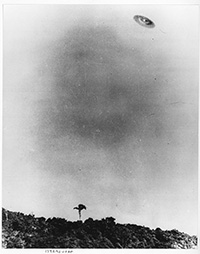
Declassified UFO files: Declassified UFO files: WASHINGTON (AP) — The Pentagon has started posting declassified UFO files. These files are about unidentified anomalous phenomena, or UAPs. Now, the public can see the records themselves, not just summaries. Project Blue Book
One report is from a drone pilot. He saw a linear object that lit up and then disappeared quickly. This kind of story makes some people want more UFO records. But others say many cases lack sufficient information.
The timing is also political. President Donald Trump had been talking about this for months. He says it’s a step towards being more open. But people are used to big promises that don’t always come true.
There’s a reason for caution. Trump has released documents before, like those about famous assassinations. But many pages didn’t add much new information. Now, with UFO files, people are hoping for clear answers.
Declassified UFO Files: Key Takeaways
- The Pentagon has begun releasing declassified UFO files about UAPs to the public.
- Officials say the goal is to disclose UFOs so people can judge the evidence for themselves.
- One record describes a drone pilot seeing a bright, linear object that vanished fast.
- The release is framed as a transparency initiative amid long-running government secrecy concerns.
- President Donald Trump previewed the effort months ago and tied it to greater government openness.
- Past releases of top-secret documents, like assassination records, set a cautious benchmark for what may change.
Pentagon launches new public UAP records release with “maximum transparency.”
The Pentagon has opened a new public window into UFO investigations. They say it’s a shift towards easier access and fewer barriers. In a post on X (Friday), the department said the public should review the material and decide what it means for themselves.
The first wave includes 162 declassified files. These files mix old State Department cables, FBI documents, and NASA transcripts from crewed spaceflight. The collection adds fresh context to long-running UFO sightings.
What the Pentagon announced on X and why it matters now
The message ties the release to an explicit push for “maximum transparency” under President Donald Trump. It also argues that earlier eras sometimes worked to discredit or discourage public interest. This keeps alien encounters in the spotlight even when the paperwork is cautious and heavily sourced.
Readers tracking the announcement through the declassified UAP file release will see the same theme repeated. This includes centralized access, fewer gatekeepers, and a clear attempt to reduce rumor-driven gaps.
How the rollout works: additional documents released on a rolling basis
This is not described as a one-time dump. The Pentagon says more records will come out on a rolling basis. This keeps UFO investigations active and encourages the public to check back as new items are cleared.
This steady pace matters because many UFO sightings are reported across different commands and years. A rolling release can also surface older material that people associate with Area 51 archives, even when the documents point to broader, government-wide recordkeeping.
Who is involved beyond the Pentagon: White House, Director of National Intelligence, Energy Department, NASA, and the
The effort is presented as interagency work. It’s led not only by the Pentagon but also by the White House, the Director of National Intelligence, the Department of Energy, NASA, and the FBI. This mix links defense reporting with intelligence review, scientific records, and law enforcement files tied to certain alien encounter claims.
This also signals that the public-facing record is being shaped across offices that do not usually share a single platform. For readers following broader UFO sightings trends, this coordination suggests fewer silos and more consistent language across releases.
The new UAP website: retro design, black-and-white military imagery, typewriter-style statements
The documents sit on a newly unveiled UAP website. It leans into an archive look, using black-and-white military imagery and typewriter-style statements. The design choice cues “official record” over speculation, while nodding to the culture that surrounds Area 51 archives and other famous storylines.
For a wider sense of how UFO sightings are tracked and discussed in the U.S. today, the topic also connects with unexplained mysterious sightings across America. Public curiosity often fills in what documents do not spell out.
Declassified UFO files: what the newly released documents say and what remains unclear
The latest batch of records adds detail but also keeps the debate wide open. Readers looking for extraterrestrial evidence will find more raw descriptions than neat answers. This pattern feeds both curiosity and doubt.
It also shows how UFO disclosure can expand the public record while leaving key questions hanging.

Drone pilot account from September 2023: “linear object,” intense light, then vanished within seconds.
One entry summarizes an FBI interview with a person identified as a drone pilot. The pilot described a “linear object” paired with a bright light. The light was vivid enough to make out bands within it.
The sighting lasted roughly five to ten seconds before the light went out and the object vanished.
As UFO sightings go, the short window matters. It limits what can be checked against known aircraft, weather, or optical effects. That uncertainty is also why government secrecy shapes how people read even a plain, typed summary.
Apollo 17 (1972) NASA photo: three dots in triangular formation and “no consensus” on the anomaly
Another file points to a NASA image from Apollo 17 in 1972. The photograph shows three small dots in a triangular formation. An odd detail that invites close reading.
The Pentagon caption adds a blunt line: there is “no consensus” about the nature of the anomaly. That phrasing leaves room for many interpretations without steering toward one.
For audiences tracking UFO disclosure, the language feels careful. It’s as if the record is meant to be shared without turning into a verdict. It keeps the door open while also avoiding a promise of extraterrestrial evidence.
Pentagon caption and preliminary analysis: possibility of a “physical object,” but uncertainty remains.

The same release notes a new, preliminary review suggesting the anomaly could be a “physical object.” Yet it does not offer a confirmed identification, a measurement, or a clear source. The gap between “could be” and “is” becomes the main story.
That gap is familiar in UFO sighting reports, where sensor data, context, or original materials are limited. It also shows how government secrecy can persist in tone and structure, even when documents are posted publicly.
Context from Congress and the Pentagon’s prior work: the 2022 declassification push and the 2024 report
The new files sit inside a longer effort that has been built over several years. Congress created an office in 2022 to support the declassification of UAP material. Lawmakers also ordered the Pentagon to begin releasing decades of records tied to military reports.
Those steps raised expectations that UFO disclosure would bring clarity, not just volume. The Pentagon’s 2024 report added hundreds of new incidents while stating that it found no evidence that the U.S. government has confirmed the existence of alien technology.
It also pushed back on claims that the government recovered alien tech or confirmed alien life. As those statements circulate, the public conversation keeps swinging between calls for extraterrestrial evidence and frustration with government secrecy.
Some Republicans have pressed for faster releases and accuse the Pentagon of holding back key material. Rep. Anna Paulina Luna cited a March letter seeking 46 UAP videos flagged by whistleblowers, saying more videos are expected later. Rep. Tim Burchett has argued transparency will take time, a message that keeps UFO sightings in the spotlight without setting a finish line.
Experts also urge caution because videos and images can be misread, even with advanced military systems involved. That warning does not close the case; it complicates it. In a climate shaped by UFO disclosure and long-running government secrecy, the newest documents add texture but leave room for competing readings of extraterrestrial evidence.
Declassified UFO Files: Conclusion
The Pentagon has made UFO investigations public with a new site and 162 declassified files. These files come from State Department cables, FBI records, and NASA transcripts. This move is a step towards more openness, even if it doesn’t end the debate.
The Pentagon said on X that they want to be transparent. They believe the public should make their own conclusions. This approach suggests more updates are coming, not just one big release.
Supporters of UFO disclosure see this as a positive sign. They believe the government is slowly opening up about alien encounters. But the new release also shows the ongoing debate about UFO investigations.
The stories are intriguing, but the facts are not always clear. The September 2023 drone pilot report and the Apollo 17 image are notable. Yet, the official explanations are cautious and lack full context.
The Pentagon plans to release more information in the future. Congress is also keeping a close eye, with Rep. Anna Paulina Luna making comments. As more documents are released, the public can follow the updates through this report. The debate over alien encounters will likely continue.